Helsinki Collegium for Advanced Studies Fellowships 2023-4 (Finland)

FellowshipsCore fellowships, Helsinki Collegium for Advanced Studies, Helsinki, Finland. Deadline: 14 September 2023.

The Core Fellowship Program is the basis of all Helsinki Collegium for Advanced Studies (HCAS) activities and the majority of fellows are appointed through it. In 2023, the application period begins on 22 August and closes on 14 September. Open to researchers from the humanities, social sciences, behavioral sciences, theology and law, as well as to researchers in other fields who focus on topics related to the human sciences. These prefixed-term appointments for 6 months to 3 years, for all career levels beyond the doctorate (post-docs, mid-career researchers, and full professors). The usual number of appointments is 8–14 per year, with no fixed career stage or discipline quotas. These are salaried positions with associated benefits (paid family and sick leave, pension benefits and occupational health care), as well as relocation assistance for international fellows. In addition, there is a Postdoctoral Fellowship in the Arts.

HIBLend Survey on Blended Student Mobility (Finland)

“Collaborative

HIBLend survey on Blended Student Mobility practices, Academic Cooperation Association, funded by the EU. Deadline: 7 July 2023.

CID followers are asked to complete this survey if they have relevant experience.

“This questionnaire has been prepared in the framework of the HIBLend project “Fostering high-quality blended student mobility in higher education” funded under the Erasmus+ programme. HIBLend aims to build the capacity of higher education institutions to design and deliver quality blended mobility opportunities for students through the exchange of good practice and peer learning. The project is coordinated by the Academic Cooperation Association and implemented in close collaboration with the European University Foundation, the Accreditation Organisation of the Netherlands and Flanders, Masaryk University and Tampere University of Applied Sciences.

The aim of this survey is to map different approaches to blended student mobility in the post-Covid context. For the purpose of this questionnaire, blended mobility is understood as an international learning activity consisting of a physical mobility experience and a complementary virtual learning component delivered prior, during or after the physical mobility stage.

Common examples of blended student mobility include Blended Intensive Programmes (BIPs) for students funded under the Erasmus+ programme or other types of blended short-term study mobility activities funded at the EU, national or institutional level (e.g., summer schools).

This survey targets any administrative or academic staff actively involved in the design or delivery of blended mobility activities at the central or faculty/department level (e.g., International Mobility Coordinators, study programme coordinators, teachers/professors, e-learning consultants, methodological advisors, quality assurance officers, IRO, IT officers).

The questionnaire consists of four major parts encompassing: (a) background information on the respondents, (b) motivation for the set-up of a blended mobility activity, (c) delivery mode, and (d) challenges to implementation and impact. The questionnaire is in English language, please provide all of your answers in English language only. It takes ca. 20 minutes to complete this questionnaire.”

Anssi Roiha Profile

Profiles

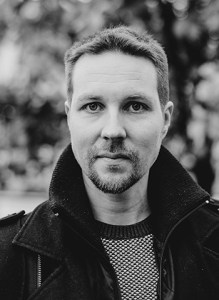
Anssi Roiha works as a university lecturer in foreign language didactics at the Department of Teacher Education at the University of Turku, Finland. He teaches subject-specific didactics to pre-service language teachers, including the topic of critical intercultural education in language teaching.

Anssi RoihaRoiha obtained his PhD (University of Jyväskylä, Finland) in 2020. His doctoral research examined the long-term effects of Content and Language Integrated Learning (CLIL) on former students’ lives. One of his PhD articles, co-written with Mélodine Sommier, was about the participants’ foreign language and intercultural attitudes and was published in Language and Intercultural Communication.

Intercultural education is among Roiha’s research interests; he has published articles and book chapters on the topic. Recently, he has co-edited a special issue in the Journal of Praxis in Higher Education and a book with Routledge on critical intercultural education with Mélodine Sommier and Malgorzata Lahti. Roiha’s other research interests include bilingual education and differentiation and he has also published widely on those topics.

Roiha is currently a member of the European Center For Modern Languages of the Council of Europe project CLIL LOTE and a co-coordinator of the portfolio group. The project sees CLIL as part of intercultural education and as a vehicle for promoting pluralistic approaches to language learning.

Selected publications:

Sommier, M., Roiha, A., & Lahti, M. (Eds.) (2023). Interculturality in higher education: Putting critical approaches into practice. London: Routledge.

Sommier, M., Lahti, M., & Roiha, A. (Eds.). (2021). From ‘intercultural-washing’ to meaningful intercultural education: Revisiting higher education practice (Special Issue). Journal of Praxis in Higher Education3(2).

Roiha, A., & Sommier, M. (2021). Exploring teachers’ perceptions and practices of intercultural education in an international school. Intercultural Education, 32(4), 446–463.

Roiha, A., & Sommier, M. (2018). Viewing CLIL through the eyes of former pupils: Insights into foreign language and intercultural attitudes. Language and Intercultural Communication, 18(6), 631–647.

Sommier, M., & Roiha, A. (2018). Dealing with culture in schools: A small-step approach towards anti-racism in Finland. In A. A. Alemanji (Ed.), Antiracism education in and out of schools (pp. 103–124). Cham, Switzerland: Palgrave Macmillan.


Work for CID:
Anssi Roiha is the co-author of a Guest Post on Implementing Critical Approaches to Interculturality in Higher Education .

Malgorzata Lahti Profile

Profiles

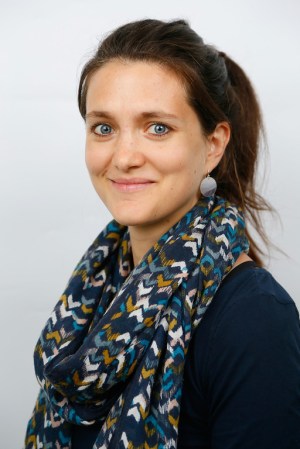
Malgorzata  Lahti,  Ph.D., works  as  Senior  Lecturer  in  Communication  at  the  Department  of Language  and  Communication  Studies,  University  of  Jyväskylä,  Finland.

Malgorzata Lahti

She currently teaches courses on small group and team interaction with a focus on professional settings. She has extensive experience designing and running courses in  intercultural  communication,  and  she has  co-run international  master’s programmes (Intercultural Communication; Language, Globalisation and Intercultural  Communication)  offered  by  the  department.  Lahti is a member of the teaching and research network European Masters in Intercultural Communication (EMICC), and she offers a course on diversity in workplace interactions as part of the annual EMICC exchange program Eurocampus. She is also a member of the board of the Nordic Network for Intercultural Communication.

Lahti’s 2015 doctoral dissertation, Communicating Interculturality in the Workplace, won the Best Dissertation of the Year Award at the University of Jyväskylä. Her research interests  include interculturality  and  multilingualism  in  professional  and  academic  contexts,  critical  approaches  to intercultural communication, as well as face-to-face and technology-mediated team interaction. In her ongoing research projects she is exploring knowledge construction in interactions of a cleaning team. She also applies the perspective of interculturality to the study of interprofessional teamwork in health care.  Together with Mélodine Sommier and Anssi Roiha, Lahti recently co-edited a special issue in the Journal of Praxis in Higher Education and a book with Routledge on the topic of teaching critical interculturality in higher education.

Selected publications:

Lahti, M., & Valo, M. (2017). Intercultural workplace communication. In          M. C. Green & K. Fitzgerald (Eds.), Oxford research encyclopedia of communication. Oxford, UK: Oxford University Press.

Lahti, M. (2020). Diversity and social interaction at work. In L. Mikkola & M. Valo (Eds.), Workplace communication (pp. 110-122). New York: Routledge.

Lahti, M., Olbertz-Siitonen, M., & Laitinen, K. (Hosts). (2021, November 23). Communicating interculturality (No. 3) [Audio podcast]. In Vuorotellen. Prologos.fi.

Sommier, M., Lahti, M., & Roiha, A. (Eds.). (2021). From ‘intercultural-washing’ to meaningful intercultural education: Revisiting higher education practice (Special Issue). Journal of Praxis in Higher Education3(2).

Shirahata, M., & Lahti, M. (2022). Language ideological landscapes for students in university language policies: Inclusion, exclusion, or hierarchy. Current Issues in Language Planning, 1-21. DOI: 10.1080/14664208.2022.2088165.

Sommier, M., Roiha, A., & Lahti, M. (Eds.). (2023). Interculturality in higher education: Putting critical approaches into practice. London: Routledge.


Work for CID:
Malgorzata Lahti is the co-author of KC107: Interculturality and of a Guest Post on Implementing Critical Approaches to Interculturality in Higher Education.

Mélodine Sommier Profile

ProfilesMélodine Sommier is currently working as an Academy of Finland Research Fellow at the University of Jyväskylä, Finland. She received her Ph.D. in 2016 for work on representations of secularism as part of the French national imaginary in newspaper texts.

Melodine Sommier

Mélodine’s research interests cover a variety of themes related to intercultural communication, media representations, race and racism, migration, sustainability, and education. Within the field of intercultural communication, her work concentrates on the use of culture as a discursive and an interactional resource. She mostly relies on critical and discursive approaches to examine the construction of cultural realities and outcomes regarding the (re)production of difference. Her research project on ‘racial landscapes’ (2022-2027) focuses on the way race and racism materialize in everyday urban spaces across Europe in ways that contribute to (re)produce and contest existing discourses and processes of racialization.

Mélodine is co-founder of the Intercultural Communication & Diversity division at the Netherlands-Flanders Communication Association (NeFCA) which she co-chaired between 2018-2022. She is the chair of the Intercultural and International Communication division at the European Communication Research and Education Association (ECREA) and a board member of the Society for the Study of Ethnic Relations and International Migration (ETMU).

Selected publications:

Fanari, A., Sommier, M., & Rahmani, D. (2025). (Re)defining intercultural communication theorizing: Mapping the current landscape of the field. Journal of Intercultural Communication Research, 54(5), 287-97.

Sommier, M., Roiha, A., & Lahti, M. (Eds.) (2023). Interculturality in higher education: Putting critical approaches into practice. London: Routledge.

Sommier, M. (2022). Race et espace: La ville comme lieu d’étude des représentations raciales [Race and space: Exploring racial representations in the city]. Itinéraires: Littérature, Textes, Cultures, 2021(3).

Sommier, M., Wang, Y., & Vasques, A. (2022). Transformative, interdisciplinary and intercultural learning for developing HEI students’ sustainability-oriented competences: A case study. Environment, Development and Sustainability.

Sommier, M., Lahti, M., & Roiha, A. (Eds.) (2021). From ‘intercultural-washing’ to meaningful intercultural education: Revisiting higher education practice. (Special issue). Journal of Praxis in Higher Education, 3(2).

Galy-Badenas, F., & Sommier, M. (2021). “A baby bump for women’s rights”: Analysing local and international media coverage of Jacinda Ardern’s pregnancy. Feminist Media Studies.

Sommier, M. (2020). “How ELSE are you supposed to dress up like a Black Guy??”: Negotiating accusations of Blackface in online newspaper comments. Ethnic and Racial Studies, 43(16), 57–75.


Work for CID:
Mélodine Sommier is the co-author of KC107: Interculturality and of a Guest Post on Implementing Critical Approaches to Interculturality in Higher Education., and the translator of KC107: Interculturality into French.

U Vaasa: Manager of International Development (Finland)

“Job

Manager of International Development, University of Vaasa, Vaasa, Finland. Deadline: 7 September 2022.

As the International Development Manager you will work to achieve substantial growth in overseas recruitment and enhance institutional global partnerships and networks in the designated market (India and South Asia). Working closely with the Vice Rector and reporting to the Director of International Development, you lead the implementation of the University’s international student recruitment strategy as a part of the wider University strategic plan and in support of the University Schools’ objectives. In consultation with senior management and other internal stakeholders, you will set recruitment priorities and deliver appropriate international development for the dedicated market.

To be successful in this role, you will have a background in and experience of international student recruitment, and ideally excellent knowledge of India/South Asia and another major recruitment market. You have excellent collaborative skills and substantial experience of developing strong working relationships in an international setting.

In this role you should be prepared to undertake overseas visits which amount up to twelve weeks each year. The focus of this role will be India and South Asia. You may be expected to engage in other recruitment markets in line with the University’s development plans.


U Arts Helsinki: Global Music & Community Engagement (Finland)

“JobTwo positions in Global Music and Community Engagement, Sibelius Academy, University of the Arts Helsinki, Finland. Deadline: different for each position (see below).

With a focus on intercultural dialogue and collaboration, the Global Music Department creates a unique educational environment for musicians from diverse musical and cultural backgrounds. Through the interwoven areas of the curriculum and immersion in an intercultural environment, students expand and deepen their musicianship, artistic identities, and approaches to arts-based community engagement and research. Degree studies are offered at bachelor, master, and doctoral levels, with students developing the ability to perform, create, communicate, collaborate, facilitate, carry out research, and lead in a wide range of musical, cultural, and socially engaged contexts.

In 2022, the new Elsa Brule Centre for Global Music and Community Engagement is being established under the umbrella of the Global Music Department, which will include this new lectureship post. As part of the work of the centre, students will utilise their unique skills to connect with the world around them through working on socially engaged community projects as an integral part of the curriculum. With the focus on creating art in collaboration with diverse areas of society, students and teachers facilitate projects in refugee centres, immigrant communities, schools, prisons, and with marginalised community groups in Finland and around the world.

There are two positions available:

Lecturer of Global Music and Community Engagement – deadline 23 April 2022

Professor of Global Music and Community Engagement – deadline 1 May 2022

U Jyväskylä: Intercultural Communication (Finland)

“JobUniversity Teacher in Intercultural Communication, Department of Languages and Communication Studies, University of Jyväskylä, Jyväskylä, Finland. Deadline: 15 April 2021.

The University Teacher will be a part of a team responsible for research and education in the field of Intercultural Communication. The teaching takes place in the international MA degree programme Language, Globalization and Intercultural Communication and the study module in Intercultural Communication. The contents of the teaching modules deal for example with themes related to diversity in organizational communication, migration and transition in a global world, and issues related to intergroup communication in technology-mediated contexts. A successful candidate is expected to have earlier experience and strong teaching merits from the field of Intercultural Communication. An active research profile in the field will also be considered an asset. The primary language of instruction is English. A good command of Finnish is considered an asset.

‘University Teacher’ in the Finnish system is a relatively junior position, focused on teaching but with the potential to progress. It’s a full-time permanent position, often held by people during their PhD or postdoc studies. 

U Jyväskylä Senior Lecturer in Communication (Finland)

“JobSenior Lecturer in Communication, Department of Languages and Communication Studies, University of Jyväskylä, Jyväskylä, Finland. Deadline: 2 October 2020.

There is also a position for Assistant or Associate Professor, with a deadline of November 4, 2020.

The Senior Lecturer’s position is allocated to the Department of Language and Communication Studies to the discipline of Communication. Communication is a popular, academic discipline, focusing on communication behaviour and dynamics of social interaction both in face-to-face and technology-mediated contexts. The key focus area in the discipline is interpersonal and group communication in working life. In teaching and research, interpersonal relationships in organisations, groups, teams and networks, technology-mediated and organisational communication, communication and well-being, persuasion and argumentation, communication competence as well as communication ethics are being examined.

Together with co-workers, the Senior Lecturer is responsible for teaching and research of communication. The Senior Lecturer is expected to conduct high-level teaching and scientific research in areas that support the teaching and research profile of the department. Expertise in interpersonal communication, communication in groups, teams and organisations, communication competence and communication development in organisations, as well as methodological competence in the area of communication is emphasized in the position. The duties of Senior Lecturer also include supervision of theses, planning new research projects and acquiring external research funding.

Tampere U: Social Psychology (Finland)

“JobAssistant/Associate Professor, and Associate Professor/Professor in Social Psychology, Faculty of Social Sciences, Tampere University, Finland. Deadline: 20 May 2020.

The Unit of Social Research is the largest unit in the Faculty of Social Sciences (SOC). Its key research themes are the transformation of social governance, social and societal processes and risks, and the challenges of well-being and sustainable development. The unit hosts six subjects: social psychology, sociology, social policy, youth research, social anthropology and gender studies. The Unit of Social Research also has four research centers: the Working Life Research Center, the Research Center for Knowledge, Science, Technology and Innovation, the Childhood, Youth and Family Research Center, and the Peace and Conflict Research Center.

The Unit of Social Research offers bachelor’s, master’s and doctoral level education. The unit has a joint, comprehensive bachelor’s program in social studies. Master’s degree education is given in fields of study corresponding to the subjects. In addition to these, the master’s program is implemented in five international programs: Comparative Social Policy and Welfare, Gender Studies, Global and Transnational Sociology, Peace, Mediation and Conflict Research, and Public Choice. Doctoral education takes place within the doctoral program in social research, including: gender studies, peace and conflict research, social anthropology, social policy, social psychology, sociology, social work, and youth research. In social psychology, key research topics include social interaction, self and identity, group dynamics, and the relationships between the individual, communities, and society.