Call for Book Chapters: Video Games in East Asia

Contributors are sought for an interdisciplinary book on video games in East Asia to be edited by Austin Lee and Alexis Pulos and published by Palgrave Macmillan for its East Asian Popular Culture Series. The series was launched in 2014 in order to meet an increased interest in the subject among scholars of various disciplines in recent years. East Asia refers to China, Hong Kong, Japan, North Korea, South Korea, and Taiwan. Reflecting the interdisciplinary nature of popular culture studies, the series will accept submissions from different social sciences and humanities disciplines that use a variety of methods.

Dedicated to video games in East Asia, this book examines the development and prominence of video games within historical, cultural, industrial, and global contexts. The editors are seeking contributions that cover a wide range of interdisciplinary work and that address topics such as:
–    Quantitative and qualitative approaches to industry, content, culture and players;
–    Studies examining eSports events, the politics of games, gamer culture and popular culture;
–    Studies examining the influence of political, economical and cultural factors on video game content, platforms (e.g., PC, console, mobile) and genres (e.g., RPG, FPS, strategy, sports);
–    Investigations of games, players, narratives, ludology or game environments;
–    Analysis of the ways technologies, celebrity status, and subculture (e.g., cosplay) impact both local and global perspective of gaming;
–    Historical analyses of game developments, cultural reactions, or significant moments;
–    Analyses of future trends and challenges for East Asian gaming culture and industry;
–    Research that explores the realities of power relations and oppression that stem from pervasive stereotypes of race, class, gender, sexual orientation or place within the context of East Asian games and players;
–    Ethnographic, rhetorical and other qualitative research on topics around video games.

Please submit a 500-word abstract, current contact information along with brief biography (or CV) as Word attachments to both Alexis Pulos and Austin Lee by February 15, 2015. Authors will be notified of the outcome of their submission within four weeks. The deadline for completed chapters (which should not exceed 9,000 words, inclusive of references) is May 31, 2015.

All submissions should be in MS Word format. The submission of images where appropriate, is also welcome.

CFP Asia Pacific Regional Intercultural Conference (Bali)

The First Asia Pacific Regional Intercultural Conference
Call for Proposals

You are invited and encouraged to participate in the AFS-AAI-SIETAR 2015 Conference on 15-17 April, 2015 in Bali, Indonesia.
Deadline for submission: January 31, 2015

The theme of this conference is: Learning to Live Together. Intercultural Education: From Ideas to Action.

Please submit proposals that explore the best thoughts on the intercultural field evidenced by theory, research or best practices. Asia Pacific regional perspectives highly appreciated. The conference review committee seeks for proposals that reflect emerging ideas, stimulate engaging discussion and learning outcomes.

The criteria for selection: Connection to the theme; Originality and Relevance to the Intercultural Learning and Education audience.

Promotion of product or service is not acceptable topic for session but sponsorship opportunities provided.

Please send submission of Abstract; Session Title; Biography of the presenter/s; Contact details and Audio-visual needs. The tracks are theory, research and best practices. Time allocations: 40 minutes for presentations or 60 minutes for panel discussion.
to : afs.aai.sietar2015@gmail.com

Public Anthropology Competition 2015

International Publishing Competition
California Series In Public Anthropology

The California Series in Public Anthropology encourages scholars in a range of disciplines to discuss major public issues in ways that help the broader public understand and address them. Two presidents (Mikhail Gorbachev and Bill Clinton) as well as three Nobel Laureates (Amartya Sen, Jody Williams, and Mikhail Gorbachev) have contributed to the Series either through books or forwards.  Its list includes such prominent authors as Paul Farmer co-founder of Partners in Health, Kolokotrones University Professor at Harvard and United Nations Deputy Special Envoy to Haiti.

Each year the Series highlights a particular problem in its international call for manuscripts.  The focus this year will be on STORIES OF INEQUALITY.

We are particularly interested in authors who convey both the problems engendered by inequality as well as ways for addressing it.  Prospective authors might ask themselves:  How can they make their study “come alive” for a range of readers through the narration of powerful stories?  They might, for example, focus on the lives of a few, select individuals tracing the problems they face and how they, to the best of their abilities, cope with them.  Prospective authors might examine a specific institution and how, in various ways, it perpetuates inequality.  Or authors might describe a particular group that seeks to address a facet of the problem.  There are no restrictions on how prospective authors address STORIES OF INEQUALITY – only an insistence that the proposed publication draw readers to its themes through the inclusion of powerful stories about real people.  The series is directed at the general public as well as college students.

The University of California Press in association with the Center for a Public Anthropology will review proposals for publication independent of whether the manuscripts themselves have been completed. We are open to working with authors as they wind their way through the writing process.  The proposals can describe work the author wishes to undertake in the near future or work that is currently underway. The proposals submitted to the competition should be 3-4,000 words long and describe both the overall work as well as a general summary of what is (or will be) in each chapter.  We expect the completed, publishable manuscripts to be between 250-300 pages (or 60,000-100,000 words) long excluding footnotes and references.  Examples of the types of analyses we are looking for include:
*Death Without Weeping: The Violence of Everyday Life in Brazil by Nancy Scheper-Hughes
*Behind the Beautiful Forevers: Life, Death and Hope in a Mumbai Undercity by Katherin Boo
*Imperial Reckoning: The Untold Story of Britain’s Gulag in Kenya by Caroline Elkins
*American Dream: Three Women, Ten Kids, and a Nation’s Drive to End Welfare by Jason DeParle
*Five Days at Memorial: Life and Death in a Storm-Ravaged Hospital by Sheri Fink
*There Are No Children Here: The Story of Two Boys Growing Up in the Other America by Alex Kotlowitz

We are interested in establishing committed, supportive relationships with authors that insures their books are not only published but are well publicized and recognized both within and beyond the academy.  We are committed to insuring the success of winning proposals.

DEADLINE FOR SUBMISSIONS IS APRIL 21, 2015
Submissions should be emailed to: bookseries@publicanthropology.org with the relevant material enclosed as attachments. They can also be sent to: Book Series, 707 Kaha Street, Kailua, HI. Questions regarding the competitions should be directed to Dr. Rob Borofsky at: bookseries@publicanthropology.org.

All entries will be judged by the Co-Editors of the California Series in Public Anthropology: Rob Borofsky (Center for a Public Anthropology & Hawaii Pacific University) and Naomi Schneider (University of California Press).

Howard Giles Profile

ProfilesHowie Giles, past Head of Psychology and Chair of Social Psychology at the University of Bristol, England, has been Professor of Communication at the University of California, Santa Barbara (with affiliations with Linguistics and Psychology) since 1989.  He is a Charter Fellow of the Intercultural Academy and elected Fellow of other Associations in Psychology, Communication, and Gerontology.

Howard_Giles

Giles has worked in language, intercultural, interpersonal, health, lifespan, and media arenas, with intergroup communication being his umbrella identification; the other subfields are subtended by this.  In this regard, he was editor of the 2012 Handbook of Intergroup Communication and with Jake Harwood is co-editor of the upcoming Oxford Research Encyclopedia of Intergroup Communication.  With Antonis Agardiki, he will be co-convening the 1st International Symposium on Intergroup Communication in Thessaloniki in June 2017.  Giles is currently Chair of the International Communication Association’s Intergroup Communication Interest Group which he founded with Scott Reid in 2003, and was co-founder with Peter Robinson of the International Conferences on Language and Social Psychology (ICLASP); the 15th ICLASP will occur in Bangkok in 2016.

Conducting cross-cultural research across dozens of nations and ethnic communities around the world, Giles has worked in an array of intercultural settings, including between-gender, interability, interethnic, intergenerational, police-community, and gay-straight relations.  Within these, for example, he has explored language attitudes, ethnic identity, tourism, acculturation, and successful aging.  Among the research questions he has posed are:

•    How when, and why do we mark our many social identities via language and communicative practices – and how transactively doing so sustains, reshapes these very same identities?

•    How do we age successfully as well as possibly unsuccessfully from different cultures’ standpoints, and how can communication be empowering or disempowering in these regards?

An integrative framework across these domains has been Communication Accommodation Theory, being its architect in the early 1970s (see Key Concepts in Intercultural Dialogue, #48).   Giles has recently been working to inject the salience of “culture” into intergroup theory and was editor of the “Intergroup and Intercultural” section of the International Encyclopedia of Communication (2008-).  Elected Past President of the International Communication Association and the International Association for Language and Social Psychology, Giles is founding/current Editor of the Journal of Language and Social Psychology (1981-) and the Journal of Asian Pacific Communication (1990-) as well as elected Editor of Human Communication Research (1995-98.  He is also General Editor for Peter Lang Publishers of a book series entitled, ”Language as Social Action.”

Giles spent much of his “leisure” time as a Reserve Detective Lieutenant in the Santa Barbara Police Department.  He did this for 15 years and was the recipient of over a dozen outstanding service awards.  This experience fueled his interest in researching police-community relations which is currently a very hot topic in the American media and public discourse.

It is possible to download his vita, or send him an e-mail.


Work for CID:
Howie Giles wrote KC48: Communication Accommodation Theory.

CFP Different Games Conference (New York)

Different Games, the first conference on inclusivity and diversity in games, invites participants for its 2015 edition at NYU’s Polytechnic School of Engineering, located in Brooklyn, NY, on Friday April 3 and Saturday April 4.

After a hugely successful 2nd year that welcomed 40 some speakers, dozens of original games and more than 300 attendees, Different Games is back for a third edition and we can’t wait to come together again this April!

Critical voices from across the games community— including designers, activists, researchers, journalists and others— are invited to present new and recent work as part of our two day program.

Submissions are invited before Feb 1, 2015 in three categories (though we welcome other ideas):

Arcade: Designers interested in showcasing their game in the Different Games arcade should submit a brief overview of their game (no more than 500 words) that includes their design vision and concept of the game. In addition, please submit the cover art and two screenshots of gameplay. We welcome pieces that will be in (beta) or playtesting phase as well as those further along in the development process.

Paper Presentations and Talks: We invite academics and creative minds alike to share recent work (written or otherwise) as speakers on our conference panels. We encourage participants from every field to submit writing or talks exploring topics pertaining to diversity and inclusion. Possible topics may include, but are not limited to: post mortems, design methodology, reflections on playtesting, analysis/commentary on games content (theme, gender, sexuality, etc.), game reception, and game culture/communities.

Breakout or Workshop Sessions: We invite topic specific or exploratory discussions on challenges and solutions for promoting diversity and inclusion in the broader game community/communities and other pertinent subjects. Hands-on workshop sessions geared towards learning design and development skills are also invited. Your proposal should include an explanation of any equipment participants will need for your workshop. If your session will be facilitated collaboratively, please include bios and links for all co-facilitators.

Visit our website for more info or to submit. Send questions to DifferentGamesConference@gmail.com.

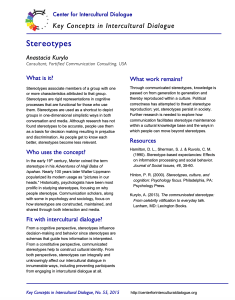
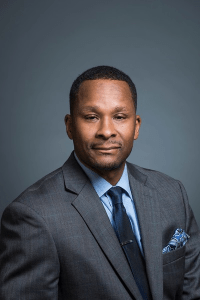
Key Concept #47: Cultural Contracts Theory by Ronald L. Jackson II

Key Concepts in ICDThe next issue of Key Concepts in intercultural Dialogue is now available. This is KC47: Cultural Contracts Theory by Ronald L. Jackson II. As always, all Key Concepts are available as free PDFs; just click on the thumbnail to download. Lists organized  chronologically by publication date and numberalphabetically by concept in English, and by languages into which they have been translated, are available, as is a page of acknowledgments with the names of all authors, translators, and reviewers.

kc47-sm

Jackson, R. L. (2015). Cultural contracts theory. Key Concepts in Intercultural Dialogue, 47. Available from: https://centerforinterculturaldialogue.org/wp-content/uploads/2015/01/key-concept-cultural-contracts-theory.pdf

The Center for Intercultural Dialogue publishes a series of short briefs describing Key Concepts in Intercultural Dialogue. Different people, working in different countries and disciplines, use different vocabulary to describe their interests, yet these terms overlap. Our goal is to provide some of the assumptions and history attached to each concept for those unfamiliar with it. As there are other concepts you would like to see included, send an email to the series editor, Wendy Leeds-Hurwitz. If there are concepts you would like to prepare, provide a brief explanation of why you think the concept is central to the study of intercultural dialogue, and why you are the obvious person to write up that concept. Feel free to propose terms in any language, especially if they expand our ability to discuss an aspect of intercultural dialogue that is not easy to translate into English.


Creative Commons License
This work is licensed under a Creative Commons Attribution-NonCommercial-NoDerivatives 4.0 International License.

Gonzaga-in-Cagli Project

Gonzaga University has announced that the Gonzaga-in-Cagli Project is now available to undergraduate as well as graduate students from any university.  This will be the 12th year of the International Media Project in Cagli, Italy. Students can earn up to six graduate or undergraduate credits in communication and leadership in this cultural immersion project that stresses media convergence.  We would like you and your students to consider this summer. Recently one of our projects was featured in the American Journalism Review. We say “Go Out a Tourist and come back a World Citizen.”

The program includes instruction in language and culture as well as photo, video, web design, writing and blogging.  Class begins in Florence and moves to historical Cagli in the Apennine Mountains.  The program also includes a day trip to the beautiful Renaissance city of Urbino, and there is free “weekend travel”  Dates are June 8 – June 24, 2015.  The program has won several awards and is considered one of the best buys in Study Abroad.

The deadline for application is February 1, 2015.  Please contact me if I can provide any additional information.

Professor John S. Caputo
Gonzaga University

CFP Truth in the Public Sphere

Jason Hannon is seeking contributors for a volume on truth, communication, and the public sphere. If you are interested in participating in this project, please submit an abstract of no more than 200 words, along with a brief bio, to Jason Hannon by February 1, 2015.

A. AIM
The proposed book, Truth in the Public Sphere, will explore the role of truth in different domains of social and political life. It will present a new set of expository essays from a variety of theoretical and philosophical perspectives. The aim is to challenge conventional thinking on truth by investigating the meaning and power of truth in different dimensions of the public sphere.

B. DESCRIPTION
Truth is a basic and primordial concept. It has long been and remains indispensible to multiple domains of thought and practice, including law, government, science, and religion. In the humanities, however, the idea of truth is commonly regarded with suspicion and cynicism. Truth is seen as an antiquated metaphysical illusion at best and an instrument of power and coercion at worst. The idea of truth therefore elicits strikingly different attitudes. For millennia, philosophers have debated the meaning and possibility of truth, proposing a range of complex theories. However, in the twentieth century, philosophers such as G. E. Moore, Gottlob Frege, Bertrand Russell, and Alfred Tarski have argued that truth is indefinable. In a similar vein, Donald Davidson has argued that instead of seeking to define truth, we should instead try to understand what role it plays in observable human behavior (i.e. linguistic interaction). More recently, the pragmatist philosopher Jeffrey Stout has argued that truth matters to democracy. This volume takes its cue from Davidson and Stout by exploring the role of truth in our social and political world from the perspective of communication. To this end, the volume examines the function and value of truth in four dimensions of the public sphere: 1) language and discourse, 2) ethics and justice, 3) journalism and politics, and 4) media, art, and aesthetics.

C. TARGET AUDIENCE
Although this volume will speak to a general humanities audience, it has been designed for students and scholars of rhetoric, media studies, communication theory, and the philosophy of communication.

D. SCOPE, CONTENT, METHODOLOGY
The proposed volume has been divided into four parts: 1) language and discourse; 2) ethics and justice; 3) journalism and politics; and 4) media, art, aesthetics. The essays in the volume will answer questions such as the following:
– What role does truth play in language and communication?
– Is communication possible without a commitment to truth?
– What role does truth play in ethics and social justice?
– Do we live in a post-truth world?
– What are the consequences of post-truth journalism?
– How do media and communication professionals conceptualize truth?
– What is the connection between truth and aesthetics?
– How do music and art capture truth?
– How does truth function in comedy, especially in political satire?

E. TABLE OF CONTENTS
We are seeking contributions for each of the following sections. Please note that we are open to suggestions for other topics.

PART I: LANGUAGE & DISCOURSE
Suggested topics include:
– Rhetoric
– Genealogy
– Hermeneutics
– Deconstruction
– Critical Theory
– Pragmatism
– Analytic and Post-Analytic Philosophy

PART II: ETHICS & JUSTICE
Suggested topics include:
– Feminism, truth, and women’s emancipation
– Postcolonialism, truth, and resistance
– Truth in the thought and speeches of Mahatma Gandhi
– Truth in the thought and speeches of Martin Luther King, Jr.
– Jacques Ranciere, truth, and education

PART III: JOURNALISM & POLITICS
Suggested topics include:
– Media Witnessing
– Post-truth journalism
– Post-truth politics
– Wikileaks

PART IV: MEDIA, ART, AND AESTHETICS
Suggested topics include:
– Truth in music
– Truth in visual art (including painting, photography, and street art)
– Truth in humor (especially satire)
– Truth in film

F. ABSTRACTS
If you are interested in participating in this project, please submit an abstract of no more than 200 words, along with a brief bio, to Jason Hannon by February 1, 2015. Those whose abstracts are accepted will be asked to submit their proposed chapter by August 31st, 2015.

Howard University job ad

Tenure-track Associate/Full Professor
Department of Communication, Culture & Media Studies, Howard University

The Department of Communication, Culture and Media Studies, with a doctoral-level program, seeks to fill a tenure-track position at the Associate or Full Professor level in U.S. multicultural media and communication studies. We are seeking a historical and critical scholar who can teach a range of doctoral-level courses in and serve on dissertation committees.  Applicants should have substantive knowledge in at least two of the following:  media industries, popular culture, communication policy, audience research, political economy of communication, media globalization, communication technologies, or media and social movements, as these relate to the African American experience.  Incorporation of multicultural concerns, e.g., gender, race, ethnicity, socio-economic class, sexuality and/or nationality, in the applicant’s research agenda is essential.  Responsibilities would include teaching 4-6 courses per year, mentoring students in their research, serving on dissertation committees, participating in other administrative committees, carrying on a full program of research, and exercising leadership within the broader profession.

Qualifications
Applicants should possess an earned doctorate in a communications field or a related discipline.  The ideal candidate will have at least six years of full-time teaching experience and a publications track record, as well as demonstrated promise for research and publication.  Applicants should also possess an understanding of the broader field of communications as well as specific knowledge in mass communications, as listed above.

The Department, School and University
The Department of Communication, Culture and Media Studies (CCMS) offers doctoral-level studies leading to the Ph.D.  The person hired will help to build the CCMS program through course re/development, by carrying on an active program of scholarship and publication, and through mentorship of students. The department has a diverse community of approximately 50 doctoral students from the United States and other nations, and a core faculty of five, with additional affiliate faculty from other departments in the recently restructured School of Communications.  The School of Communications is an interdisciplinary unit composed of two undergraduate departments (Strategic, Legal and Management Communications; and Media, Journalism and Film) and two graduate departments (Communication, Culture and Media Studies; and Communication Sciences and Disorders). Howard University is a private research university comprising 13 schools and colleges.  A historically Black institution in Washington, D.C, Howard was created by the Congress of the United States in 1867to educate and otherwise advance African Americans and those from other underserved populations.  Howard produces the largest number of African American recipients of doctoral degrees on campus than any other institution in the United States.  In keeping with Howard’s mission, the CCMS Department is committed to preparing academicians and research professionals to assume positions of leadership both nationally and internationally.  Applicants must demonstrate an understanding for and support of Howard University’s mission.

Application process
Send (1) a letter of application, (2) a current curriculum vitae, and (3) three current letters of recommendation to:
Dr. Carolyn M. Byerly, chairperson
Department of Communication, Culture & Media Studies
School of Communications, Howard University
525 Bryant St. NW, Washington, DC 20059

Review of applications will begin on January 30, 2015 and continue until the position is filled.  The new hire will begin August 2015.  Howard University is an affirmative-action, equal opportunity employer.  The university offers benefits to married couples, both same sex and different sex.

Charlie Hebdo and Intercultural Dialogue

Guest PostsCharlie Hebdo and Intercultural Dialogue by Peter Praxmarer.

Dear readers of this page:

As so many all over, I am following the unfolding of the dynamics of the Paris events. I do not think that I have particularly much to say about this, but I do want to share some thoughts that trouble me. They have to do with the Paris crimes and with intercultural communication; “intercultural communication” here understood as a research field in contemporary social science and/or the humanities, as a professional practice, and as the social practice of living together in a multifaceted and diversified society.

I do not want to enter into the debate about free speech vs. obscurantist or fundamentalist religious faith, but would like to draw your attention to the possibly problematic relationship between limitless free speech and expression on the one hand, and respect for the dignity of all human beings on the other. This problem is very well addressed n a series of discussions provided by “Democracy Now” (take it from 11:59 onwards). Separate interviews/contributions/debates with Art Spiegelman, Gilbert Achcar, Tariq Ramadan and others can be downloaded. For those who read German, these reflections of a Swiss historian may also be of interest.

More succinct, but equally telling, are the caricatures by Joe Sacco of The Guardian (caricature against caricature, so to speak), who takes a different stance than the one taken now by the hardcore provocateurs-and-proud-of-it, in the name of unbridled freedom of expression or in the name of xenophobia or utter racism.

What happened in Paris very much involves satire, also satire as a form of communication. The question: “To what culture does satire pertain?” or headings such as “The satirical differences of cultures” are probably idle ones, at least in this context, even though some people hail satire as a hallmark of a culture of democracy. Likewise, speculating about that particularly vitriolic “French” form of satire, developed since the French Revolution, which some see as typically Charlie Hebdo sarcasm, does probably not yield too much in this respect. At any rate, I think one can make some points regarding satire as a form of (intercultural) communication.

When analyzing acts of speech, argumentation – indeed, communicative utterances in all forms and communicative (re-)actions –, certain questions are all too seldom asked: “cui bono” or “cui prodest”, and the question “why”. Why do we communicate what and how we do, for what reason, to what end and purpose, and to whose benefit? Analyzing the Charlie Hedbo caricatures (and the earlier Danish ones) by asking these simple questions, one could come to the conclusion that efficiency as well as effectiveness of communication can also be measured in terms of the underlying reason and purpose. Seen in this way, a superior and refined intercultural communication competency would be, to say it with J.M.C. Le Clézio: (Coexister, c’est) comprendre ce qui peut offenser l’autre.

Considering all this, I am not so sure if I can without reserve underwrite “Je suis Charlie” – it depends on what Charlie stands for: if Charlie stands for the journalists and the others murdered, yes, then I can indeed identify with and proudly defend Charlie, just as I could say Je suis Ahmed. If Charlie stands for the right and license to provoke, to offend, to denigrate, in the name of free speech seen as universal, absolute and unilateral human right without corresponding duty and obligation to respect the Other, then I would not like to be seen with this sign in my hands.

A number of points could still be made while reflecting on, and trying to analyze and interpret, these Paris events. Let me just refer to two, which I think are particularly important for those who deal, professionally or in other ways, with intercultural communication:

First, we have to resist any attempt to construe this barbaric act as a clash of cultures or civilizations, or religions, as “Islam against the West”. Even in its more qualified form of “Radicalized Islam”, “Islamic Terrorism” or the like – let’s leave Islam, the Moslems, and indeed culture, out of this. The fact that some individuals use the terminology of a religion and profess to be violent and criminal defenders of a faith does not mean that that religion and its faithful are violent and criminal. Any analysis of this in terms of legitimization and ideological justification is much more explanatory than in terms of culture or religion. No cultural essentialism here – this may be a hard blow for those interculturalists who live off and by culturalizing anything and everything, including conflicts and violence. Equally, any appeal to identity, “Western”, “Christian” or other should be carefully avoided in this context – identity anyways being a very problematic concept that one anthropologist (Francesco Remotti) considers “poisonous”, while a famous economist, Amartya Sen, warns us about the potential of violence inherent in what the French call repli identitaire.

Secondly, what happened is clearly a failure of inclusion, of integration – socially, politically, economically, psychologically and, why not, “culturally”. In a wider context: the free-market-consumer-capitalism-cum-liberal-democracy model of integration does not work anymore (not my thought alone, but the thought of such prominent scholars as Joseph E. Stiglitz, Thomas Piketty, Tony Judt, Richard Wilkinson, Immanuel Wallerstein, Richard Sennett, Colin Crouch, and a host of others). France, as other European countries, has been unable to give to all of her immigrants the space and opportunities where to develop, where to grow into and together with society. Add to this the stigmatization and all too often outright enmity towards Muslims in today’s Europe – the veritable construction of an inner and outer enemy, as exercised daily by xenophobic and populist-nativist (usually right-wing) political parties and certain media – and then you get that type of social climate and political culture, in which violence thrives. Moreover, this climate in Europe is exacerbated by what happens in many of the Muslim majority countries, from corrupt or utterly undemocratic regimes backed by the (capitalist) West for economic or geopolitical reasons, to direct, almost always US-led, military intervention in Iraq, Afghanistan, Syria and elsewhere. And, in the specific case of France, consider that nation’s colonial past, particularly in North Africa.

I think that we, as interculturalists, cannot ignore the wider, indeed global, context of what is happening (in Europe and elsewhere) in the name of Islam and anti-Islam, but should be well aware of the fact that there are other than “cultural” reasons, factors and dimensions that fuel this conflict.

The only way out of this, and here our contribution and the very name of, and idea behind, the Center for Intercultural Dialogue come in, is to search for (new and original) ways of understanding, dialogue and inclusion – intercultural communication as science (or is it an art?) and practice of human understanding and dialogue, to put it loftily…

Cordially yours,
Peter Praxmarer

Download the entire post as a PDF.