Ali Karakas Profile

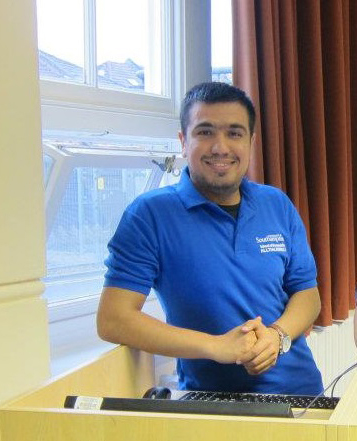
ProfilesAli Karakas has a B.A. in English Language Teaching from Uludag University, and took MA courses at Hacettepe University, Turkey. He is also a member of academic staff in the ELT department of Mehmet Akif Ersoy University, which has sponsored his current PhD project at Southampton University, UK.
Ali Karakas

Currently, he is based in Southampton and working towards completing his PhD research, entitled ‘Turkish Lecturers’ and Students’ Perceptions of English in English-Medium Universities’. He is a member of several research centers and groups, such as Centre for Global Englishes (CGE), English Language Teacher Education Research (ELTER) and English as Lingua Franca Research Network (ELF-Ren). His research interests primarily include English as a Lingua Franca, Language Policies, Language Attitudes and Ideologies, Language Teacher Education and Intercultural Communication. He has presented papers and published articles in various journals and magazines on topics of his research interests.

More information on his research and publications can be obtained from his academic homepage: http://abs.mehmetakif.edu.tr/akarakas

Selected Publications

Articles

Karakaş, A. & Karaca, G. (2011). Use And Importance Of Illustration As Materials In Foreign Language Teaching. Balıkesir University. The Journal of Social Sciences Institute, 14(26), 351-357.

Karakaş, A. & Karaca, G. (2011). Yabancı Dil Öğretiminde Resmin Materyal Olarak Kullanımı ve Önemi. Yaşadıkça Eğitim Dergisi. Sayı 110, Nisan-Mayıs-Haziran, s. 14-19.

Karakaş, A. & Sarıçoban, A. (2012). The Impact of Watching Subtitled Animated Cartoons on Incidental Vocabulary Learning of ELT Students. The Journal of Teaching English with Technology, 12(4), 3-15.

Karakaş, A. (2011). Motivational Attitudes of ELT Students towards Using Computers for Writing and Communication. The Journal of Teaching English with Technology, 11(3), 37-53.

Karakaş, A. (2012). English as a Lingua Franca: Practices of Academics in a Turkish University. Uşak Üniversitesi Sosyal Bilimler Dergisi, 5(3), 160-179.

Karakaş, A. (2012). Evaluation of the English Language Teacher Education Program in Turkey. ELT Weekly Newsletter, 4(15).

Karakaş, A. (2012). Foreign Accent Problem of Non-native Teachers of English. Humanising Language Teaching, 14(5).

Karakaş, A. (2012). How to cope with Speaking Anxiety in EFL Classrooms. ELT Weekly Newsletter, 4(28).

Karakaş, A. (2013). Intercultural Attitudes of Turkish Students Studying in a UK University. Journal of Intercultural Communication, 31.

Karakaş, A. (2013). Is Communicative Language Teaching a Panacea in ELT? – Student and Teacher Perspectives. Journal of Second and Multiple Language Acquisition, 1(1), 1-19.

Karakaş, A. (2013). The Expansion of the English Language across Turkey: Threat or Opportunity. Mediterranean Journal of Humanities, 3(2), 159-171. DOI: 10.13114/MJH/201322477

Karakaş, A. (2014). Lecturers’ Perceptions of Their English Abilities and Language Use in English-Medium Universities. International Journal on New Trends in Education and Their Implications, 5(2), 114-125.

Karakaş, A. (2015). Orientations towards English among English-medium Instruction Students. Englishes in Practice, 2(1), 1-38. DOI 10.1515/eip-2015-0001

Korumaz, M. & Karakaş, A. (2014). An Investigation of English Language Instructors’ Attitudes towards Reflective Teaching. Pegem Journal of Education & Instruction, 4(1), 27-46. DOI: 10.14527/pegegog.2014.001


Work for CID:

Ali Karakas wrote KC66: English Medium Instruction, and translated it into Turkish.
Intercultural Innovation Award 2015

The United Nations Alliance of Civilizations is pleased to announce the launch of the 2015 edition of the Intercultural Innovation Award, a partnership between the United Nations Alliance of Civilizations (UNAOC) and the BMW Group. The Award searches for grassroots projects around the world that are promoting dialogue and cooperation among people from different cultural backgrounds using novel and creative methods.

Ten organizations with sustainable and innovative intercultural projects that have potential for expansion and replication will be awarded funding and strategic support by the BMW Group and the UNAOC. To be considered, organizations must apply online by Wednesday, 30 September 2015 at 5:00 pm New York City time.

The top ten finalists will be invited to present their projects at the 7th UNAOC Global Forum. A total of 100,500 USD is offered to the awardees, of which 40,000 USD goes to the first placed project. For more details, you can check the applications guidelines.

CFP: 3rd Ebenezer Soola Conference on Communication (Nigeria)

The conveners of the 3rd Ebenezer Soola Conference on Communication hereby invite abstracts and full papers from all academics and professionals in all fields of media and communication for presentation and discussion at the conference. Papers should however be based on the conference theme and sub-themes.

COMMUNICATION, CHANGE MANAGEMENT AND SUSTAINABLE DEVELOPMENT IN THE 21ST CENTURY
September 27th30th, 2015.
Conference Centre, University of Ibadan, Ibadan, Nigeria

The Problem: Change is the only thing that is constant in life. Nigeria, and indeed, the whole world are witnessing rapid changes in all spheres of life. The challenge facing humanity today is how these changes are managed. Change management has been defined as the application of the set of tools, processes, skills and principles for managing the people’s side of change to achieve the required outcomes of the change project or initiative. How do we combine communication with these tools, processes, skills and principles to achieve and sustain positive changes in our society? This is the problem that this conference seeks to engage.

Sub-Themes:
*Communication, Change Management and People-Centred Development
*Communication, Change Management and Transformation
*Communication, Change Management and Government Reportage of its activities
*Communication, Change Management and Corporate Reporting Culture
*Communication, Change Management and Social Responsibility
*Communication, Change Management and Gender Rights
*Communication, Change and Risk Management in the Oil and Gas Sector
*Change Management and the Broadcast Media
*Change Management and the Print Media
*Change Management and the Social Media
*Change Management and the New Media of Communication
*Change Management and the Traditional Media of Communication
*Change Management and Political Communication
*Change Management and Journalism
*Change Management and Development Communication
*Change Management and Sustainable Development
*Communication, Social Fairness and Democratic Legitimacy
*Communication, Conflict and Institutional Change
*Communication, Community and Common Destiny

Arrival:        Monday, September 27th 2015.
Conference days: Tuesday 28th – Wednesday 29th, September 2015.
Departure:      Friday, 30th September 2015.

Paper Submission Guidelines:
*Abstracts should not be more than 200 words, typed single spaced with 12 points regular Times New Roman.
*Abstracts should have title, name of author(s) and full contact details: institution, postal address, personal email address and telephone numbers.
*Full papers should not be more than 20 pages A4, typed 1.5 spacing with 12 points regular Times New Roman using the APA style of referencing.
*The first page of the paper should indicate the title, name of author(s), and full contact details: institution, postal address, personal email address and telephone numbers. All other pages of the paper must not feature any of these details.
*Abstracts and full papers should be sent as an MS Word attachment to the conference email address.

Abstract Submission Deadline    – August 30th, 2015
Full Paper Submission Deadline  – September 13th, 2015

Conference Fee – N5,000.00 per participant.
(This covers conference materials, tea breaks, lunch and closing dinner.)

Publications
*Papers that pass the process of blind, peer-review of journals shall be published in two reputable international journals, namely, the Journal of Communication and Media Research and the Journal of Communication and Language Arts.
*Other papers will be published in a well-edited book. (Note: not a book of readings, but a thematic, educational and instructional book.)

For further information please contact:
Dr. Eserinune McCarty Mojaye
Secretary, Conveners Committee

Jonathan Shailor Profile

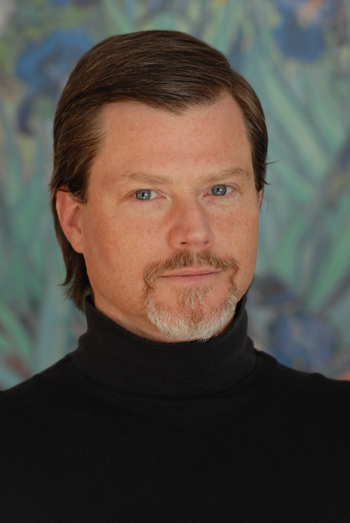
ProfilesJonathan Shailor, Ph.D., Communication, University of Massachusetts, is a Professor at the University of Wisconsin-Parkside in Kenosha, where he directs the Certificate Program in Conflict Analysis and Resolution.

Jonathan Shailor

He is founder and director of The Shakespeare Prison Project in Wisconsin, and a 2015 Fellow with the CMM Institute for Personal and Social Evolution. His teaching, research, and community service focus on the uses of storytelling, dialogue and performance as vehicles for conflict transformation.

Selected publications:

Shailor, J. (2013). Kings, warriors, magicians, and lovers: Prison theater and alternative performances of masculinity. In S. J. Hartnett, E. Novek & J. K. Wood (Eds.), Working for justice: A handbook of prison education and activism (pp. 13-38). Champaign: University of Illinois Press.

Shailor, J. (Ed.). (2011). Performing new lives: Prison theatre. London: Jessica Kingsley Publishers.

Shailor, J. (2011). Humanizing education behind bars: The theatre of empowerment and the Shakespeare project. In S. Hartnett (Ed.), Empowerment or incarceration? Reclaiming hope and justice from the prison-Industrial complex (pp. 229-251). Champaign: University of Illinois Press.

Shailor, J. (2009). Improvising a new life: Interactive theater. In K.J. Gergen, S.M. Schrader & M. Gergen (Eds.), Constructing worlds together: Interpersonal communication as relational process. New York: Pearson Education.

Shailor, J. (2008). When muddy flowers bloom: The Shakespeare Project at Racine Correctional Institution. Publications of the Modern Language Association of America, 123(3), 632-641.

Shailor, J. (2008). A professor’s perspective: The Shakespeare Project at Racine Correctional Institution. In K. Brune (Ed.), Creating behind the razor wire: Perspectives from arts in corrections in the United States (pp. 38-41). Published by Lulu.com.

Shailor, J. (1999). Desenvolvendo uma abordagem transformacional à prática da mediação: Considerações teóricas e práticas. In D. F. Schnitman & S. Littlejohn (Eds.), Novos paradigmas en mediação. Porto Alegre, Brazil: Editora Artes Médicas Sul Ltda.

Shailor, J. (1997). Context and the coordinated management of meaning. In J. L. Owen (Ed.), Context and communication behavior. Reno, NV: Context Press.

Shailor, J. (1994). Empowerment in dispute mediation: A critical analysis of communication. New York: Greenwood Press.


Work for CID:
Jonathan Shailor wrote KC65: Conflict Transformation.

Key Concept #65: Conflict Transformation by Jonathan Shailor

Key Concepts in ICDThe next issue of Key Concepts in intercultural Dialogue is now available. This is KC65: Conflict Transformation by Jonathan Shailor. As always, all Key Concepts are available as free PDFs; just click on the thumbnail to download. Lists organized  chronologically by publication date and numberalphabetically by concept in English, and by languages into which they have been translated, are available, as is a page of acknowledgments with the names of all authors, translators, and reviewers.

Key Concept #65: Conflict Transformation by Jonathan Shailor

Shailor, J. (2015). Conflict transformation. Key Concepts in Intercultural Dialogue, 65. Available from: https://centerforinterculturaldialogue.org/wp-content/uploads/2015/05/key-concept-conflict-transformation.pdf

The Center for Intercultural Dialogue publishes a series of short briefs describing Key Concepts in Intercultural Dialogue. Different people, working in different countries and disciplines, use different vocabulary to describe their interests, yet these terms overlap. Our goal is to provide some of the assumptions and history attached to each concept for those unfamiliar with it. As there are other concepts you would like to see included, send an email to the series editor, Wendy Leeds-Hurwitz. If there are concepts you would like to prepare, provide a brief explanation of why you think the concept is central to the study of intercultural dialogue, and why you are the obvious person to write up that concept.


Creative Commons License
This work is licensed under a Creative Commons Attribution-NonCommercial-NoDerivatives 4.0 International License.

CFP Shared Histories: Media Connections Between Britain and Ireland (Dublin)

Shared Histories: Media Connections Between Britain and Ireland
A conference, to be held in Dublin, 6-7th July 2016
*Call For Papers*

The relationship between Ireland and the rest of the British Isles has a long and complex history. One key dimension has been the connections and interactions between the various media of communication – print and electronic – which have mediated this relationship. This conference seeks to address this important, but relatively neglected, topic at a timely moment in the history of Ireland, England, Scotland and Wales.

The conference organisers want to take a long view as well as look in detail at particular moments. It therefore invites papers from the sixteenth century onwards, dealing with all forms of media (print, periodical, broadcasting, ephemera) as well as with structures of ownership, regulation, distribution and identity.

The conference will examine the different kinds of media interactions from the arrival of print to the emergence of broadcasting, under what conditions they operated and to what effect. How did these interactions take place? What were the networks through which material flowed? What were the major developments in the content and reception of the media from the sixteenth century onwards? How helpful is it to think in terms of distinctive ‘national’ media traditions? In what sense, if any, are concepts such as centre and periphery of value in thinking about these relationships, or do they need revision? How has the development of relationships between the peoples of these islands been influence by shared histories of media exchange and interaction?

Proposals of up to 400 words stating the topic in relation to the conference theme should be sent to Steven Conlon by 1 June 2015.

The conference is jointly organised by the School of Communications, Dublin City University, the Centre for Media History,  Newspaper & Periodical History Forum of Ireland, Aberystwyth University, and the journal Media History. For further details please contact Mark O’Brien, Siân Nicholas, Jamie Medhurst, or Tom O’Malley.

PRISMA Human Rights Photo Contest

Photo ContestThe Global Campus of Master’s Programmes and Diplomas in Human Rights and Democratisation invites photographers, professional and amateurs, from any part of the world to submit their work to PRISMA – Human Rights Photo Contest.

On 11 September 2015, an exhibition with the selected images, along with photographs by the special guest photographer Rena Effendi, will open in Venice, during the 72nd Venice International Film Festival, at the Monastery of San Nicolò, the premises of EIUC, the European Inter-University Centre for Human Rights and Democratisation.

The day of the exhibition’s opening will be marked by an event with live music and talks on the theme “Freedom” and the connection between art, photography, cultural production, media and human rights.

THE GOAL
The goal of PRISMA is to complement academic research with other media of knowledge, such as photography, to reach a wider international public and foster a better understanding of human rights issues and their protection. PRISMA aims to become an annual event, and to create a network of artists, intellectuals and professionals interested in strengthening the protection of human rights and the promotion of democracy and peace.

THEME
The theme for the 2015 edition is “Freedom”. The value of Freedom is at the very core of the concept of human rights: freedom from oppression, freedom of speech and belief, freedom from fear, freedom of thought and freedom of opinion. The images submitted for the photo competition should illustrate the relevance of “Freedom” as a fundamental human right and the importance of defending it.

HOW TO APPLY
You can submit your photo by registering on the website of PRISMA, entries submitted by e-mail or regular post will not be accepted. The entry period is from the 1 May to the 30 June 2015. Entries will be evaluated by a jury on the basis of subject, originality, artistic merit and style. There is no entrance fee.

CFP ECREA Interpersonal Communication and Social Interaction (Denmark)

Call for Papers
European Communication Research and Education Association (ECREA)
Interpersonal Communication and Social Interaction Section (ICSI)
November 10.-12.2015 at Aarhus University, Denmark
Theme: Addressing the role of media in interpersonal communication and social interaction in different contexts and professions

Keynotes:
*Klaus Bruhn Jensen, professor, University of Copenhagen, DK: There is no such thing as unmediated communication: Media of three degrees.
*
Malene Charlotte Larsen, associate professor, Aalborg University, DK: Social Intimacy in Social Media: How youth practice friendships and construct identity online?
*Pekka Isotalus, professor, School of Communication, Media and Theatre, University of Tampere, Finland: Communication competence and new challenges of politicians: From public speaking to live-tweeting.

Timeschedule: November 10-12. 2015

Themes and perspectives:
– Online intimacy
– Social interaction and social media
– The newness and oldness of new media
– Is there anything beyond media?
– When is interpersonal communication (ever) (non?)mediated?
– Participatory culture as social interaction in a digital age
– How do different professionals and professions address the challenge of (new) media?
– Remediation of interpersonal communication and social interaction
– Etc.

Abstract:
We welcome individual papers, group papers, fishbowl/panels presenting discussions in clearly framed and thematised sessions. Both theoretical, methodological and empirical papers. When sending your abstract, please indicate/formulate three central questions raised in your presentation that might be topics for discussions during the conference. If you want to host a fishbowl, please send an abstract for the theme, questions and the participants of your group (3-5 participants). Please submit an abstract of max 250 words for individual/group papers and of max 500 words for panels/fishbowl discussions to Dorthe Refslund Christensen, Chair of the ICSI and conference organizer, before June 10. We will get back to you with information on acceptance of papers/panels/fishbowls and with a preliminary program and practical information on June 20.

CFP The Spanish Civil War 80 years on: Discourse, Memory and the Media

CALL FOR ARTICLES

Catalan Journal of Communication and Cultural Studies – Special Issue 8.1 (Spring 2016)
*Special Issue: ‘The Spanish Civil War 80 years on: discourse, memory and the media’*
Guest Editors:  Ruth Sanz Sabido (Canterbury Christ Church University), Stuart Price (De Montfort University) and Laia Quílez Esteve (Rovira i Virgili University)
Deadline for contributions: *15 October, 2015*

The Catalan Journal of Communication and Cultural Studies invites submissions for a 2016 Special Issue that will mark the eightieth anniversary of the beginning of the Spanish Civil War, by presenting a collection of papers that represent the latest perspectives on the
cultural, historical, regional, political, and social aspects of the Civil War and its legacy.

If it is true that ‘history is written by the victors’, the aftermath of the Spanish Civil War provides a textbook example of this tendency: the victorious Nationalists spent the following thirty-six years (1939-1975) trying to eliminate any remaining vestiges of those who had fought against them. For the losers, this meant in effect both a constant purge
of any dissenting ideologies, and the physical persecution of anyone who was suspected of sympathising with the Republican cause. Furthermore, the ‘pact of silence’ that was agreed during the transition to democracy meant that the problems caused by the Civil War and the dictatorship remained unresolved long after Franco’s death, maintaining deep-rooted
divisions in contemporary Spain.

It was only approximately thirty years after Franco’s death that the recovery of memory was promoted through social, political, and cultural means, so that the unheard voices of the past began to gain attention. However, this remains a highly contentious area, since the old struggles often re-emerge in contemporary political and socio-economic issues within the country. The Law of Historical Memory provides guidelines on several issues related to memory, from the exhumation of mass graves to the alteration of street names to eliminate references to agents of the dictatorship. However, the limited extent and application of this Law by the Government has led to the further polarisation of political perspectives (while thousands of families are still looking for the graves of their relatives).

This Special Issue considers Memory as yet another site of struggle, a contemporary re-enactment of the old divisions that are very much part of the country’s identity and which still permeate social, political and cultural life in contemporary Spain. The collection of articles will acknowledge the reproduction of these tensions, but will also offer a clear-sighted account of the conflict, grounded in a variety of historical and political discourses, oral testimonies, and analyses of media outputs.

Among other aspects, this issue is concerned with the ways in which children and grandchildren of victims and survivors of the Spanish Civil War and Franco’s dictatorship relate to the memory of the repression, and to the development of the democratic transition. The examination of these issues from the perspective of generational memory involves several considerations, including the socialization of memory, the institutionalization and revision of the past, the connections between popular culture, media practices and representations, and the uses of memory through time in relation to the changes in the policies of remembrance.

We invite contributions from scholars, researchers and practitioners from around the world to submit full articles on topics that may include, but are not limited to, the following:
– Media representations of trauma and violence in the Civil War, Franco’s repression, the final years of the dictatorship and the transition
– The significance of the conflict in contemporary Spain
– Memory and the Civil War
– Postmemory and Civil War, Francoism and the Transition
– Collective identities (national and regional)
– The work of Memory Associations in Spain
– Women in the Civil War and beyond
– The struggle of anarchists and libertarian communists
– Constructions of ‘national’ (Spanish) memories and their national and regional significance
– Social perceptions of the Civil War, the dictatorship and the transition
– Using the past to look into the future

The journal plans to include articles between *6000 and 7000 words*, as well as brief research notes and reports of around *3000 words* for the Viewpoint section. Full articles for proposed contributions should be sent to catalan.journal@urv.cat by *15 October 2015*. All contributions will be subjected to double blind peer review. And please follow the guidelines for authors.

Loughborough University job ad

Assistant Director (Technology-enhanced Learning)
Loughborough University – Centre for Academic Practice
Salary: £48,743 to £54,841
Hours: Full Time
Contract Type: Permanent
Closes: 8th June 2015
Job Ref: REQ15287
View Employer Profile

Required to work to foster excellence in learning and teaching through promoting the effective and extensive use of technologies to enhance learning across the University, including Loughborough University in London.

Candidates will have an excellent track record of developing and supporting technology-enhanced learning and of leading and managing teams to successful achievement of their objectives. They will have experience in scholarly inquiry in relation to technology-enhanced learning.

The post holder will play a central role in the senior management team of the Centre for Academic Practice, foster effective team working across all staff in the Centre, inspire colleagues and enhance further the University’s reputation for high quality learning and teaching provision.

Interviews will be held on 1 July 2015.

Please click here for details.