Jane Yau Profile

Profiles

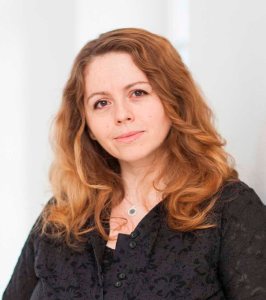
Jane Yau is a senior researcher at the Leibniz Institute for Research and Information in Education in Germany.

Jane YauShe is a member of the Global Young Academy and co-led the Science Education for Youth and UN SDGs working groups from 2022-24. She is also a member of the International Science Council and an expert member of the Science Education consultative working group. In addition, she is an Advisory Committee member of the Smithsonian Science Education Center based in Washington DC. Previously, she was a Visiting Researcher at the UNESCO Institute for Lifelong Learning, Hamburg.

She is currently the Program Manager of a Horizon Europe project – GREAT Realising Effective and Affective Transformation (2023-26), that aims to use games as an effective global communication channel between citizens and policy-makers. Via games, citizens’ attitudes on climate policies are collected with the aim of supporting policy-makers to make policies more suited to their needs. She has published over 80 articles in Mobile Learning, Learning Analytics and Educational Technologies.


Work for CID:

Jane Yau is participating in an expert group organized by the Center.

Ping Yang Profile

Profiles

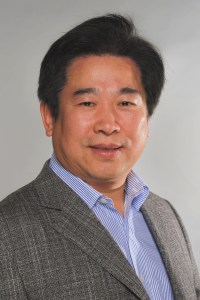
Ping Yang holds a PhD in Linguistics from Macquarie University in Australia, and is Senior Lecturer in the School of Humanities and Communication Arts at Western Sydney University.
Ping Yang

His teaching and research areas of expertise are intercultural verbal and nonverbal communication, socio-cultural linguistics, educational linguistics, TESOL teacher education, and translation studies. He also publishes and supervises PhD candidates in these areas.

Dr. Yang is an associate editor of international peer-reviewed journals, such as SAGE Open, Current Trends in Translation Teaching and Learning E and Humanities & Social Sciences Communications. He is an editorial board member of Australian Review of Applied Linguistics and English Language Teaching. He has been invited to peer-review book manuscripts for world-renowned publishers, including Routledge, SAGE, and Springer Nature. He is also an internationally recognised reviewer for many peer-reviewed journals of different disciplines. See details at https://orcid.org/0000-0002-3646-438X.

Following his writing of KC112: Intercultural nonverbal communication, Dr Ping Yang has recently published the following article:

Yang, P. (2025). Why do TESOL teachers need to develop intercultural nonverbal communication competence? TESOL Journal, 16(3), e70054.

It’s open access, so all can read and download. You can find more about Dr Yang’s recent publications via his Western Sydney University researcher profile.

Other selected publications:

Susilo, A., Yang, P., & Qi, R. (2026). Ongoing development of critical intercultural awareness: A qualitative case study of Indonesian university teachers. Intercultural Education, 27(3), 393-414. https://doi.org/10.1080/14675986.2026.2639809

Yang, P. (2024). Interpreting ethics in crisis in the conflict zones: A focus on the Afghanistan War. In C. J. M. Declercq & K. Kerremans (Eds.), The Routledge handbook of translation, interpreting and crisis (pp. 187-199). Routledge. https://doi.org/10.4324/9781003207580-16

Susilo, A., Yang, P., & Qi, R. (2023). Developing critical intercultural awareness through video clip-assisted intercultural tasks. Higher Education Pedagogies, 8(1).
https://doi.org/10.1080/23752696.2023.2235337

Yang, P. (2022). Co-constructing intercultural identity in the work-integrated learning: Pre-service TESOL teachers’ professional development. In K. Sadeghi & F. Ghaderi (Eds.), Theory and practice in second language teacher identity: Researching, theorising and enacting (pp. 121-135). Cham, Switzerland: Springer International Publishing. https://doi.org/10.1007/978-3-031-13161-5_9

Yang, P. (2020). Intercultural responsiveness: Learning languages other than English and developing intercultural communication competence. Languages, 5(2), 1-13.
https://doi.org/10.3390/languages5020024

Yang, P. (2020). Informal learning: Approaching Chinese language and culture in authentic contexts. In M. Tian, F. Dervin, & G. Lu (Eds.), Academic experiences of international students in Chinese higher education (pp. 101-124). New York: Routledge.
https://doi.org/10.4324/9781003026143-7

Alkhlaifat, E., Yang, P., & Moustakim, M. (2020). Code-switching between Arabic and English in Jordanian GP consultations. Crossroads: A Journal of English Studies, 30(3), 4-22.
https://doi.org/10.15290/CR.2020.30.3.01

Yang, P. (2019). Intercultural dialogue as constructive and positive communication: From intercultural communication to global peacebuilding. In P. Samuel (Ed.), Intercultural and interfaith dialogues for global peacebuilding and stability (pp. 30-49). IGI Global.
https://doi.org/10.4018/978-1-5225-7585-6.ch002

Yang, P. (2016). Intercultural communication between East and West: Implications for students on study abroad programs to China. In D. M. Velliaris & D. Coleman-George (Eds.), Handbook of research on study abroad programs and outbound mobility (pp. 755-777). Hershey, PA: IGI Global. https://doi.org/10.4018/978-1-5225-0169-5.ch030 

Yang, P. (2010). Managing miànzi (face) in Mandarin Chinese talk-in-interaction: A nonverbal perspective. Semiotica, 181(1/4), 179-223. https://doi.org/10.1515/semi.2010.041


Work for CID:

Ping Yang is the author of KC112: Intercultural Nonverbal Communication and is participating in an expert group organized by the Center. He also has served as a reviewer of translations into Simplified Chinese.


Maja Nenadovic Profile

ProfilesMaja Nenadovic holds a Ph.D. from the University of Amsterdam, and is the co-founder of the Croatian Education and Development Network for the Evolution of Communication – HERMES and of Reflectory, a consultancy in the fields of conflict transformation, social cohesion and civic engagement.

Maja Nenadovic

Maya is a monitoring and evaluation specialist, dialogue facilitator, human rights & civic education specialist, debate coach, critical pedagogy practitioner, and program design consultant. She has worked in 40+ countries worldwide. Since 2012, she has implemented “Across Divides – Training Workshops for Depolarizing Communication,” a methodology that she developed and tested in the field through a series of workshops and dialogues with both individuals using discriminatory and hate speech rhetoric, and with people and groups targeted by it. In addition she serves as a Board member of the Global Dialogue Collective.


Work for CID:

Maja Nenadovic participated in a CID/UNESCO focus group for the Futures of Education Initiative, and is participating in an expert group organized by the Center.

Polina Ivanova Profile

ProfilesPolina Ivanova is a postdoctoral researcher at the University of Bremen, in Germany.

Polina Ivanova


Her research interests lie in the areas of migration and migrant integration, focusing on international students, refugees and asylum seekers, and highly skilled migrants. She is also interested in intercultural communication, particularly in the context of higher education. Her work primarily centres on Japan, with comparative analyses extending to Australia, the United Kingdom, and the United States. Her recent books include Civil Society and International Students in Japan: The Making of Social Capital (Routledge, 2023) and Refugees and Asylum Seekers in East Asia: Perspectives from Japan and Taiwan (Palgrave Macmillan, 2024).


Work for CID:

Polina Ivanova will be participating in an expert group for the Center.

Yehuda Silverman Profile

Profiles

Yehuda Silverman is a peacebuilding pracademic (practitioner/academic) who specializes in conflict prevention, analysis, and transformation. He is currently an Instructor at Northwestern University’s Civic Education Project (in the US) and occasionally teaches at Brock University (in Canada).

Yehuda Silverman

At Acquaint, he serves as a Cultural Exchange Assistant, with an emphasis on cultivating partnerships to foster inclusivity on their free online global platform, where people engage in one-on-one conversations with individuals from over 100 nations. He has also developed and facilitated micro-courses on intercultural communication, along with mentoring many participants.

He is additionally a Facilitator at Civic Synergy and the International Center for Religion and Diplomacy in collaboration with AMIDEAST, and a Transatlantic Educators Dialogue Fellow at the University of Illinois: European Union Center. He also mentors emerging peacebuilders through UNESCO Global Youth Community, Initiatives of Change, and United People Global. He previously had a postdoctoral academic appointment as the Faculty Diversity Fellow at Ursuline College, where he developed and taught the course Intrapersonal Peace and Conflict Prevention.

Some of his research interests connect directly to his previous United Nations fellowships, which includes being a UNAOC Fellow, UNESCO MGIEP Fellow, and WFUNA Peace Fellow. In these capacities and beyond, he focuses on understanding the root causes of conflict and reimagining peace, particularly in transforming education. His specialization also comprises advancing autoethnography in the peacebuilding field to cultivate social cohesion. Yehuda’s Ph.D. is in Conflict Analysis and Resolution with a concentration in International Peace from Nova Southeastern University, and he is also a certified Facilitator in Intercultural Dialogue from the UN Habitat and Kingian Nonviolence Conflict Reconciliation from the University of Rhode Island.

Selected publications:

McIntyre, S., & Silverman, Y. (2024). Reimagining the 9/11 aftermath: Transforming violent extremism in a case study about youth, prevention, heritage, and resiliency. In L. Lixinski & Y. Zhu (Eds.), Heritage, conflict, and peace-building (pp. 206-223). Routledge.

McIntyre. S., & Silverman, Y. (2024). Cultivating social cohesion through conflict transformation in educational environments. Proceedings of the H-Net Teaching Conference, 2(1), 9-18.

Silverman, Y. (2020). The dynamics of intrapersonal conflict resolution. The Eurasia Proceedings of Educational and Social Sciences, 17, 18- 23.

Lee, K. S., Silverman, Y., Fouda, I., Stalter, S., Corvalán, A., Ferreira, E., & Cvetković, K. (2019). Recommendations made by the alumni of UNAOC programs to the United Nations Envoy on Youth, UNAOC, Summary Report.

Silverman, Y. (2018). Addressing the root causes of violent extremism: Analyzing intrapersonal frameworks to avert radicalization, United Nations Alliance of Civilizations, Final Report.

Georgakopoulos, A., Duckworth, C., Silverman, Y., & Redfering, K. (2017). Supporting literacy and peace education with youth: A community mentorship study. Peace Studies Journal, 10(2), 24-41.


Work for CID:

Yehuda Silverman participated in the CID/UNESCO focus groups for the Futures of Education Initiative, and is participating in an expert group organized by the Center.

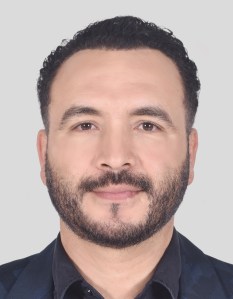
Abdeslam Badre Profile

Profiles

Abdeslam Badre is is a policy development expert, and associate professor at Mohammed V University in Rabat, Morocco.

Abdeslam Badre

His research seeks to analyze current norms that hamper the progress and livelihood of migrants, women, and youth as social groups. He aims to generate evidence-based recommendations to inform national and regional policies, and provide comparable data across borders for key countries in MENA and Southern Mediterranean regions, while addressing the causes of entrenched marginalization and socio-economic transformation. Badre has worked with/for a number of international organizations (including Fulbright, EU-JRC, ERASMUS+, InterAcademy Partnership (IAP), Konrad-Adenaeur Foundation (KAS), Global Young Academy (GYA), Next Einstein Forum (NEF), African Institute for Mathematical Sciences (AIMS), Institute for Cultural Diplomacy (ICD), ECSA Global, Arab Council for Social Sciences (ACSS), American Political Sciences Association (APSA), and EDU4U, among others, on various projects. He has also held visiting professor positions and research fellowships at Alfred University in New York, Monterey Institute for International Studies in California, University of North Carolina, all in the United States, as well as Aalborg University in Denmark, Institute for Cultural Diplomacy in Germany, and Babes Bolyai University in Romania. He is an Editor of the Social Science Section for Elsevier and the journal Scientific African.

Recent publications include North-South Economic Diplomacy: EU-Morocco Free Trade Negotiation (Germany, 2020); Enjeux Culturelles (Morocco, 2020); Voices of Early Career Researchers in and out of the Academy: A Pan- African Perspective (coauthored book, Germany, 2020). Currently, he is a coordinator of and author for the EuroMeSCo Joint Study Group 2021: Algeria, Morocco, Tunisia: A Comparative Perspective on Maghreb Countries Migration Cooperation with their West African Neighbours.


Work for CID:

Abdeslam Badre is part of an expert group organized by the Center.

Mingshi Cui Profile

Profiles

Mingshi Cui earned her PhD in Museum Studies at the University of Leicester in the UK. She holds an MA in Intercultural and International Communication.

Mingshi CuiHer research interests include material culture studies, intercultural communication, and digital humanities. Drawing upon her previous educational and working experiences, she is particularly interested in examining how to facilitate cross-cultural understanding in museums, so that audiences and the museum professionals alike could better engage with the museum collections and empathize with their originating communities that had experienced histories of disempowerments.
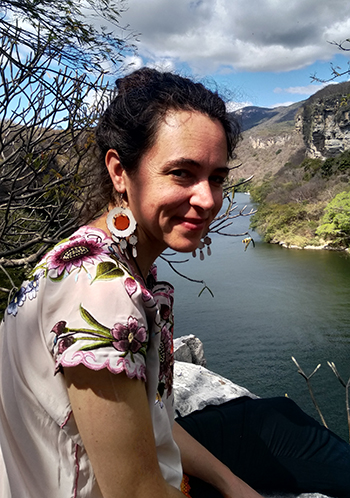
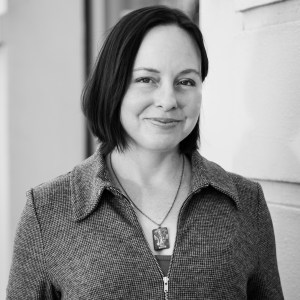
Mingshi’s current research project explores the potential of creating a digital object biography for the displaced object in a way that unveils its multi-layered interpretations and values.

Selected publications:

Cui, M. (2022). The role of digital platforms in enriching the narration of displaced objects [数字化平台在丰富流失文物叙述方面的运用]. Science Education and Museums [上海科技与博物馆], 8(1), 7-12.

Cui, M., & Vavoula, G. (2021). Digital platforms as facilitators of dialogic co-creation of displaced object biographies [Digitale Plattformen als Vermittler von dialogischer Ko-Kreation verdrängter Objektbiografien]. Journal of Cultural Management and Cultural Policy [Zeitschrift für Kulturmanagement und Kulturpolitik], 7(1), 43-58.

Du, J., & Cui, M. (2021). Intercultural dialogues in third spaces: A study of learning experiences of museum visitors. Journal of Transcultural Communication, 1(1), 79-101.


Work for CID:

Mingshi Cui co-authored a guest post on Museums as third spaces for intercultural dialogue, as well as writing one on Reflections on the object diasporas in museums; in addition, she has translated KC38: Boundary Objects, KC39: Otherness and the Other(s), KC65: Conflict Transformation, KC103: Geoculture, and KC102: Inclusive Communication  into Simplified Chinese.

Neus Crous-Costa Profile

Profiles

Ms. Neus Crous-Costa is currently a researcher affiliated with the Sustainability Observatory (Spain).

Neus Crous-Costa

Her work brings together the sociology of tourism, culture, and philosophy, focusing on understanding how individuals and societies construct meaning in the context of the current socio-ecological crisis.

Earlier in her career her main research line was tourism and cultural management, exploring issues such as cultural diplomacy, intercultural dialogue, and the experience of otherness. Her work is enriched by participating in social, educational, and environmental initiatives, which have led to exploring situated action-research approaches.

Selected publications:

Crous-Costa, N., Real, J., Rodríguez-Martín, S., & Martín Martín, V. O. (2025). ¿Cómo pueden los anfitriones recobrar la capacidad de decidir sobre su hogar? Perspectivas desde el caso de las Islas Canarias. Estudios Turísticos, 229.

Crous-Costa, N., Vidal-Casellas, D., & Morere-Molinero, N. (2023). A chronological exploration of key influences on the development of tourism. In P. Goulding (Ed.), Tourism: A temporal analysis. Oxford, UK: Goodfellow Publishers.

Caselas, D., & Crous-Costa, N. (2022). Dimensión socio-cultural del turismo. Girona, Spain: Documenta Universitaria.

Crous-Costa, N. (2022). Self-otherness in tourism: A semiotic analysis of China travel posters. Rhetoric and Communications Journal, 51, 20-43.

Villagrá Álvarez, C., & Crous-Costa, N. (2020). Genetic tourism: Key to multicultural understanding and peacebuilding? in J. Tavares da Silva,  Z. Breda, F. Carbone (Eds.), Role and impact of tourism in peacebuilding and conflict transformation (pp. 302-319). IGI Global.

Crous-Costa, N. (2020). Turismo y armchair tourism: Una reflexión sobre la naturaleza del turismo. Antrópica: Revista de Ciencias Sociales y Humanidades, 6(11),  17-42.

Crous-Costa, N., & Vidal Casellas, M. D. (2020). La aparición del turismo como disciplina académica y el lugar del turista como sujeto methaodos. Revista de Ciencias Sociales, 8(2), 306-315.

Casas i Serrabassa, M., & Crous-Costa, N. (2020). Marketing como herramienta para la gestión: El caso de la Ruta del Vino de la D.O. Empordà (Costa Brava, España). Communication Papers, 9 (19).

Vidal-Casellas, D., Aulet, S., & Crous-Costa, N. (Eds.). (2019). Interpreting sacred stories: Religious tourism, pilgrimage and intercultural dialogue. CAB International.


Work for CID:

Neus Crous-Costa wrote Key Concept 110: Tourism and translated it into Spanish; she also has translated CID Posters into Spanish; the following have been published so far: #1: Comunicación / comunicació / competència intercultural, #3: Definición de diálogo intercultural, #4: Tipos de comunicación cultural, #5: La comunicación como definición de cultura, #6: Definir el diálogo, #7: Justicia social / armonía social, #10: Multiculturalismo y cohesión social, #11: Lenguaje y comunicación intercultural, #12: El elefante en la habitación, and #13: Los ciegos y el elefante. Translations into Catalan are also being published: #1: Comunicació / competència / diàleg intercultural, #3: Definició de diàleg intercultural, #4: Tipus de comunicació cultural, #6: Definim el diàleg, #10: Multiculturalisme i cohesió social, #11: Llenguatge I Comunicació Intercultural, #12: L’elefant a l’habitació, and #13: Els cecs i l’elefant.

Louise Townsin Profile

Profiles

Dr. Louise Townsin leads the Research Management Services unit at Torrens University Australia.

Louise TownsinShe provides strategic support for research and research training activities and develops and implements systems and processes that promote high quality research management, monitoring and reporting for both internal development and external reporting purposes. Dr. Townsin also undertakes research in Education and Health, focusing on intercultural communication and cultural contexts of learning, teaching and health and wellbeing. Her current research includes teacher professional development, stigma of mental illness, access to health services by culturally and linguistically diverse consumers, and community engagement in research. She uses qualitative methods, including participatory action research, to explore educational interventions to encourage sustainable attitudinal and behavioural change.
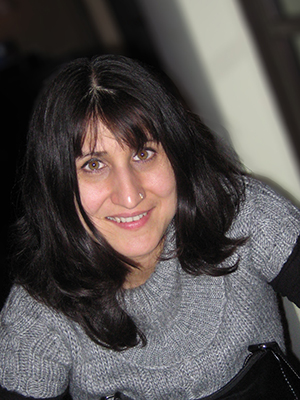

Work for CID:
Louise Townsin wrote KC109: Border Crossing.

Sangita Shresthova Profile

Profiles

Dr. Sangita Shresthova is Associate Research Professor of Communication and Co-PI of the Civic Imagination Project at the University of Southern California, Los Angeles, CA.

Sangita ShresthovaShe is a writer, researcher, scholar, speaker and practitioner with expertise in mixed-methods research, media literacies, media and parenting, popular culture, civic imagination, and globalization.  Her recent publications include three co-authored books: Practicing Futures: The Civic Imagination Action Handbook, Transformative Media Pedagogies, and Popular Culture and the Civic Imagination: Case Studies of Creative Social Change. Sangita is one of the creators of the Digital Civics Toolkit, a collection of resources for educators and teachers to support youth learning. Her creative work has also been presented in venues around the world including the Pasadena Dance Festival, Schaubuehne (Berlin), the Other Festival (Chennai), the EBS International Documentary Festival (Seoul), and the American Dance Festival (Durham, NC). She is also a faculty member at the Salzburg Academy on Media and Global Change in Austria.

A Czech-Nepalese child of the final years of the Cold War, Sangita grew up between Prague and Kathmandu. Her childhood was shaped by hostile visa policies and travel restrictions. In reaction, she has since taken the opportunity to call many cities home (including Brussels, Boston, London, Kandy, Ahmedabad, and Berlin). She relishes any opportunity to draw on her mixed race/cultural background and routinely keeps track of multiple time zones. She is still most comfortable when her carry-on is packed and believes home is a place where there is someone waiting for you; right now that is Los Angeles.


Work for CID: Sangita Shresthova serves on the CID Advisory Board, and is the author of ICD Exercises #3: Mix, Mix, Remix: Drawing on Pop Culture Stories to Inspire Intercultural Dialogue, and was interviewed for Voices from the Field #4: On Cross-Cultural Parenting, Media Use, and Intercultural Dialogue. In addition she participates in an expert group organized by the Center.