CFP Contemporary Developments on Media, Culture and Society: Argentina and Latin America (Argentina)

Contemporary Developments on Media, Culture and Society: Argentina and Latin America

We invite submissions to the conference “Contemporary Developments on Media, Culture and Society: Argentina and Latin America.” The conference, organized by The Center for the Study of Media and Society in Argentina (MESO), will take place on Friday, November 03, 2017, at Universidad de San Andrés in Buenos Aires, Argentina.

This will be the third annual conference organized by MESO on the interactions between media, culture and society. This third annual conference is sponsored by the Center for Global Culture and Communication at Northwestern University.

Submissions should contribute to ongoing conversations about media, culture, and society in empirical, theoretical or methodological ways. They might also broaden our knowledge about the relationship between media, culture,and society at the national and regional level. Articles may refer to different aspects of communication, media, and cultural goods and services in the areas of journalism, entertainment -cinema, theater, television, music, etc. – advertising and marketing, public relations, social media, and video games, among others.

The deadline for submission is May 15, 2017. Abstracts should be sent by email to mediosysociedad@udesa.edu.ar . The subject of the mail should be “Last Name, Name – Medios y Sociedad 2017”. A selection committee will evaluate the abstracts and the results will be notified to the authors on July 1, 2017.

CFP Multivoicedness in European Cinema (Ireland)

Multivoicedness in European Cinema: Representation, Industry, Politics
ECREA Film Studies Section Conference
10th and 11th November, 2017
University College Cork, Ireland

European cinema has evolved from a homogenous and selective object of study, mostly shaped by frameworks of national industry, identity and culture, to a much more diversified field, reflecting the shift to a post-colonial, post-communist, post-national, globalised Europe. In the context of an increasingly diverse but also split society, in which social polarisation is on the increase due to the crisis of the Eurozone and the decline of the welfare states, and in which popularism and nationalisms are on the rise, resulting in the strengthening of the Fortress Europe project, this conference aims to turn the spotlight on the less-represented and less-audible voices in European cinema in all its forms: fiction, documentary, mainstream, art house, independent, exploitation, art film. With an inclusive focus encompassing issues of production, distribution and reception, of representation and of form, of dissent and of control, the conference invites contributions that engage from a wide range of theoretical perspectives and methodological approaches with the politics of difference and with the representation and/or expression of alternative viewpoints in European films / in films made in Europe.

Abstracts are invited on topics related to Multivoicedness in European Cinema, including but not limited to:

  • Multivoicedness in national and transnational European cinemas
  • Peripheries, borders, and grey areas: falling between the cracks, speaking from the margins
  • Ethics and/or aesthetics of alternative voices
  • Audiodescription, subtitling and dubbing of multivoiced films
  • Cultural and market negotiations: translating cultures, crossing borders
  • Participation, dissent, resistance: audiences, politics, and public discourse
  • Alternative European cinemas and the global market
  • Other voices: niche markets, new forms of consumption
  • Deterritorialising identities, becoming migrant/minoritarian
  • Polyglot cinema: speaking from multiple subject positions
  • Genders and genres: decentering and in-betweennes
  • Alternative film festivals and other cinemas
  • Speaking in tongues: the audiences of multivoiced films
  • Queering European cinema
  • Nonfiction and commitment: documenting the silenced subject
  • Speaking for oneself: multiple forms of first-person filmmaking
  • Transnational, cosmopolitan, global: what European cinema
  • A continent in motion: multiple commitments, divided belonging
  • The New Europeans in films / making films
  • Margins of industrial practices, alternative forms of production, distribution and reception
  • Speaking parts: person, character, actor, star

Submission deadline: May 2nd 2017.

CFP New Media: Interactions & Transactions (Morocco)

New Media: Interactions and Transactions
23-24 November 2017
Chouaib Doukkali University
El Jadida, Morocco

New media, communication and information technologies are nowadays powerful tools for trade and exchanges. They transformed the modes of information as well as the forms of production and consumption in all areas. Indeed, blogs, search engines, online newspapers, social networks, and digital contents in general are all “forms of communication tools that have quickly changed the ways in which public relations is practiced, becoming an integral part of corporate communications for many companies” (Matthews, 2010). Hence, this increased the need to tackle the intercultural impact and implications of these new forms of communication in the global business.

In fact, the rise of new media has impacted the behavior of users who have shifted from being mere consumers to producers of digital content. This has not only increased the variety of content produced, but it has also promoted intercultural dialogue between different cultural groups. Additionally, new media users have contributed to changing business models, value chains and distribution systems. Thus, we have witnessed the “increase of the value of communication in the so called “economy of attention”” (Dennis 2015).

Furthermore, the virtual world, with its characteristics of content abundance, diversity and immediacy, has facilitated economic transactions and negotiations. Content digitization and convergence of information tools have transformed new media into a platform for plural, creative and interactive exchanges, which requires a multidimensional approach.

The objective of this conference is to tackle new media contents and the exchanges produced. The conference also aims at analyzing the impact of this new media landscape on intercultural communication and on the economic processes.

Conference topics:
Cultural Diversity: New Media and Contexts
New Media and Power: Intercultural Issues
New Media and Management

Abstract submission deadline:  31 April 2017


CFP Borders & Crises in European Past & Present (Greece)

The Tensions of Europe Early Career Scholars’ Group organises the summer school “Borders and Crises in European Past and Present – angles from the history of technology” in connection with the 8th Tensions of Europe Conference (Athens, 7-10 September 2017).

The summer school aims at introducing PhD’s and early career scholars to the Tensions of Europe network as well as to facilitate and encourage network between young scholars across borders, while building their academic skills. The summer school further relates to the overall conference theme, problematizing how history of technology contributes to the study of border related phenomena. It also aims at revisiting the close connections between borders and technology by focusing at another keyword, which is related to the on-going discussion of Tensions of Europe future research agenda: crises. Following the main objective of the Tensions of Europe Early Career Scholars’ Group, the event focuses on network building through workshops, discussions and informal events.

One of the main themes we will discuss is the concept of crisis and how it has been co-produced with narratives about technology and borders in a historic perspective. How is a crisis formulated and perceived in relation to technology? How have different politics of crises looked over time? What links or separates definitions of crises over time? And what role does the memory of past crises play in the definition of and coming to terms with later crises? We also invite you to relate these issues to the conference theme of borders, and discuss themes such as migration, security and violence, political regimes and identities, human rights, economic infrastructure and more. We hope for a fruitful discussion that can inspire and help all participants in their future research.

Schedule and structure
In order to promote network building, the summer school is organized to a large extend around workshops and group discussion. The expected schedule of the summer school will include one lecture, one session for introductions, one workshop on writing and publication, one session on funding, one session co-organised with the ‘Borders, Technology, Peace’ Pre-Conference Meeting (to be confirmed), one workshop on the topic of crises, and two sessions connecting these activities and discussions to the Tensions network and its research agenda (see link above).

How to apply
In order to participate, we invite applicants to submit a short bio (no more than one page) and a short text (300-500 words)explaining their interest in the topics of the summer school and how their work would benefit from these discussions.

Proposals should be sent until 30th April 2017 to Elena Kochetkova.

In the beginning of the summer, participants will be asked to read texts and write short contributions for the workshops. The deadline for submitting these contributions will also be communicated to the participants at that time.

Location and other practicalities
The summer school will take place in Athens, on the 5th and the 7th September, in the seminar room in the Department of History and Philosophy of Science of the National and Kapodistrian University of Athens, and on the 6th September it is expected to take place in Delphi, as part of the ‘Borders, Technology, Peace’ Pre-Conference Meeting (to be confirmed).

The participants of the summer school are expected to be on-site, but in some of the sessions, we might also be able to include a few on-line participants. Those who apply for that option should include that in their application.

As usual, the Tensions of Europe network will have travel grants to which the conference participants can apply to. To apply for these travel grants, the summer school participants will also have to attend the conference.

CFP ECREA Communication History: Our Group First!

CFP European Communication Research and Education Association (ECREA) Communication History Section
Budapest, Hungary, 7-9 September 2017

Our Group First! – Historical perspectives on Minorities/ Majorities, Inclusion/Exclusion, Centre/Periphery in Media and Communication History

“Our group first!” A familiar chant, which echoes past times in contemporary voices has recently gained momentum in the political discourse in Europe and the United States with resonance all over the globe. The claim and focus of such demands is however not new, but rather restorative with illustrious historical predecessors. Throughout history, communication has always been used to disseminate stereotypes, narratives and social myths aimed to the end of creating clear distinctions between a superior “us” and the “other”. Drawing lines between “us” and “them” is functional in negotiating senses of community and belonging and goes way beyond its political use. However, inclusion always harbors exclusion as well and the identity of groups also demarks
their boundaries. For this workshop the ECREA Communication History Section invites scholarly presentations to shed light on questions of inclusion/ exclusion, minorities/ majorities and centre/ periphery in communication.

The goal is to understand such practices throughout a variety of historical and cultural settings and to learn from the past for contemporary challenges. The workshop allows for a scope ranging from the macro level of national or supranational societies, to very peculiar particularities of social groups and issue communities. The workshop is also interested in work that helps to deconstruct or re-evaluate assumptions about minorities/majorities, exclusion/ inclusion, centre/periphery in a variety of contexts and as they are constructed or stabilized in academic work. Submissions dealing with the topics below are specially welcomed, even though the workshop will be opened to papers dealing with other aspects of the relation between media, minorities and majorities.

Minorities through the eyes of the Majorities and vice versa
In different historical locations the media have claimed to reflect societies in which they operate, disseminating cultural and social values that are accepted by the social structure in place, contributing to the imagination of community. In many cases this has led the media to focus their attention on majorities, while minorities are mostly ignored or represented in a negative fashion. Many authoritarian regimes, for example, have used all sorts of communication technologies, from posters and literature to broadcasting and newspapers, to promote fear and hate against minorities while exalting the qualities of those who are said to be the true patriots.

The concern about how minority groups are represented in public communication and how they engage in media production has deserved academic attention with the publication of books and journal issues dealing mostly with how mainstream media treat disabled citizens and gender, ethnic and religious minorities, migrants or refugees. We are interested in submissions addressing the logics, motives and uses of communicative constructions of normality and deviance, homogenization of cultural norms, dealing with heterogeneous concepts of life, alteration and hybrid identities. The workshop will focus on the creation of different types of minority groups as in-groups and out-groups, the alteration of their positions, identities and histories.

Different by choice
Differentiation and distinction are important ingredients for identity work. We are interested in communication phenomena and styles, which aimed at differentiating perspectives and creating alternative communities (e.g. hackers, tech-nerds) or establish alternative cultural scenes (e.g religious groups such as the Amish). This ranges from subcultures to the doing identity of political, LGBT, or activist groups and the conflicts and struggles they engaged in. Research is invited, which analyses special media formats produced by or addressing specific niches in the “small life-worlds of modern man” or highlight specific (protest) campaigns or identity management practices of such groups. Also representations of such minorities by choice through the lens of majorities, the mainstream media or popular culture are welcomed.

Inclusion and exclusion.
Minorities are often excluded from possibilities
of communication that are taken for granted and offered to majorities. Policy makers and commercial driven companies often consider as unprofitable bringing communications in unpopulated areas which leads to the exclusion of specific groups of people or specific region. Moreover, people tend to self-exclude themselves from too difficult, too expensive, and too complicated forms of communication. The workshop welcomes contributions on the history of communication divides (analogue and digital), and histories of political or business practices aiming to exclude groups of potential users.

Minority Media, Majority Practices
With the decline of mass communication and the slow disappearance of large audiences the lines between minorities and majorities get blurred when it comes to reception practices and habits. The discussion on how majorities and minorities use communication (technologies) and how they are represented on the media should also take into account the role of alternative media that, in many different historical contexts, have been created and operated by minorities. While cases like the Jewish press comes immediately to mind, feminist magazines and community radio stations are also examples of how different groups have used the media to promote their ideas and ideologies among fragmented audiences and compartmentalized collective identities. Many of these media played a role in in-group identity construction, frequently transcending borders and linking transnational audiences. The use of technologies that has widely disappeared or retracted to small niches or the nostalgic rediscovery of past media devices that are considered minoritarian will also be discussed.

Centre and periphery
Majorities are often at the centre and minorities at the periphery of infrastructures and networks. While at the centre the flow of communication is more intense and the speed of connections is higher, at the peripheries connections can be unstable and less reliable. Nevertheless, peripheries are also places where unexpected and minoritaran uses of media and communication emerge. In different historical periods, cities such as Athens, Rome, Venice, London, and New York have been at the centre of communication flows while places distant from the centre have to deal with their peripheral status. Case studies and papers dealing with the consequences of being central or peripheral in communication will be welcomed.

“Us and them” through the history of communication studies
Another field of inquiry the workshop is interested in is the role of academic research in observing and thus preserving logics of inclusion and exclusion through academic work. How do and did media and communication scholars normalize some media practices and pathologize others? What was the role of media and communication scholarship in stabilizing social in-groups while alienating outsiders (e.g. through links to political propaganda, psychological warfare and similar manipulation strategies or corporate advertising)? Which myths and narratives are cultivated by media research and how do prevalent concepts, eligible methods and accessible sources shape and foster certain understandings of media history, highlighting specific groups while sidelining others, thus creating an implicit invisible mainstream? Is thus a biased
understanding of majority and minority groups at a given created in communication history? Which strategies could be used to deconstruct and re-evaluate existing assumptions in the light of gender, postcolonial or non-Western perspectives? How can subgroups hidden in the alleged communication mainstream be made visible? How are in-groups and out-groups (mainstream
and outsider perspectives) constructed within the academic field of (historical) communication research?

Abstracts of 500 words (maximum) proposing empirical case studies as well as theoretical or methodological contributions should be submitted no later than 29 April 2017. Proposals for full panels (comprising 4 or 5 papers) are also welcome: these should include a 250-word abstract for each individual presentation, and a 300-word rationale for the panel. Send abstracts to: Dr. Sipos Balázs (sipos.balazs AT btk.elte.hu). Authors will be informed regarding acceptance/rejection for the conference no later than 15 May 2017. Early career scholars and graduate students are highly encouraged to submit their work. Please indicate if the research submitted is part of your thesis or dissertation project. The organizers will aim to arrange for discussants to provide an intensive response for graduate students projects.

CFP Argumentation & Language (Switzerland)

The second edition of the conference “Argumentation & Language” will take place from 7 to 9 of February 2018 at USI – Università della Svizzera italiana in Lugano, Switzerland.

Building on the success of the first ARGAGE conference, held at the University of Lausanne in 2015, the goal of the conference is to further explore the intersections of argumentative and language practices. Scholars are therefore invited to submit proposals dealing with the interrelations between language (its units, its levels, its functions and modes of processing) and the way argumentation functions. Contributions must be related to at least one of the following five research axes:

1. Argumentation in spoken interaction
2.  Semantics and argumentation
3.  Argumentative indicators
4. Corpora annotation and argumentation
5. Rhetorical devices

Priority will be given to proposals that make their methods and analytical categories explicit and that privilege the description of empirical data collected in corpora or empirically. Submissions will be evaluated on the basis of anonymized abstracts.

Types of contributions

Individual presentation
The deadline for submission is 30 June 2017.

Panel
Panel proposals can be submitted until 30 April 2017.

CFP European Television and Nations (Romania)

Call for proposals
European television and nations: Between centers and peripheries, 1950-1980
9-10 November 2017, Bucharest, Romania

Since the end of the 2000s, research into television history has
revealed different realities depending on the country (Bignell & Fickers
2008, see also Socialist Television Studies). Far from being limited
to the development of main television (British, German, or French), the
European television landscape seems to have been configured along a
number of dividing lines: the classical divisions (East / West, public
service / commercial TV) overlapped with new dichotomies (North / South (Bourdon 2011), democratic / authoritarian systems (Goddard 2013)).

In order to evaluate the relevance of these taxonomies and to account
for different dynamics which were thus created, our symposium aims at
exploring the less known history of the television referred to here as
peripheral in relation to pre-existing television models (continuing
Wallerstein’s world economy theory, 1974). The symposium is meant to
explore the attraction, imitation and diffusion of practice and content
between central and/or peripheral television. Particular attention will
be given to the period of emergence and development of television
institutions and to the established or presumed relationships between
television operators and national construction.

We are welcoming contributions which will analyze the influence,
convergence or opposition between European television, from different
perspectives:
-television techniques (introduction of color TV, modes of transmission
and recording etc.);
-institutional organization (regulation of relations between political
authorities and public television, recruitment of staff etc.);
-formation or practice of television professionals;
-design of broadcast schedules;
-circulation and possible adaptation of the program formats (fiction or
non-fiction);
-dissemination of national or international content;
-reception of programs by trans-border audiences.

Contributions may also address methodological issues or the problem of
access to television archives, in so far as these issues form the basis
of future research.

Lecturers:
Prof. Jérôme Bourdon, University of Tel Aviv
Géraldine Poels, responsible for scientific development, INA, Paris

The abstracts, in French or English, up to 250 words, are to be sent to
the following e-mail addresses: anne.roekens@unamur.be, romina.surugiu@fjsc.ro, amatei25@yahoo.com, by 10 April 2017. The languages of the symposium will be French and English.

Participation fee: 50 euros.

Organized by CEREFREA Villa Noël and the Faculty of Journalism and Mass Communication of the University of Bucharest within the trilateral Belgium(Wallonie)-Bulgarian-Romanian project “Television and nations in the European semi-periphery: Establishing a national identity through television (1958-1980)”

CFP EDEN: Diversity Matters (Sweden)

DIVERSITY MATTERS
26th European Distance and E-learning Network (EDEN) annual conference
13-16 June, 2017 in JÖNKÖPING, SWEDEN

Call for contributions:

The responsibility of the scholarly community includes the proper handling of diversity in education with respect to learners’ profiles, backgrounds, generations, cultures with different languages, literacies, and ways of communication as well as diversity in media and technology enhanced learning environments.

We need renowned reflections of practice that support paradigm-changing transformations based on systematic knowledge.

Join the Conference in Jönköping to tell about your research, projects and experience connected to diversity challenges.

Due to numerous extension requests received, the online submission will remain open until further notice. Submissions that relate to the Conference Scope and one or more of the Conference Themes are still welcome in paper, poster, workshop, training, demonstration and synergy formats.


IAICS 2017 (China)

IAICS 2017In today’s world, globalization erases boundaries and leads to increased contact among various languages and cultures. While human contact and migration have always been present throughout history, e.g., on the Silk Road, today’s media and transport capacities facilitate contact and communication to an exponentially greater extent than ever before. As a consequence, the phenomena of diversity, interculturality and hybridity are intensified. Juxtaposed to increased contact ensuing from globalization are both the positive and negative aspects of the protectionist efforts of localism. The theme of this conference seeks to examine the context of these problems within the spheres of education, language, culture, and society.

Preregistration due February 28, 2017.

Save

Save

CFP ESTIDIA 2017: Dialogues Without Borders (Bulgaria)

Call for Papers
European Society for Transcultural and Interdisciplinary Dialogue
4th ESTIDIA Conference
Dialogues without Borders: Strategies of Interpersonal and Inter-group Communication
29-30 September 2017

Faculty of Philosophy
Sofia University “St. Kliment Ohridsky”
Sofia, Bulgaria

in partnership with

Institute of Rhetoric and Communications, Sofia
Centre for New Media and Transdisciplinary Dialogue, Constanţa

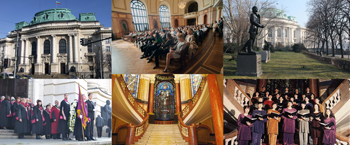
Sofia UniversityThe 4th ESTIDIA conference, to be held on 29-30 September, 2017, is hosted by Sofia University “St. Kliment Ohridski”, the oldest higher education institution in Bulgaria, founded in 1888, which has been consistently ranked as the top university in the country according to national and international rankings. The conference serves as a discussion forum for researchers and practitioners to showcase their dialogue-oriented work on current societal and community-related issues, and on methodological approaches to dialogue and strategies of interpersonal and inter-group Communication. The aim is to bring together senior and junior scholars and practitioners from a wide range of disciplines and professional orientations to critically explore, through dialogue, different perspectives on human thinking, communication strategies, interpersonal relations, socio-cultural traditions, political processes and business interactions by means of theory-based and practice-driven investigations.

Conference Theme

Most of the world’s population – and Europe is a case in point – lives in contexts that are becoming increasingly multi-ethnic, multi-lingual, multi-cultural. Travel across national boundaries is becoming an everyday activity for many, and new technologies allow individuals to communicate easily and cheaply across such boundaries, even if they stay at home. Meanwhile, hostilities between ethnic, national, religious, and other groups do not seem to be decreasing, but on the contrary, are being kindled by extremist groups and totalitarian leaders. To oppose, prevent and do away with such negative and dangerous developments in the 21st century, it is more important than ever to acquire an in-depth and nuanced understanding of how individuals communicate based on group or community memberships, and how communication allows or encourages group segregation and isolationist tendencies. It is languages – verbal language, sign language, body language – that constitute the basic channels of communication through which group stereotypes can be tolerated, changed, and/or resisted.

While the dynamics of interpersonal and intergroup relations has been a recurrent topic in several disciplines, such as psychology, social psychology (Tajfel 1978, 1982; Haslam et al 1998; Bar-Tal 2000) and political science (Sherif 1966; Pennebaker et al. 1997; Sidanius & Pratto 2001), research on communication and miscommunication in interpersonal and intergroup interaction has been conducted primarily within the fields of linguistics, sociolinguistics anthropology, rhetoric and communication studies (Hymes 1964; Gumperz 1971; Gudykunst 1998; Gudykunst & Mody 2002; Giles 2012; Berger 2014). A major advantage of these research strands lies in their intergroup perspective that considers people not only as individuals, but also as members of social groups (in terms of e.g., gender, age, ethnicity, nationality, region), and investigates the ways in which various social group memberships relate to the way that we communicate with each other.

Sofia city

A major goal of this conference is to bring together scholars from a wide range of disciplines who are interested in sharing their expertise and in discussing and comparing their extensive empirical and theoretical findings, so as to achieve a synergy and a cross-fertilisation of perspectives and approaches that highlight the role of communication practices in dealing with challenging situations emerging in interpersonal and intergroup encounters in 21st century societies.

Save