Hong Kong Baptist U: AI and Media Research Lab (China)

“Job2 positions, AI and Media Research Lab, Hong Kong Baptist University, Hong Kong, China. Deadline: May 30, 2020.

Post-doctoral Fellow in AI and Media Research Lab, Department of Journalism, School of Communication.

Senior Research Assistant in AI and Media Research Lab, Department of Journalism, School of Communication.

Both positions conduct research around social media, online incivility, and misinformation, with particular foci around the two topics of politics and COVID-19.

SIETAR Europa Cross-Cultural Coffee Breaks

Applied ICDCross-Cultural Coffee Break, offered by SIETAR Europa.

What is a cross-cultural coffee break (CCC Break)? Every participant grabs a cup of coffee (cappuccino, latte macchiato, espresso, you name it) and dives into a vivid exchange on an intercultural topic.

The Objectives of CCC Breaks: Sharing and Learning in an informal virtual setting. Every CCC Break is designed for the maximum number of 10 participants in order to allow the maximum of interaction between participants.

Team behind the scenes: Barbara Covarrubias Venegas, Joanna Sell, Gradiola Kapaj, Camilla Degerth.

Coursera MOOCs: Free Certificates for Learning

“MOOCs”Free Courses with Certificates, offered through Coursera. Deadline: July 31, 2020.

At the end of March, the world’s largest Massive Open Online Course provider Coursera announced that they are offering 100 free courses in response to the impact of the COVID-19 pandemic. Most recently, Coursera added another 35 new courses from its Latin American university partners and extended the deadline. See the entire list put together by Dhawal Shah. There are none on any intercultural or dialogue topics, but here are some that still may be of interest:

Language learning courses include: Chinese for Beginners, First Step Korean, and Tricky American English Pronunciation. Job skills include: How to Write a Resume, and How to Write and Publish a Scientific Paper. More general skills courses include: Creative Problem Solving, and Communication Strategies for a Virtual Age.

Be sure to follow the link above and read the directions for how to earn certificates for free. (MOOCs are always free, by definition, but many universities typically charge a fee to award a certificate proving success.)

Webinar: Comparing US and East Asian Primary Education

EventsWhy East Asian Students Beat U.S. Students on Every International Test, Society for Intercultural Education, Training and Research (SIETAR) Tri-State (NY-NJ-CT), Webinar on Wednesday, May 20, 2020, 1:00 PM – 2:30 PM EDT.

Years ago, Cornelius Grove grew curious about why, on every international comparative test since the early 1970s, East Asian students’ scores are among the highest while American students’ scores are somewhere in the middle…or lower. He discovered that the answer lies not only in how they are taught in school but also in how they are raised at home. He wrote two books about what he learned: The Drive to Learn (2017) and A Mirror for Americans (2020), both published by Rowman & Littlefield. Grove will share highlights of what he learned during this SIETAR Tri-State webinar.

The event is free – just follow the link above to register.

Lisle International: Global Seed Grant Program

GrantsGlobal Seed Grants, Lisle International, Leander, TX, USA. Deadlines: Request to apply: August 20, 2020; Completed application: September 1, 2020.

Do you have a project idea that will bring people of diverse backgrounds together for shared learning? Lisle International provides Global Seed Grants to support innovative projects which advance intercultural understanding through shared experiences, with the goal of creating a more just social order. Projects may seek to bridge a variety of community divides, including ethnic, cultural, religious, racial or gender perspectives, anywhere in the world.

Lisle International was an early pioneer in intercultural education programming, beginning with US projects in 1936 and expanding internationally in 1952. Since 2004, Lisle has focused on providing small “seed grants” to support programs fostering intercultural understanding.

Grants of $500 to $3,000 are available to innovative projects that match the mission of Lisle. Lisle awards between three and eight grants each year to projects in the Americas, Europe, Asia and Africa.

Maria Faust Profile

ProfilesDr. Maria Faust holds the position of a Research Associate at Chemnitz University of Technology, in Germany. She graduated from Leipzig University, Institute of Communication and Media Studies, Germany, with her thesis on “The Theoretical and Empirical Paradox of Temporal Change due to Digital Media in Germany and China” with highest distinction (summa cum laude). She was a Visiting Scholar at Renmin University, PRC, and the University of Bergen, Norway.

Maria FaustDr. Faust has worked for University of Leipzig, University of Technology Chemnitz, Stockholm University, University of Applied Sciences Mittweida, the Micro Census in Saxony, and the European Institute for Journalism and Communication Research.

In 2011 she presented her work at Oxford Internet Institute, in 2016 she won a Best Paper Award at IADIS Conference and presented at University of Sao Paulo, RANEPA, Sorbonne and Lomonosov University, amongst others. She served as CGCP Editor of Stanford Law School’s China Guiding Cases Project and held the position of an Associate Editor with the Postgraduate Journal Networking Knowledge of the British Media, Communication and Cultural Studies Association.

She has frequently published with China Media Research and guest-edited a special section on Visual Online Communication in BRICS countries with the same journal. In 2020 she edited a volume with Assoc. Prof. Thomas Herdin and Prof. Guo-Ming Chen on De-Westernization of Visual Communication and Cultures, embracing perspectives from the Global South with NOMOS publisher. Moreover, Dr. Faust’s articles have appeared in Kronoscope, East Asian Journal of Popular Culture, and Journal of Multicultural Discourses.

Since 2023, Dr. Faust has been investigating “The Epistemologies of Landscape in the Age of Deep Mediatization” from a transdisciplinary perspective in her postdoctoral project. First insights were presented at the Annual Conference of the Digital Geographies Research Group of the Royal Geographical Society, UK.


Work for CID:

Maria Faust translated KC28: Postcolonialism, Poster 1: Intercultural Communication / Competence / Dialogue, CID Poster 3: Intercultural Dialogue, CID Poster 4: Types of Intercultural Communication, and CID Poster 5: Kommunikation als Kulturdefinition into German, and has served as a reviewer of German translations.

Oslo Met U: PHD Fellowship: Journalism & Media Studies (Norway)

FellowshipsPhD-fellowship (3 years), Department of Journalism and Media Studies, Oslo Metropolitan University, Oslo, Norway. Deadline: May 29, 2020.

The Department of Journalism and Media Studies (IJM) offers a 3-year PhD fellowship position. The successful applicant will enroll and participate in the doctoral program in library and information science at the Faculty of Social Sciences. She/he will also be a member of one of two research groups at IJM: INDEX or Digital Journalism. The position will be closely connected to one of two international research projects financed by The Norwegian Research Council:

  • Understanding Youth Participation and Media literacy in Digital Dialogue Spaces (U-YouPa)
  • Source Criticism and Mediated Disinformation (SCAM)

The PhD project is to be designed and conducted in a way that contributes significantly to the project that the successful candidate will be a part of. Applications can either be directed to the U-YouPa or the Scam project (see descriptions below). The applications will be ranked by an external evaluation committee. The position will fall to the applicant with the top-ranked application, given that – after an interview round with the person and the other leading candidates – the candidate is found to be best suited to fill the position.

CFP: Relationships in the Time of COVID-19

“PublicationCall for Papers: Relationships in the time of COVID 19: Examining the effects of the global pandemic on personal relationships, for a Special issue of Journal of Social and Personal Relationships. Deadline: September 1, 2020.

Dr. Jennifer Bevan (Chapman University) and Dr. Pamela Lannutti (La Salle University) are editing a special issue of Journal of Social and Personal Relationships entitled “Relationships in the time of COVID 19: Examining the effects of the global pandemic on personal relationships.” This special issue of JSPR focused on the effects of the pandemic on personal relationships will serve as a valuable resource for scholars and practitioners as we work to understand the pandemic’s personal and social implications and to develop recommendations for scholars and practitioners in assisting relational partners to thrive in such difficult times.

Editors expect the special issue will serve as a catalyst to develop and challenge multiple theoretical and methodological aspects of relationship science. They will only consider papers where the pandemic is a central focus of the research project. Papers in the issue will be consistent with existing JSPR guidelines and requirements for papers.

Continue reading “CFP: Relationships in the Time of COVID-19”

We Rise Video: Response to COVID-19 (Italy)

Applied ICDWE RISE video, prepared by Class 5B, Liceo Artistico Aldo Passoni [High School of Arts Aldo Passion], Torino, Italy.

NOTE: A prior class of Paola’s won 2nd prize in the CID Video Competition in 2018, and then prepared a reflection on making that video to aid potential 2019 competitors. This video shows how a group might create a video for the 2020 competition, despite quarantine orders.

The idea came in the middle of the eye of the hurricane of COVID-19 in Italy. It was mid-March 2020 and, in the north of Italy where I live, the number of infected people was tripling every day, the hospital system was nearly collapsing, and the death toll was appalling.

I had been meeting my students online regularly. Before starting our lessons on English Literature and Visual Arts, we always had short conversations about how they were, how their family members were, and how they were coping with the situation. Looking at their faces through the screen, I saw their sense of bewilderment, but I also saw their resilience. Their young bodies and their youthful energies were confined, but their minds were not.

Therefore, I thought that maybe we could try together to get out of our physical confinement, and send a message of resilience, solidarity, and hope which could reach other people outside our homes. Yet, such a message was also directed inward to ourselves as an act of resistance and as the possibility to open our inner window on the future.

I proposed that my students make a video in which each of them would read some lines of a poem or a song. Participation was voluntary, yet the majority of them accepted immediately. I looked for some poems on a website which is very well done and which I often use for my lessons too: www.poetryfoundation.org. I chose some lines from four poems which I found particularly inspiring for the purpose we had in mind. I then proposed the poems to the participants: we read the poems together, I translated some parts for them, and then they decided which poem they preferred. Then, each participant read the whole poem that s/he had chosen, recording it on her/his mobile phone or computer. Meanwhile, I had asked a friend of mine, Luca Gasparini, a professional film editor, whether he could edit the different recordings. He accepted immediately and willingly. So, I collected all the different videos and uploaded them for him on a platform. He promptly edited them, and finished in only a few days.

I am so proud of my students! To spread such a message, they accepted to foreground the fragility and the vulnerability of speaking in English, which is not their native language. Even the students who have more difficulties in speaking English agreed to participate, showing that exposing one’s frailty can be a great act of courage. I think they all demonstrated great generosity, hope, and trust.

A final note on the title. The title was inspired by one of the poems, but it was important to convey plurality and solidarity by using use the inclusive pronoun ‘we’ – referring to ‘we’ in the video, but also to ‘we’ in not only our immediate communities, but also in the global community. Then, the verb ‘to rise’ which means ‘to stand up’ and indicates resilience and hope; but at the same time ‘to rise’ also references the rising sun. Therefore, our message also points out that after darkness comes a new dawn.

I hope you like the video!
Paola Giorgis

CFP From ‘Intercultural-Washing’ to Meaningful Intercultural Education

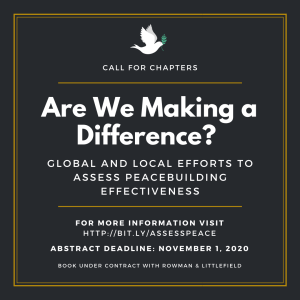
“PublicationCall for Papers: From ‘intercultural-washing’ to meaningful intercultural education: Revisiting teaching practices in tertiary education. Deadline for abstracts: 30 June 2020.

Guest editors: Mélodine Sommier (Erasmus University Rotterdam, the Netherlands), Anssi Roiha (HU University of Applied Sciences Utrecht, the Netherlands) and Malgorzata Lahti (University of Jyväskylä, Finland).

This special issue in the Journal of Praxis in Higher Education intends to provide a forum in which to address the difficulties and opportunities that arise in tertiary education when revisiting intercultural teaching practices. It therefore calls for papers that provide theoretical as well as practical insights into the implementation of critical approaches to intercultural communication.

Suggested topics include, but are not limited to:
· Incorporating critical approaches to intercultural communication in teaching materials and/or ICT;
· Learners’ experiences of intercultural education and/or expectations of intercultural communication;
· Difficulties faced by teachers in developing new understandings of intercultural communication;
·  Critical approaches to intercultural communication in specific subjects;
·  Tertiary education policies and ‘intercultural-washing’ approaches; and
·  Intercultural education in supervision and mentoring.

Please note that the editors also welcome book reviews on the topic of critical intercultural education at tertiary level.