CFP: BAICE Early Career Conference 2023 (UK but Online)

ConferencesCall for abstracts: British Association for Comparative and International Education Early Career Conference, UK but online, 5-6 August 2023. Deadline: 3 July 2023.

The call for abstracts is now open for The British Association for Comparative International Education (BAICE). The Student Committee warmly welcomes your submissions to the 2023 Annual Early Career conference, ‘Transformative education as a force for change: reflections and experiences from around the world’. The conference will be held over two days, hosted online via Zoom.

They invite submissions from postgraduate students, researchers and practitioners engaged with education research. The conference offers a dynamic and friendly environment for postgraduate researchers to showcase and discuss their research, even if the research is still in early stages. Attendees will be able to listen to colleagues from different areas of the Education Studies field; those presenting will be able to receive feedback in a diverse, constructive and academically rigorous environment. They welcome innovative and creative submissions on any research topic concerned with ‘Transformative education as a force for change: reflections and experiences from around the world.’

Knappitsch Guest Post: The Global Case Study Challenge

Guest Posts
The Global Case Study Challenge: Competencies for the Future of Work in Virtual Environments.
Guest post by Eithne Knappitsch.

The Global Case Study Challenge (GCSC) began as a Collaborative Online International Learning (COIL)/Virtual Exchange program, offering students an authentic and immersive intercultural learning opportunity. As the importance of New Work and remote work contexts grew following COVID, it became clear that students and professionals needed to develop more effective competencies to excel virtual and hybrid work environments. Initial iterations of the GCSC revealed that while students possessed strong digital skills, they frequently lacked essential digital collaboration competencies – the attitude, knowledge, and skills to become high performing teams in diverse, interdisciplinary, and international contexts. Recognizing this gap in competencies needed for future New Work environments and those acquired at higher educational institutions, the need for the GCSC to further develop into a transformative, career-oriented global teaching and learning program became obvious. At the same time, the GCSC management team – a virtual female-led team – became inspired by the potential for virtual exchange to contribute to a paradigm shift in higher educational settings as responsible and sustainable forms of education (and internationalization). The GCSC, over the five consequent iterations from 2018 onward evolved into a transformative program, resulting in the development of the GLOW model. This CID guest post explores how the GCSC GLObal Work (GLOW) model addresses these pressing needs and empowers students and educators with the competencies required to excel in virtual and intercultural work settings.

Download the entire guest post as a PDF.

U Wroclaw: Intercultural Education (Poland)

“JobAssistant Professor of Intercultural Education, Department of Intercultural Education and Social Support Research, Institute of Pedagogy, University of Wroclaw, Poland. Deadline: 30 August 2023.

University of Wroclaw invites applications for the position of assistant professor in the Department of Intercultural Education and Social Support Research, Institute of Pedagogy at the Faculty of Historical and Pedagogical Sciences. Requirements include: Doctoral degree (Ph.D) awarded in a scientific field of social science, discipline of pedagogy; Polish and English proficiency allowing writing scientific publications, participating in conferences, and conducting classes with students.

Columbia U: International Projects and Partnerships Manager (USA)

“JobInternational Projects and Partnerships Manager, Teachers College, Columbia University, NY, USA (Hybrid position). Deadline: 14 July 2023.

The Office of Global Engagement (OGE) at Teachers College, Columbia University (TC) is seeking an International Projects and Partnerships Manager to further international engagement at the College. Reporting to the Director of the Office of Global Engagement, the incumbent will support the development and expansion of strategic partnerships with institutions and organizations abroad. The incumbent will be responsible for overseeing short- and long-term collaborations from initiation to closure; and will liaise with internal and external stakeholders (e.g. academic institutions, Ministries of Education, Columbia Global Centers, etc.) to carry out program initiatives abroad or at the College through in-residence programs. In addition, the International Projects and Partnerships Manager will be expected to conduct research to vet potential partners; draft and edit collaboration agreements; manage partnership and program activities; and develop funding proposals and budgets.

Multicultural Music: Cultural Connections Over Time

Applied ICD

Williger, Jonathan. (23 May 2023). From Pomona to Heart Mountain: “La Banda Más Chingón en Wyoming.” Folklife Magazine.

“The cultural and geographic lineage of “La Banda Más Chingón en Wyoming” by No-No Boy with Mariachi Los Broncos is culturally layered and deeply American: a mariachi rendition of a folk-country song about a 1940s Japanese American swing band, composed in Wyoming by the son of a Vietnamese refugee from Nashville performed in Southern California. Brimming with ecstatic energy and righteous anger, the song draws connections between recent waves of migration from Central and South America and the long history of Asian American immigration and the discrimination both groups have experienced once they reached American soil.”

This recording is a great example of combining multiple cultural heritages through music. The article explicitly discusses the parallels between current Latin American migrants to the US, and Japanese Americans during World War II.

UNESCO Intercultural Competencies for Peacemaking

“UNESCO”

Regional Expert Consultations on Intercultural Competencies for Peacemaking, UNESCO, Paris, France.

UNESCO’s Social and Human Sciences Sector has launched the UNESCO Series of Regional Expert Consultations on Intercultural Competencies for Peacebuilding. Through these consultations, UNESCO aims to explore the potential of the development of intercultural and socio-emotional skills to serve as an enabler for peace in fragile, conflict-affected and post-conflict contexts. The first out of the six regional editions focused on Europe and was held 20 June 2023 (notice did not reach CID in time to advertise it). The goal is to bring together policymakers, practitioners and researchers in the fields of peace and conflict studies, psychology and intercultural education to discuss the main challenges to intercultural understanding, the role of intercultural skills in building trust among different parties, and ways of improving intercultural competence to better promote peacebuilding efforts, paying a particular attention to the role of women and youth.

The consultations are held online and open to the public, so if you are interested, look for future announcements.

CRASSH: CIRN Intesa Sanpaolo Visiting Fellowship 2023/24 (UK)

FellowshipsCIRN Intesa Sanpaolo Visiting Fellowship 2023/24, CRASSH, University of Cambridge, UK. Deadline: 31 July 2023.

CIRN Intesa Sanpaolo Visiting Fellowship offers an opportunity for an outstanding early career scholar whose research focuses on Italy to spend a period of time at Cambridge developing their research on a given broad theme, contributing to the Cambridge Italian Research Network (CIRN) and joining the Cambridge Centre for Research in the Arts, Social Sciences and Humanities (CRASSH).

The research theme for the Fellowship in 2023/24 will be ‘Diverse Italy’.

The Fellowship is open to early career scholars working on Italy from outside Cambridge (i.e., neither current researchers nor current members of staff at Cambridge), irrespective of their current status of employment, subject to visa conditions. ‘Early career’ is here defined as within five years of completing a PhD in any relevant field or discipline, allowing for career breaks. Near-native proficiency in English is a requirement for the Fellowship.

Inclusive Public Space (Webinar)

EventsInclusive public space: is placemaking the solution?, Council of Europe Intercultural Cities Webinar, 7 July 2023, 11am-12:30pm CEST.

Marta Popiolek and Ramon Marrades from Placemaking Europe will discuss “placemaking”, an approach to urban planning and public space design that places social innovation, the commons, and local communities at the heart of a co-creative process to shape healthier, more resilient, and more equitable public spaces lasting for the future. They will also tell us more about the pilot project “Cities in Placemaking”, aimed at developing a roadmap to a more holistic and sustainable approach to urban development that harnesses placemaking as a city-wide strategy. Six intercultural cities are participating in the pilot and will be happy to share their experience with you/ Get ready to ask questions and be inspired!

You are welcome to register here and forward the link to your colleagues. The webinar is open to everyone!

Please note that this webinar will only be available in English.

Eithne Knappitsch Profile

Profiles

Dr. Eithne Knappitsch is Professor of Intercultural Management at Carinthia University of Applied Sciences (FH Kärnten), Villach, Austria. Additionally, she is a corporate trainer and consultant, bringing her expertise to organizations seeking to enhance intercultural teamwork dynamics, leadership, Diversity and Inclusion (D&I), and sustainability.
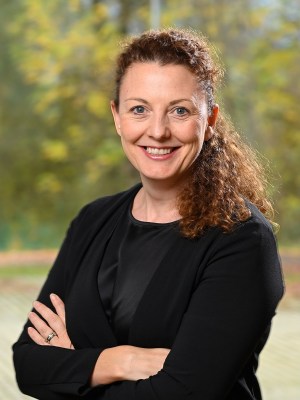
Eithne Knappitsch

Eithne is passionate about the interplay between people, culture, communication (and language), and connectivity. She is dedicated to promoting conscious personal and professional leadership in her training and teaching endeavors. And she considers herself a “pracademic,” bridging the gap between academic and practitioner contexts.

Based in the tri-border region of southern Austria, which includes Slovenia and Italy, Eithne has a special affinity for borderscapes, both physical and virtual. She grew up in Inishowen on the Ireland-Northern Ireland border and spent some time working as a researcher for the Culture, Arts & Leisure Committee of the Northern Ireland Assembly. She describes herself as a “border person,” having developed a sense of comfort in liminal or in-between spaces. Eithne is a founding member of the Transfrontier Euro-Institut Network, a network established in 2010 with 17 university, research institution, and training partners from 9 border regions in Europe. TEIN focuses on strengthening European integration and cross-border cooperation, embodying Eithne’s commitment to practical intercultural collaboration in Europe.

Drawing upon her expertise in Intercultural Management, Eithne equips her learners with the necessary competencies and perspectives for success in a globalized world and the opportunities of New and Remote Work. Her ability to bridge academic theory and practical application enhances the development of essential skills among her learners.

Eithne’s contributions extend beyond academia. She served as the President of SIETAR Austria (Society for Intercultural Education, Training, and Research) from 2019 to 2022, actively promoting intercultural understanding and competence. Moreover, Eithne co-founded the Global Case Study Challenge, a non-profit organization dedicated to cultivating a future-oriented movement of global, conscious, and sustainable thinkers, doers, and leaders. The GCSC offers an award-winning Virtual Exchange/COIL program, focusing on intercultural communication, digital collaboration, and sustainability competencies. In addition, she is involved in the Transcultural Competence Expert group at the Leadership Excellence Institute at Zeppelin University, a Delphi study on transcultural competence, and active in a working group for the World Council for Intercultural and Global Competence

Selected publications:

Knappitsch, E. (2023). A new narrative of leadership in the context of global virtual teams? In J. B. Montecinos, T. Grünfelder, and J. Wieland (Eds.), A relational view on cultural complexity: Implications for theory and practice (pp. 367-389). Cham: Springer.

Knappitsch, E. (2017). Bias mindfulness and perceptual shift: Key to managing a diverse workforce. In SIETAR Europa Congress Proceedings Cultural Dexterity for Turbulent Times, 22-27 May, 2017. Dublin: SIETAR Europa.

Knappitsch, E. (2008). 10 October commemorations in Carinthia: Promoting unity or division? Debatte: Journal of Contemporary Central and Eastern Europe, 16(2), 171-187.

Knappitsch, E., & Caliskan, S. (2017). Managing bias in HR: From recruiting to retaining a diverse workforce. In B. Covarrubias Venegas, K. Thill, & J. Domnanovich (Eds.), Internationales Personalmanagement. Rollen – Kompetenzen – Perspektiven: Implikationen für die Praxis. SpringerGabler.

Buko, S., Knappitsch, E., Zinenko, A., & Covarrubias-Venegas, B. (2022). The Global Case Study Challenge: A virtual exchange developing global work competencies. European Conference on e-Learning, 21(1), 32-41.

Deckert, C., Schomaker, R., & Knappitsch, E. (2022). Cultural impacts on national innovativeness and entrepreneurship. In Innovation and entrepreneurship: Theory and practice (pp. 57-84). WSB University.

Döring, T., Knappitsch, E., & Aigner, B. (2010). Political competences within the EU and their significance for the Western Balkans. European Perspectives, 2(2/3), 15-39.


Work for CID:

Eithne Knappitsch wrote a guest post on The Global Case Study Challenge: Competencies for the Future of Work in Virtual Environments in 2023, and on Empowering Remote-Ready Graduates: The Transformative Role of Virtual Exchange in Career-Oriented Education in 2024.

International Day for Countering Hate Speech

EventsInternational Day for Countering Hate Speech, as established by the United Nations in 2017, occurs on 18 June every year.

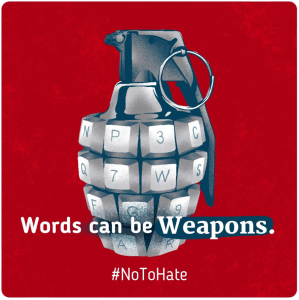
Words can be weaponsThe International Day of Countering Hate Speech was established by the United Nations in July 2021.

Hate speech incites violence, undermines diversity and social cohesion, and threatens the common values and principles that bind us together.

It promotes racism, xenophobia and misogyny; it dehumanizes individuals and communities; and it has a serious impact on our efforts to promote peace and security, human rights, and sustainable development.

Words can be weaponized and cause physical harm.

– António Guterres