Special issue editors:
Alice Fanari (Northeastern University, USA)
Diyako Rahmani (Massey University, New Zealand) Mélodine Sommier (University of Jyväskylä, Finland)
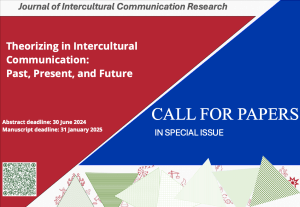
This special issue offers a platform to discuss theories that have shaped the field of intercultural communication and consider how they may need to be adapted to reflect major contemporary issues. Authors are invited to submit original manuscripts that focus on the development of intercultural communication theorizing that contribute to our understanding of individual-level and societal-level phenomena at the international, intercultural, or cross-cultural level. The editors encourage manuscripts from a wide range of scholarly areas and welcome all methodological approaches. Both empirical research reports and theoretical or conceptual essays are welcomed. In addition to an emphasis on methodological pluralism, they encourage submissions that reflect global, underrepresented, and/or marginalized experiences.
Aiming to create two-way relations with the context in which it takes place – the island of Zlarin – the Summer School programme is designed to address issues that we consider crucial for their sustainability: community building and engagement, tourism and its adjustments to the needs of the local communities and, finally, care as an organising principle intertwining all the elements necessary for the growth and well-being of the community.
Organizers invite students, scholars, cultural and creative practitioners, cultural professionals and activists who work with and within smaller communities, in rural and non-urban areas worldwide, to join in! The working language of the Summer School will be English.
The Summer School is organised by IN SITU partners Kultura Nova Foundation in cooperation with the Centre for Social Studies of the University of Coimbra and the IN SITU Consortium.
Special issue editors:
Kristof Savski (Prince of Songkla University, Thailand)
Ana Tankosić and Eldin Milak (Curtin University, Australia)
In this special issue, editors propose to collect examples of scholarship on the post-Yugoslav space, a geographic area in which the study of translingual practice (Canagarajah, 2012) demands an approach sensitive to events in the recent past. By ‘post-Yugoslav space’, they refer to the territories formerly part of Kingdom of Yugoslavia (1918-1941) and to the Socialist Federal
Republic of Yugoslavia (1945-1991), as well as cross-border areas in which the languages associated with this region are spoken – among others, these include Albanian, Bosnian, Croatian, German, Hungarian, Italian, Macedonian, Montenegrin, Romani, Serbian and Slovene. A key challenge to the study of translingualism in this space is that it must account for the existence of numerous linguistic continua, including the well-documented Bosnian-Croatian-Serbian-Montenegrin continuum as well as those found in minoritized regions (e.g., Slovene-Croatian-Italian in Istria). In these continua, borders imposed by historic political processes exist in continuous tension with different forms and levels of mutual intelligibility, facilitated by linguistic similarity and ongoing cultural contact, but often obstructed by antagonistic narratives of belonging.
The research project Sociolinguistic Barriers and Potentials among Second Language Learners in Danish Social and Healthcare Education explores social and linguistic barriers and potentials among second language learners in Danish social and healthcare education (‘SOSU-hjælperuddannelsen’ and ‘SOSU-assistentuddannelsen’), an educational field which has attracted increasing political attention due to a drastic projected shortfall in healthcare personnel in coming years and high dropout rates. More than 30% of SOSU students are assumed to have Danish as a second language, representing more than 109 different nationalities and a vast array of linguistic repertoires.
The project focuses on the linguistic practices of students with Danish as a second language, the linguistic barriers and demands associated with different parts of their healthcare training, and how students respond to these barriers and demands in everyday interaction, drawing on linguistic and sociocultural registers of healthcare, education and care. The SOSU programme includes a variety of educational arenas for linguistic minority students, including healthcare training, language lessons and internships across nursing homes, hospital wards and private homes, where students are expected to interact with teachers, supervisors and co-students along with patients, elderly citizens, relatives and various kinds of healthcare personnel. An in-depth linguistic-ethnographic approach is applied, including extensive digital sound recordings, qualitative interviews and participant observation, to explore students’ linguistic practices, barriers and potentials, along with the various linguistic skills and sociocultural registers associated with becoming a ‘good SOSU worker’ across different institutional arenas.
I spent about three months between January and April 2024 traveling in several countries in Asia, including Singapore, Malaysia, Cambodia, Vietnam, China, Hong Kong, and Taiwan.
While the trip entailed a field research project about the use of visual media as a form of multicultural communication in Southeast Asia, I took advantage of the occasion to explore many local cultures or heritages in the vast region. For example, I visited some UNESCO World Heritage sites, such as Angkor Wat in Cambodia, the Singapore Botanic Gardens in Singapore, George Town in Malaysia, and Hoi An Ancient Town in Vietnam.
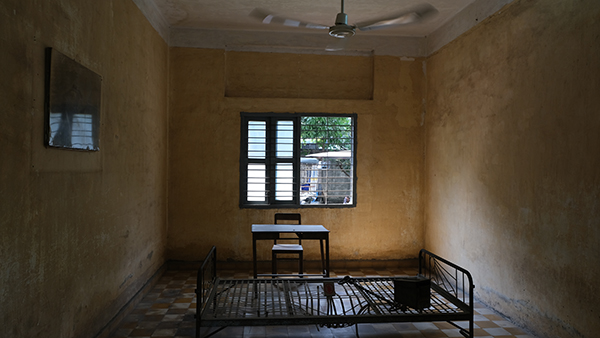
Some classrooms were repurposed as interrogation rooms at Tuol Sleng
But while the above heritage sites and many other such cultural resources were truly very remarkable, my visits of the Tuol Sleng Prison and the Choeung Ek Genocidal Center in Phnom Penh, Cambodia, have left a long-lasting impression on me. Both sites, and many other sites such as these that have been collectively called the Killing Fields, came from an extremely dark and bloody history that was the genocide (with up to three million people murdered) committed by the Khmer Rouge government under Pol Pot between 1976 and 1978.
I have read about the Cambodian genocide by the Pol Pot regime in media reports through the years since college, although I have never seen the 1984 British film The Killing Fields. But none of what I have read about this tragic history could have prepared me for the shock and sadness I experienced during my visits there.
Tuol Sleng, or S-21 Prison, was one of about 189 interrogation (read torture) centers during those tumultuous years under Pol Pot’s Khmer Rouge regime. It was inaugurated on April 17, 1980, as a memorial museum and has been open to the public since. According to the United States Holocaust Memorial Museum, “Between 14,000 and 17,000 prisoners were detained there, often in primitive brick cells built in former classrooms. Only 12 prisoners are believed to have survived.”
Located approximately 11 miles south of Phnom Penh’s city center, the Choeung Ek Genocidal Center is perhaps the most well-known among about 300 Killing Fields. Tuol Sleng was directly tied to the Choeung Ek site in that (“confessed”) prisoners from S-21 were sent to Choeung Ek for their summary execution. Close to 9,000 bodies were exhumed from the mass graves after they were initially discovered. When I was there, sections of the open-air fields were still cordoned off to prevent visitors from accidentally disturbing any human remains that were still buried there. Perhaps one of the most iconic symbols of Choeung Ek is the Buddhist stupa, which houses more than 5,000 human skulls that are encased behind acrylic glass.
My attendance at the various exhibits in both the Tuol Sleng and the Choeung Ek sites was nothing short of being surreal and, at times, bone-chilling. One of the most unforgettable parts of the visits has been our close proximity to the objects being on display. For example, in Tuol Sleng, which was housed in a repurposed school, we were standing right in front of the bed in the middle of several of the former classrooms where the prisoners were tied and tortured for their confession. In the extremely tight space inside the Buddhist stupa at Choeung Ek, we were literally inches away from the human skulls on display. I overheard a fellow traveler who refused to go inside the stupa precisely because they felt uncomfortable getting so close to the skulls.
Indeed, the visit to Tuol Sleng and Choeung Ek was by no means a positively pleasant experience, regardless of how educational it may have been. It certainly reminded me of my visit to Auschwitz I and Auschwitz II-Birkenau outside of Krakow, Poland, in 2018. In both cases, I walked away with more questions than I had answers. What can and should we learn from these dark and tragic histories?
Casey Man Kong Lum, Associate Director
Center for Intercultural Dialogue
Under the overall authority of the Assistant Director-General for Social and Human Sciences Sector (ADG/SHS), strategic guidance from the Director for Research, Ethics and Inclusion and direct supervision of the Chief of Inclusion, Rights, and Intercultural Dialogue Section, the Programme Specialist is responsible for analyzing, implementing and monitoring projects and activities within the inclusion, rights and intercultural dialogue Section, leading work to promote dialogue for social cohesion, resilience, accountability, civic empowerment and conflict transformation; and contributing to work to enhance social and gender inclusion through the empowerment of vulnerable and marginalised communities and the fight against racism and discrimination.
The incumbent, working within the frameworks of UNESCO’s Medium Term Strategy (C/4), the approved Programme and Budget (C/5) and global development plans such as the 2030 Agenda for Sustainable Development, will guide the technical development of sectional, cross-sectional and divisional projects and activities, financed by core and voluntary funding; provide recommendations on project feasibility and possible collaborations; engage with substantive developments in relevant technical fields; and manage relationships with key internal and external stakeholders to provide expert technical advice.
The Department of Languages, Cultures & Film wishes to appoint to a fixed-term Lectureship (Teaching and Scholarship) in World Cinema to provide cover for a colleague on a Leverhulme Fellowship. The successful candidate will be a key member of the Film Studies team, working with colleagues to maintain and enhance a thriving undergraduate programme, which has experienced significant growth and over recent years, and to help develop and deliver a new MA in Film Studies.
Applicants should have a PhD in Film Studies or a relevant related discipline and provide clear evidence of teaching experience in World Cinema (understood broadly, i.e. encompassing streaming and other platforms). Candidates should also be able to demonstrate sensitivity to diverse cultural contexts; a focus on transnational and intercultural approaches to Film Studies is what makes our degree programme in Liverpool unique and attractive, and the department actively encourages comparative, global, transnational, and transcultural approaches. Active engagement with scholarship in the field of Film Studies and/or World Cinema is expected, as is the demonstration of leadership in high-quality teaching innovations. The post is available from 1 September 2024 until 31 August 2025 working on a 0.9fte basis.
ReDICo stands for Researching Digital Interculturality Co-operatively. They have just sent a note to share:
“Finally our Hub on Digital Interculturality is ready! Here you will find resources, calls, job and collaboration opportunities and publications. Our aim with this Hub is to provide a non-commercial space in which individuals, who are passionate about research and praxis in relation to digital interculturality, can come together to share and to forge meaningful collaborations that transcend geographical boundaries. It would be great if you could take just a few minutes of your time to create a profile, free of charge, on our Hub here. By doing so, you’ll be contributing to the growth of our community.
You know, beginnings are always hard! As part of your profile setup, we encourage you to include your Zip Code if you wish to appear on the platform’s World map. This will allow others to locate and connect with you based on your location. Thank you for considering our invitation. We look forward to welcoming you to our growing community!”
The Martin Institute and Program in International Studies, and the Idaho Society of Fellows, are now accepting applications for a two-year postdoctoral fellowship in International Relations to begin July 1, 2024. Fellows will pursue their own research and teach one course per semester. The unit is particularly interested in recruiting candidates whose work complements existing unit initiatives in area studies, international organizations, conflict/peace, and/or human rights.

 This special issue offers a platform to discuss theories that have shaped the field of intercultural communication and consider how they may need to be adapted to reflect major contemporary issues. Authors are invited to submit original manuscripts that focus on the development of intercultural communication theorizing that contribute to our understanding of individual-level and societal-level phenomena at the international, intercultural, or cross-cultural level. The editors encourage manuscripts from a wide range of scholarly areas and welcome all methodological approaches. Both empirical research reports and theoretical or conceptual essays are welcomed. In addition to an emphasis on methodological pluralism, they encourage submissions that reflect global, underrepresented, and/or marginalized experiences.

 Center for Intercultural Dialogue