

Daniel Mateo Ordóñez is a Sociologist from the National University of Colombia, Bogotá, Colombia.
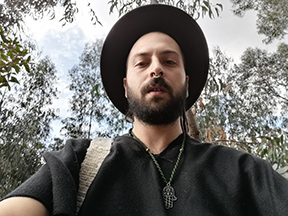
The research areas in which he is interested are: Interculturality, Intercultural Dialogue, Hermeneutics, Hermeneutical Cultural Analysis, Phenomenology, Discrimination, Social Exclusion, Human Rights, and Culture.
He is an independent translator, investigator and author, as well as a volunteer collaborator with the UNESCO Chair in Intercultural Dialogue / Cátedra UNESCO – Diálogo Intercultural at the National University of Colombia, and a member of the “Observatorio de la Exclusión” project associated with the UNESCO Chair.
He is also the creator of the Autarkeia Project, an independent project of dissemination and promotion of knowledge, especially in the area of Human and Social Sciences.
See his profile on academia.edu.
Work for CID:
Daniel Mateo Ordóñez wrote KC101: Antisemitism, and translated it into Spanish; he also translated concepts originally written by others, specifically KC14: Dialogue, KC16: Migration, KC23: Afrocentricity, KC31: Indigenous, KC49: Intersectionality, KC89: Xenophobia, KC90: Islamophobia, and an essay on intercultural dialogue into Spanish. He also has served as a reviewer for Spanish.
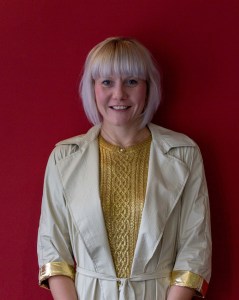 Dr. Faust has worked for University of Leipzig, University of Technology Chemnitz, Stockholm University, University of Applied Sciences Mittweida, the Micro Census in Saxony, and the European Institute for Journalism and Communication Research.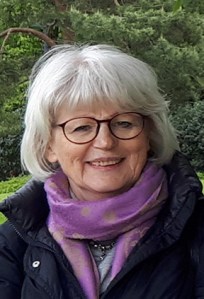
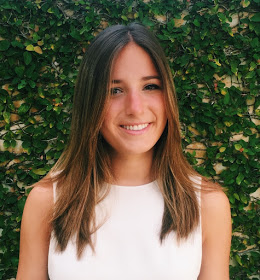
 Born in Turkey, she immigrated to the USA in 1998. She studied English and German as part of her school curriculum in Turkey, and she enjoys translating between the languages of Turkish, German and English. In her current job, she helps software engineers accomplish their goals via Agile methodologies. She currently lives in New York City and appreciates the immense diversity the city has to offer. Her other interests include traveling the world and discovering good Plant Based food wherever she goes. She is happy to be a part of CID’s research community and hopes that through such exchange, the world will learn to become one and appreciate our differences as well as our similarities.
 Center for Intercultural Dialogue