Calouste Gulbenkian Prize

Calouste Gulbenkian’s long path, from his childhood in Istanbul to the latter years of his life in Lisbon, shaped his personality and influenced the Foundation that he decided to create in Portugal as a Portuguese institution.

A pioneer in the oil industry, a demanding art collector, a diplomat and philanthropist, Calouste Gulbenkian was a perfect example of the synthesis of the eastern culture of his birth and origins, and the western culture in which he was educated and lived. Other revealing features of his character were his great sensitivity towards the harmony of nature and a particular taste for admiring its beauty.

Naturally, the Calouste Gulbenkian Foundation’s activities reflect these characteristics of the founder’s personality and aim to support efforts to foster the universal values inherent to the human condition, respect for diversity and difference, a culture of tolerance and the conservation of the environment in man’s relationship with nature.

The Calouste Gulbenkian Prize will distinguish an individual or institution whose thoughts or actions make a decisive contribution to, and have significant impact on understanding, defending or fostering the universal values of the human condition: namely, the respect for diversity and difference, a culture of tolerance and the conservation of the environment in man’s relationship with nature.

The Prize of €250.000 (two hundred and fifty thousand euros) is awarded annually.

Nominations
1. Fully-grounded nominations will be presented by third parties.
2. Nominations will be submitted exclusively on-line, between 15 February and 15 May, for the respective year, via the Calouste Gulbenkian Foundation website and completed according to the instructions indicated.
3. In addition to the documents presented with the nominations, the panel may request further information from nominees.
4. Each member of the panel may nominate up to three other candidates.
5. The Prize will be awarded at a ceremony on 20 July at the headquarters of the Calouste Gulbenkian Foundation.

The Prize is open to individuals or institutions, regardless of nationality.
The Prize cannot be awarded posthumously or to an institution that has ceased its activity.

Artistic and other Creative Practices as Drivers for Urban Resilience (Portugal)

Artistic and other Creative Practices as Drivers for Urban Resilience
September 5 to 7, 2016
Museu Municipal de Espinho, Portugal

Thematic area(s) of the course
Artistic and creative practices, urban resilience, urban sustainability

Course description
Urban sustainable development requires enhancing urban resilience. In this Summer School, we look at resilience as a space for translocal bottom-up learning, emerging artistic-cultural-ecological approaches or as a ‘Space of Possibilities’. Resilience for us is openness, possibility, emergence, creation, non-structuration, art, praxis, mutual learning and doing . . . It is not a 10-point governmental program to be implemented (e.g., early warning, knowledge transfer, etc.).

Several key characteristics of resilience (redundancy, diversity, learning modes, and self-organization) can potentially be fostered in urban neighborhoods through creative practices entangling natural and cultural resources and processes such as “ecological art” and “social practice” interventions, “urban gardening” projects, autonomous social-cultural centers fighting against gentrification, and artivist actions that question unsustainable city planning and societal behaviours. However, how far does the potential of such practices reach? When and how do they scale up to wider urban institutions as drivers of transformations, fostering systemic innovations? What limits and challenges do they encounter? How far do they foster urban resilience towards sustainability as a transformative search process of fundamental change, or are they coopted into neoliberal urban development? What recurrent processes and structures can be observed across different contexts? And how can we learn from these in order to support transformative processes?

The summer school, conceived as an extended workshop, will explore comparative insights across different urban initiatives and projects. We invite researchers, artists, and practitioners to address together several sets of questions and reflect on their empirical research, previous project experiences, and expertise from different cities. Insights emerging from the workshop will inform, and be informed by, the ongoing international comparative research project/network “Culturizing Sustainable Cities: Catalyzing translocal learning and advancement of emerging artistic-cultural environmental approaches”, initiated by the Center for Social Studies at the University of Coimbra, Portugal, and the transdisciplinary research project “The City as Space of Possibility” at Leuphana University Lüneburg, Germany. In addition, insights from the summer school will be disseminated through Cultura21, an international network of cultural practitioners, researchers, and others (e.g., cultural policymakers) who are focused on advancing cultures of sustainability.

Participants
Researchers (multidisciplinary), graduate students and post-docs, artists, and practitioners working with community-based artistic and sustainability/resilience initiatives

During the pre-registration process, applicants are asked to submit [HERE] a brief statement on the relevant project(s)/initiative(s) with which they are involved, and why they want to attend the summer school. These statements will be reviewed as part of the participant selection process. Deadline: Sunday, May 1, 2016. All applicants will be notified of selection process results by Monday, May 16, 2016.

Researchers responsible
Nancy Duxbury (CES) and Sacha Kagan (Leuphana University Lüneburg)

Core Team
Nathalie Blanc, Le Centre national de la recherche scientifique (CNRS), France
Hans Dieleman, Universidad Autónoma de la Ciudad de México, Mexico; Cultura21
Nancy Duxbury, Centre for Social Studies, University of Coimbra
David Haley, Manchester Metropolitan University, England
Verena Holz, Leuphana University Lüneburg, Germany
Sacha Kagan, Leuphana University Lüneburg, Germany; ESA RN2; Cultura21

Registration
Earlybird rate (by May 31): € 150
Late rate from June 1: € 165
Fee includes: Summer School registration and materials | Welcome BBQ or dinner on Sept 5 | Lunch on Sept 6 and 7 | Breaks (5)
Accommodation and dinner on Sept. 6 at own cost.

Maximum number of registrations: 25 | Minimum number of registrations: 20

Getting to Espinho
Espinho can be easily reached by train from Porto – Campanhã station. Details of train schedules and prices.

Summer school organized by Centre for Social Studies (CES) at the University of Coimbra, in collaboration with the ESA (European Sociological Association) Research Network Sociology of the Arts and its 9th Midterm Conference being held in Porto September 8-10, 2016. The insights generated at the summer school will be shared in a workshop at the Midterm Conference.

Scientific projects relating to the course
“Culturizing Sustainable Cities: Catalyzing Translocal Learning and Advancement of emerging Artistic-cultural Environmental Approaches” – Nancy Duxbury, CES
“The City as Space of Possibility” – Volker Kirchberg, Ute Stoltenberg, Ursula Weisenfeld, and Sacha Kagan, Leuphana University Lüneburg, Germany

This is a self-funded, non-profit Summer School

Save

Nancy Duxbury Profile

ProfilesNancy Duxbury holds a doctorate in Communication from Simon Fraser University, Canada, specializing in cultural policy. Since 2009, she has been a Senior Researcher at the Centre for Social Studies, University of Coimbra, Portugal and, since 2010, Co-coordinator of its Cities, Cultures and Architecture Research Group.
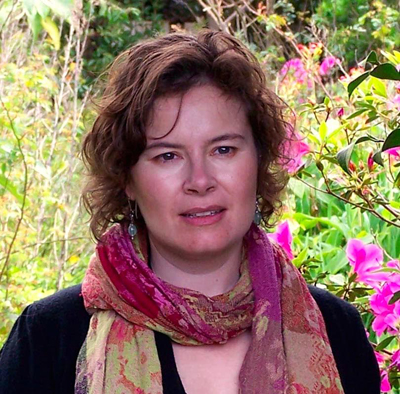
Nancy DuxburyHer research has examined the integration of culture in local sustainable development, with an emphasis on the policy and planning frameworks that enable this; culture-based development models in smaller communities; and the emerging interdisciplinary field of cultural mapping, which bridges insights from academic inquiry, community practice, and artistic approaches to understanding and articulating place. Building on these foundations, she is now the Principal Investigator for a major three-year research and demonstration project on creative tourism in Portugal, entitled “CREATOUR: Creative Tourism Destination Development in Small Cities and Rural Areas.” The project involves five Portuguese research centres and 40 pilots, and aims to link the cultural and tourism sectors within a context of inclusive and sustainable local and regional development. Her research is interdisciplinary in nature and her events and publications are designed as meeting places that bring together academic and practice-based knowledges, including artistic perspectives and approaches.

She is a member of the European Expert Network on Culture, and was Chair of the Policies working group of a European research network on “Investigating Cultural Sustainability” (2011-2015). She is also an Adjunct Professor of the School of Communication at Simon Fraser University, of the School of Urban and Regional Planning at University of Waterloo, and of the Department of Journalism, Communication, and New Media at  Thompson Rivers University, Canada. She was co-founder and Director of Research of the Creative City Network of Canada, and received a Cultural Leadership Award from the organization in 2017.

More information on her research and publications can be obtained from her academic homepage.

Selected publications

Books

Duxbury, N., Rahim, S., Silva, S., and Vinagre de Castro, T. (Eds.). (2024). Creative tourism, regenerative development, and destination resilience: Insights and reflections. Coimbra, Portugal: CREATOUR Observatory on Culture and Tourism for Local Development, Centre for Social Studies, University of Coimbra. ISBN: 978-989-8847-85-0..

Duxbury, N., & G. Richards (Eds.). (2019). A research agenda for creative tourism. Cheltenham, UK: Edward Elgar Publishing.

Duxbury, N., Garrett-Petts, W. F., & Longley, A. (Eds.). (2018). Artistic approaches to cultural mapping: Activating imaginaries and means of knowing. London: Routledge.

Kangas, A., N. Duxbury, & C. De Beukelaer (Eds.). (2018). Cultural policies for sustainable development. London: Routledge.

Duxbury, N., Garrett-Petts, W. F., & MacLennan, D. (Eds.). (2015). Cultural mapping as cultural inquiry. New York: Routledge.

Hristova, S., Dragićević Šešić, M., & Duxbury, M. (Eds.). (2015). Culture and sustainability in European cities: Imagining Europolis. London: Routledge.

Duxbury, N. (Ed.). (2013). Animation of public space through the arts: Toward more sustainable communities. Coimbra: Almedina.

Guest edited journal issues

Kangas, A., Duxbury, N., & De Beukelaer, C. (Eds.). (2017). Special issue: Cultural policies for sustainable development. International Journal of Cultural Policy, 23(1).

Duxbury, N., & Longley, A. (Eds.). (2016). Special issue: Cultural mapping: Making the intangible visible. City, Culture and Society, 7(1).

Duxbury, N., & Jeannotte, M. S. (Eds.). (2015). Special double issue: Cultural mapping in planning and development contextsCulture and Local Governance / Culture et Gouvernance Locale, 5(1-2).

Saper, C., & Duxbury, N. (Eds.). (2015). Special Issue: Mapping culture multimodally. HyperRhiz, 12.

Duxbury, N., Canto Moniz C., & Sgueo, G. (Eds.). (2013). Special Issue: Rethinking urban inclusion: Spaces, mobilisations, interventions. Cescontexto – Debates, 2.

Duxbury, N., Fortuna, C., Bandeirinha, J. A., & Peixoto, P. (Eds.). (2012). Special Issue: Em torno da cidade criativa (Beyond the creative city). Revista Crítica de Ciências Sociais, 99.

Duxbury, N., & Jeannotte, M. S. (Eds.). (2011). Special double issue: Culture and sustainable communitiesCulture and Local Governance / Culture et Gouvernance Locale, 3 (1-2).

Articles

Duxbury, N., Bakas, F. E. & Pato de Carvalho, C. (2019). Why is research–practice collaboration so challenging to achieve?: A creative tourism experiment. Tourism Geographies.

Bakas, F. E., Duxbury, N., & Vinagre de Castro, T. (2019). Creative tourism: Catalysing artisan entrepreneur networks in rural Portugal. International Journal of Entrepreneurial Behaviour and Research, 25(4), 731-752.

Bakas, F. E., & Duxbury, N. (2018). Development of rural areas and small cities through creative tourism: The CREATOUR project.Revista: Anais Brasileiros de Estudos Turísticos (ABET), 8(3) (Set./Dez.), pp. 74-84.

Kangas, A., Duxbury, N., & De Beukelaer, C. (2017). Introduction: Cultural policies for sustainable development. International Journal of Cultural Policy, 23(1).

Duxbury, N., Kangas, A., & De Beukelaer, C. (2017). Cultural policies for sustainable development: Four strategic paths. International Journal of Cultural Policy, 23(1).

Longley, A., & Duxbury, N. (2016). Introduction: Mapping cultural intangibles. City, Culture and Society, 7(1): 1-7.

Duxbury, N. (2015). Positioning cultural mapping in planning and development contexts: An introduction. Culture and Local Governance, 5(1-2): 1-7.

Jeannotte, M.S., & Duxbury, N. (2015). Advancing knowledge through grassroots experiments: Connecting culture and sustainability. Journal of Arts Management, Law and Society, 45(2), 84-99.

Duxbury, N., & Saper, C. (2015). Introduction: Mapping culture multimodally. HyperRhiz, 12.

Carvalho, C. P., & Duxbury, N. (2014). Artistic intervention projects and cultural memory: Experiences from Portugal’s centre region. Culture / Kultura: International Journal for Cultural Research, 4(8), 21-32.

Duxbury, N. (2014). Cultural governance in sustainable cities. Kult-ur: Interdisciplinary journal on the culture of the city, 1(1), 165-182. doi: http://dx.doi.org/10.6035/Kult-ur.2014.1.1.7.

Duxbury, N., & Jeannotte, M. S.. (2012). Including culture in sustainability: An assessment of Canada’s integrated community sustainability plans. International Journal of Urban Sustainable Development, 4(1), 1‑19. doi:10.1080/19463138.2012.670116

Book chapters

Duxbury, N. (2019). Thoughts on future directions: Art and culture in transformations toward greater sustainability. In V. Riccardi & V. Ferreira (Eds.), Creative responses to sustainability – Portugal green guide 2019 (pp. 9-14). Singapore: Asia-Europe Foundation (ASEF).

Duxbury, N., & Richards, G. (2019). Towards a research agenda for creative tourism: Developments, diversity, and dynamics. In N. Duxbury & G. Richards (Eds.), A research agenda for creative tourism (pp. 1–14). Cheltenham, UK: Edward Elgar Publishing.

Duxbury, N., & Richards, G. (2019). Towards a research agenda in creative tourism: A synthesis of suggested future research trajectories. In N. Duxbury & G. Richards (Eds.), A research agenda for creative tourism (pp. 182–192). Cheltenham, UK: Edward Elgar Publishing.

Duxbury, N., Garrett-Petts, W. F., & Longley, A. (2018). An introduction to the art of cultural mapping: Activating imaginaries and means of knowing. In N. Duxbury, W. F. Garrett-Petts & A. Longley (Eds.), Artistic approaches to cultural mapping: Activating imaginaries and means of knowing. London: Routledge.

Duxbury, N., Kangas, A., & De Beukelaer, C. (2018). Cultural policies for sustainable development: Four strategic paths. In A. Kangas, N. Duxbury & C. De Beukelaer (Eds.), Cultural policies for sustainable development. London: Routledge.

Kangas, A., Duxbury, N., & De Beukelaer, C. (2018). Introduction: Cultural policies for sustainable development. In A. Kangas, N. Duxbury, & C. De Beukelaer (Eds.), Cultural Policies for Sustainable Development. London: Routledge.

Ferreira, I., & Duxbury, N. (2017). Cultural projects, public participation, and small city sustainability. In K. Soini, S. Asikainen, K. Plebanzcyk, L. Rojac-Mijatovic, & C. Brites (Eds.), Perspectives for culture in sustainable futures: Theories, policies, practices. Jyväskylä, Finland: University of Jyväskylä.

Duxbury, N., Baltà, J., Hosagrahar, J., & Pascual, J. (2016). Culture in urban development policies: An agenda for local governments. In Culture: Urban future – Global report on culture for sustainable urban development (pp. 204-211). Paris: UNESCO.

Cardielos, J.P., Lobo, R., Peixoto, P., Mota, E., Duxbury, N., & Caiado, P. (2016). Mondego: o surdo murmúrio do rio. In P. Peixoto & J.P. Cardielos (Eds.), A Água como património: Experiéncias de requalificação das cidades com água e das paisagens fluviais (pp. 95-112). Coimbra: Impressa da Universidade de Coimbra (Coimbra University Press).

Duxbury, N., & Jeannotte, M. S. (2015). Making it real: Measures of culture in local sustainability planning and implementation. In L. MacDowall, M. Badham, E. Blomkamp, and K. Dunphy (Eds.), Making culture count: The politics of cultural measurement. Hampshire, UK: Palgrave Macmillan.

Duxbury, N., Garrett-Petts, W. F., & MacLennan, D. (2015). Cultural mapping as cultural inquiry: Introduction to an emerging field of practice. In N. Duxbury, W.F. Garrett-Petts & D. MacLennan (Eds.), Cultural mapping as cultural inquiry (pp. 1-42). New York: Routledge.

Duxbury, N. (2015). European cities as cultural projects: Where is culture in urban sustainability policy? In S. Hristova, M. Dragićević Šešić & N. Duxbury (Eds.), Culture and sustainability in European cities: Imagining Europolis (pp. 69-85). London: Routledge.

Duxbury, N., & Jeannotte, M. S. (2013). Global cultural governance policy. In G. Young & D. Stevenson (Eds.), The Ashgate research companion to planning and culture (pp. 361-376). London: Ashgate.

Duxbury, N., Cullen, C., & Pascual, J. (2012). Cities, culture and sustainable development. In H.K. Anheier, Y.R. Isar & M. Hoelscher (Eds.), Cities, cultural policy and governance (pp. 73-86). London: Sage.

Nelson, R., Duxbury, N., & Murray, C. (2012). Cultural and creative economy strategies for community transformation: Four approaches. In J. Parkins & M. Reed (Eds.), The social transformation of rural Canada: New insights into community, culture and citizenship (pp. 368-386). Vancouver: University of British Columbia Press.

Duxbury, N. (2011). Shifting strategies and contexts for culture in small city planning: Interlinking quality of life, economic development, downtown vitality, and community sustainability. In A. Lorentzen & B. van Heur (Eds.), Cultural political economy of small cities (pp. 161-178). London: Routledge.

Duxbury, N., & Murray, C. (2010). Creative spaces. In H.K. Anheier, Y.R. Isar & C. Waterman (Eds.), Cultural expression, creativity and innovation. London: Sage.


Work for CID:

Nancy Duxbury wrote KC69: Cultural Mapping.

CFP Imagining Europe: Wars, Territories, Identities (Portugal)

Imagining Europe: Wars, Territories, Identities – Representations in Literature & the Arts
19-21 November 2015
an international conference hosted by the Faculty of Arts and Humanities
University of Porto, Portugal

Confirmed keynote speakers:
António Sousa Ribeiro (Univ. of Coimbra)
Donna Landry (Univ. of Kent)
Philip Shaw (Univ. of Leicester)

This conference is directly prompted by a commemoration: the bicentennial of the battle of Waterloo. It is a commonplace to state that the events of June 1815 proved a watershed in European history, redrawing the map of the continent and much of what came in its wake. We want to consider this, however, alongside other instances of conflict that have proved momentous in European history, including other ‘fifteens’ prior to Waterloo — e.g. Agincourt and Ceuta (1415), the 1st Jacobite rising (1715); and, crucially, the conference will focus on the imaginative consequences of such events, especially in literature and the arts.

In sum: the conference avails itself of a commemorative design to consider the consequences that a history of conflict(s) in Europe has had, within imaginative production, for an ongoing refashioning of perceived identities. We want to showcase and discuss the impact of such processes on literary and artistic representations, preferably from a comparatist perspective.

As indicated by the number in its title, this conference is the third in a series of academic events that reflect the ongoing concerns of the eponymous research group (Relational Forms), based at CETAPS (the Centre for English, Translation and Anglo-Portuguese Studies).

The organisers will welcome proposals for 20-minute papers in English responding to the above. Suggested (merely indicative) topics include:
– Europe, conflict and the imagination
– terrible beauties: European wars in literature and the arts
– rout and road: narratives of disaster and displacement
– poetry and battlefields, self and community
– reviewing the massacre: verbal and visual reenactments of war scenarios
– conflict, identity, translation: representations across media / across languages
– drama, war and Europe: ‘a nation thinking in public…’
– shooting Europe: film, war and memory

Submissions should be sent by email.

Please include the following information with your proposal:
– the full title of your paper;
– a 250-300 word description of your paper;
– your name, postal address and e-mail address;
– your institutional affiliation and position;
– a short bionote;
– AV requirements (if any).

Deadline for proposals: 15 July 2015
Notification of acceptance: 31 July 2015
Deadline for registration: 15 October 2015

Registration Fee: 80 Euros
Student fee: 65 Euros
Registration details will be posted online in September 2015.

All delegates are responsible for their own travel arrangements and accommodation. Relevant information will be provided later on the conference website.

Organised by the Relational Forms research group

Local Executive Committee:
Rui Carvalho Homem
Jorge Bastos da Silva
Miguel Ramalhete Gomes
Márcia Lemos

For further queries please contact:
CETAPS — Centre for English, Translation and Anglo-Portuguese Studies
Faculdade de Letras da Universidade do Porto
Via Panorâmica, s/n
4150-564 PORTO
PORTUGAL

CFP LusoFrance: Cultural Productions by and about the Portugues and Lusodescendants in France

CALL FOR ARTICLES
For a special issue of The InterDISCIPLINARY Journal of Portuguese Diaspora Studies
“LusoFrance: Cultural Productions by and about the Portuguese and Lusodescendants in France”

Since the nineties, the Portuguese in France can no longer be considered an invisible minority (Albano Cordeiro, Jean-Baptiste Pingault). Although they have long been the focus of scholarly inquiry in sociology (e.g. Michel Oriol, Maria Do Ceu Cunha, Maria Beatriz Rocha Trindade, Albano Cordeiro, Christine Volovitch-Tavares, Irène dos Santos, Jorge de la Barre, Manuel Antunes da Cunha, Maria Baganha, etc.), political science, history (e.g. Victor Pereira, Cristina Clímaco) and linguistics (e.g. Michele Koven, Roselyne de Villanova), their cultural productions have remained understudied.

In order to explore the diversity of cultural productions of “Luso-France,” we wish to expand the field of cultural studies on the Portuguese diaspora in France in this special issue. To date, scholarship in this emerging area of inquiry has addressed literature (Ana Paula Coutinho, Isabelle Marques, Marie Isabelle Vieira, Martine F. Wagner), immigrant life stories (Elsa Lechner), film and documentary (José Cardoso Marques, João Sousa Cardoso), poetry (Dominique Stoenesco), drama (Graça dos Santos), the graphic novel (Michael Gott), and humor (Michèle Koven and Isabelle Marques). We seek papers that expand on this approach, welcoming work that explores how the cultural productions of the Portuguese in France can illuminate contemporary debates in Francophone, postcolonial and migration studies, and more specifically on issues related to national, transnational, diasporic, and ethnic identities, gender and sexuality, travel writing, (post)memory, history, and trauma. We invite original contributions with a multidisciplinary approach on the diverse genres of Portuguese and lusodescendants’ cultural productions in France (literature, migrant and life writing, film, poetry, theater, comics and graphic novels, humor, multimedia, music).

Unpublished and original papers in Portuguese, Spanish, English or French are welcome. Possible areas for consideration include, but are not limited to:
– Memories of o salto, clandestinity, border crossings, travel writing
– Exile, nostalgia, saudade
– Working lives of immigrants, labor bodies, disability
– Political engagement, écriture engagée, writing politics
– Representations of identity, hybridity, transnationalism, sexuality, LGBT
– Transgenerational memories, postmemory of the dictatorship and Portugal’s Salazar
– The Portuguese and lusodescendants in history, national, regional or local French history
– The status of women, women writing, gender
– The myth of return, return narrations, road movies
– Languages, dialects, multilingualism, lyrics, music, humor
– Images of the Portuguese in comics, photographic, film, digital representations

Submissions: All articles will be double-blind peer refereed. An invitation to submit a paper to the special issue in no way guarantees that the paper will be published; this is dependent on the review process. Prospective contributors should email all inquiries and submissions to the issue editors, Martine F. Wagner and Michèle Koven. Please send an abstract (400-500 words) with a bio-paragraph by June 30, 2015. Articles will be due by December 1, 2015.

Details: Manuscripts must be submitted electronically as word documents. When submitting your paper, please use the following checklist to match your submission with the editorial guidelines: 1. On a separate page, please include the following author’s information: name, address, and email address, professional affiliation, biographical note (maximum 150 words) 2. Title of the paper 3. Abstract (400-500 words), and Keywords (5-7 maximum, separated by commas) 4. Research Paper: a) Length: 20-25 pages maximum. This length includes only the text of the article and not the abstract, references, notes and appendices. b) Paper should conform to the MLA preparation guidelines for punctuation, spelling, capitalization, italics, abbreviations, headings, subheadings, quotations, numbers, tables, figures, citations, and references. c) Papers should use: double-spaced text – 12-point standard font -(Times, Times Roman)- 1 inch (2,54cm) margins (i.e., top, bottom, left, right) – italics, as needed, but no underlining – page numbers, in the upper right corner of the page header; – section headers, as needed- endnotes – any acknowledgements of persons, institutions, or granting agencies should be brief. – tables, figures and other artwork: Number tables, figures or illustrations consecutively throughout the text. Each should include a title. All labels on figures and illustrations must be typeset. Images must be accompanied with proof of copyright permission.

CFP Discourses and Societies on the Move (Portugal)

Call for proposals
2nd International EDiSo Symposium: Discourses and Societies on the Move
Coimbra, Portugal, 18-20 June 2015

The call for papers for the different  work sessions in the  2nd International EDiSo  Symposium is now open. You are invited to send your individual proposals for the different thematic panels,  independent proposals, proposals for participation in  data analysis workshops, or for  poster presentations. If you belong to a research group, you can still participate in our roundtables for research groups.

Please note! The language used to describe each session does not condition the language used in the presentations. We accept proposals in any EDiSo language.

Papers in Thematic Panels [“Painéis Temáticos” , PT]: Designed for senior or junior researchers interested in presenting their research outcomes and exchanging ideas with colleagues who hold similar interests. These proposals will need to specify the panel they would like to be included in.  Please select your panel here.

Individual Papers [“Comunicações Livres” , CL]: Designed for senior or junior researchers interested in presenting their research outcomes. If you consider that your research does not fit into any of the thematic panels proposed, you may still present your work as an individual paper.

Participation in Data Analysis Workshops [“Oficinas de Análise de Dados” , OAD]: Designed mainly for junior researchers or those with research in progress who wish to participate in practical sessions about research methodology and to obtain feedback on their work.  Please select your data analysis workshop here.

Posters: Designed for sharing research results, research in progress, or studies in the early stages that could benefit from open discussion with other researchers. More information here.

Roundtables for research groups: following the conversation started at the  1st EDiSo Symposium in Seville (2014), the goal is basically to present and discuss research perspectives, share tasks, viewpoints… with the goal of creating synergies and opportunities for collaboration.  Please take a look at the roundtable topics here.

The deadline for proposal submissions is March 15th 2015.

EDiSo has a small budget available to  partially cover some travel and lodging costs. If you are a graduate student and have not secured funding from other sources, please specify this in your registration form, and please include in your email a statement indicating that you would like to be considered for this grant, which will be awarded through a lottery process. This information will not affect the evaluation of your proposal.

Information on the submission of proposals here.

For further details, send an email to the organizers.

Michele Koven Profile

ProfilesMichele Koven is Professor in the Department of Communication at the University of Illinois at Urbana-Champaign, with courtesy appointments in the Departments of Anthropology. French, Global Studies, and the Center for Writing Studies.

Michele Koven

Using ethnographic and discourse analytic approaches, her research interests include how people enact, infer, and evaluate images of social types in interaction. She is particularly interested in people’s interpretations and experiences of their own and others’ « identities » in multilingual contexts She has most extensively addressed these issues through the prism of oral storytelling among young people of Portuguese origin, raised in France. More recently, she has begun exploring these issues in social media.

Publications

Marques, I. S., & Koven, M. E. J. (2017). “We are going to our Portuguese homeland!”: French Luso-descendants’ diasporic Facebook conarrations of vacation return trips to Portugal. Narrative Inquiry27(2), 286-310.

Koven, M. E. J. (2016). Essentialization strategies in the storytellings of young Luso-descendant women in France: Narrative calibration, voicing, and scale. Language and Communication46, 19-29.

Jaffe, A., Koven, M. E. J., Perrino, S., & Vigouroux, C. (2015). Heteroglossia, performance, power, and participation. Language in Society, 44(2) , 135-139.

Koven, M. E. J., & Simões Marques, I. (2015). Performing and evaluating (non)modernities of Portuguese migrant figures on YouTube: The case of Antonio de Carglouch. Language in Society 44(2), 213-242.

Koven, M. E. J. (2014). Interviewing: Practice, ideology, genre, and intertextuality. Annual Review of Anthropology43, 499-520.

Koven, M. (2013). Antiracist, modern selves and racist, unmodern others: Chronotopes of modernity in Luso-descendants’ race talk. Language and Communication. 33(4), 544-558.

Koven, M. (2013). Speaking French in Portugal: An analysis of contested models of emigrant personhood in narratives about return migration and language use. Journal of Sociolinguistics, 17(3), 324-354.

Koven, M. (2007). Selves in two languages: Bilingual verbal enactments of identity in French and Portuguese. Amsterdam: John Benjamins.

Koven, M. (2004). Transnational perspectives on sociolinguistic capital among Luso-descendants in France and Portugal. American Ethnologist, 31(2), 270-290.


Work for CID:
Michele Koven wrote KC72: Intertextuality and translated it into French; she has also served as a reviewer of French translations.

CFP World Peace Day e-conference

Call for Papers
Multidisciplinary International e-Conference dedicated to World Peace Day

All accepted papers will be published as a special publication with a unique ISBN number. The authors will be also sent a printed copy of the publication after the conference finishes. The papers will be also published in a special edition of European Scientific Journal. The authors of all the accepted papers on the conference will be given the opportunity to present them online. However the authors of the accepted papers are not obliged to present their works. Supporting the concept of interdisciplinarity, we welcome submissions in all academic fields.

SUBMISSION DEADLINE : 10th September 2014

Organizers: European Scientific Institute, ESI (affiliated institution with the UN Academic Impact) and Center for Law and Economic Studies, University of the Azores (Universidade dos Açores), Portugal. For submissions or any other information please send an email to the conference organizers.

Save

CFP Mapping culture conference Coimbra 2014

INTERNATIONAL CONFERENCE
Mapping Culture: Communities, Sites and Stories
May 28-30, 2014
Coimbra, Portugal

CALL FOR PROPOSALS
The Centre for Social Studies (Centro de Estudos Sociais – CES), a State Associate Laboratory at the University of Coimbra in Portugal, is calling for the submission of papers and panel/workshop proposals from academics, researchers, public administrators, architects, planners and artists for an international conference and symposium. The CES is committed to questions of public interest, including those involving relationships between scientific knowledge and citizens’ participation.

UPDATE: January 25, 2014: The Conference Website and Proposal Submission form are now live.

Cultural Mapping – A general definition:
Cultural mapping involves a community identifying and documenting local cultural resources. Through this research cultural elements are recorded – the tangibles like galleries, craft industries, distinctive landmarks, local events and industries, as well as the intangibles like memories, personal histories, attitudes and values. After researching the elements that make a community unique, cultural mapping involves initiating a range of community activities or projects, to record, conserve and use these elements. …The most fundamental goal of cultural mapping is to help communities recognize, celebrate, and support cultural diversity for economic, social and regional development.

Clark, Sutherland and Young

An emerging interdisciplinary field
Cultural mapping reflects the spatial turn taken in many related areas of research, including cultural and artistic studies, architecture and urban design, geography, sociology, cultural policy and planning. Traditional approaches to cultural mapping emphasize the centrality of community engagement, and the process of mapping often reveals many unexpected resources and builds new cross-community connections. Internationally, cultural mapping has come to be closely associated with professional cultural planning practices, but its recent adoption within a variety of disciplinary areas means that ‘traditional’ approaches are being re-thought and expanded, with cultural mapping practices adopting new methodologies, perspectives and objectives as they evolve.

This event is intended to explore both conventional and alternative approaches to mapping cultures and communities in an international context. Presenters will discuss and illustrate innovative ways to encourage artistic intervention and public participation in cultural mapping.

They will also address the challenges posed by such artistic practices and community involvement in various phases of the research process, from gathering and interpreting data to modes of presenting ‘findings’ to interest groups from different sectors – the local public as well as specialists in the arts, research, public administration and planning.

Two key dimensions of current research with implications for artistic, architectural and planning practices are:
(a)   the participatory and community engagement aspect, especially in the context of accessible mobile digital technologies; and
(b)   mapping the intangibilities of a place (e.g., stories, histories, etc.) that provide a “sense of place” and identity to specific locales, and the ways in which those meanings and values may be grounded in embodied experiences.
These two aspects will be highlighted in the conference presentations and symposium workshops, bridging interests of both researchers and practitioners.

EVENT COMPONENTS
*Keynote lectures
*Plenary panel sessions with discussions among researchers, artists/creators, and local planners/municipal representatives
*Interactive workshop sessions (Symposium)
*Associated artistic presentations to complement event themes

KEY THEMES
*Cultural mapping as an agent of community engagement
*Cultural mapping as a tool of local policy development
*Cultural mapping processes and methodologies
*Multimedia mapping tools – recording interpretations and cultural uses of public space
*Artistic approaches to cultural mapping
*The artist-researcher in interdisciplinary inquiry
*Understanding architecture and urban space through mapping

Sub-Themes:
Particular panel sessions can be organized for sub-themes such as:
*’Making visible’ eco-cultural knowledge and practices through mapping
*Political underpinnings of cultural mapping – Lessons and corrections
*Mapping as activist art

Symposium – Linking research and practice:
Collaborative research with communities can help us better understand its role in their cultural and social development. But how to create or recreate such an experience? The Symposium elements will address how multidisciplinary research perspectives can be applied to local development practice. Workshops will be used to explore the possible contributions of cultural mapping approaches to different communities at a local level, and the role for academia.
*What type of ‘cultural map’ is required, and what methodological tools have proven to be valuable?
*How can academic knowledge be effectively applied to solving issues at the community level?
*How much of this information is more than what we see, that is, ‘cultural mapping’ for the intangible or unseen?

CALL FOR PROPOSALS
We invite proposals for individual paper/project presentations, thematic panel sessions and workshops. The primary language of the event will be English, but proposals for presentations in Portuguese are also welcome. (We will try to arrange for ‘informal’ translation support for Portuguese-language sessions, as possible.)

SUBMITTING A PROPOSAL (online at the CES website)
Required information:
*Name of primary author
*Email of primary author
*Names of other authors (if applicable)
*Position/title of primary author
*Organization/institution
*Department
*City
*Country
*Is this presentation part of a proposed panel? Y/N
*If yes, title of panel
*Title of presentation
*Abstract (250 words)
*Key theme(s) of presentation (from the list of themes above)
*Brief bio of presenter(s), including position/role of each (e.g., researcher, professor, architect, doctoral student, artist, town planner, etc.) (max. 250 words)

Panel Proposals:
If you are proposing a panel, please submit the proposed paper of each panel participant separately, using the submission form, to provide full information for each paper and participant. Be sure to enter the title of the proposed panel in the assigned field.

Abstracts will be published in the conference program in English and Portuguese.

Full Papers:
Selected papers will be compiled and posted online (in a password protected folder), and all conference registrants will receive an email with the URL and password for access prior to the conference.

We are planning to publish selected papers in a journal, following the conference.

TIMELINE
Launch – Conference website, online submission form at www.ces.uc.pt – January 15, 2014
Submission Deadline – using online submission formFebruary 14, 2014
Selection decisions communicated to authors – March 1, 2014
Early Registration closes – April 15, 2014
Completed Papers Deadline – via email – May 15, 2014
Conference Presentation in Coimbra – May 28-30, 2014

PROJECT PARTNERS and COLLABORATORS (so far):
*Centro de Estudos Sociais (CES) / Centre for Social Studies, University of Coimbra, Portugal
*Colégio das Artes, University of Coimbra
*The Social Sciences and Humanities Research Council of Canada
*Thompson Rivers University, Canada

QUESTIONS? Please contact Dr. Nancy Duxbury

REFERENCES
*Clark, Sutherland & Young (1995). Keynote speech, Cultural Mapping Symposium and Workshop, Australia.
*McLucas, Clifford (no date). There are ten things that I can say about these deep maps. Available: http://documents.stanford.edu/MichaelShanks/51.
*Scherf, Kathleen (2013), The Multiplicity of Place; or, Deep Contexts Require Deep Maps, with an Example. Paper presented at World Social Science Forum, October 13, 2013.
*Shanks, Michael; Pearson, Mike (2001), Theatre/Archaeology. New York: Routledge.
*Stewart, Sue (2007). Cultural Mapping Toolkit. Vancouver: 2010 Legacies Now and Creative City Network of Canada. Available: http://www.creativecity.ca/database/files/library/cultural_mapping_toolkit.pdf

Save

CFP ECREA’s European Communication conference

ECREA’s 5th European Communication Conference

The European Communication Research and Education Association (ECREA), in partnership with Lusofona University, will organise the 5th European Communication Conference (ECC). The Conference, due to take place in Lisbon from 12 to 15 November 2014, has chosen as its overarching theme, ‘Communication for Empowerment: Citizens, Markets, Innovations’. The organisers call for proposals in all fields of communication and media studies, but particularly invite conceptual, empirical, and methodological proposals on inter- and transcultural communication phenomena and/or on comparative research. that link the general conference theme, as developed below, to the fields pertinent to each ECREA section.

CFP: ‘Communication for Empowerment: Citizens, Markets, Innovations’

The ubiquitous presence of the media in contemporary society has led to the macro-institutions of society increasingly adapting themselves to (new) media logics , whereby there ceases to be a clear-cut separation between media and other social/cultural institutions. This situation begs for an analysis of how the fast-paced social and technological innovations of our media ecology alter various aspects of daily life, transforming national boundaries into transnational spaces, with resonance on markets and consumption. At the same time that the liberalization of content creation brought about by new media paves the way for innovations and the democratization of the creative economy through the production and distribution of user-generated content, we increasingly witness the prevalence of large economic groups in the design, control and filtering of information. Moreover, the interactive dimension of new technologies not only allows for the voluntary visibility of individuals and groups, but also acts as a means of disciplinary surveillance. As such, increasing cultural, economic and technological convergence implies the mastering of new literacies that allow for the use and critical understanding of both media form and media content. Reflection on the regulatory politics of the communication sector is thus paramount to facilitating both greater mobilization as well as political and cultural participation on the part of the common citizen in public space. Further, we should rethink the necessary balance between the public interest and the interests of the market, so as to ensure the promotion of citizenship, social capital and social inclusion.

Proposals for panels, individual papers and posters can be submitted to one of the 17 ECREA sections through the conference website from 1 December 2013 to 28 February 2014.

Abstracts should be written in English and contain a clear outline of the argument, the theoretical framework, and, where applicable, methodology and results. The preferred length of the individual abstracts is between 400 and 500 words (the maximum is 500 words).

Panel proposals, which should consist of five individual contributions, combine a panel abstract with five individual abstracts, each of which are between 400 and 500 words. Participants may submit more than one proposal, but only one paper or poster by the same first author will be accepted.

First authors can still be second (or third, etc.) author of other papers or posters, and can still act as chair or respondent of a panel.

All proposals should be submitted through the conference website from 1 December 2013 to 28 February 2014. Early submission is strongly encouraged. Please note that this submission deadline will not be extended.

Save