UNESCO Chair Conference: Exploring Intercultural Competences in an African Context (Morocco)

EventsExploring Intercultural Competences in an African Context. UNESCO Chair on Intercultural Competences, Rabat, Morocco, 29 Sept-2 Oct 2025. Deadline: 1 Sept 2025.

The UNESCO Chair on Intercultural Competences hosted by Stellenbosch University has organized a second international conference, with contributions from academics and researchers, professionals, practitioners, educators, innovators, leaders and organisations with an interest in the theme. ​

The specific sub themes are:

  • How do aspects of Intercultural Competence intersect, interact and influence climate action, gender equality, or peacebuilding?
  • The existence and use of intercultural practices in pre-colonial times.
  • Intercultural tools available to the practitioner (for example; Cultural diversity and ethics; Ethical encounters and interactions; Culturally responsive teaching; Collaborative Online International (intercultural) Learning (COIL); tools for understanding values across multi-cultural and multi-religious societies)​
  • African Youth Perspectives on Intercultural Competence​

Responding to the theme and sub-themes above, organizers look forward to the sharing of research, reflections, lived experiences and examples from practice in the form of Workshops, Parallel sessions, and Poster Presentations.

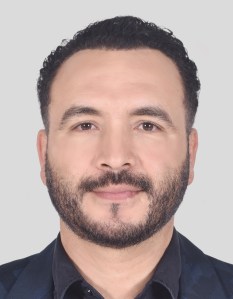
Abdeslam Badre Profile

Profiles

Abdeslam Badre is is a policy development expert, and associate professor at Mohammed V University in Rabat, Morocco.

Abdeslam Badre

His research seeks to analyze current norms that hamper the progress and livelihood of migrants, women, and youth as social groups. He aims to generate evidence-based recommendations to inform national and regional policies, and provide comparable data across borders for key countries in MENA and Southern Mediterranean regions, while addressing the causes of entrenched marginalization and socio-economic transformation. Badre has worked with/for a number of international organizations (including Fulbright, EU-JRC, ERASMUS+, InterAcademy Partnership (IAP), Konrad-Adenaeur Foundation (KAS), Global Young Academy (GYA), Next Einstein Forum (NEF), African Institute for Mathematical Sciences (AIMS), Institute for Cultural Diplomacy (ICD), ECSA Global, Arab Council for Social Sciences (ACSS), American Political Sciences Association (APSA), and EDU4U, among others, on various projects. He has also held visiting professor positions and research fellowships at Alfred University in New York, Monterey Institute for International Studies in California, University of North Carolina, all in the United States, as well as Aalborg University in Denmark, Institute for Cultural Diplomacy in Germany, and Babes Bolyai University in Romania. He is an Editor of the Social Science Section for Elsevier and the journal Scientific African.

Recent publications include North-South Economic Diplomacy: EU-Morocco Free Trade Negotiation (Germany, 2020); Enjeux Culturelles (Morocco, 2020); Voices of Early Career Researchers in and out of the Academy: A Pan- African Perspective (coauthored book, Germany, 2020). Currently, he is a coordinator of and author for the EuroMeSCo Joint Study Group 2021: Algeria, Morocco, Tunisia: A Comparative Perspective on Maghreb Countries Migration Cooperation with their West African Neighbours.


Work for CID:

Abdeslam Badre is part of an expert group organized by the Center.

Bridging Cultural Gap Between Morocco, Japan

Applied ICD

Kawano, G. (2021, April 25). Morocconia, Nipponia: Bridging cultural gap between Morocco, Japan. Morocco World News.

“The greatest strength I gained through this project is cultural awareness. I’m better equipped with skills to work in [a] multicultural environment.”

This article documents the ways in which Hafsa Rifki, of Morocco, who first became interested in Japanese anime, then began studying the Japanese language, and later Japanese culture, became part of a cultural circle of like-minded peers, which turned into the group Nipponia. Later she moved to Japan for a PhD in Media and Governance at Keio University. While in Japan, she developed a similar group of people interested in Morocco, named Morocconia. She now manages both groups.

Mohammed Guamguami Profile

ProfilesMohammed Guamguami is Associate Professor of English at Mohammed Premier University, Oujda, Morocco. He is also a current part-time teacher at ALC, American Language Center, Oujda.

Mohammed Guamguami

Prior to this, he was a full-time trainer at the CRMEF, teacher training center, Oujda. His doctorate is in Languages, Cultures and Communication (2015). His specializations are: English Language Teaching, Cross-Cultural Communication and Discourse Studies.

Mohammed has been a visiting scholar at several international universities: AUT, Beirut, Lebanon; DePaul University, Chicago, IL; State University of New York, NY; and IUPUI, Indianapolis, IN.

His major publications include:

Guamgaumi, M., et al. (In press). Rethinking knowledge, inquiry and learning in the big data age: Perspectives across disciplines.

Guamgaumi, M., Zeriouh, M. & Boujemâa, E. (Eds.). (2018). Culture, society and education: An interdisciplinary reader. London, UK: Dar El Maha.

Guamgaumi, M., Zeriouh, M., & Tizaoui, H. (Eds.). (2017). English for Specific Purposes: A reader. Egypt: Dar El Maha.

Guamgaumi, M., & Zeriouh, M. (2017). Moroccan cultural identity: Difference and belonging at a post-modern age. Egypt: Dar El Maha.

Guamgaumi, M. (2016). English hegemony on ICTs: Local linguistic, cultural and educational divide. Germany: Lambert.

Guamgaumi, M. (2015). Cross-cultural communication in foreign language discourse: Towards a pedagogy of culture teaching/learning in Moroccan EFL context. Germany: Lambert.


Work for CID:

Mohammed Guamguami wrote KC99: Translanguaging and translated it into French and ArabicKC100: Transcultural Communication and translated that into French and ArabicKC102: Inclusive Communication and translated that into French, and KC103: Geoculture. He is now translating earlier concepts into French; already published are KC1: Intercultural Dialogue, KC2:Cosmopolitanism, KC3: Intercultural CompetenceKC4: Coordinated Management of Meaning, KC5: Intercultural Communication, KC6: Intercultural Capital, KC7: Intergroup Relations DialogueKC8: Intercultural Dialogue, KC10: Cross-cultural Dialogue, KC11: Intercultural Discourse and Communication, KC12: Third Culture KidsKC13: Language EcologyKC14: Dialogue, KC15: Cultural Pluralism, KC16: MigrationKC17: Multilingualism, KC18: Intractable Conflict, KC19: Multiculturalism, KC21: Reflexivity, KC22: Cultural Identity, KC26: Global-Local Dialectic, KC32: Ethno-Political Conflict, KC36: Counter-narrativeKC39: Otherness and the Other(s), KC41: Yuan, KC46: Politeness, and KC49: Intersectionality. In addition, he has translated concepts into Arabic, including KC2: CosmopolitanismKC4: Coordinated Management of MeaningKC5: Intercultural CommunicationKC6: Intercultural CapitalKC7: IGR Dialogue, and KC12: Third Culture Kids. And he wrote Constructing Intercultural Dialogues #12: Transcultural Education in Context. He also participated in a CID/UNESCO focus group for the Futures of Education Initiative, and will be participating in an expert group organized by the Center.

UNESCO: Advisor for Communication/Information (Morocco)

“JobAdvisor for Communication and Information, Communication and Information Sector, UNESCO, Rabat, Morocco. Deadline: December 26, 2020.

The Advisor for Communication and Information, under the direct supervision of the Director of UNESCO Office in Rabat and the overall authority of the Assistant Director-General, Communication and Information (ADG/CI) as well as in close cooperation with staff of CI Sector at Headquarters (Directors, Chiefs of Section, Programme Specialists) and in Field Offices of the region, is responsible for developing, planning and managing a programme of work and as a team leader may manage, supervise and guide a team of staff to ensure the delivery of programme initiatives and project activities, from funding proposals to project design to evaluation and reporting.

CFP New Media: Interactions & Transactions (Morocco)

New Media: Interactions and Transactions
23-24 November 2017
Chouaib Doukkali University
El Jadida, Morocco

New media, communication and information technologies are nowadays powerful tools for trade and exchanges. They transformed the modes of information as well as the forms of production and consumption in all areas. Indeed, blogs, search engines, online newspapers, social networks, and digital contents in general are all “forms of communication tools that have quickly changed the ways in which public relations is practiced, becoming an integral part of corporate communications for many companies” (Matthews, 2010). Hence, this increased the need to tackle the intercultural impact and implications of these new forms of communication in the global business.

In fact, the rise of new media has impacted the behavior of users who have shifted from being mere consumers to producers of digital content. This has not only increased the variety of content produced, but it has also promoted intercultural dialogue between different cultural groups. Additionally, new media users have contributed to changing business models, value chains and distribution systems. Thus, we have witnessed the “increase of the value of communication in the so called “economy of attention”” (Dennis 2015).

Furthermore, the virtual world, with its characteristics of content abundance, diversity and immediacy, has facilitated economic transactions and negotiations. Content digitization and convergence of information tools have transformed new media into a platform for plural, creative and interactive exchanges, which requires a multidimensional approach.

The objective of this conference is to tackle new media contents and the exchanges produced. The conference also aims at analyzing the impact of this new media landscape on intercultural communication and on the economic processes.

Conference topics:
Cultural Diversity: New Media and Contexts
New Media and Power: Intercultural Issues
New Media and Management

Abstract submission deadline:  31 April 2017