
Call for papers: 14th International Symposium on Bilingualism: Diversity Now, Macquarie University, Sydney, Australia, 26-30 June 2023. Deadline: 30 November 2022.
The conference theme of ISB14 is Diversity Now:
The United Nations General Assembly has declared the period between 2022 and 2032 as the International Decade of Indigenous Languages to draw attention to the critical status of many Indigenous languages across the world and encourage action for their preservation, revitalisation, and promotion. As we move into this decade, ISB14 encourages work especially involving lesser studied bilingual communities and interdisciplinary work to tackle bilingualism across the life-span, cultures and societies. In service to the International Decade of Indigenous Languages, IBS14 will focus on collaborative work with Australian Indigenous communities on various Indigenous languages and issues.
Organizers now invite abstracts for two categories of submissions: individual papers and posters. (They previously invited submissions for panels, but that deadline has passed.) Individual papers are formal presentations on original research or pedagogy-focused topics by one or more authors, lasting a maximum of 20 minutes with 5 additional minutes for discussion. Posters on original research or pedagogy will be displayed in sessions that offer the opportunity for individualised, informal discussion with others in the field. Posters are especially effective for presenting work-in-progress, fieldwork, and results of empirical research for which data can be presented visually. Posters will be available throughout an entire day of the conference with presenters in attendance for a 90-minute poster session.


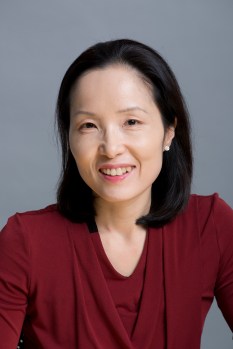 Jinhyun specializes in translation and interpreting and sociolinguistics with a focus on gender, intercultural communication, and language ideologies. Jinhyun’s research brings together interpreting and sociolinguistics to examine hitherto taken-for-granted cultural and linguistic phenomena through the unique prism of interpreters as social agents. By focusing on a shift in understanding away from the traditional mechanical view of interpreters as “translation machines” to a perspective which sees interpreters as social actors, she has been able to capture significant insights into the dynamics of dominant ideologies and societal power structures and their influences on linguistic and cultural practices in diverse socio-historical contexts.

 Center for Intercultural Dialogue