
 Some Observations on Internal Social Discourses on the Recent Increase of Refugee Immigration into Germany
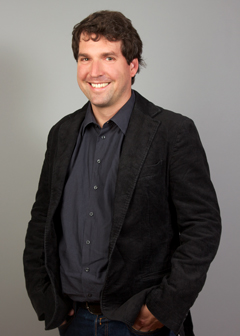
Guest post by Dominic Busch
Professor of Intercultural Communication and Conflict Research
Universität der Bundeswehr München, Germany
[A couple of weeks ago, Wendy Leeds-Hurwitz asked me to write down some remarks on the current situation of Germany receiving a growing number of refugees. It is an honor for me to be allowed to say something on that topic. And at the same time – being a member of the society under discussion – the topic seemed to be so overly complex to me that I felt I was not able to write something off the cuff. After some consideration, I have tried my very best, and still, I fear that I might have forgotten or overseen one or another aspect.]
In international news coverage, Germany recently has been referred to as having been approached by an increasing number of refugees and immigrants from Africa, the near East as well as from South Eastern Europe (see either this excellent quantitative visualization, or this textual introduction with many links to the news).
Here, I would like to provide some remarks on this discourse as well as on how the discourse relates to ideas of intercultural dialogue. I cannot but write these remarks from a perspective that must be acknowledged as a highly personal one. Writing as a white German male professor at a university in Germany, and having been born in Germany, I am in a privileged position. I cannot contribute from the perspective of migrant experiences. I am part of that wealthy world where some (not too many) refugees have arrived, and civil society grows in strength and self-confidence by successfully accommodating them, donating, teaching refugee children German language in newly installed “welcoming classes”, etc. Critics of my contribution may well refer to the fact that I have not been personally involved in any challenging situations in the context of refugee movements.
Still, I would like to give it a try from the perspective of intercultural communication, my field of research. Even more, I would like to warmly invite readers of this contribution to add their perspectives and thoughts in this blog’s comment section below!
The Basic Assumptions of European Political Discourse on Refugees
Inside Germany, refugee immigration has been by far the predominant news topic for the last ten months. Migration had not been a topic of much consideration in the German national news discourse as it is now. Recent surveys have repeatedly confirmed that, even today, for a large part of the Germans the refugee phenomenon is an issue that they do not experience except via news media. Nevertheless, almost everybody seems to have an opinion on the topic. The arrival of refugees centrally can be dealt with as an issue of socially constructed news discourse. Keeping that constructionist aspect in mind may better help in understanding the central characteristics of the debate: it is primarily lead by attempts to finding a position and attitude for a whole society facing a situation some of the people feel as being insufficiently prepared for. In other words, German society is faced with a new situation and they cannot clearly see where it will lead.
The Construction of Unpreparedness
To start with, the primary reaction of the EU as well as many of its member states concerning the increasing immigration of refugees is that they were not prepared for this. Overall, political discourse builds upon the assumption that the increasing immigration is an event that could not have been foreseen. From this initial perspective, discourse draws the legitimation for needing to look for new solutions – and (in case of need) to break with former principles. So, for example, some EU member states have decided to act autonomously in terms of the refugee movement, although they had previously agreed upon following common decisions of the EU on these matters. Specifically, some of the EU member states have autonomously decided to close their borders to refugees, while others have decided to limit the number of refugees they are willing to accept.
Germany
In the case of Germany, one central ignition to the debate may be seen in Chancellor Merkel’s now famous statement “wir schaffen das” [we can do this]), first pronounced during a press conference on August 31, 2015 and encouraging society that they (and the state) have the means to welcome and accommodate the growing number of refugees. Furthermore, taking the perspective of international human rights, Merkel avowed that moral behavior will not allow for limiting numbers of refugees arriving as long as they are fleeing prosecution or other significant dangers. Stating that, Merkel took a position that is more open towards immigrants than the one taken by her own political party’s center-conservative attitude.
From that point onwards, simply put, it can be said that German society has been split into two groups – one group supporting Merkel’s openness across any political camps, and another group campaigning for an enforced stop of further immigration as well as for expelling those immigrants that already have entered the country. Beyond this overall dichotomy, the debate has some further nuances, all speaking either for one political camp or the other one. Generally this divide may accurately be described by distinguishing between the “old” Germans and the “new” Germans, terminology introduced earlier by Professor Naika Foroutan, who is based in Germany. Foroutan sees a large part of Germany’s population as representing the new Germans, and being open for aspects of globalization, migration and internationalization. Separate from them, however, Foroutan sees a part of the population that determines national identities on the basis of origin. Foroutan terms these the old Germans.
Over the past one or two years, discourse on refugees into Germany has grown into political upheaval. Newly founded political parties have entered several regional parliaments after a strong gain of votes during recent elections within some of Germany’s regions – propagating right-wing totalitarian and anti-Muslim attitudes.
The Inescapability of Being Part of Conflict Discourse
So these are the basic facts. The question now: what does this have to do with intercultural dialogue? First of all: A look at contemporary German discourse strongly teaches that there are no “facts”. The stronger and the more pervasive a political debate and conflict grows, the more it becomes evident that (as authors like Holliday and Dervin have stated for the field of intercultural communication, recently) any statement on the topic is automatically political. Even although academic research, above all, claims to analyze social phenomena from a distance that allows far-sighted reflection and multiple perspectives, any academic statement turns out to support either one or the other opinion. This is the case for writing, but even more, it is an issue for social discourse, which no longer accepts any neutral position but immediately categorizes any statement into one of the political camps. To date, researchers have not been pulled into escalated conflict. But since some extreme right-wing groups claim that the German national press media frequently lie, media discourse takes up a clear position within the debate. For the time being, most of the national media voices are pro refugees – to some degree perhaps just to counter the extreme right’s accusations. Remembering Spivak’s famous phrase, it regrettably goes without saying that here again, refugees – despite standing at the center of the debate – have no voice at all.
In sum, although I have long been convinced of constructionist and critical discourse analytic approaches to social communication anyway, the situation in German discourse just described makes it clear in a very painful way that once you are in a conflict situation, you will be constrained by your position as a party to that conflict, and you will not be able to pull yourself out of that situation by your own bootstraps. Even if you want to, society will not let you. Thus, from a discourse perspective, German society has maneuvered into an intractable internal conflict more quickly than might have been expected.
Conflict Discourse Ethnocentrism
Another aspect that comes to mind from the perspective of intercultural research is the observation that the debate on refugees is, to a breathtaking degree, ethnocentric. German news discourse and social discourse construct the phenomenon of increased refugee immigration into Germany as a singular and particular case that cannot be compared to any similar cases, whether in the past or in any other country in the present. From this perspective, the vast field of existing international research on migration is not considered relevant. Even more, the debate largely ignores the fact that international migration, and flight-based migration in particular, have been a worldwide phenomenon for centuries, and that, in fact, they are seen as a central characteristic of contemporary processes of globalization. Instead, a discourse of self-victimization of citizens of Northern Europe is being promoted. This ethnocentric perspective hinders political and social discourse from considering the phenomenon of increased immigration from a distance and in a wider context. Instead of well-considered orientations, society constrains itself to the search for ad hoc solutions. Even more, a general feeling of helplessness, hopelessness, and despair on the issue of immigration pushes social discourse into a situation of feeling under pressure. This pressure results in a situation of perceived conflict where participants narrow their perspectives rather than widening them to find creative solutions. Social discourse gradually adopts a tone of conflict discourse. As a consequence, even those political camps that actually endorse the reception of refugees tend to construct the increased immigration as a problem, a threat, and even a crisis. The notion of a refugee crisis today is commonly mentioned in German national news media, although even this notion has to be understood to be a construction – with many potential alternatives. Again and again, some authors thus warn that the language and rhetoric of contemporary discourse on immigrants is taking a more and more dehumanizing style – at the expense of the refugees.
Strategic Culturalization vs. Anti-Culturalism and Culture as a Taboo
Although research on intercultural communication and on intercultural dialogue has developed a vast range of highly sophisticated and differentiating notions of culture, these notions have not played any considerable role in contemporary social discourse. Instead, supporters of right-wing parties opposing the reception of refugees strategically have made use of rather crude and essentialist notions of culture. Until this happened, scholars might have believed that their research had overcome such outdated concepts. Instead, assumed cultural differences between refugees and Germans are being used to foment fear of future social and/or cultural conflict inside the country. Cultural particularities are made responsible for a putatively higher crime rate and even terrorism. In other words, talking about culture in the debate on refugees has so thoroughly been monopolized by extreme right-wing voices that the rest of the political camps see only one chance to oppose them: Instead of arguing for more differentiating (e.g. interactionist or constructionist) concepts of culture, residing political parties as well as news media act as if their only option is to completely ignore and deny the existence of culture as a phenomenon. For supporters of non-right-wing political camps, talking about culture has become taboo. Speaking the language of intercultural research, an anti-culturalism here (again) turns out to be the only morally acceptable attitude. To some degree, intercultural research is significantly threatened by this taboo. Social and political discourse here passes up the chance of gaining insights into how cultural identities are co-constructed in both face-to-face and media interaction, and how their construction can be activated in cooperative as well as in discriminating ways. In short, a careful look at the role of culture and its force as a discursive construction might help in finding ways to transcend the conflict discourse, yet these ways seem to be blocked by that very discourse at the moment.
Insights into the genuinely constructionist nature of social and political discourse may turn out to be the only chance for evading and escaping the conflict circle that has been described here. Even though this line of argument may perhaps give the impression of being abstract, and even complex, interculturalists, opinion makers, and the news media should be highly encouraged to contribute to establishing this perspective.
Download the entire post as a PDF. See the response prompted by this post, by Peter Praxmarer.



 Center for Intercultural Dialogue