CFP The Politics of Intercomprehension (Belgium)

Conferences

Call for extended abstracts: The politics of intercomprehension, Université de Mons, Mons, Belgium, 18-19 June 2026. Deadline: 15 January 2026.

Studies of language acquisition, language education and other contexts of multilingualism present intercomprehension as the phenomenon of understanding, or being understood, through different modes of communication. It is a transdisciplinary and “polyhedral concept”: researchers employ distinct formulations, but all play with the (inter)action of understanding in contexts of difference. This has real political stakes, though they have not always been acknowledged. What does it mean to understand a message, as it relates to power and recognition? What does it mean to understand a person, or to understand each other? Is understanding always necessary? And when (and for whom) is it a privilege? The aim of this two-day conference is to tug at the ideological threads woven into intercomprehension and unfasten it from its purely linguistic interpretation to achieve a transdisciplinary understanding. We hope that this gathering of different academic and activist perspectives will engender a more inclusive framing of the concept.

In the Global North, linguistic intercomprehension is understood as the process of an interlocutor understanding unknown languages within the same linguistic family as their primarily used languages. It has been lauded as a practice subversive to monolingual norms and aligned with European values, without much contextualization of the colonial ontology underpinning European frameworks of multilingualism and multiculturalism. Projects of minority language revitalization have increasingly promoted intercomprehension as a tool for democratic collaboration, but its consequences for linguistically-isolated communities (e.g. Euskera in Euskal Herria, which does not belong to the same linguistic family as neighboring minority languages) has not been explored. What are the benefits and limitations to such practices? How does increased technological intervention transform these practices? Furthermore, we invite contributions that critically explore how politics of intercomprehension are enacted for vulnerable groups, particularly when understanding and intelligibility are transformed into responsibilities rather than rights. For instance, situations of migration and (im)mobility offer unique contexts to further understand how intercomprehension happens when people are mixed together or forced apart.

Organizers invite participants to analyze the relationships between intercomprehension and different conceptualizations of multilingualism. Of particular interest is the moral and ideological work that surrounds this intersection. For example, does the application of intercomprehension practices signify a more democratic future for language users, or are its liberatory aspects overstated, as Jürgen Jaspers warned with translanguaging (2018)? Moreover, the ontological limits of linguistic intercomprehension seem to be restrained to human multilingualism. How can the “animal turn” in sociolinguistics (Cornips: 2025) contribute to theorizing intercomprehension as a distributed and emergent property between sociomaterial actors, human and non-human?

This conference welcomes creative approaches to questions such as these to understand the political and ideological contours of a multilingual future based in intercomprehension.


U Louvain: Lecturer or Professor of Discourse and Language Practices in Italian (Belgium)

“JobLecturer or Professor of Discourse and Language Practices in Italian, University of Louvain, Belgium. Deadline: 12 November 2025.

Within the Faculty of Philosophy, Arts and Letters and the Institute for Language and Communication, Social Sciences and Humanities Sector, this position will include the following teaching, research and community service duties:

Teaching
You will teach courses in Italian language and linguistics (taught in Italian) for students of modern languages and literature, and courses in linguistics in your field of specialization for a wider audience (language and literature programs, communication programs, etc.), taught in French or English.  Your expertise will enable you to build up an attractive range of courses, likely to reinforce existing programs at UCLouvain and/or contribute to the introduction of new and original programs responding to the interests and concerns of future students.

Research
You will develop your research activities, including the development of research projects, in a field of linguistics and communication studies, preferably around one of the following issues:
– Intercultural pragmatics and communication
– Language interactions in professional contexts
– Multimodal discourse analysis
– Digital communication

Your scientific expertise should complement and reinforce the major lines of research developed within the UCLouvain Language & Communication Institute.

You will be responsible for the supervision of PhD theses.

Elise Cuny Profile

Profiles

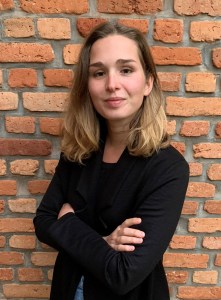
Elise Cuny is chair of the French association culture Solutions working towards the recognition of the role of culture in EU’s external relations and the understanding and promotion of international cultural relations at large. In this position, she coordinates projects and supervises the strategic development of content production, partnerships and network.

Elise CunyElise has a background in European affairs and extensive experience in the field of international relations and diplomacy from the capacity building and research perspectives, as well as on the topic of democracy and citizen participation. She has developed projects strengthening administrative cooperation and diplomatic skills in bilateral and regional programmes. She has also designed and monitored national training programmes for experts deployed in EU Common Security and Defense Policy (CSDP) missions.



She specialises in Africa-Europe partnerships with a focus on youth support and international exchanges in the development of cultural and creative industries. She spent three years in Rwanda as part of an international investigation team on the 1994 Genocide of the Tutsi, and developed knowledge and expertise on the field of memory policies. She is an alumna from the College of Europe (MA, International Relations and Diplomacy Studies of the EU) and Sciences Po Lille (MA European Affairs). She also supports projects raising awareness on cultural heritage among youth in schools. She runs the podcast series (Re)generating trust from culture Solutions focusing on the links between youth and culture.


Work for CID:

Elise Cuny is participating in an expert group for the Center.

BAEF: Fellowships for Graduate Study or Research (Belgium)

FellowshipsFellowships for graduate study or research in Belgium, Belgian American Educational Foundation, Belgium. Deadline: varies by program.

The Belgian American Educational Foundation offers fellowships for graduate study and for research for Americans who wish to do the work in Belgium, or Belgians who wish to do the work in the United States. The primary purpose of the BAEF is to instill in Belgium as well as in the United States a deep respect and appreciation for the other’s country and people. The Foundation has selected education to achieve this purpose, with a special emphasis on the younger generation. Education implies excellence in teaching, research, professional practice, management, as well as citizenship. BAEF fosters the higher education of deserving Belgians and Americans through its fellowship program between the United States and Belgium.

Graduate study for Americans to go to Belgium – Deadline: 31 December 2024.

Research for Americans in Belgium – Deadline: 31 December 2024.

Graduate study for Belgians to go to the US – Deadline: 31 October 2024.

Research for Belgians in the US – Deadline: 31 October 2024.


Summer School: Linguistic Ethnography (Belgium)

Study AbroadSummer school module on Linguistic Ethnography, Methods in Language Sciences, Ghent University, Belgium, 15-19 July 2024. Deadline: 30 June 2024 or until all spaces filled.

Through (guest) lectures, group work and reading groups, the course dives deep into linguistic ethnography’s foundational principles. Step by step, instructors will discuss the different steps of the research process: from research design to data analysis and dissemination. The keynote lecture entitled “What does it mean to find patterns in language data?” will be given by Prof. Dr. Karin Tusting, from Lancaster University.

This course is aimed at students and researchers from a variety of backgrounds with a keen interest in discourse and (the processes of) communication. Previous linguistic-ethnographic experience is not necessarily required. Registrations will close by the end of June 2024.

Other Instructors: 

    • From Ghent University, Departments of Linguistics and of Translation, Interpreting and Communication: Prof. dr. Geert Jacobs, Prof. dr. Stef Slembrouck, Dr. Marie Jacobs, Dr. Ella van Hest, Alexander De Soete

    • From the University of Antwerp, Department of Linguistics: Anne-Sophie Bafort

Questions are very welcome, just contact Dr. Marie Jacobs.

U Antwerp: Studentship in Peace, Institutional Design and Ethnicity in Africa (Belgium)

“Studentships“

Graduate Teaching & Research Assistant in Peace, Institutional Design and Ethnicity in Africa, Institute of Development Policy, University of Antwerp, Belgium. Deadline: 29 February 2024.

As a graduate teaching & research assistant, you are part of the Academic Assistant Staff (Dutch: Assisterend Academisch Personeel, AAP). You spend at least 50% of your working time preparing a PhD thesis in development studies. In addition, you play an assisting role in teaching, research and service-delivery activities.

PhD research

  • You work on the preparation and defence of a PhD thesis in Development Studies – in English, French or Dutch – on a subject related to peace, institutional design and ethnicity in Africa. Your PhD research is situated at the national level of state institutions, possibly with linkages to the local sub-state and the intergovernmental regional level (African Union, RECs). You investigate how, as a conflict prevention or conflict resolution strategy, ethnic diversity and segmentation is institutionally managed through constitutional design or other governance instruments.  You may decide to focus on one country or engage in a comparative analysis. Your PhD contributes to the scholarly literature and policy on nation-building, state-building and peacebuilding in Africa.

  • You organise your own PhD research and report on your progress regularly.

  • You participate in a doctoral training programme, for instance by participating in courses offered by the Antwerp Doctoral School and/or CERES doctoral school in order to enhance your doctoral research skills.

  • You present the findings of your PhD research at academic conferences and you publish in scientific publications (among which IOB’s own publication outlets). You also communicate your findings to non-scientific audiences (among which IOB’s own Analysis and Policy Briefs).

  • You contribute to the research related activities organized by the community of IOB PhD students.

MPI: Internships (USA)

“JobPaid internships: The Demetrios G. Papademetriou Young Scholars Program, Migration Policy Institute, Washington, DC, USA, onsite or remote. Deadline: 1 July 2023 for fall, 1 November 2023 for spring, 1 March 2024 for summer.

The Migration Policy Institute is an independent, nonpartisan, nonprofit think tank based in Washington, DC, and dedicated to the study of migration worldwide. The Demetrios G. Papademetriou Young Scholars Program, named in honor of MPI’s co-founder and first president, has trained more than 375 future global migration scholars and policy analysts, many of whom are now leaders in the field. MPI’s internship program has two goals: harnessing the valuable contributions of interns for MPI’s work and training the next generation of migration leaders. MPI is committed to recruiting and supporting interns who reflect the breadth of experiences, backgrounds, and perspectives in the countries where it works. As such, the Institute is committed to making sure that interns and staff members of all backgrounds work in an inclusive environment with equity and access for all.

Research Interns work within one of MPI’s four program areas: U.S. Immigration, International Migration, U.S. Immigrant Integration, or Latin America and Caribbean Initiative. There are also Communications and Event Internships, as well as Executive Office Internships. There are also MPI Europe Internships, also paid, but they follow a different timeline.

IMISCOE PHD School: Migration, Racism, Discrimination (Belgium)

Study Abroad2023 IMISCOE PhD School: Critical Reflections on Migration Studies, Racism and Discrimination, 24-28 April 2023, Vrije Universiteit, Brussels, Belgium (on-site). Deadline: 8 January 2023.

Migration studies has, for long, largely ignored the study of racism. Recent calls for the decolonization of the university and Black Lives Matter 2020 led to the gradual entry of the study of race, racism and colonialism into the migration studies field. Whilst developed apart in the past, mainstream migration studies and race critical studies (from postcolonial, to decolonial, to critical race studies, Black studies and more) are slowly starting to dialogue. This IMISCOE PhD school aims at bringing together PhD researchers with experienced scholars, activists, practitioners, and artists to explore how the more mainstream social sciences on migration, racism and discrimination and race critical studies can learn from each other and (im)possibly integrate, and how we can contribute to more racial justice.

Event organized by: Brussels Interdisciplinary Research Centre on Migration and Minorities (BIRMM, Vrije Universiteit Brussel), Centre for Ethnic and Migration Studies (CEDEM, Université de Liège), Centre for the Social Study of Migration and Refugees (CESSMIR, Ghent University), & The Network on Migration and Global Mobility (University of Antwerp).

KU Leuven: PHD Researcher for Immigrant Integration (Belgium)

“Studentships“PhD researcher for The Integration Conundrum, KU Leuven, Brussels, Belgium. Deadline: 28 February 2022.

The selected candidate is expected to prepare a PhD that fits within the research project ‘The integration conundrum: An intergroup relations perspective on majority support for inclusion versus exclusion of immigrant minorities.’ The project addresses ‘the integration conundrum’ as an important cause of public concern and political contention in today’s Europe and zooms in on the acculturation views of the majority: do majority citizens expect minorities to engage mainly or exclusively with the mainstream culture, with the heritage culture, or do they expect them to combine both cultures? The project aims to discover when and how intergroup fit and misfit on integration strategies will politicize and drive support for policy and political action. As such, the project aims to explain support for policies and actions that challenge the exclusion of immigrants and promote social change towards more equal and inclusive intergroup relations. For this project, survey data were collected among a random sample of the Belgian majority population (N = 1600). These survey data can be enriched with new (digital, geospatial, text and administrative) data sources and complemented with embedded experiments. The data is to be analysed with advanced statistical methods.

The researcher will team up with a large research group consisting of several PhD students, postdoctoral fellows and supervisors, working on related topics. In addition, the researcher will be involved in existing national and international research networks in the field of intergroup relations. The PhD candidate will be stimulated to present research output at international conferences and participate in seminars and (methodological) training activities. An international fellowship and participation in teaching activities are among the possibilities.

U Antwerp: Migration & Global Mobility (Belgium)

“JobResearch Professor on Migration and Global Mobility, Faculty of Social Sciences, University of Antwerp, Antwerpen, Belgium. Deadline: 28 February 2022.

As a member of the Academic Staff (Dutch: Zelfstandig Academisch Personeel, ZAP), you will contribute to the University of Antwerp’s three core tasks: research, academic service and teaching. During your first max. 10 years as a research professor, your role will consist primarily of academic research with some limited involvement in teaching. You will also be involved in academic organisation and management.

Research

  • You will expand high-quality scientific research on migration and global mobility.
  • You will acquire and manage national and international research funding.
  • You will publish in international journals and specialist literature.
  • You will develop an international scientific network, including the further development of the scientific network existing within and beyond the Faculty of Social Sciences.
  • You will supervise PhD students and postdoctoral researchers.
  • You will translate research insights into societally relevant valorisation initiatives.

.