
 Call for submissions: Conference on Convergence, Diversity, and Development, Minzhu University of China, Beijing, China. Deadline: 1 April 2024.
Working in collaboration with the National Communication Association (NCA), the Communication University of China (CUC), and the Association for Chinese Communication Studies (ACCS), the Minzu University of China (MUC) announces an international conference addressing “Convergence, Diversity, and Development.” The conference will convene at Minzu University, in Beijing, China, on June 14-16, 2024. In Mandarin, minzu translates as ethnicities. This means that Minzu University—a campus dedicated to studying, implementing, and advancing the cause of Diversity, Excellence, Inclusion, and Access (DEIA)—is the ideal partner for hosting this event. As indicated in the conference title, organizers propose 3 lines of inquiry:
“Convergence” suggests the overlapping and intersecting of different communication infrastructures, platforms, and genres.
“Development” points to the geopolitics of modernization, including the ways U.S., Chinese, and international forces seek to spread political power by engaging in development projects in the Global South.
“Diversity”—and its expansion into the acronym DEIA—can suggest the intentional process of expanding the range of voices included in civil society, or it can be a catch phrase that leads to appropriation and cooptation.
Organizers seek research presentations rooted in the Communication discipline broadly configured among and across the lines of inquiry described above. Presentations will be limited to 10 minutes so that conference sessions can prioritize collaborative brainstorming, constructive feedback, and idea testing. Each panel session will include an equal number of Chinese and international presenters. Presentations and discussion will take place in English. Above all, they seek to facilitate dialogue and the fair and rigorous exchange of ideas representing international perspectives and diverse understandings.

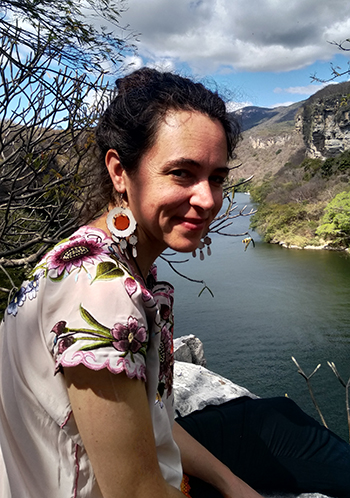 As a researcher and lecturer, she is now at the crossroads of tourism studies, humanities, and personal transformation, as a result of her earlier career in cultural tourism and tourism management in museums, while volunteering in education for adults and refugees. She also engages in academic activism. Although in the past she has had the opportunity to travel and live on different continents, at the moment she is choosing slower forms of mobility. This lowers her ecological footprint, but even more importantly it is a creative endeavour to engage differently with the world around her.




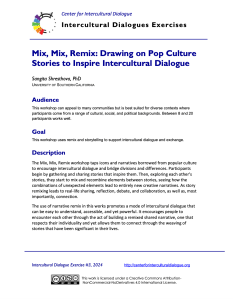
 Center for Intercultural Dialogue