Director of Study Abroad, Loyola Marymount University, Los Angeles, CA. Deadline: Open until filled, posted July 27, 2018.
Loyola Marymount University seeks a Director of Study Abroad to oversee, develop, promote and evaluate a wide range of study abroad and international experiences for LMU and non-LMU students. The Director is responsible for developing and implementing strategic initiatives that directly align study abroad programming with the university’s academic objectives, mission, and vision for comprehensive internationalization. Partnering with faculty, staff, and senior administrators, the Director will work to deepen the students’ academic experience through curricular integration of international opportunities.
A full-time Research Associate position is available at the University of Cambridge in conjunction with the research project Multilingualism: Empowering Individuals, Transforming Societies (MEITS), funded by the AHRC under the Open World Research Initiative to promote modern languages in the UK. The post is 12 months in the first instance, available from 1 January 2019.
Minimum qualifications: Ph.D. in Communication by August 2019. Candidates in interdisciplinary fields with extensive communication training, teaching and/or scholarship will also be considered. A scholar with demonstrated capacity to launch and sustain a research program of quality in conflict and peace studies from a communication perspective. Applicants must possess demonstrated teaching effectiveness at the undergraduate level.
The International Hellenic conference of political science: New Challenges, New Answers (HEPO2019) is a new interdisciplinary platform for the presentation of empirical and theoretical work that is reflective of a highly dynamic political arena both domestically and internationally. The conference is seeking to receive contributions by scholars who recognise that political science needs to vindicate its relevance by tackling today’s challenges while predicting the themes ahead. We aim to establish a hub for academics that engage with peers over the latest advances and research results in any sub-field of Political Science and International Relations both in the shape of empirical and theoretical work. The theme of the conference is meant to inspire and bring together academic leaders, researchers, and scholars who like to think outside the box and transcend their disciplinary domain. While offering a forum to established academics we also like to see proposals from a new generation of researchers as well as outstanding research students who like to share their work, receive feedback and exchange ideas with faculty from all around the world.
This is a helpful concrete article by a journalist who underwent training in conflict resolution, focusing on intractable conflict, explicitly intended for journalists but useful to many others as well. The short version of the conclusion is the need to “revive complexity in a time of false simplicity.” Read the article to learn more.
Call for Submissions: Special section of the journal China Media Research, Communication and Wellbeing in a Multicultural Society. Deadline: October 15, 2018.
This special section of China Media Research invites scholars from different disciplines to submit manuscripts on the theme of “Communication and Wellbeing in a Multicultural Society.” In an increasingly globalized world that brings members of diverse backgrounds into contact with each other in various relational, organizational, health, and mediated contexts, conflicts, tensions, and stress inevitably compromise the quality of life. Although mental illness has been a major public health threat in many countries, there have been low levels of mental health literacy, e.g., in China, that contributed to lack of support at interpersonal, institutional, and societal levels. This special section aims to explore how communication scholarship contributes to our understanding of psychological, socio-cultural, organizational, occupational, technological, or generational factors that impede or enhance our wellbeing, whether individually or as a group.
Open invitation to participate in a panel, from Concha M. Höfler, Durham University, UK:
“We’re organising a panel at next year’s 16th International Pragmatics
Conference Pragmatics at the Margins in Hong Kong, 9-14th of June 2019, and hereby invite you to contribute. Deadline: 15 October 2018.
*Dealing with Marginality: Categories and Positioning in Interaction*
The question of marginality is more often than not conceptualized as one of (hegemonic) social and spatial exclusion (Leimgruber 2004; Weisberger 1992, Sassen 2016): individuals and/or perceived groups are marginalized by a societal majority and in the process they are portrayed as both voiceless and without agency.
CID’s first video competition is now over, and the judges have reviewed all the videos. As a reminder, the instructions were to answer the question “What does intercultural dialogue look like?” in 90-120 seconds, on video.
An award of excellence goes to Mónica Estrella Oliva, Gabriela Quevedo Rabanal and Renato Morales Camacho, who are all BA students in International Business at the University of Lima (Peru). Judges praised the excellent use of graphics and music, and the combination of live video with still photography, said it was simple but well done, and specifically mentioned the opening and closing. In terms of content, they said it shows clear understanding of intercultural dialogue.
Title: Different cultures, One same feeling
Description: “We tried to show what Intercultural Dialogue look like through our international friends, in order to have different opinions from many countries, and not just ours, so people can compare and, in the same way, know that they all have something in common.”
There were first, second and third place winners, as well as 3 videos that merited awards of excellence. Each of these is being highlighted in a separate post, as they warrant our attention. My thanks to the judges of the competition, professionals who made time to review student videos. Thanks also to all the competitors, who took the time to really think about the question of how to show intercultural dialogue visually.
The Office of International Programs oversees student engagement in education abroad. The office supports Vassar sponsored programs in London, St. Petersburg, Clifden, as well as programs in Berlin, Bologna, Paris, and Madrid that Vassar runs consortially with other colleges and universities. The office also manages Vassar’s exchange programs with institutions abroad in Paris, Tokyo, Kyoto, Exeter, Toulouse, and Singapore. In addition to Vassar programs, the office manages a list of approximately 150 other approved programs that students may access. Nearly half of Vassar students engage in education abroad for one semester or more prior to graduation. The Assistant Director reports to the Director of International Programs.
Professor of Media and Communication, School of Media and Communication, Faculty of Arts, Humanities & Cultures, University of Leeds, UK. Deadline: 24 August 2018.
The School of Media and Communication at the University of Leeds is a vibrant and highly ranked department with a commitment to excellence in both research and teaching. We are looking to appoint a Professor to join us to provide leadership across the range of our activities. The successful candidate will be expected to enhance the School’s research and teaching activities, working with colleagues to develop our international profile and standing. Applications are welcome from candidates whose research extends our strengths in media industries and cultural production, Journalism, political communication, global communication, visual media and communication, and digital cultures.

 Director of Study Abroad, Loyola Marymount University, Los Angeles, CA. Deadline: Open until filled, posted July 27, 2018.




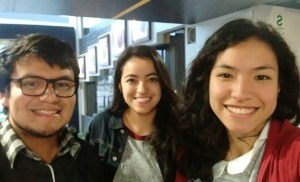 An award of excellence goes to Mónica Estrella Oliva, Gabriela Quevedo Rabanal and Renato Morales Camacho, who are all BA students in International Business at the University of Lima (Peru). Judges praised the excellent use of graphics and music, and the combination of live video with still photography, said it was simple but well done, and specifically mentioned the opening and closing. In terms of content, they said it shows clear understanding of intercultural dialogue.
