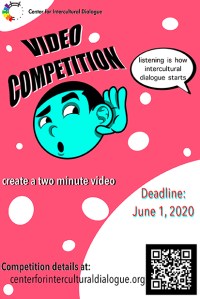
 The CID Video Competition opened for submissions a few days ago, and the first entries have come in. In a month the judges will begin their part. My thanks to all of them for taking the time to watch and critique all the student videos. It’s clear the greatest reward for all those who entered the competition is getting their videos seen by these accomplished professionals!

Jim D’Addario has been an award winning producer for the Walt Disney Company since 1995. He started his career with Disney Interactive as a Production Supervisor on multiple edutainment projects, including the best sellers Lion King Activity Center and Toy Story Activity Center. Jim was then recruited by Walt Disney Imagineering to produce sound tracks and interactive projects for Walt Disney World, Tokyo DisneySea and Walt Disney Studios Park in Paris. Jim was instrumental in the design of The Buzz Lightyear ride at Disneyland park and The Winnie the Pooh Ride at Walt Disney World. His most memorable moment came when he worked with the iconic Sherman Brothers (of Mary Poppins fame) to produce the new soundtrack for the ride. Jim has recorded with some of the most recognizable talent in the industry including Mickey Mouse, Donald Duck, Rafiki, and Tigger! Jim then jumped ship to work in the online space with Disney Cruise Line, Disneyworld.com, and Disneyland.com creating the first immersive sites for those properties. Jim’s current position is with Walt Disney Parks and Resorts, Global Broadcast, as a Senior Producer of television and radio commercials, trailers, First-Look programming, in-room videos, online videos, and airport interactive displays.
 Ovinuchi Prince Ejiohuo is a writer, filmmaker, photographer, and activist currently working as a Media and Communications Officer/Sustainable Development Goals Ambassador at Yiaga Africa in Nigeria. A 2018 Global Ambassador Fellow of the Better Tomorrow Movement, he is a member of the International Youth Media Summit (IYMS). He has photographed and filmed world leaders, including Nobel Prize winner Dr. Denis Mukwege, Kenyan Activist Boniface Mwangi, former Nigerian Electoral Chairman Prof. Atahiru Jega, Nigerian Speaker House of Representative Femi Gbajabiamila, EU and ECOWAS ambassador to Nigeria Ketil Karlsen, US ambassador Stuart Symington, and British High Commissioner Catriona Laing. His written work and photo and video images have featured in many reputable publications and research both nationally and internationally. He has worked on media projects for organizations such as the Centre for Democracy and Development, ActionAid Nigeria, International Republican Institute, Accountability Lab, European Centre for Electoral Support and the Independent National Electoral Commission. In 2018, he co-directed the silent short film Anything for us for an anti-corruption project sponsored by McArthur Foundation. In 2019 his documentary film displaced showcased in Nepal where he produced the film Rising for IYMS. His Democracy Summer Camp short film Below the Legal Line was nominated for the 2019 Pan African Film Festival. His work focuses on addressing issues around peace, gender equality, marginalisation, education, youth participation, environment, governance and development.
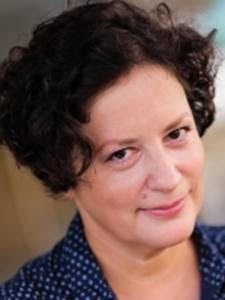
Zsuzsanna Gellér-Varga is a documentary filmmaker and video storyteller living in Budapest, Hungary. Her Screw Your Courage documentary won awards at several US film festivals and was broadcast on public TV. She worked for the New York Times Television as a video-journalist and later directed documentaries, including Once They Were Neighbours, Synagogue for Sale, Mr. Mom, and Angel Business, which were screened internationally and broadcast on public TV. She works as cinematographer, story editor and media consultant, and taught documentary ethics at the international Masters program, DocNomads. She has master degrees from ELTE University Budapest, Graduate School of Journalism UC Berkeley (as a Fulbright scholar), and a DLA from the University of Theater and Film Arts Budapest.
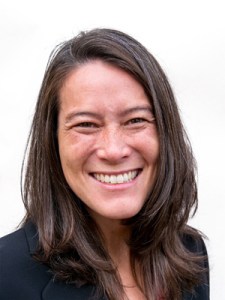 Elizabeth S. Parks is Assistant Professor of Communication Studies at Colorado State University. She has degrees in Communication, Deaf Studies, and Sign Language Interpreting. She uses her international fieldwork experience with diverse cultural communities to ground her scholarship in listening and dialogue, communication ethics, cultural studies, and disability studies. Her current research focuses on the ways in which cultural diversity and embodied difference impacts perceptions and practices of “good listening” that ultimately promote ethical dialogue across difference. Courtesy of her publisher, Lexington Books, copies of her new book, The Ethics of Listening: Creating Space for Sustainable Dialogue, will be given to the top three prize winners in this competition.

Mary C. Schaffer is a digital media consultant. She was an Associate Professor of New Media at California State University, Northridge (CSUN) for 14 years. Prior to CSUN, she spent 12 years as a New Media Executive (Disney, Viacom, Geocities) and 18 years as a journalist (NPR, CBS and NBC). She is a member of the Producers Guild of America, the Academy of Television Arts & Sciences, the International Documentary Association and Broadcast Education Association.

Mattias Skoog is a film and video creative from the Swedish west coast. He started his career as a public service radio broadcaster and has since then always worked with storytelling, media and communication. After eight years as a digital strategist in local government, Mattias recently decided to go all in as a full-time self-employed filmmaker, and is now combining life as a start-up entrepreneur with being a family man. He is also a member of the advisory board of the International Youth Media Summit.
 Carolijn van Noort is a lecturer in politics and public policy at the University of the West of Scotland in London, UK. In 2018, she was awarded her PhD in Political Science and Media, Film and Communication from the University of Otago in New Zealand. Her research explores the strategic communication of rising powers on the issue of infrastructure vision and action plans. Her articles have appeared in Global Society, International Journal of Cultural Policy, Politics and Governance, and Women Talking Politics.

 Dr. Maria Faust holds the position of a Research Associate at Chemnitz University of Technology, in Germany. She graduated from Leipzig University, Institute of Communication and Media Studies, Germany, with her thesis on “The Theoretical and Empirical Paradox of Temporal Change due to Digital Media in Germany and China” with highest distinction (summa cum laude). She was a Visiting Scholar at Renmin University, PRC, and the University of Bergen, Norway.
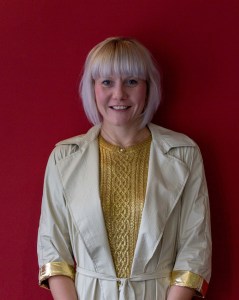 Dr. Faust has worked for University of Leipzig, University of Technology Chemnitz, Stockholm University, University of Applied Sciences Mittweida, the Micro Census in Saxony, and the European Institute for Journalism and Communication Research.

 Center for Intercultural Dialogue