Massey U (New Zealand) job ad

The School of Communication, Journalism and Marketing in the College of Business at Massey University (New Zealand) is searching for a Lecturer or Senior lecturer in Communication, to be located at the Albany Campus. Candidates will exhibit a record of, or a strong potential for, research and teaching in one or more of the following emphases: (a) public relations; (b) communication management; (c) professional and business communication; (d) journalism studies; and/or (e) health communication. The successful appointee will join other recent recruits in communication to assist in a substantial expansion of the communication programmes at Albany.

Massey University was ranked fifth most attractive employer in New Zealand in the 2013 Randstad awards, an international survey conducted across 14 universities. It was also the education sector winner. Massey University is ranked in the top 150 worldwide for communication and media studies in the QS World University Rankings 2013. The College of Business is AACSB and AMBA accredited and has New Zealand’s longest running MBA, journalism and entrepreneurship and small business programmes. The Albany campus is located in Auckland, consistently ranked as one of the most liveable cities in the world by the Economist magazine. The campus has good access to beaches, forests and boating, as well as the attractions of Auckland city.

Closing date: 30 October 2013
Reference number: A282-13SF

See here for further information and to apply online.

Save

U Miami job ad


UNIVERSITY OF MIAMI
School of Communication
Position in Health and/or Intercultural Communication

The Department of Communication Studies in the School of Communication at the University of Miami is seeking applicants for a tenure-track position at the rank of Assistant Professor beginning August 2014.  Successful candidates will have expertise in health and/or intercultural communication and will join a growing team of faculty working to build a nationally prominent Ph.D. program focused in these areas.  Applicants must have a Ph.D. in communication, or provide evidence they will have completed all requirements for the degree by August 2014.  They should also have a record of strong teaching and publication in mainstream communication journals, or promise of such.

Review of applications will begin November 1, 2013 and continue until the position is filled.  Qualified candidates should send:  (1) letter summarizing teaching philosophy and research area, (2) current CV, and (3) three letters of recommendation to:

Professor Diane Millette
Communication Studies Department
School of Communication
University of Miami
P.O. Box 248127
Coral Gables, FL  33124-2105

The University of Miami offers competitive salaries and a comprehensive benefits package including medical and dental benefits, tuition remission, vacation, paid holidays and much more.  The University of Miami is an Equal Opportunity/Affirmative Action Employer.

Save

Texas A&M job ads

The Department of Communication at Texas A&M University invites applications for three Associate or Full Professors starting September 1, 2014.  The three positions are intended to build our strength in departmental and university initiatives regarding democratic practice, health, and global media and technology.  They offer a unique opportunity for senior scholars to provide leadership in building on our strengths in these areas and enhancing the national and international prominence of the department.

The department offers the PhD, MA, and BA degrees, and has 20 tenure-track faculty members, 55 graduate students, and over 1000 undergraduate majors.  Texas A&M is a research-intensive flagship university with more than 53,000 students, including 10,000 graduate students, making it the sixth largest university in the United States.  The student body includes 26% African American, Hispanic, Asian or Pacific Islander, and American Indian or Alaskan Native students, as well as approximately 5000 international students from 124 countries. We seek candidates who can teach in a diverse and global classroom.  It ranks among the top universities nationally in total research expenditures (with more than $700 million dollars per year), and in total endowment funds. Texas A&M University is an equal opportunity, affirmative action employer, is deeply committed to diversity, and responds to the needs of dual-career couples.

Position #1:  Associate/Full Professor in Rhetoric.

The position is intended to enhance our strategic initiative in Civic Dialogue and Leadership, which draws together faculty from different scholarly traditions to conduct research and teach courses on the interrelationships among civic discourse, leadership, and democratic practices. We seek scholars to support our existing strengths in Rhetoric and Public Affairs while also having complementary interests with our other departmental areas, including Organizational Communication, Health Communication, and Telecommunication & Media Studies.  Applications from scholars of rhetoric and public affairs, deliberative democracy and the public sphere, social movements, citizenship, feminist approaches to political rhetoric, public memory, or politics and visual culture are particularly welcomed.

To receive fullest consideration, applicants should apply by November 1, 2013, but applications will continue to be accepted until the position is filled.  A PhD and strong record of scholarship and teaching are required; successful candidates will be expected to contribute to the department in the areas of teaching, research, and service. Interested candidates should send a letter of application, curriculum vitae, and the names of three references to: Jennifer Mercieca (mercieca AT tamu.edu) Department of Communication, 4234 TAMU, Texas A&M University, College Station, TX 77843-4234 (emailed applications are preferred).  References will not be contacted without permission.

Position #2:  Associate/Full Professor in Health Communication.

Applicants will have a nationally or internationally prominent program of research in one or more of the following four areas: 1) clinician-patient communication with a focus on medical decision-making, behavior change, and health outcomes; 2) media campaigns and interventions in the context of behavior change; 3) health and new communication technologies including social interaction through computers, social media, and mobile technologies; or 4) technology and healthcare involving either the effectiveness and quality of health care delivery or the related use of technology and rapid learning organization systems. Applicants will have a strong background in either qualitative or quantitative research methods. Experience with grant funding is desirable.

Health communication members of our faculty engage in interdisciplinary, grant-funded research collaborations addressing questions with both substantive theoretical and practical implications. We seek a colleague who will help us continue this tradition and can teach health communication and research methods courses at the graduate and undergraduate levels. Applicants should be interested in contributing leadership toward the further development of undergraduate and graduate health communication programs in the department.

Texas A&M University offers health communication scholars a number of excellent opportunities for collaboration, including with scholars from the College of Medicine, the School of Rural Public Health, and the Department of Health & Kinesiology. In addition, Texas A&M’s location not far from Texas’ large metropolitan areas permits collaboration with scholars from other universities, including the Baylor College of Medicine in Houston.

To receive full consideration, applicants should apply by November 1, 2013, but applications will continue to be accepted until the position is filled. A PhD or other doctoral degree is required in communication or a related field such as psychology, public health, health education, or health services. A successful candidate will be expected to contribute to the department in the areas of teaching, research, and service. Interested candidates should mail a letter of application, curriculum vitae, and the names of three references to: Dr. Christopher Beaudoin (beaudoin AT tamu.edu), Department of Communication, 4234 TAMU, Texas A&M University, College Station, TX 77843-4234 (emailed applications are preferred).  References will not be contacted without permission.

Position #3:  Associate/Full Professor in Global Media and Technology.

This position is intended to enhance our strategic initiative in Global Media and Technology, which explores the relationships between global media, information technology, and new media.  Scholars able to teach courses and direct research in Telecommunication & Media Studies, with a strong research program on global media and/or technology, are invited to apply.   Experience with grant funding is desirable.

We particularly invite applications from scholars who can help to develop collaborative programming with other key initiatives, including a departmental emphasis on Civic Discourse and Leadership and the university-wide Initiative for Digital Humanities, Media, and Culture. Texas A&M is an internationally prominent university with a global reach (including a branch campus in Doha, Qatar, and international study centers in Costa Rica and Italy), and international impact. Our close proximity to some of the nation’s largest cities also provides opportunities for collaboration with media corporations and other top universities in highly diverse metropolitan areas.

To receive fullest consideration, applicants should apply by November 1, 2013, but applications will continue to be accepted until the positions are filled.  A PhD and strong record of scholarship and teaching are required; successful candidates will be expected to contribute to the department in the areas of teaching, research, and service. Interested candidates should send a letter of application, curriculum vitae, and the names of three references to: Randy Kluver (rkluver AT tamu.edu). Department of Communication, 4234 TAMU, Texas A&M University, College Station, TX 77843-4234 (emailed applications are preferred).  References will not be contacted without permission.

Save

Andrew Spieldenner-Microgrant report

NCA Microgrant Report
Andrew R. Spieldenner, Hofstra University

ARSpieldenner at Sigma
I applied for one of the Center for Intercultural Dialogue‘s microgrants funded by the National Communication Association  to explore the possibilities of meeting with researchers in London. Currently, I am looking at using communication methods to better implement and evaluate the roll out, implementation and uptake of HIV biomedical interventions among gay and bisexual men in the United States. Because of the disproportionate impact of HIV in the United States on certain groups, my work focuses on African American, Latino and HIV-positive gay men – all populations that experience persistent structural barriers in the healthcare system.

Matching funds
The Hofstra University School of Communication supported this project with a faculty research support grant. The matching funds covered the costs of housing and food while at the host institution.

Local host
The Global Forum on Men who have Sex with Men (MSM) hosted a Pre-Conference focused on gay and bisexual men at the International AIDS Conference 2012 in Washington, DC. I chaired the panel on HIV, community mobilization and immigrant MSM. On the panel, Ibidun Fakoya, Research Fellow at University College London presented her formative assessment of African gay men living with HIV in London. Ibidun Fakoya works with Dr. Fiona Burns on the advancing Migrant Access to health Services in Europe (aMASE). aMASE uses a multi-site Community Advisory Group to assess clinical and health care access for migrants in Europe with some focus on MSM and substance users. As such, aMASE is constructing a framework for effectively working with mobile and marginalized populations in assessing healthcare. In follow up conversations and through social media, a relationship emerged on common research interests. Through these conversations, the project emerged and additional meetings were made through Ibidun Fakoya and social media. In the past few years, I have developed a network of other advocates and researchers who are active on twitter and whose specialty is health disparities and the gay, lesbian, bisexual and transgender communities.

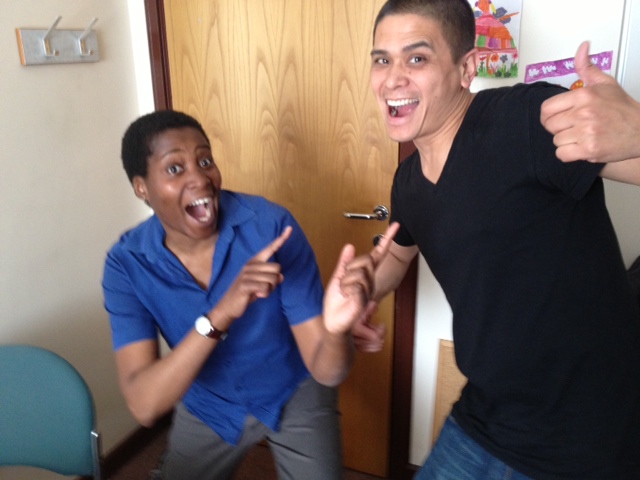
Ibidun Fakoya, Andrew Spieldenner

Trip itinerary
My colleagues were generous with their time. I visited University College London, Birkbeck College and the London School of Hygiene and Tropical Medicine. Each meeting opened up other doors to consider – with other researchers, community groups, medical providers, and health policy institutions.

Uni College London

Ibidun “Ibi” Fakoya and Dr. Fiona Burns of University of College London aMASE project were my primary hosts. Ibi and I met with the Community Mobilization Coordinator to discuss the Community Advisory Group and the implementation of the research survey in multiple countries in clinic and community settings.  We brainstormed on possible community partners to achieve the target survey populations in the United Kingdom (UK), Germany, Spain and Italy. I was able to review the processes that aMASE has implemented to get a shared research tool and protocols across all partner sites. In addition, Ibi and I reviewed social marketing and health messaging in order to develop marketing materials. Ibi was instrumental in coordinating with the other researchers for my trip.

At the University College London, I met with Professor Graham Hart on HIV and gay men in the London and New York City, focusing on the vastly different healthcare systems in the two countries. Professor Hart is Dean of the School, and he has extensively researched HIV and gay men. Professor Hart was interested in how the differing healthcare systems and social attitudes about health impact the treatment and service environment for gay men of varied racial/ethnic and socioeconomic backgrounds. He gave several referrals to visit community groups and health policy institutions.

Professor Matthew Weait of Birkbeck College is an expert on HIV criminalization laws. We discussed the ways that HIV criminalization laws operate in various countries, and how cultural views frame the laws. We also examined the concurrent passage of gay marriage legislation in Maryland alongside an enhancement of the state’s HIV criminalization law. We discussed the importance of translating research and policy into accessible language in order to mobilize community members.

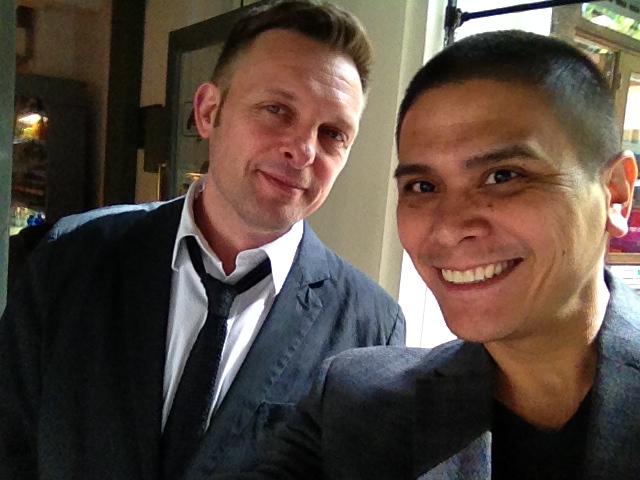
Matt Weait, Andrew Spieldenner

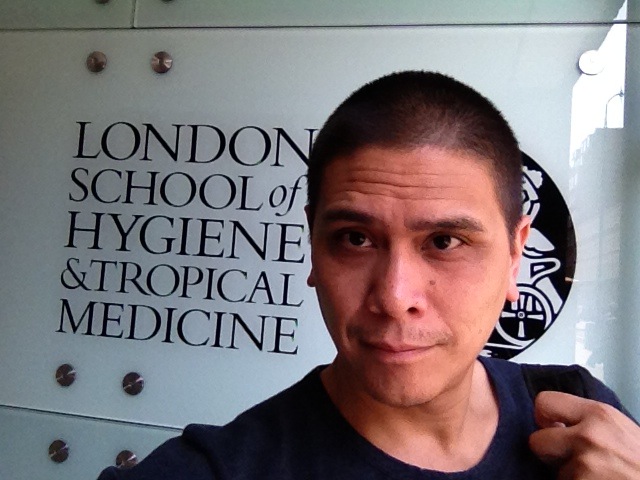
Dr. Catherine Dodds and Dr. Ford Hickson of the Sigma Research Group are currently housed at the London School of Hygiene and Tropical Medicine. The Sigma Research Group has been on the forefront of research in the UK on gay men and HIV. They have conducted surveys at gay prides in the UK for over a decade, and have implemented several Community-Based Participatory Research (CBPR) projects alongside community partners. We had an intense discussion about harm reduction in HIV, the limits to current public health discourse on gay men and HIV, methods of conducting CBPR projects (including the use of Skype), and how communication – as a field – can be used in public health research.

Further activities
There are several future activities possible in the future. Many of these involve future correspondence and research support. We acknowledged that there were several meetings about HIV and our respective fields that may be of interest to the others. Dr. Hickson, Dr. Dodds  and Professor Weait committed to ongoing communication about projects and possible next dates for meetings when we happened to be in the same event (such as the International AIDS Conference 2014).

Ibidun Fakoya and I sketched out two different research projects to advance, and we are looking to collaborate over the next two years on these projects.

Finally, I plan to return to Europe summer of 2014 on another project, where I will be renewing my relationships with these researchers.

[NOTE: Andrew Spieldenner’s original project proposal is available here.]

Nat U Singapore 3 job ads

The Department of Communications and New Media at the National University of Singapore (NUS) has posted ads and seeks to hire for three positions, one at the Assistant Professor level and two at the Associate Professor level. For application info, please visit this website.

NUS

1) A tenure track Assistant Professor in Health Communication for July 2014. Candidates must have a Ph.D. in Communication or a closely related field. ABDs are encouraged to apply, but a Ph.D. degree is required by date of appointment. The successful candidate should demonstrate a clear promise of research excellence in health communication. We are interested in candidates who explore health communication using participatory and culture-centered methodologies or approaches. The successful candidate will teach a range of courses in Health Communication and Communication Management/Public Relations, and work closely with the Center for Culture-Centered Approach to Research and Evaluation (CARE) at NUS. CARE is a global hub for health communication research that uses participatory and culture-centered methodologies to develop community-driven health communication solutions. Application deadline for this position is: September 30, 2013.

2. Associate Professor in Health Communication and/or Communication Management. Candidates must have a Ph.D. in Communication or a closely related field, and demonstrated excellence in teaching and research.  We are interested in scholars who approach communication through new and emergent media perspectives and value diverse research methods. The successful candidate will be expected to teach a range of courses in health communication and communication management/public relations, and play active roles in developing the Department’s graduate program and mentoring graduate students.

3. Associate Professor in Media Studies/New Media. The successful candidate should have a Ph.D. in Communication or a closely related field, who has demonstrated excellence in teaching and research.  We seek a colleague to conduct teaching and research in one or more of the following specializations in New Media: (a) Freedom of Speech, Regulation, and Control, and (b) Public Discourse and Public Participation. We are interested in scholars with a record of research or a research interest in Asian contexts.

Application deadline for positions two and three: August 31, 2013.

Louisa Edgerly-Microgrant Report

NCA Micro Grant Report
Louisa Edgerly, Independent Scholar

This report details my travel to the Republic of Congo to begin fieldwork on a collaborative research project with the International Conservation and Education Fund (INCEF), a US-Congolese nonprofit organization that produces educational films on topics related to public health and environmental conservation. The aim of my research is to develop descriptive accounts and interpretations of the intercultural communication that takes place between INCEF, their audience of rural Congolese villagers, and the global health workers and environmentalists who also work on the issues of human health and environmental conservation in Congo.

Identifying local partners
I learned about INCEF’s work – and its relevance to theories of intercultural communication – through conversation with an INCEF board member. Following this initial conversation in May of 2011, I drafted a project proposal outlining a possible collaboration between INCEF and the University of Washington’s Center for Local Strategies Research (UWCLSR) to study INCEF’s methods of communication and their process of project design through the lens of speech codes theory.

I sent the draft proposal to INCEF’s Executive Director, Cynthia Moses, and to UWCLSR. When all parties expressed interest in moving forward with the project, I then began to discuss possible dates for an initial research trip to Congo to observe INCEF’s work in place. Based on INCEF’s planned activities for 2012, Cynthia and I determined that November and December, 2012 would be a good time for my visit. I estimated that I could raise funds to cover a two-month stay in Congo, and to pay for travel of about a week to a remote location outside the capital city to observe INCEF’s project implementation.

Sunrise-smRaising research funds
Once I had chosen the dates for my research trip, I began by setting up an account on a crowd-funding web site called Petridish. I had done quite a lot of research on possible sources of funding for research, but as an independent scholar there were not many options available. The National Communication Association‘s Travel Microgrant was one notable exception, and I applied for this in addition to my other fund-raising efforts.

Crowd-funding offered the best – and fastest – mechanism to raise the $7,000 I estimated I would need to cover the costs of the entire trip. I created a short video to put on the Petridish web site, chose the different donation levels and the rewards for each level (a photograph from the trip, subscription to the trip’s blog, etc.), and set up the crowd-funding platform. In fifty days I raised just over $7,000 through my personal network of friends and family, using social media tools and email appeals. Petridish charged 4% of the total raised for providing the web site, and Amazon Payments also took a transaction fee from each donation made online. I was able to use the remainder to cover my direct research costs, including air fare, food, housing, and local transportation in Congo.

The timing of my travel depended to a great extent on INCEF’s schedule, and thus I had to depart for Congo before the decision about the NCA microgrants was announced. I crossed my fingers and booked my ticket for Brazzaville, Congo.

The NCA microgrant for $1,000 covered one third of the total round trip airfare from Seattle to Brazzaville, and thus allowed me to use other funds raised to cover unexpected expenses that arose during my field work, including several extra days spent in the northern town of Impfondo due to canceled flights, and the wildly unpredictable cost of gasoline, which increased travel costs within Congo.

Research Activities in Congo
The aim of my research in Congo was to study the communication methods used by INCEF, and to assess the degree to which they constituted a dialogic and participatory approach to intercultural communication. This field trip also aimed to allow me to see whether further academic collaboration might be able to offer some real benefits to INCEF, by offering a theoretical approach to intercultural dialogue that was compatible with their overall goals and experience, as well as helping them make connections with other organizations doing similar work.

In Brazzaville, I stayed in a guest room at INCEF’s headquarters, located in the Centreville neighborhood. The experience of studying human beings in their natural settings almost never goes completely smoothly, and this trip was no exception. INCEF’s Executive Director had intended in be in Brazzaville to meet me, but she was delayed several weeks and did not arrive until I had been there almost four weeks. The project that I had planned to observe was on hold due to lack of funds, and many of the activities that I had hoped to observe were likewise delayed or suspended. All of this provided me with the chance to explore Brazzaville and observe daily life there, to have longer conversations with INCEF’s staff, and to study their library of public health and conservation films in greater detail. The realities of living and working in a developing country, with inconsistent electrical supply, running water, and internet service also provided important background context to help me understand the structural barriers INCEF faces in their work every day.

My first weeks of observations and interviews with INCEF staff, and with individuals from other organizations such as the Wildlife Conservation Society that partner with INCEF in Brazzaville, provided me with a preliminary set of data to analyze, and important context for my later observations in the field. After four weeks in Brazzaville, I traveled north to the town of Impfondo, where I met with two of INCEF’s educators to prepare for a trip out to the village of Makolongoulou to screen several INCEF films as part of their work on violence prevention and public health with UNICEF. I conducted observations at a number of INCEF film screenings and at the facilitated discussions that followed, both in the village and in Impfondo. This trip gave me the opportunity to see INCEF’s communication methodology in practice, and added a great deal of information to the data I had collected through earlier interviews. From Impfondo, I returned to Brazzaville to conduct a few final interviews and prepare to return to Seattle.

Louisa & Mika-sm

Further research activities
Back in Seattle, I have continued to pursue new contacts and find connections with researchers doing similar work. Perhaps unsurprisingly, I have found that many more people are interested in talking with me now that I have completed an initial field study, and I have begun to develop several promising contacts at the University of Washington in the departments of Anthropology and Computer Science and Engineering. I have written a paper based on my preliminary research findings, and submitted it to the NCA conference. I am also developing a project in collaboration with Public Health-Seattle & King County and the Masters of Communication in Communities & Networks program at UW. I will lead a year-long graduate student practicum to apply some of the communication methodologies used by INCEF – video, facilitated discussion, local perspectives and languages – to the task of reaching the many different cultural and language communities around King County, Washington with public health messages.

I remain in touch with INCEF’s Executive Director and I am actively pursuing ways to return to Congo to conduct more field research with INCEF staff. My research experience thus far has shown that there is a very clear connection to theories of intercultural dialogue in INCEF’s practice, and that engaging with these theories could enhance INCEF’s work on future projects. It has also become clear that continued involvement in scholarly research will benefit INCEF by raising their profile among possible donor organizations and academic institutions. In addition, this collaboration will offer them access to new technologies to assist in the dissemination of their films and educational tools. Another possibility that has opened up would involve INCEF in training local people in Congo to produce their own videos on public health and environmental topics, thus creating a more participatory process of two-way communication between citizens and policy makers in Congo. This methodological shift has emerged from the research connections I have begun to build as a result of my initial fieldwork.

The NCA travel microgrant played a very important part in the successful completion of my field trip to Congo. Completing this initial pilot study has given me a foundation of preliminary data and access to a whole new network of connections that would not have been possible without the travel grant.

[NOTE: Louisa Edgerly’s original project description is available here; further information about her project in a report to the Center for Local Strategies Research is here.]

Nat U Singapore job ad

The Department of Communications and New Media at the National University of Singapore (NUS) seeks to hire a tenured Full Professor with research and teaching specialization in Communication Management. In particular, research and teaching interests in health communication, science communication, public policy, social change communication, strategic communication, corporate social responsibility, public communication campaigns, and/or globalization are desired. We are interested in internationally recognized scholars who value diverse research methods and approach communication through new and emergent media perspectives.

For this position, candidates must have a Ph.D., extensive teaching experience, globally recognized research achievements, proven administrative experience, and leadership qualities. The successful candidate will be expected to teach a range of courses and play active roles in developing the Department’s graduate program, supervising graduate students, and mentoring junior faculty.  Minimum qualifications will include demonstrated excellence in teaching and research. Our Remuneration is internationally competitive.

The Department, a part of the globally ranked Faculty of Arts and Social Sciences at NUS, offers degree programs at the undergraduate, masters and doctoral levels, and is ranked number 3 in the global QS rankings of Communication and Media Studies. There are currently 15 tenure-track faculty members in this multi-disciplinary Department with international faculty whose areas of expertise cover communication management, media studies, and interactive design. The Department values its culture of collegiality and collaboration, and is a cross-disciplinary institution for multi-dimensional scholarship that encompasses engineering, arts, humanities, and the social sciences.

Application Procedure: Please submit the following: (1) a letter of interest; (2) an updated curriculum vitae (including education, employment history, public and professional service, honors and awards, and a complete list of publications); (3) a list of six referees (with affiliations and particulars); and (4) a statement of research. Application Deadline: To ensure consideration, applications must arrive by 31 March 2013. We uphold the principle of non-discrimination and encourage every qualified individual to apply.

Enquiries and applications should be sent to Ms. Gayathri Dorairaju, Department of Communications and New Media, Faculty of Arts and Social Sciences, National University of Singapore, Blk AS6, #03-41, 11 Computing Drive, Singapore 117416. Email: cnmcareer AT nus.edu.sg.

Save

Louisa Edgerly – micro grant

Louisa EdgerlyDr. Louisa Edgerly, an independent scholar with a Ph.D. from the University of Washington, received one of the National Communication Association’s micro grants in Fall 2012 to travel to Brazzaville, in the Republic of Congo, where she will study the work of the International Conservation and Education Fund (INCEF), a non-profit organization that produces and distributes films on the topics of conservation and health in central Africa. INCEF’s main focus is on reaching rural audiences in remote areas, with largely illiterate populations. They bring their films to remote villages, screen them for the entire local population, and then use dialogue and discussion to enhance the learning experience initiated by viewing the films. The Republic of Congo is a multi-lingual, multi-ethnic country, and INCEF uses local speakers and local languages in their films, with the aim of connecting with local audiences. This local approach to communication aligns very closely with the approach of the ethnography of communication, and with the aims and interests of the University of Washington’s Center for Local Strategies Research, which is collaborating on the project.

The main goals of this first trip to Congo are to gain familiarity with the region, make closer contacts with INCEF’s staff, and make some initial field observations of INCEF’s dialogues and film screenings. As a pilot project for a longer-term project, this first field trip will allow Dr. Edgerly to build key local contacts, refine her overall research questions, and assess the feasibility of future field projects. In addition, this first trip will reveal what may prove to be some key terms and norms among the community of health and conservation communicators working in Congo. This information will be valuable in the longer term project of studying the communicative norms in the global health and development community.

Eckerd College job ad

Eckerd College
4200 54th Ave. South, St. Petersburg, FL 33711

Assistant Professor of Communication, tenure track position, to start in September 2013.  PhD. in Communication required.  Eckerd College seeks an outstanding teacher/scholar with expertise in one or more of a broad range of specialties in communication, including, but not limited to: intercultural, multicultural, environmental, health, interpersonal, or public relations.  The successful candidate will be able to teach Introduction to Communication Theory, Public Speaking, Research Methods, and courses in area(s) of expertise. Teaching load is seven courses per academic year (3-1-3).  Candidates should be committed to teaching and mentoring undergraduates, and have a record of scholarship that leads to publication.

Participation in an interdisciplinary, values-oriented general education program is required, including a regular rotation in the two-semester freshman program. Eckerd College, the only independent national liberal arts college in Florida, has a tradition of innovative education and teaching/mentoring excellence. Send letter of application, vita, teaching evaluations, statement of teaching philosophy, graduate transcripts, and contact information for three references to www.eckerd.edu/hr/employment.  Applications must be complete by November 7, 2012.  Inquiries may be sent to Dr. James Janack, janackja AT eckerd.edu.  Qualified candidates must be authorized to work in the United States for the College. EOE.  Applications from women and minorities encouraged.

Ann Neville Miller Profile

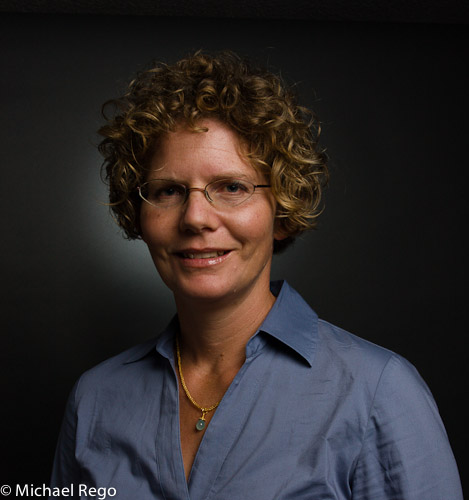
ProfilesAnn Neville Miller is a Professor in the Nicholson School of Communication at the University of Central Florida.

She has published over 60 peer-reviewed journal articles, one edited volume, and numerous book chapters. Much of her work addresses critical issues concerning communication about HIV in sub-Saharan Africa, including communication of religious leaders and churches toward HIV prevention in Africa, and the role of sexual content in African entertainment media in youth sexual attitudes and behavior. She also has a long-running research interest in barriers to research productivity of African communication scholars. Dr. Miller’s study of African communication patterns arises out of over a dozen years of living, studying, teaching, and researching as an American in Kenya and Uganda. She continues to work closely with former colleagues there on a range of projects.

Dr. Miller was the receipt of a Fulbright African Regional Research Grant in 2015 and a Fulbright Specialist grant in 2017, and has served as a consultant to the World Health Organization.

Recent publications include:

Kayongo, C., & Miller, A. N. (2018). Men’s response to Obulamu campaign messages about male involvement in maternal health: Mukono District, Uganda. Health Communication, electronic publication Aug 1, 2018.

Ngula, K., Miller, A. N., & Mberia, J., K. (2018). Motivational and contextual factors related to Kenyan adolescents’ intake of sexual radio and TV content. Health Communication, 33, 724-732.
doi: 10.1080/10410236.2017.1306909

Miller, A. N., Gabolya, C., Mulwanya, R., Nabasaaka, G., Kiva, J., Nalugya, E., Lagot, S., & Chibita, M. B. (2018). The relationship between parental mediation of adolescent media use and Ugandan adolescents’ sexual beliefs, attitudes and behavior. Howard Journal of Communications, 29, 161-174. doi:10.1080/10646175.2017.1354788.

Miller, A. N., Sellnow, T., Neuberger, L., Todd, A., Freihaut, R., Noyes, J., Allen, T., Alexander, N., Vanderford, M., Gamhewage, G. (2017). A systematic review of literature on training in crisis and risk preparedness. Journal of Health Communication, 22, 612-629.
doi: 10.1080/10810730.2017.1338802