GIGA: Postdoc in Comparative Politics with a focus on Sub-Saharan Africa (Germany)

Postdocs

Postdoctoral Research Fellow in Comparative Politics with a focus on Sub-Saharan Africa, German Institute for Global and Area Studies, Hamburg, Germany. Deadline: 26 May 2025.

The German Institute for Global and Area Studies (GIGA) / Leibniz-Institut für Globale und Regionale Studien is an independent social science research institute based in Hamburg. It analyses political, social, and economic developments in Africa, Asia, Latin America, and the Middle East, and links this knowledge to questions of global significance. It combines region-specific analysis with innovative comparative research on accountability and participation, peace and security, globalisation and development, and global orders and foreign policies. The GIGA seeks to appoint a Postdoctoral Research Fellow (M/F/D) in Comparative Politics With a Focus on Sub-Saharan Africa.

Applications are invited for a full-time position, with an initial contract of three years and the possibility of another three years after successful evaluation and depending on the availability of funds. The successful applicant should start as soon as possible. The successful candidate will work on key questions and challenges in comparative politics with a focus on sub-Saharan Africa. Potential research areas include but are not limited to autocratisation and democratisation, domestic politics and/or institutions, external actors, comparative political economy, the comparative study of conflicts, questions of misinformation or repression, and the political challenges arising from digitalisation. They expect the candidate to outline a corresponding research agenda.

Munich U of Applied Sciences: Business English & Intercultural Competence (Germany)

“JobProfessor of Business English and Intercultural Competence, Munich University of Applied Sciences, Munich, Germany. Deadline: 5 May 2025.

To further strengthen their team, HM Business School is seeking to appoint a Professor of Business English and Intercultural Competence for the winter semester 2026/2027. You will teach English language courses on specialized topics in business, economics, and intercultural communication at HM Business School in both undergraduate and advanced degree programs. Your in-depth knowledge of English-language business communication and your professional experience will enable you to successfully implement integrated modules and projects in business studies. You are a highly motivated individual (m/f/d) with academic expertise and professional experience in English business communication.

Roman Lietz Profile

Profiles

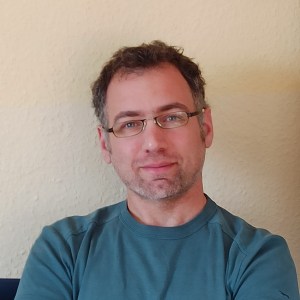
Roman Lietz received an MA and a PhD in Intercultural Business Communication from the Friedrich-Schiller-University of Jena, in Germany.

Roman LietzHe gained seven years of practical experience in Berlin (Germany) managing the – at that time – second largest project for integration assistants (Integrationslotsen) in Germany. With this practical backing, he commenced an academic career in teaching and research. He was a researcher at various universities (the Karlshochschule of Applied Sciences, the Hochschule Karlsruhe of Applied Sciences, the University of Landau, and the Johannes-Gutenberg University of Mainz/Germersheim) carrying out several applied research projects concerning questions of integration, participation and intercultural communication. The latest project is the ReDICo project (Researching Digital Interculturality Co-operatively), carried out together with Fergal Lenehan among others. The ReDICo research co-operative also retains editorship of the book series Studies in Digital Interculturality.
His list of publications includes one monograph concerned with quality assurance in integration projects (2018, in German), and three co-edited volumes on the topics of cyber-utopia/dystopia (2022, in English), language and interculturality in the digital world (2024, German and English), and about the reimagining of digital cosmopolitanism (2025, English), and more than 30 articles, research reports and newer forms of science content communication, such as an educast and a podcast.


Work for CID:

Roman Lietz wrote a guest post for the Center, The Need for a Cosmopolitan Perspective.

Humboldt U: inherit. heritage in transformation Fellowships 2026-27

Fellowships

Fellowships inherit. heritage in transformation, Humboldt University, Berlin, Germany. Letters of interest for 2026-27 appointment are due 14 April 2025.

The Centre for Advanced Study inherit. heritage in transformation, a BMBF-funded Käte Hamburger Kolleg based at Humboldt-Universität zu Berlin, is pleased to invite applications for its fellowship program, which will run from 1 October 2026 to 31 July 2027. This opportunity is open to both experienced and early-career postdoctoral researchers, as well as artists, filmmakers, and curators.

The theme for the 2026-2027 Fellowships is:
‘Addressing Heritage Loss’

Applications should relate to the following research areas of the Centre:
* Decentring the West
* Decentring of the human being
* Changing values

The Centre explores historical, contemporary, and potential future transformations in heritage and hosts up to fifteen international fellows each year to pursue their research. The topic for applications for fellowships for 2026-7 is Addressing Heritage Loss. Applications should also relate to one or more of our guiding themes: decentring the west. decentring the human, and transforming value.

CFP Studies in Digital Interculturality Book Series

“Publication

Call for submissions: Studies in Digital Interculturality Book Series, ReDiCo. Deadline: Rolling.

Co-editors: Luisa Conti, Fergal Lenehan, Roman Lietz and Milene Mendes de Oliveira.

The ReDICo project (“Researching Digital Interculturality Co-operatively”) is pleased to announce an open call for submissions for the book series Studies in Digital Interculturality. This peer-reviewed series explores the diverse dimensions of intercultural practices and discourses within digital spaces, as well as their influence upon issues such as identities, group social cohesion and cultural change. In the series, they aim to publish thematically relevant monographs, edited volumes, dissertations and other contributions of the highest quality. A possibility also exists to publish all books as open access by the transcript Publishing House, in cooperation with the international de Gruyter Publishing House.

Fergal Lenehan Profile

Profiles

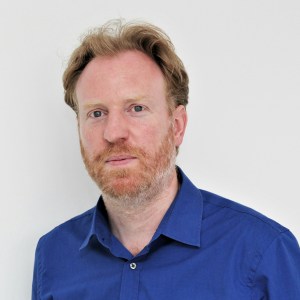
Fergal Lenehan is adjunct Professor (ausserplanmäßger Professor) at the Friedrich-Schiller-University of Jena, in Germany. He received a BA and an MA from University College Dublin, Ireland, and a PhD from the University of Leipzig, Germany.

Fergal LenehanHe also completed the German Habilitation – the formal, second PhD which allows you to officially become a Professor – at the Friedrich-Schiller-University of Jena. He is also journalistically active and has written for the Dublin Review of Books and The Currency, among other publications.

He has had a varied research profile, but intercultural questions have remained central. He has written a monograph on the intellectual history of the European idea, Intellectuals and Europe: Imagining a Europe of the Regions in Twentieth Century Germany, Britain and Ireland (2014), and a monograph on German depictions of Ireland, Stereotypes, Ideology and Foreign Correspondents: German Media Representations of Ireland, 1946-2010 (2016).

In recent years, he has been a central figure in the research co-operative ReDICo: Researching Digital Interculturality Co-operatively. As part of ReDICo he has been co-editor of a number of open-access publications dealing, theoretically and empirically, with the topic of digital interculturality. These include a special issue of the journal Interculture Journal on Cyber-Utopia / Dystopia? Digital Interculturality between Cosmopolitan and Authoritarian Currents (2022), and the edited volumes: Language and Interculturality in the Digital World (2024), Lifewide Learning in Postdigital Societies (2024), and Reimagining Digital Cosmopolitanism (2025). He is also co-editor, with Luisa Conti, Roman Lietz and Milene Mendes de Oliviera, of the book series Studies in Digital Interculturality. ReDICo has also developed educasts, a podcast series, and the scholarly platform, the ReDICo-Hub. He recently published the article Examining realised and unrealised contacts: theoretical thoughts on digital interculturality (2024) in the journal Language and Intercultural Communication.

Work for CID:

Fergal Lenehan has written a guest post for the Center, The Need for a Cosmopolitan Perspective, as well as writing KC114: Digital cosmopolitanism, and then translating it into German.

FMSH: Trilateral “Villa Vigoni” Workshops (France, Italy, Germany)

GrantsTrilateral “Villa Vigoni” workshops (France, Germany, Italy), Fondation Maison des Sciences de l’Homme (FMSH), Paris, France. Deadline: 13 April 2025.

In order to promote the exchange between researchers active in France, Germany, and Italy and the construction of scientific networks within the humanities and social sciences, as well as to explicitly encourage the use of French, German, and Italian as scientific languages, the Fondation Maison des sciences de l’homme (FMSH), the Deutsche Forschungsgemeinschaft (DFG), and the Villa Vigoni have set up the “Trilateral Workshops” program. Applications for this program can come from all disciplines of the humanities and social sciences. They will be selected on the basis of a competitive evaluation procedure.

Each trilateral workshop consists of a series of three scientific meetings, organized at the rate of one meeting per year. They will all take place at Villa Vigoni (located on the shores of Lake Como). The participants in the Workshops form a core group of 12 (minimum) to 16 (maximum) researchers coming, if possible in a balanced way, from the three partner countries and from different institutions within the same country. This group will remain the same for all meetings.

The submission of the project and the coordination of each workshop are ensured by a group of three researchers active respectively in France, Germany and Italy. The project leaders guarantee that they have an institutional affiliation (university, research organization, etc.) for the duration of the proposed project.

The participation of researchers at the beginning of their career is highly desirable. In order to facilitate the submission of a project, postdocs (up to 6 years after the defense of the thesis) may choose to submit their application in a reduced format. This variant is only possible if at least two of the three project leaders and at least half of the participants are in the post-doctoral phase defined above. In this case, the conditions are as follows: support for two years for two (instead of three) meetings and with a group of 9 (minimum) to 12 (maximum) participants; each of the three partner countries must be represented by at least 2 (if there are more than 9 participants, by at least 3) persons.

ReDICo 2025: Digital Pasts and Futures: Internet Histories, Digital Interculturality and Reimagining Digitality (Germany but Online)

ConferencesDigital Pasts and Futures: Internet Histories, Digital Interculturality and Reimagining Digitality, ReDICo, Germany but online, 23-24 June 2025. Deadline for abstract: 28 February 2025.

Digital Pasts and Futures: Internet Histories, Digital Interculturality and Reimagining Digitality – The Fourth ReDICo Conference Online, 23-24 June 2025. In this conference organizers would like to bring together scholars who engage with internet histories, digital futures and digital interculturality so as to initiate a discussion regarding the reimagining of digitality, not least its relationship to interculturality. They are, thus, interested in wide and interdisciplinary approaches that go beyond the presentism that often marks media and communication studies, while also engaging with alternative visions of how digitality can be construed, not least from an intercultural perspective.

It is intended that a selection of the papers presented will be published following a peer review process in book form, funding pending, with the transcript Publishing House in the Series “Studies in Digital Interculturality”. The conference is without fees, completely online and is funded by the German Federal Ministry for Education and Research (BMBF). Keynote speakers that have already been confirmed include Prof. Valérie Schafer (University of Luxembourg), Associate Prof. Helle Strandgaard Jensen (Aarhus University), Prof. Ethan Zuckerman (University of Massachusetts, Amherst) and Prof. Ramesh Srinivasan (University of California, Los Angeles).

Bielefield U: IAS Research Group Funding 2024-26 (Germany)

FellowshipsVisiting groups (not individuals), Center for Interdisciplinary Research, Bielefeld University, Germany. Deadline: 24 April 2025.

The Center for Interdisciplinary Research (ZiF) is Bielefeld University’s Institute for Advanced Study. It offers opportunities—with respect to time, space, and funding—for outstanding interdisciplinary research. ZiF is open to scholars from all disciplines post-PhD, based in Germany and abroad. They can propose a research project to be conducted with a curated group of (preferably) international colleagues.

In support of the work of groups on-site in Bielefeld, ZiF allocates financial resources and provides infrastructure as well as organisational support. If their collaborative application is successful, ZiF will host these groups on its campus. Visiting Groups can, for example, explore new research topics and partnerships, finalise interdisciplinary publications or conduct small research projects during their stay at ZiF. Visiting Groups can, for example, explore new research topics and partnerships, finalise interdisciplinary publications or conduct small research projects during their stay at ZiF.

• Duration: one stay at ZiF of a duration between one and three months
• Funding Amount: up to EUR 50,000 to cover the costs for travel and accommodation, workshops and/or conferences on-site; personnel expenses (buy-outs) cannot be covered, but an allowance of 1.000 EUR per month will be paid as a compensation for any additional costs
• Timing: Projects can commence approximately 12 months after the deadline.

Osnabrück U: Postdoc in Futures of Migration (Germany)

Postdocs

Postdoc in Futures of Migration, Institute of Migration Research and Intercultural Studies, Osnabrück University, Germany. Deadline: 7 January 2025.

As part of the research area ‘Futures of Migration’ (FuturMig) funded by the Lower Saxony Ministry of Science and Culture, Osnabrück University is seeking to appoint a Postdoctoral Researcher.

The Institute for Migration Research and Intercultural Studies (IMIS) at Osnabrück University, the Center for Global Migration Research (CeMig) at the Georg August University Göttingen, the Center for Educational Integration (ZBI) at the University of Hildesheim, the Leibniz Institute for Educational Media, Georg Eckert Institute (GEI), Brunswig, and the Friedland Museum are cooperating in the Lower Saxony research area ‘FuturMig’ (2025–2029).

‘FuturMig’ deals with ideas and strategies for shaping the future of societies that are shaped by migration and diversity in political, media, and societal debates, fields of practice and migration research. ‘FuturMig’ is reviewing the academic state of the art, is planning the establishment of an international guest professorship and the development of a follow-up collaborative research initiative. ‘FuturMig’ focuses in particular on educational contexts – early childhood institutions, schools, universities, civil society initiatives, museums and memorials.