Collegium de Lyon Fellowships 2025-26 (France)

Fellowships

Collegium de Lyon Fulbright fellowships, Lyon, France. Deadline: 16 September 2024.

Through a new partnership between the Franco-American Fulbright Commission and the Collegium de Lyon, applicants to one of the three national Fulbright scholarship programs (All Disciplines, French Studies, Fulbright-Tocqueville) who wish to be hosted in a research unit in Lyon or Saint-Etienne are now eligible for a Collegium fellowship. This includes all-inclusive housing in the Collegium residence on the ENS de Lyon campus, assistance with administrative formalities, and integration into the 2025-2026 interdisciplinary cohort of international fellows.

Scholars interested in the Collegium fellowship program are asked to include a letter of support from the director of the targeted research unit at the University of Lyon with their Fulbright application.

Director, Collegium de Lyon job ad (France)

Director – Collegium de Lyon
Université de Lyon recruits the Collegium de Lyon Director

The Collegium de Lyon is an international and multidisciplinary Institute for Advanced Study (IAS), focusing on social sciences without excluding exact sciences. Its purpose is to create an academic community based on a culture of excellence, supporting exchanges between disciplines, cultures and languages.

The Institute benefits from Lyon’s overall academic environment, coupling its research to the scientific and educational potential of the city (universities and grandes écoles, research networks, institutions), with the vision of developing cross-disciplinary reflections and launching pioneering research.

The Collegium de Lyon’s primary ambition is to link the Institute’s research program to the diffusion of knowledge for action. In the domain of public policy, it should therefore act as an intermediary between the research sphere and political and social issues. Research undertaken within the Institute should comprise reflections informing the construction of public policy: urban policy and planning, health policy and risk management, cultural policy, international relations and urban powers, development of heritage sites, etc and should be linked with Université de Lyon strategic themes : Global Health and society / Sciences and Engineering for sustainable development / Humanities and urbanity.

ROLE
Promotion of the Collegium Strategy and responsibility for its implementation:
• Source of proposals for the Board of Directors and the Academic Board to lay out the strategy and to update it;
• Implementation of the Collegium strategy defined by the Board of Directors;
• Development of public and private partnerships with national and international actors;
• Setting out and execution of the fundraising and sponsorship strategy, in collaboration with the Fondation pour l’Université de Lyon;
• Steering of the Program of Action deployment.

Coordination of the academic animation:
• Scientific animation of the Collegium in collaboration with the territorial partners
• Definition of the communication strategy

Management
• Interface with the Fondation pour l’Université de Lyon
• Preparation with the Université de Lyon President of the Board of Directors meetings
• Budget preparation and implementation based on Board of Directors decisions.

REQUIREMENTS
• Extensive knowledge of scientific communities in humanities and social sciences
• Bilingual French/English. Knowledge of any other language is an asset;
• Project management and public-private partnerships skills;
• Good knowledge of national and international funding mechanisms;
• Knowledge of national and international research networks;

Successful fundraising experience would be an asset as well as a good knowledge of Université de Lyon academic sphere.

CONDITIONS
The position is open to all European candidates. This is a half-time position, with a two-year and renewable contract starting on March 15th, 2016.

How to apply
To apply for this post please provide a cover letter and a CV detailing your work experience and skills and your main scientific publications.

All applications should be sent before February 19th, 2016 to Université de Lyon President by email.

Interdisciplinary Summer School on Economy and Language (Paris)

Call for applications
Interdisciplinary Summer School on Economy and Language

The aim of this Summer School is to bring together PhD students in economics and linguistics who are working on or are interested in any the manifold aspects of the relationship between economy and language in order to continue engaging in a fruitful and overdue dialogue between the two disciplines.

From 10 to August 21, 2015
University of Chicago Center in Paris
6 rue Thomas Mann
75013 PARIS (France)

Lectures will be taught and discussion sessions will be led alternately by economists and linguists, who have published on economy and language from the point of view of their respective discipline. Lectures will cover a broad range of topics including:
*Language and economic development
*Language in/and materiality
*Language proficiency and its implications for language policies
*Informal economy and language practice
*Language proficiency and immigration
*Language commodification and income-earning
*Economy and language vitality
*Costs and benefits in foreign language learning
*Use of national micro-data in measuring patterns and trends in language demographics
*Linguistic distances and their use in economics
*Standardization and its discontents

Instructors:
Professor Barry Chiwick (Economist), University of Washington
Professor Paulin Djité (Linguist), retired from the University of Western Sydney, Australia
Professor Judith Irvine (Linguistic anthropologist), University of Michigan at Ann Arbor
Professor Salikoko S. Mufwene (Linguist), University of Chicago
Professor Dorrit Posel (Economist), University of KwaZulu-Natal, South Africa
Professor Cécile B. Vigouroux (Linguist), Simon Fraser University, Canada
Professor Schlomo Weber (Economist), Southern Methodist University, Dallas & New Economic School, Moscow

Targeted Participants:
Economics and linguistics PhD students at any stage of their training/research are welcome to apply. The Summer School is open to students working in different subfields of economics (micro and macro) and of linguistics (e.g. applied linguistics, sociolinguistics, ethnography, linguistic anthropology; language endangerment), as well as in related areas (e.g., economic sociology, economic anthropology, political economy).

Tuition:
The sponsors of the Summer School will underwrite room and board expenses for all participants, who will be housed at a student residence in Paris. Except for those coming from the economic South (e.g. Africa and India), who will be fully funded by our sponsors, students will pay for their travel to and from Paris.

Application:
Interested students should submit an abstract not exceeding 800 words in which they describe their research interests/projects and articulate their particular research questions, as well as how they hope to benefit from the Summer School. They should state clearly whether they are pursuing a degree in economics, linguistics, or a related discipline and what particular theoretical framework they have used so far, if this is applicable. A current CV and a support letter from the applicant’s major professor or adviser should be included in the application, which can be written in either English or French.

Applications should be submitted in a PDF format in one single file (including the abstract, the CV, and the reference letter). 16 students will be selected based on the merits of their applications and the contributions that their participation can make to the success of the Summer School. An effort will also be made to balance the disciplinary backgrounds of the students, in order to foster a productive exchange of ideas across disciplines.

The applications must be submitted electronically by March 15, 2015 to the following website:  collegium-lyon.candidature@ens-lyon.fr (with the heading SUMMER SCHOOL). The applicants will be informed by May 15, 2015 about the outcome of their applications.

Language of Instruction:
The language of instruction will be English, although some accommodation will be made to students who are more fluent in French than in English to ask questions or to comment in French. Some competence in English is required in order to benefit from the lectures, the readings, and the discussion sessions.

CONTACT INFORMATION
For further information, prospective applicants can contact Professor Cécile B. Vigouroux with the heading SUMMER SCHOOL PARIS 2015. The queries can be written in English or French.

History and Organizers:
The Collegium of Lyon, France, in collaboration with the Réseau Français des Instituts d’Etudes Avancées (RFIEA), is sponsoring a two-week interdisciplinary summer school on Economy and Language at the University of Chicago Center in Paris, during August 10-21, 2015. Organized by Professor Salikoko S. Mufwene (University of Chicago) and Professor Cécile B. Vigouroux (Simon Fraser University), this Summer School is one of the outcomes of the productive workshop on Language and Economy hosted by them, at the same location, on June 19-20, 2014. Like the Workshop, the Summer School will bring together economists interested in the role that language plays in economic development and linguists working on economic aspects of language practice, in an effort to bridge both economics and linguistics on their overlapping interests. We learned, among other things, how useful it is to understand how practitioners in the other disciplines address issues that may be negligible to us and/or why they address them the way they do.

Erving Goffman book-collaborative project

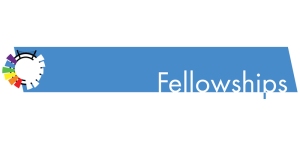
One of the international collaborative projects that developed as a result of my 2009 stay at the Collegium de Lyon (France) was a book on Erving Goffman with Prof. Yves Winkin, of the Ecole Normale Supérieure de Lyon, that has been in process for several years. That book has just been published.

Erving Goffman by Winkin and Leeds-Hurwitz

Winkin, Y., & Leeds-Hurwitz, W. (2013). Erving Goffman: A critical introduction to media and communication theory. New York: Peter Lang.

My thanks to Yves Winkin for inviting me to co-author the book; to Dave Park, the series editor, for considering Goffman an essential communication theorist; and to all the editorial staff at Peter Lang, who were quite efficient once we submitted the manuscript.

Although Erving Goffman never claimed to be a media or communication scholar, his work is definitely relevant to, and has already served as a substantial resource for, those who are. This is the first detailed presentation and analysis of his life and work intended specifically for a communication audience. While primarily an introduction to Goffman’s work, those already familiar with his ideas will also learn something new. In addition to summarizing Goffman’s major concepts and his influence on other scholars, the book includes an intellectual biography, explication of his methods, and an example of how to extend his ideas. Readers are invited to consider Goffman as a lens through which to view much of the pattern evident in the social world. Goffman’s work always appealed to the general public (several of his books became bestsellers), and so this book has implications for those who are interested in the role of media or communication in their own lives as well as those who study it professionally.

For those interested, the book is available either directly from Peter Lang, or from Amazon.

These fictions we call disciplines

An article growing out of research started as a Fellow at the Collegium de Lyon in 2009 has just been published:

Leeds-Hurwitz, W. (2012). These fictions we call disciplines. Electronic Journal of Communication/La Revue Electronique de Communication, 22(3-4). Available from: http://www.cios.org/www/ejcmain.htm

Abstract: Accepting that disciplines are social constructions implies expanding current practice in four directions: incorporating disciplinary history, cognate disciplines, international variations, and rival subdisciplines. Intercultural Communication serves as a concrete case study for how these implications play out. Consideration of the broader impact of these issues on the future of social construction research leads to concluding discussion of the characteristics required of more adequately prepared scholars.

Here’s a quote relevant to my work with the Center for Intercultural Dialogue:

“There can be no more literal form of alien knowledge than that produced by foreign scholars. Their research agendas have different histories, so they have developed different traditions of investigation, whether methods, theories, or topics. One result is that foreign research can be difficult to understand, requiring time and effort spent developing familiarity with the vocabulary used and assumptions made. Yet the result repays the time and effort: just as looking at the past reveals paths not taken, so does looking at research conducted in other countries.”

Wendy Leeds-Hurwitz, Director
Center for Intercultural Dialogue

Save