Royal Roads U: Canada Research Chair in Changemaking (Canada)

“JobTier 2 (Emerging Scholars) Canada Research Chair in Changemaking, Royal Roads University, Victoria, BC, Canada. Deadline: 9 July 2025.

As a Tier 2 CRC at Royal Roads, you will develop an exemplary scholarly and creative presence, complement, and enrich research and scholarship among faculty and graduate students, and participate in local and international research networks. While based in one faculty, you will collaborate with other units within RRU as appropriate.

As the Tier 2 CRC in Changemaking, you will have established relationships in both academic and non-academic communities and a portfolio demonstrating the application of applied and problem-based research methods. You will also have demonstrated success (or a high degree of promise) in obtaining research funding from diverse sources, leading collaborative research initiatives, establishing and maintaining community relationships, supervising student research, and mobilizing research. Royal Roads considers a broad range of contributions to research, training and mentoring as part of the merit review process, with a focus on the quality and impact of these contributions.

The successful applicant will be nominated by the University for a Tier 2 CRC and, upon approval by the CRC Secretariat, will be offered an initial five-year continuing-track appointment with the possibility of conversion into a continuing appointment, subject to performance and program needs. The Tier 2 Chairs include the possibility of a renewal for an additional five years.

This position is not currently linked to a particular school within the Faculty of Interdisciplinary Studies and is open to candidates from a wide variety of disciplinary backgrounds. The determination of school will be based on the successful candidate’s area of focus. The nominee’s research area, however, must be primarily in the social sciences and humanities (i.e., aligned with the legislated mandate of the Social Sciences and Humanities Research Council of Canada).

Tier 2 Chairs are intended for exceptional emerging scholars. Candidates must have been an active researcher in their field for fewer than 10 years at the time of nomination. Applicants who are more than 10 years from their highest degree may have their eligibility for a Tier 2 Chair assessed through the program’s Tier 2 justification process. This process considers career breaks such as parental leave, illness, administrative burden, clinical training, and others. For further information, see the Canada Research Chairs website.


Cole Foundation Grants: ICD Through Theatre 2025 (Canada)

Intercultural Conversations-Conversations Interculturelles programme, Cole Foundation, Montreal, Canada. Deadline: 28 March 2025.

Twice a year the Cole Foundation’s Intercultural Conversations-Conversations Interculturelles (IC-CI) program disperses hundreds of thousands of dollars to support professional Montreal theatre companies to produce, commission and translate plays that show diversity on stage. This encourages greater understanding of Montreal’s intercultural reality by having audiences both learn about and see their stories presented.

The Cole Foundation is committed to celebrating the vibrant multi-cultural mosaic of Montreal, Quebec and the rest of world by supporting professional theatre that features the stories of different (racial, ethnic or religious) cultures. We hold a bi-annual competition, awarding grant funding to the production, creation, and translation of plays that bring to the stage the voices of such cultures.

Vancouver Dialogues (Canada)

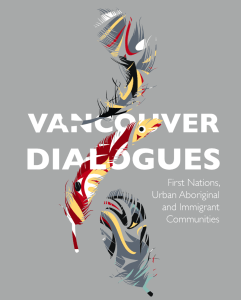
Applied ICDVancouver Dialogues: First Nations, Urban Aboriginal, and Immigrant Communities, Vancouver, BC, Canada.

“Stories build community and create understanding. They are the memories and oral histories of peoples who have taken different journeys to create a home in Vancouver. The City of Vancouver Dialogues Project aimed to create cohesive communities by exploring the stories of Vancouver’s First Nations, urban Aboriginal and immigrant communities.”

The book resulting from the 2010-11 project (available online, for free) can serve as a model to other communities for how to get people from different cultural backgrounds talking to one another. At the end of the project, “Overwhelmingly, those who have been involved with the Project have asked for a continued dialogue about the issues which have been raised,” which can only be understood as a marker of success.

Stories from the Silk Roads (Canada)

Applied ICD

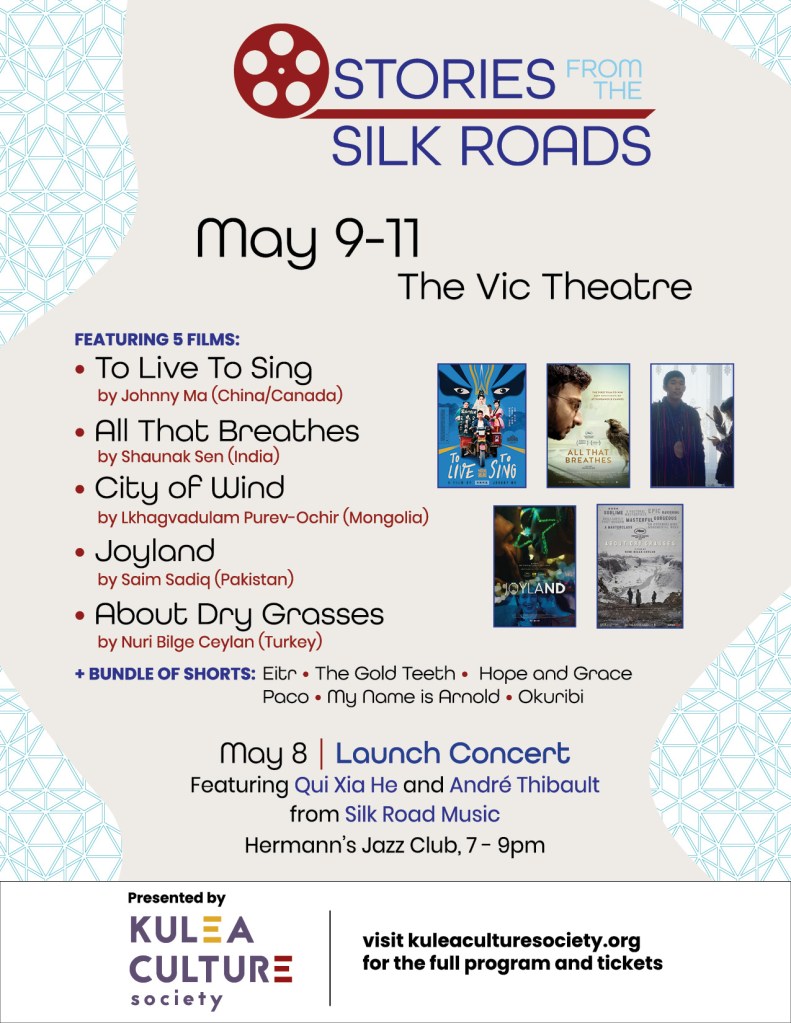
Storis from the Silk Roads, Kulea Culture Society, Victoria, British Columbia, Canada, 8-11 May 2024.

Stories from the Silk Roads, Kulea Culture Society

During Asian Heritage Month, Kulea Culture Society presents Stories from the Silk Roads, a four-day event of music and film to celebrate the rich heritage of Canadians with roots in the Asian continent. The Silk Roads were a system of caravan routes crossing the Eurasian continent from the Mediterranean Sea to China. They influenced the emergence and development of trade and cultural ties between people and statehoods located along the way and beyond. The routes carried goods, ideas, people across the continent and the sea from China, India, Uzbekistan, Turkmenistan, Kazakhstan, Iran, Syria, Turkey among others to the Mediterranean and the West. Just like on the Asian continent, different Asian communities live across Canada today. These cultures have developed their distinct identities, arts and histories through interaction and communication with each other in Canada. Stories from the Silk Roads highlight diversity and harmony through arts and culture.

U Montreal: Assistant Professor of Anthropology (Canada)

“JobAssistant Professor of Anthropology, Faculty of Arts and Sciences, Université de Montréal, Montréal, Québec, Canada. Deadline: 20 November 2023.

The Department of Anthropology invites applications for a full-time, tenure-track position as Assistant Professor of anthropology. Specifically, the Department seeks candidates with an active research programme on social mobilisations (collective action, social movements) and/or information technology and circulation. The selected candidate’s research programme must be ethnographic in nature and comprise an international dimension. Original methodological innovations will be an asset, as will having thematic or geographical research expertise not currently represented in the Department. In their teaching and student mentorship, the selected candidate will also contribute to the International Studies program.

NOTE: The Université de Montréal is a French-language institution.

York U: Postdoc in Education, Mobility & Social Capital (Canada)

Postdocs
Jean Augustine Chair in Education, Community and Diaspora, York University, Toronto, Canada. Deadline: open until filled (posted June 2023).

York University invites applications for a Postdoctoral Fellowship in the area of education, social mobility, and social capital amongst Black adult learners. The Jean Augustine Chair in Education, Community & Diaspora is a university chair in the Faculty of Education at York University, which aims to advance access, equity and inclusivity to education through community engagement and collaborative action. First launched in 2008, the chair holder initiates, facilitates, directs and engages in research, educational programs, and community partnerships which are culturally responsive and relevant to the educational and social needs, interests and aspirations of Black and other racialized community members.

The Postdoctoral Fellow will engage in research that (1) advances knowledge about the lives of Black people in Canada with attention to the educational and community interventions that can support Black students as well as (2) establishes a comprehensive, nation-wide understanding of the pathways racialized individuals utilize towards realizing educational, social and economic mobility in Canada. It is expected that this Fellowship will offer emerging Black scholars and recent graduates new and/or additional opportunities, supports and education that will build on their graduate work; as well as opportunities to engage in research, writing, publishing and mentorship activities.

CERC: Under the Tent (Canada)

Intercultural Dialogue Pedagogy
Under the Tent. Canada Excellence Research Chair (CERC) in Migration and Integration, Toronto Metropolitan University, Toronto, Canada.

“Under the Tent is a multimedia storytelling project that explores how individuals experience a sense of belonging or not belonging under the tent of Canadian multiculturalism…The project began in the fall of 2021 with a call to graduate students from across Canada to collaborate with CERC Migration to produce a creative work that investigated multiculturalism…Through a competitive process, a select group of graduate students were invited to receive training support and mentorship to explore their personal experiences with race and diversity in the production of a creative work using a medium of their choice. They were asked to express criticisms and also new thinking on the future possibilities of multiculturalism.”

What is now available online are 17 of the stories presented as short films, sometimes supplemented by photographs and interviews, describing ways in which each of the authors falls “under the tent” of multiculturalism in Canada. These are divided into 3 acts: Act 1: Negotiating barriers, overcoming differences; Act 2: Connections to the past, the journey ahead; and Act 3: Importance of refuge, reconciliation and empowerment. This would be a useful collection to begin a class discussion, and might well serve as inspiration for a class project.

Royal Roads U: Creating a Multicultural Learning Community Online (Canada)

Intercultural Pedagogy

Intercultural Dialogues: Creating a Multicultural Learning Community Online. (14 October 2020). Royal Roads University.

Professors Dr. Juana Du, Dr. Zhenyi Li, and Dr. Deniz Unsal from the MA in Intercultural and International Communication program within the School of Communication and Culture, at Royal Roads University, posted a video of their workshop on how to create a multicultural learning community online, with the assumption that the goal is teaching online, and creating intercultural dialogues in the process. The video is intended for instructors rather than students.

Toronto Metropolitan U: Civil Society & Public Administration Fellowship (Canada)

Fellowships

CERC Civil Society & Public Administration Fellowship, CERC in Migration and Integration, Toronto Metropolitan University, Toronto, Canada. Deadline: 1 May 2023.

The CERC Civil Society & Public Administration Fellowship program welcomes practitioners from civil society organizations or government bodies outside of Canada who have international experience working in the field of migration or immigrant integration and inclusion to apply to participate in a one-month residency at Toronto Metropolitan University. The residency takes place in Toronto and must occur between October 1, 2023 to June 30, 2024 for a consecutive period of 20 to 35 days.

The program promotes international collaboration and learning exchange between practitioners and researchers. It provides a unique professional development opportunity for practitioners to share and build on their field experience, connect to an expert team of Canadian and international researchers and local stakeholders, or conduct their own field research. The experience will help practitioners develop and bring back to their organizations innovative ideas for applied research and evidence-based good practices. At the same time, practitioners would be encouraged to contribute their perspectives to the work of the CERC Migration team.

Toronto Metropolitan U: Postdocs for Black Scholars (Canada)

PostdocsUp to four postdoctoral fellowships for Black scholars, Toronto Metropolitan University, Toronto, Canada. Deadline: 1 April 2023.

Black scholars are among the most underrepresented in postdoctoral positions, tenured faculty positions, and in University leadership. Building on the recommendations of the Anti-Black Racism Campus Climate Review and reinforced by the PDF fileStanding Strong committee recommendations, and as part of a wider commitment to equity, in recognition of the barriers to equal opportunities for education and employment, TMU is implementing this program with the goals of building a more diverse and inclusive academe, and supporting the flourishing of Black scholarship. In particular, this program seeks to expand and advance Black scholarship and intellectual traditions, and support the academic endeavours of the Black community.

Funding will be available to provide $70,000 per year to support up to two years of postdoctoral salary for four (4) Black scholars. Eligibility:

  • Scholars who self-identify as Black (of African descent; for example, Africans and African heritage people from the Caribbean, Americas, Europe).
  • Completion of a PhD or PhD-equivalent within the last three years prior to the application deadline, or PhD expected by the planned start date of the fellowship.
  • Can hold the fellowship by September 5, 2023 for two years.
  • Successful applicants must be eligible to work in Canada by the start of the Postdoctoral position. International applicants may apply; however, successful international applicants will require a work permit and Canadian Social Insurance Number in order to take up the postdoctoral position. Exceptional start dates may be negotiated in relation to the permit and visa process timelines.
  • Be associated with a current or proposed supervisor who holds a tenured or tenure-track faculty position at TMU, and include a letter of support from the proposed supervisor.