
CFP Refugee Integration in a Sharing Economy

“PublicationCall for proposals: Special issue on Refugee Integration in a Sharing Economy: Collective action, Organizational Communication and Digital Technologies for the International Journal of Communication (IJoC). Deadline for abstracts: July 30, 2020.

Issue editors Amanda Alencar and Yijing Wang (Erasmus University Rotterdam) are seeking papers that contribute knowledge to how collective action is enabled in a sharing economy in support of refugee integration in a diversity of contexts and situations. This includes but is not limited to voluntary contribution to refugee management and care at all different levels, from the public sector organizations to private firms, to civil society and refugee-led initiatives and networks.

Potential interdisciplinary questions which can be answered are:

1. How does enabling collective action in a sharing economy contribute to resolving the challenge of refugee integration?
2. In areas of limited statehood, which mechanisms help ensure effective governance of displaced populations in a refugee crisis?
3. What forms of organizational communication and action in terms of refugee integration stimulate the emergence of an ad hoc governance structure in the sharing economy?
4. How does media representation of collective action affect the planning and preparation at the state- and organizational-level in refugees’ receiving countries?
5. To what extent are digital technologies being developed and mobilized by different actors involved in an ad hoc governance of refugee populations?
6. How can the public, private and NGO sector work together to effectively boost economic opportunities to both refugees and host communities as well as social cohesion?

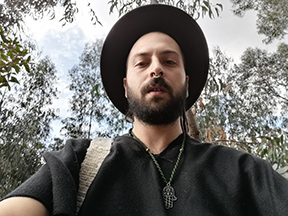
Daniel Mateo Ordóñez Profile

Profiles

Daniel Mateo Ordóñez is a Sociologist from the National University of Colombia, Bogotá, Colombia.

The research areas in which he is interested are: Interculturality, Intercultural Dialogue, Hermeneutics, Hermeneutical Cultural Analysis, Phenomenology, Discrimination, Social Exclusion, Human Rights, and Culture.

He is an independent translator, investigator and author, as well as a volunteer collaborator with the UNESCO Chair in Intercultural Dialogue / Cátedra UNESCO – Diálogo Intercultural at the National University of Colombia, and a member of the “Observatorio de la Exclusión” project associated with the UNESCO Chair.

He is also the creator of the Autarkeia Project, an independent project of dissemination and promotion of knowledge, especially in the area of Human and Social Sciences.

See his profile on academia.edu.


Work for CID:

Daniel Mateo Ordóñez wrote KC101: Antisemitism, and translated it into Spanish; he also translated concepts originally written by others, specifically KC14: Dialogue, KC16: MigrationKC23: Afrocentricity, KC31: Indigenous, KC49: IntersectionalityKC89: Xenophobia, KC90: Islamophobia, and an essay on intercultural dialogue into Spanish. He also has served as a reviewer for Spanish.

Malmo U: PHD Studentship: International Migration & Ethnic Relations (Sweden)

“Studentships“Doctoral position in International Migration and Ethnic Relations, Malmö Institute for Studies of Migration, Diversity and Welfare, Department of Global Political Studies, Faculty of Culture and Society, Malmö University, Malmö, Sweden. Deadline: 7 September 2020.

Doctoral programme in International Migration and Ethnic relations (IMER)

Scholars within IMER study, among other subjects, the national, regional, international and global causes and effects of migration in both the society of origin and destination on a structural, institutional, collective, and individual level. IMER is an inherently multi- and interdisciplinary subject, in which for instance sociology, political science, cultural geography, anthropology, economic history, economics, social work, history, ethnology, religious studies, gender studies, and cultural studies are represented. The goal of the programme is to develop the knowledge and skills required for the doctoral student to conduct research independently and contribute to the development of knowledge within the chosen subject area. The doctoral programme comprises 240 higher education credits (equivalent to four years of full-time studies), of which 60 credits are from courses. It is completed when the doctoral student publicly defends his/her printed doctoral dissertation (180 credits).