Wendy Leeds-Hurwitz Fulbright

Wendy Leeds-Hurwitz
University of Wisconsin-Parkside

Fulbright Senior Specialist to Portugal

One thing leads to another. This is the story of how I became a Fulbright Specialist in Portugal.

In May 2010 I retired from the University of Wisconsin-Parkside. In fall 2010 I applied to the Fulbright Specialist Program, and was approved in spring 2011. This program funds 2 to 6 week visits in 2 countries during a period of 5 years, including airfare and a daily stipend (host institutions cover room and board and in-country travel if it is necessary). In September 2011, while at a conference in Paris, a colleague found out I would be traveling to Portugal for pleasure. He provided an email  introduction to a scholar there with overlapping interests, with the result that I was asked to give two talks at the Instituto Politécnico de Coimbra in November. There was a good fit between my project in France at that time (describing US higher education pedagogy) and the needs of a new teaching center at IPC, so I was asked to return for a longer visit. My host, Dr. Susana Gonçalves, is the director of the new center, Centro de Inovação e Estudo da Pedagogia no Ensino Superior (CINEP). She completed the necessary paperwork, and in spring 2012 the request was approved by both Portugal and the US State Department.

I spent 6 weeks at IPC across April and May 2012, working with the director and staff to determine what information is most relevant to their needs, presenting multiple workshops at the difference schools making up the university, and meeting individually and in small groups with faculty on a variety of pedagogical matters. Workshops included: “The transformation of higher education: Lessons from the US and implications for Portugal,” “Best practices in blended delivery,” “Active learning: Hands-on practice,” “The impact of student-centered learning for curricular design,” and “How to write exams so students need to come to class.”
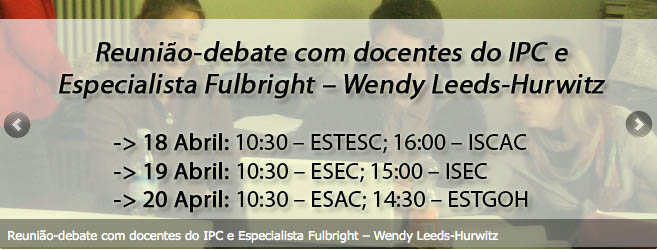
Groups included one from the Engineering school interested in math pedagogy, and one from the Education school interested in reflective practice for preschool teachers. Individual consultations ranged even more widely, from very specific questions on a particular pedagogical technique, to more general questions about common academic concerns, including student motivation and integration of technology into courses. I was also invited to speak to students enrolled in a Master’s level course on marketing.

While in Coimbra, I was invited to present several talks on my research at the University of Coimbra and the University of Lisbon. I also met with the company members of Project Llull, which uses theatre to start intercultural dialogues.

In addition, I was able to connect some of the people I met through these various contexts with colleagues in the US or elsewhere having similar research, teaching, or administrative interests.

***Update: Publication resulting from this Fulbright

Fulbright Program

FulbrightsThe Fulbright International Exchange Program, under the auspices of the US State Department, offers grants to study, teach and conduct research for U.S. citizens to go abroad and non-U.S. citizens to come to the United States. Different programs are available for faculty members, graduate students, and undergraduates. Although most of the programs are for full years, the Fulbright Specialist Program offers stays of 2-6 weeks. Fulbrights are one of the easiest ways for US academics to connect internationally.

By 2014 Fulbright circulated the following information: “As of last year, lifetime limits on Fulbright Scholar Program grants have been lifted, as have waiting periods between grants. This means more flexibility and opportunity to partake in Fulbright experiences throughout your career; you can participate on a semester-long award and not jeopardize your ability to get back on the Roster or your other future participation.” So for those who have already had one Fulbright, consider requesting another!

A few examples of Communication scholars who have been awarded Fulbrights are listed below. If you have completed any of the varieties of Fulbright awards, and wish to have your description added, send an email with details, or post a comment below.

Mara Adelman – Ethiopia
David L. Altheide – Germany and Portugal
Richard Buttny – Malaysia and India
Kevin Barnhurst – Peru and Italy
Donal Carbaugh – Finland
Kristen Cvancara – Finland
Steven Darian – Uzbekistan
Don Ellis – Israel
Glenn Geiser-Getz (Russia & Ghana)
Phillip Glenn – Moldava
Wendy Leeds-Hurwitz – Portugal
Sheila McNamee – Colombia
Tema Milstein – New Zealand

Jon Nussbaum – Wales
Susan Opt – Czech Republic
Todd Sandel – Taiwan
James Schnell – Cambodia
Stacey K. Sowards – Indonesia
John Parrish-Sprowl – Macedonia and Belarus

Ayseli Usluata – USA (from Turkey)
Paul Voakes – Uganda
Joseph Zompetti – Sri Lanka and Brazil

Stories from many of these Fulbrighters (and others) are included in chapter The value of a Fulbright: Internationalizing education one person at a time, published in Internationalizing the communication curriculum in an age of globalization.

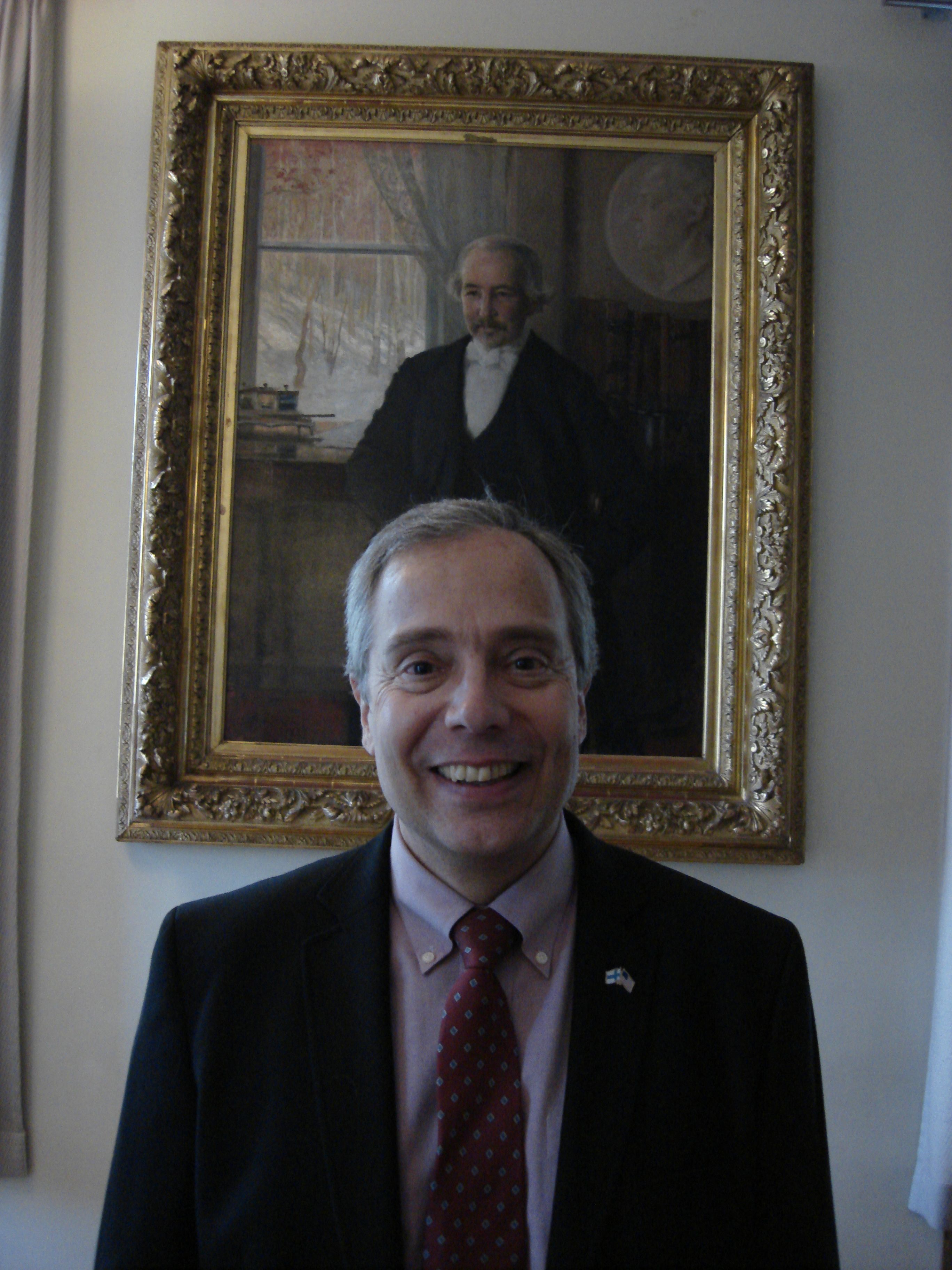
Donal Carbaugh-Fulbright

Donal Carbaugh
University of Massachusetts Amherst

Distinguished Fulbright Professor to Finland

The Fulbright Program is an outstanding resource for collaborating with others on studies of communication, dialogue, and intercultural relations. I have been extremely fortunate over the years to have the support of this program. This began in 1992-1993 when my family and I lived in Finland where I worked with colleagues at the Universities of Tampere and Jyvaskyla, and at the Turku School of Economics. Later, during the 2007-2008 academic year, I held the position of Distinguished Fulbright Professor and Bicentennial Chair of North American Studies at the University of Helsinki. These opportunities have led to longstanding collaborations with colleagues in Finland, to a deepening of studies in intercultural communication and dialogue, and to forging personal relationships that will last a lifetime.

On a related note, on May 11, I will present the closing address at the University of Helsinki’s 14th Biennial Maple Leaf and Eagle conference: “An American West and a Western World: From American Indians to Aristotle and back again.”