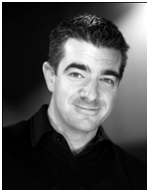
Yves Winkin Profile

ProfilesYves Winkin was Director of Scientific and Technical Culture at the Conservatoire National des Arts et Métiers [National Conservatory of Arts and Crafts] in Paris, and of the Musée des Arts et Métiers [Museum of Arts and Crafts], part of CNAM, from 2015 to 2019.
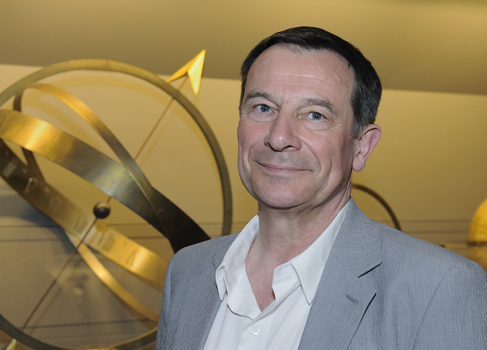
Yves Winkin

He is a member of the Kuratorium of the Deutsches Museum and a curatorial advisor to several museums in Europe. He is commissioning editor for the French publishing house Editions des Archives Contemporaines. In 2013, he served as liaison between the Ecole Normale Supérieure de Lyon (ENSL) and the new Musée des Confluences of Lyon, in charge of interdisciplinary projects. Across 2011 and 2012, he was Director of the Institut Français de l’Éducation [French Institute of Education], a national agency embedded in the ENSL. From 2006 to 2010, he was Deputy Director for Research and International Relations of ENSL; previously he was Professor of Anthropology and Communication at ENSL.

Winkin established the contours in France of an anthropological approach to face-to-face communication; the discipline he helped to define is the anthropology of communication. He offered an appropriate theoretical framework; he made explicit the ethnographic methodology, and suggested areas of investigation. His own research focuses on interactions in urban settings, especially interactions between pedestrians and other urban dwellers.

While mostly based in either France or Belgium, he has substantial international experience, including being a “Fulbright Scholar in Residence” at the University of Wisconsin-Parkside, in the fall of 1983; the University of Quebec in Montreal, in January 1984; invited to serve as associate director of studies by Pierre Bourdieu at the École des hautes études en sciences sociales in April 1984, October 1986, May 1992 and October 1998; a stint as Visiting Associate Professor at the University of California, Berkeley, in the spring of 1987; with additional stops at: Massey University in New Zealand in the summer of 1989; the University of Geneva, from 1992 to 2006 (as a substitute professor); the Universidade Federal do Rio de Janeiro in Brazil in April-May 1995; a return to the University of Pennsylvania, where he had earned his MA, 1997-98; a return to Brazil in August-September 1998, this time at the Universidade Estadual de Campinas in Brazil; and El Colegio de Michoacán in Samora, Mexico, in March 2006. Through international agreements between universities, he has presented courses at Université de la Réunion on Reunion Island, the University of Ouagadougou in Burkina Faso, and East China Normal University in Shanghai. During fall 2012, he was Harron Family Endowed Chair in Communication at Villanova University, in Philadelphia, PA; and  in spring 2013, he served as Visiting Professor of Communication at the Chinese University of Hong Kong.

Authored Books

D’Erving à Goffman: Une oeuvre performée? Paris, France: Editions MkF, 2023.

Réinventer les musées ? Paris, France: Editions MkF, 2020.

Erving Goffman. A Critical Introduction to Media and Communication Theory (with W. Leeds-Hurwitz). New York: Peter Lang, 2013.

Vers une marche plaisir en ville: boîte à outils pour augmenter le bonheur de marcher (with S. Lavadinho). Lyon,  France: Editions du CERTU (Centre d’Etudes sur les Réseaux, les Transports et l’Urbanisme), 2012.

Comment l’informatique vient aux enfants. Pour une approche anthropologique des usages de l’ordinateur à l‘école (with E. Barchechath & R. Magli). Paris, France: Editions des Archives Contemporaines, 2006 .

La communication n’est pas une marchandise. Résister à l’agenda de Bologne. Bruxelles, Belgium: Editions Labor/Editions Espace de Libertés, 2003.

Marché éditorial et démarches d’écrivains. Un état des lieux et des forces de l’édition littéraire en Communauté française de Belgique (with P. Durand). Bruxelles, Belgium: Éditions du Ministère de la Culture, 1996.

Anthropologie de la communication: de la théorie au terrain. Bruxelles, Belgium: Éditions De Boeck Université, 1996.

Erving Goffman: les moments et leurs hommes. Paris, France: Éditions du Seuil et Éditions de Minuit, 1988.

La Nouvelle Communication. Paris, France: Éditions du Seuil, 1981.

Edited Collections

Le Symbolique et le Social. La réception internationale de Pierre Bourdieu. Actes du colloque de Cerisy (with J. Dubois and P. Durand). Liège, Belgium: Editions de l’Université de Liège, 2005.

Rhétoriques du Corps (with P. Dubois). Bruxelles, Belgium: De Boeck, 1988.

Gregory Bateson: premier état d’un héritage. Paris, France: Éditions du Seuil, 1988.

Pragmatique et discours: actes du colloque “Langage et Ex-Communication” (with P. Dubois). Louvain, Belgium: Cabay, 1982.


Work for CID:

Yves Winkin was a member of the Organizing Committee for the National Communication Association‘s Summer Conference on Intercultural Dialogue in Istanbul, Turkey, which led to the creation of CID. He translated KC35: Media Ecology into French; he wrote a meditation on World Day for Cultural Diversity for Dialogue and Development 2023; and he has served as a reviewer for French translations.

Fernand Braudel fellowships to France

Fernand Braudel – IFER Fellowships
Call for applications March 2014

Fernand Braudel-IFER (International Fellowships for Experienced Researchers) Programme supported by the European Commission (Marie Curie Action Programme – COFUND – FP7). The Foundation Maison des sciences de l’homme and the partners of the programme offer postdoctoral fellowships in the humanities and social sciences for a period of nine months.

Programme

This programme is open to applicants from all countries, belonging to a foreign research centre, who wish to undertake a research residency in France.

These post-doctoral research stays are designed to enable researchers to carry out a research project in a host laboratory, integrate scientific networks in France and other European countries and build lasting partnerships between their home institution and the host institution. Applicant’s projects should match the areas of research of these institutions.

All social and human sciences are eligible. An interdisciplinary approach to research topics is encouraged.

Candidates must apply to specific fellowships, offered by several research institutions and “Laboratories of excellence” (Labex) who are partners of the programme.

Online application platform will be open on March 3 2014
Deadline for submission : April 3 2014

Please read carefully the eligibility criteria and the application procedure before applying online.


CFP Paris Institute for Advanced Studies 2015-16

Call for applications
Paris Institute for Advanced Studies (Paris IAS)
Academic year 2015-2016

The Paris Institute for Advanced Studies welcomes applications from all over the world from established scholars and scientists in the fields of the humanities, the social sciences and related fields for periods of five or nine months, respectively. The Paris IAS will host twenty international guest researchers for 2014-2015 to work freely on the project of their choice, to benefit from the scientific environment of the Institute, and to create contacts with researchers in the academic institutions of Greater Paris.

Deadline for applications: April 30, 2014

Applicants may request residencies for the following periods:
1 September 2015 to 31 January 2016 (5 months)
or 1 October 2015 to 30 June 2016 (9 months)
or 1 February to 30 June 2016 (5 months)

See the call for application online

CFP IMéRA (France) residencies

IMéRA (Institute for Advanced Study of Aix-Marseille University) is issuing calls for applications for residencies in 2015 and 2016

*Call for individual applications opened to scientists and artists, for residence schemes scheduled between 23 February 2015 and 13 July 2016 (duration 5 or 10 months);
*Call for team applications opened to scientists and artists, for residence schemes scheduled between 23 February 2015 and 13 July 2016 (duration 2, 3 or 4 weeks) ;
*In connection with the LabexMed programme, call for individual applications opened to scientists for residence schemes scheduled between 15 September 2014 and 17 July 2015 (duration 5 or 10 months).

IMéRA residence proposals are open to researchers (senior and junior) of all origins in terms of nationality and disciplines. IMéRA will consider applicants from the Mediterranean rims in a particularly favourable way.

Deadline : April 7, 2013

Applications can only be submitted on IMéRA’s website.

IMéRA (Mediterranean Institute for Advanced Research) is an Université d’Aix-Marseille [Aix-Marseille University – AMU] Foundation. As such, it is a member of Réseau Français des Instituts d’Etudes Avancées (RFIEA) [French Advanced Study Institutes Network] as well as of réseau Eurias [Eurias network] and of the European Network of University-Based Institutes.

Digital humanities grants

Transatlantic program for collaborative work in the field of Digital Humanities


The Fondation Maison des Sciences de l’Homme (FMSH) is pleased to announce the launch of a new grant program in digital humanities. Thanks to a generous grant from the Andrew W. Mellon Foundation, FMSH will co-finance transatlantic collaborative projects in the field of the digital humanities.

To strengthen its activity in the broad sphere of Digital Humanities, the FMSH seeks at present to implement a new international program of “digital philology”. To date, funded interactions in this area have been limited to exchanges within Europe. The purpose of this proposal is to create a formal organizational and funding structure for collaboration between the US and Europe in « digital literary studies ». For too long, Europe’s major projects in the digital humanities have been on a different track, as it were, from American projects. The present initiative is intended to help US and European researchers work together in an entirely new way in the field of digital literary studies, to share knowledge and methods, disseminate common practices and tools, and publicize their works.

The Program will support only research projects whose goal is to set up or to strengthen collaborations between US and European universities. It will co-finance up to 60% of the total cost of the research project per year.

Eligibility:
Grants are available to European and US universities willing to set up transatlantic collaborations. The competition is open to senior and junior researchers. The European groups will be asked to co-fund 40% of the total cost (total cost of the project can vary between $50,000 and  $100,000 per year. While the whole of Europe and North America is included in this call, priority will initially be accorded to applications originating in the U.S., France, Italy, Spain, Denmark, Sweden, Norway and Finland.  Expenses for which grant funds may be requested include the following:

  • Visiting lectureships
  • Doctoral and postdoctoral fellowships
  • International seminars, symposia
  • Honoraria, travel and meeting expenses
  • Publications

Coverage of other expenses will be subject to negotiation with the FMSH.

Deadlines:

  • Applications due – March 31, 2014
  • Notification given – June 2014
  • Grant period commences – September, 2014

Before submitting a proposal, potential applicants are encouraged to contact the FMSH program secretary.

Application Form here

Alex Frame Profile

Profiles
Alex Frame
is currently Associate Professor in Communication at the University of Burgundy (Dijon, France).

Alex Frame

After a degree in Modern Languages from St Catherine’s College, Oxford, he permanently moved to France at postgraduate level and has been lecturing at university (in Business English, Intercultural Communication, New Media and Political Communication, among others) since the year 2000. He is a member of the “Text – Image – Language” Research Group (EA 4182). In his PhD (2008), he developed a symbolic interactionist approach to intercultural dialogue, taking into account the possible mobilisation of various cultures and identities in face-to-face interactions. He insists on the importance of the situation, the immediate context, existing relationships and underlying tensions in understanding the way people negotiate meanings and go about seeking to make sense of and for one another, despite cultural differences.

Alex’s current research interests stem from critical approaches to interculturality, factoring in questions of identities, othering and power relations to look at the ways in which cultural dynamics underpin and are referred to by individuals in their interactions. His main focus is on the cultural dynamics of communication processes both locally and globally, as they manifest themselves in intercultural dialogue, in mediated/mediatized communication and as part of the globalization process. In 2015, he set up an English-taught MA course in (critical approaches to) Intercultural Management at the University of Burgundy.

Key publications (in French or English) include:

Frame, A. (2018). Repenser l’intégration républicaine à l’aune de l’interculturalité. Communiquer: Revue de Communication Sociale et Publique, 24 (1), 59-79.

Frame, A., & Ihlen, Ø. (2018). Beyond the cultural turn: A critical perspective on culture-discourse within public relations. In S. Bowman, A. Crookes, S. Romenti, & Ø. Ihlen (Éd.), Public relations and the power of creativity: Strategic opportunities (Vol. 3, pp. 151-162). New York: Emerald Publishing.

Frame, A. (2017). What future for the concept of culture in the social sciences? Epistémè, 17, 151–172.

Frame, A. (2016). Intersectional identities in interpersonal communication. In K. Ciepiela (Ed.), Studying identity in communicative contexts (pp. 21-38).Warsaw: Peter Lang.

Frame, A. (2015). Quelle place pour l’interculturel au sein des SIC ? Cahiers de la SFSIC, 11, 85–91.

Frame, A. (2015). Étranges interactions : Cadrer la communication interculturelle à l’aide de Goffman ? In P. Lardellier (Ed.), Actualité d’Erving Goffman, de l’interaction à l’institutionParis: L’Harmattan.

Frame, A. (2014). Reflexivity and self-presentation in multicultural encounters: Making sense of self and Other. In J. Byrd Clark & F. Dervin (Eds.), Reflexivity and multimodality in language education: Rethinking multilingualism and interculturality in accelerating, complex and transnational spaces (pp. 81-99). London : Routledge.

Frame, A. (2014). On cultures and interactions: Theorising the complexity of intercultural encounters. In S. Poutiainen (Ed.), Theoretical turbulence in intercultural communication studies (pp. 29-44). Newcastle-upon-Tyne: Cambridge Scholars.

Frame, A. (2013). Communication et interculturalité: Cultures et interactions interpersonnelles. Paris : Hermès Lavoisier.

Carayol, V., & Frame A. (Eds.). (2012). Communication and PR from a cross-cultural standpoint: Practical and methodological issues. Brussels, Belgium: Peter Lang.

A full list of Alex’s publications.

IMÉRA Scientific director (France) job ad

Call for applications: IMÉRA/ Scientific director

The post of Scientific Director of IMÉRA (the Mediterranean Institute for Advanced Research) is currently vacant. IMÉRA is an Aix-Marseille University foundation, a member of the French Network of Institutes for Advanced Study (RFIEA) and part of the EURIAS network and the European network of University-Based Research Institutes. IMÉRA offers residency (for periods of 5 or 10 months) to researchers and artists, as well as shorter residencies for a number of multidisciplinary groups working on joint projects. Fellows carry out their personal research project in collaboration with teams and laboratories within Aix-Marseille University. IMÉRA aims to contribute to the emergence and development of world-class multi-, inter- and cross-disciplinary research approaches and to make young researchers familiar with such approaches on the territory of Aix-Marseille University.

The Scientific Director assists the President and the General Director of the Foundation for a two-year, renewable mandate. His/her responsibilities are to work in agreement with the General Director in order to devise and implement the programme of scientific activities. (S)he contributes to prospective planning, primarily as regards the development of the Institute’s international work, particularly on a Mediterranean level, and of its multidisciplinary programs. The Scientific Director of the Foundation is a member of the Board of Management and the Scientific Leadership Committee at the Institute.The successful applicant will be awarded an Excellence Research Chair of A*MIDEX Foundation allowing him/her to carry out and develop a personal research project with a multidisciplinary dimension, in an appropriate scientific context. As well as the salary, specific financial measures will also be provided so as to cover expenses relating to temporary staff, running costs and any light equipment. This post is open to all categories of professionals qualified to teach at University, and to all nationalities. Fluent English is required. Applicants must present an ambitious project.

Selection criteria will include the following:
• wide-ranging vision of multi- and cross-disciplinary methods in social and human sciences, science and the arts, and of their current relevance at international level;
• ability to develop innovative interfaces in cross-disciplinary studies and in the Mediterranean world;
• research interests aspiring to excellence;
• international scientific status;
• proven experience in directing research bodies or programs.

Applications should be addressed, by mail or email, to the President of the Foundation and should include a CV, a list of academic publications and an outline of a project presenting the candidate’s research and detailing his/her vision of cross-disciplinary research.

The deadline for applications is January 6th 2014, and they should be addressed to:
Monsieur le Président de la Fondation Universitaire IMéRA, 2 Place Le Verrier, 13004 Marseille, France.

Term of office: 2 years, renewable
Starting date: between March 1st and June 1st 2014

Fellowships at FMSH Paris

Fondation maison des sciences de l’homme
Fellowships for Postdoctoral Researchers

Fernand Braudel – IFER programme for postdoctoral international mobility in SHS (International Fellowships for Experienced Researchers)

The Fondation Maison des Sciences de l’Homme (FMSH, Paris) offers postdoctoral fellowships for researchers in the social and human sciences for periods of nine months within the framework of its « Fernand Braudel-IFER » programme (International Fellowships for Experienced Researchers). This programme is carried out with the financial support of the European Union (Action Marie Curie – COFUND – 7th EU Research Framework Programme), the French Ministry of Higher Education and Research (MESR), the Institute for SHS at the Centre National de la Recherche Scientifique (CNRS) and the Fritz Thyssen Foundation (Cologne), and the collaboration of the Deutscher Akademischer Austauschdienst (DAAD).

Research Stays for Senior Researchers
For “senior” researchers (over 40 years of age), the FMSH offers research stays in France through the following programs:
– “Visiting Professorships”: individual stays lasting from 1 to 2 months for foreign researchers from all countries
International Program for Advanced Studies (IPAS): research stays lasting from 3 to 5 months for small international research groups working on a common project
– Institute of Advanced Studies, Paris
– Research stays in France or in selected foreign countries in the framework of exchange agreements with other research institutions:
• Russia/CIS Program,
• India Program,
• China Program,
• Latin America Program

Save

IUFM d’Auvergne

I have just spent a delightful week at the Institut Université Formation des Maîtres (IUFM) d’Auvergne, part of the Université Blaise Pascal de Clermont-Ferrand, in France. While there, I worked with three different groups. On June 4, 2013, I gave a talk and workshop for a general audience of faculty and graduate students entitled “If Learning Matters, How do I Teach Differently?” On June 5, I first worked with the faculty involved with the new diplôme enseigner dans le supérieur  (diploma for higher education pedagogy, the equivalent of a certificate in the US), and then presented a talk entitled “The Transformation of US Higher Education Pedagogy” to the students in that diploma. The talks were related to the book co-authored as a result of a stay at the Ecole Normale Supérieure de Lyon, published last fall, entitled Learning Matters. My focus was on the ways in which the Scholarship of Teaching and Learning (SoTL) has changed teaching and learning in the US, and what implications these changes have for France. Given the new diploma at IUFM, there was interest in learning about the various techniques of student centered learning.

WLH at UBP
My thanks especially to Prof. Didier Jourdan, the Director of IUFM d’Auvergne, for inviting me, and to Dr. Nathalie Younès, Maître de conférences, the responsable (person in charge of) the new diploma, for organizing the events.

WLH at UBP
Younès, Leeds-Hurwitz, Raphael Coudert, Jourdan

Since I was in Clermont-Ferrand for a week, there was also time to see some of the attractions in the area, including not only small medieval villages, but also lakes, and a row of mostly dormant volcanoes (especially Puy-de-Dôme, the tallest) and the town of Royat (a spa town with thermal springs, due to the volcanoes, and also an excellent restaurant, Le Paradis, with a great view of the region).

Nathalie_me
Leeds-Hurwitz and Younès

Wendy Leeds-Hurwitz, Director
Center for Intercultural Dialogue

Save

Best Practices in Higher Education

On October 25, 2012, I presented a talk entitled “Best practices: How the Scholarship of Teaching and Learning solves the problems offered by today’s students” as part of Colloque “Le métier d’enseignant aujourd’hui et demain” [Colloquium on the Teaching Profession Today and Tomorrow]. The Colloquium was organized by the Institut Français de l’Éducation, part of the Ecole Normale Supérieure de Lyon, France, in collaboration with CDIUFM.

This was a summary of some of the content in my book that had been published a few days before, Learning Matters: The Transformation of US Higher Education, co-authored with Peter Hoff. The goal was to present information about what the US does so that French teachers might consider doing some of the same things with their own students.

My thanks to Luc Trouche, Sophie Fermigier, and Anne-Claire Husser, for inviting me to to participate in the colloquium for facilitating my talk. This was my third and last talk in France while in residence at the ENS de Lyon this fall. My other activities are summarized here.

Wendy Leeds-Hurwitz, Director
Center for Intercultural Dialogue

Save