Taos Institute: Crafting Peace Through Autoethnography (Webinar)

EventsDialogue with the Author: Crafting Peace Through Autoethnography, Reflexive Pedagogies for Navigating Difficult Times, Taos Institute (Webinar), 24 October 2025, 12-1:30 EDT.

With Susan Riva (Switzerland),  Sheila McNamee (USA) and Robin Cooper (USA).

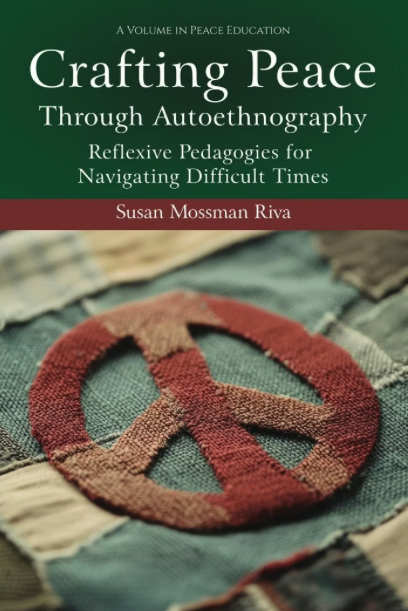
Crafting Peace by Susan Riva book cover

With a foreword by Sheila McNamee and an afterword by Robin Cooper—both scholars from the Taos Institute—the book Crafting Peace Through Autoethography: Reflexive Pedagogies for Navigating Difficult Times is grounded in a social constructionist perspective and offers a reflective framework for navigating complexity in higher education.

In this work, Riva introduces the Transformational Learning Model and feature students’ Transformagram Portfolios—creative, personal expressions of their transformative learning journeys. She also shares how her online courses provide a safe and supportive virtual space for accompanying students through deeply experiential and reflective processes.

At Creighton University, her conflict resolution course uses personal conflict narratives to connect lived experience with theoretical frameworks. Students craft story mandalas and engage with autoethnography as a social science method, deepening their understanding of conflict, identity, and personal transformation.

Taos Institute: Facilitating Participant Dialogues in Research (Webinar)

EventsFacilitating Participant Dialogues in Research, Pulsating Practices: Constructionism in Action, Taos Institute, NM, USA, (Webinar), 8 October 2025, 10-11:30 EDT.

With Norma Romm (University of South Africa) and Francis Akena Adyanga (Kabale University, Uganda).

The Taos Institute invites you to join this webinar where Norma and Francis showcase how, as professional researchers, they have worked alongside research participants with the intent that fruitful constructions can be dialogically generated via the research process. The examples will indicate how research participants can participate in reconstructing ways of living together in relation to their expressed concerns.

The research setting that will constitute the prime example in this webinar was Francis and Norma’s effort to intervene in peace-building between farmers and pastoralists in the context of land disputes in Northern Uganda. Through focus group facilitation, participants came to discuss new options for their co-existence and were appreciative of how the research process contributed to this.

The webinar will also refer to another example in Northern Uganda where participants in a community were distressed by the practices of certain foreign-owned companies and mobilized resistance. As part of their dialoguing around their (relatively successful) efforts, they offered re-constructions of the notion of “development”. Finally, Francis and Norma will point to research in South Africa exploring Indigenous practices for advocating food sovereignty (as a counterpoint to globally dominant narratives around “food security”).

The webinar will invite audiences to reflect upon (and discuss) their roles as professional or lay researchers in shaping social and ecological life.

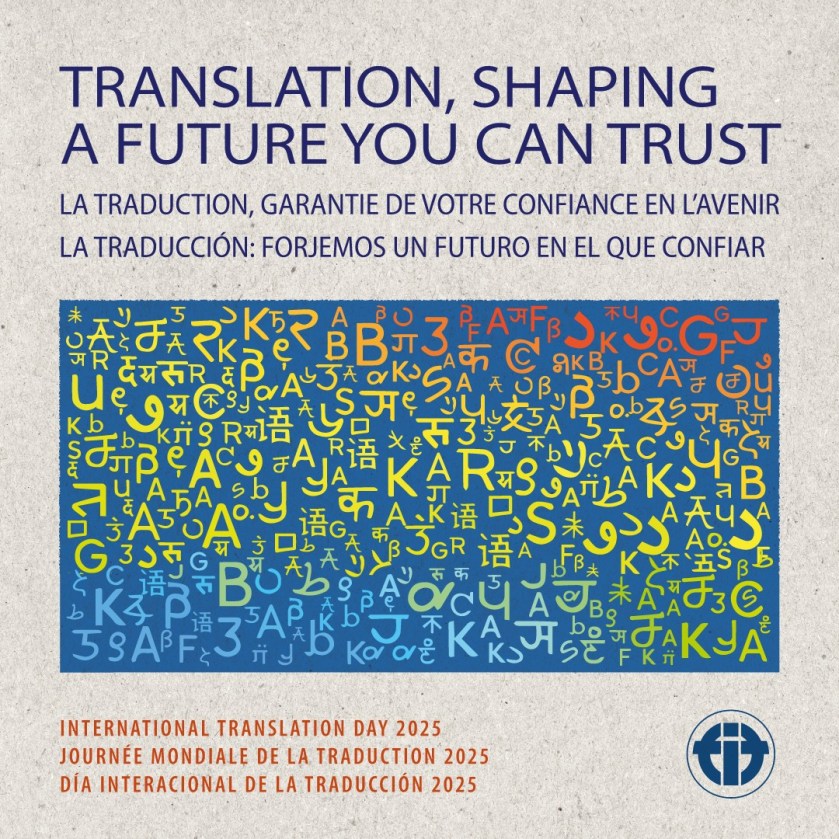
International Translation Day 2025

EventsHappy International Translation Day, a celebration  established by the United Nations in 2017, occurring on 30 September every year.

International Translation Day is an opportunity to pay tribute to the work of language professionals, which plays an important role in bringing nations together, facilitating dialogue, understanding and cooperation, contributing to development, and strengthening world peace and security. A number of organizations are planning events, as described in a prior post.

“Words travel worlds. Translators do the driving”. – Anna Rusconi

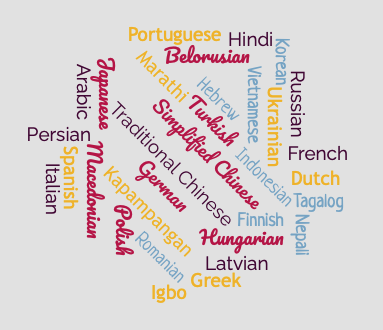
This is an appropriate occasion on which to thank all of the translators who have taken time from other responsibilities to help CID prepare translations of our publications into a remarkable 32 different languages. We could not do this without you! 

NOTE: If you want to translate one of the publications into a language in which you are fluent, please contact us before you start, to learn whether anyone else is already working on that publication in that language.


International Translation Day Events 2025

EventsInternational Translation Day, established by the United Nations in 2017, occurs on 30 September every year. A number of organizations are planning events.

International Translation Day

The International Federation of Translators is holding a webinar this year to celebrate, with the theme Celebrating Translation, Peace and Trust. In turbulent times, where peace often hangs in the balance and global communications and relations are infiltrated by a lack of trust, the ITD 2025 theme highlights the important role of human trust. Specifically, the role of translators, interpreters and terminologists in ensuring trustworthy communication, building dialogue and trust between parties and providing oversight to AI-generated text and machine translation.

English PEN will be holding both in person and online events in London to celebrate, with a two-part conversation exploring pressing questions for the craft, business and ethics of translation: How can literary translation thrive in the face of global turmoil? And how can literary translation thrive in the face of artificial intelligence?

UNESCO and Translation Commons are organizing a joint virtual event to celebrate the International Translation Day within the context of The International Decade of Indigenous Languages. This event will explore the evolving roles of Indigenous language professionals in the digital age, emphasizing the irreplaceable value of human expertise in ensuring accurate, culturally sensitive, and trusted translations. They will navigate the ethical considerations of AI in this field, focusing on community-led approaches to leverage technology responsibly for Indigenous language preservation and revitalization, ultimately creating a future where these languages are not only thriving but also safe.

From Recognition to Inclusion – Rethinking European Languages in Education (Germany or Online)

EventsOpen Conversation: From Recognition to Inclusion – Rethinking European Languages in Education, Humboldt-Universität zu Berlin, Germany, 26 Sept 2025. Deadline: 11 September for on-site participation; 24 September for online participation.

Across Europe, educational systems tend to focus on hegemonial national languages—German in Germany, French in France, and so on—as legitimate means for classroom interaction. It is also these languages that are associated with European nation-states, understood as “modern languages” for educational curricula, and targeted as desirable competences in “European languages” by multilingualism policies.

However, the linguistic reality of Europe is far more diverse. Languages such as Turkish, Arabic, Russian, Kurdish, and Romani are spoken daily by large communities in Europe, and in this sense they are European languages, yet they are rarely treated as valuable cultural or educational resources.

This open conversation explores how educational systems might move beyond narrow definitions of “European languages” and “multilingualism” towards practices of genuine linguistic inclusion—where all students’ languages are made visible, valued, and meaningfully integrated into educational life.

Organisers: Heike Wiese, İrem Duman Çakır, Annika Labrenz

Immigrant Council of Ireland: Migrant Leadership Academy 2025 (Ireland)

EventsMigrant Leadership Academy, Immigrant Council of Ireland, Dublin, Ireland, 3-5 Oct 2025. Deadline: 15 Sept 2025.

The Migrant Leadership Academy brings together migrants and refugees living in Ireland who are committed to social justice, equality and want to bring about positive change in their communities. The Academy teaches the fundamentals of activism and community organising. This year’s Migrant Leadership Academy will take place from 3-5 October in Dublin, with further sessions online.

The main objective of the Migrant Leadership Academy is to identify talented migrant and refugee leaders in Ireland and to provide them with a space for connection with fellow migrant and refugee leaders.

The space serves as a platform for reflection and skills exchange to enhance their leadership potential. The secondary aim is to support migrant and refugee leaders in designing and implementing their own social justice campaigns and/or migrant integration initiatives. Lastly, the long term objective is to increase diversity in leadership in the social justice sector, by providing access to career enhancing opportunities.

UNESCO Chair Conference: Exploring Intercultural Competences in an African Context (Morocco)

EventsExploring Intercultural Competences in an African Context. UNESCO Chair on Intercultural Competences, Rabat, Morocco, 29 Sept-2 Oct 2025. Deadline: 1 Sept 2025.

The UNESCO Chair on Intercultural Competences hosted by Stellenbosch University has organized a second international conference, with contributions from academics and researchers, professionals, practitioners, educators, innovators, leaders and organisations with an interest in the theme. ​

The specific sub themes are:

  • How do aspects of Intercultural Competence intersect, interact and influence climate action, gender equality, or peacebuilding?
  • The existence and use of intercultural practices in pre-colonial times.
  • Intercultural tools available to the practitioner (for example; Cultural diversity and ethics; Ethical encounters and interactions; Culturally responsive teaching; Collaborative Online International (intercultural) Learning (COIL); tools for understanding values across multi-cultural and multi-religious societies)​
  • African Youth Perspectives on Intercultural Competence​

Responding to the theme and sub-themes above, organizers look forward to the sharing of research, reflections, lived experiences and examples from practice in the form of Workshops, Parallel sessions, and Poster Presentations.

Circle U: From Recognition to Inclusion: Rethinking European Languages in Education (Germany and Online)

EventsFrom recognition to inclusion: Rethinking European languages in education, Humboldt-Universität zu Berlin, Germany, and online, 26 September 2025, 10:00–17:30 CET.

Across Europe, educational systems tend to focus on hegemonial national languages—German in Germany, French in France, and so on—as legitimate means for classroom interaction. It is also these languages that are associated with European nation-states, understood as “modern languages” for educational curricula, and targeted as desirable competences in “European languages” by multilingualism policies.

However, the linguistic reality of Europe is far more diverse. Languages such as Turkish, Arabic, Russian, Kurdish, and Romani are spoken daily by large communities in Europe, and in this sense they are European languages, yet they are rarely treated as valuable cultural or educational resources.

Held on the occasion of the European Day of Languages, this open conversation explores how educational systems might move beyond narrow definitions of “European languages” and “multilingualism” towards practices of genuine linguistic inclusion—where all students’ languages are made visible, valued, and meaningfully integrated into educational life.

The programme features a keynote by Christoph Schroeder (University of Potsdam), followed by a panel discussion and a commentary from Elizabeth Beloe (German Federal Association of Networks of Migrant Organisations) on broader societal power dynamics, as well as roundtable sessions on educational policy and school culture & belonging. The panel brings together researchers, students, and practitioners who will share insights from research and practice.

This is a Circle U Open Conversation. Circle U is made up of nine European universities creating international opportunities. Other Circle U activities can be found here.


Intercultural Competences for Peacebuilding in Africa: Road to Global Peace (Webinar)

EventsIntercultural Competences for Peacebuilding in Africa: Road to Global Peace, a webinar presented by George Mutalemwa and sponsored by the UNESCO Chair on Intercultural Competences, 24 July 2025, 15:00 CAT.

This free webinar series provides a dynamic platform for scholars, practitioners, and thought leaders to explore the role of intercultural competence in fostering understanding, inclusion, and collaboration across diverse societies. Each session delves into critical global issues, sharing research, best practices, and innovative approaches to climate action, peacebuilding and gender equity​​. This session is presented by George Mutalemwa founding director of the Africa Peace and Development Network and Senior Research Fellow at St. Augustine University of Tanzania (SAUT).

Constance Mbassi Manga: Language, Home, and Belonging in Migratory Contexts (Online)

EventsConstance Mbassi Manga will hold a virtual launch for her new book, Language, Home, and Belonging in Migratory Contexts, on 10 June 2025, at 7 pm GMT+1.

During the event, she will share key insights from the book, including:
🔹 A brief overview of Camfranglais
🔹 Why this topic matters now more than ever
🔹 Reflections on language, identity, and belonging in migratory contexts

There will also be time for comments and questions, to connect and discuss this topic.

👉🏾Click here to register: Event Registration Form