The Role of Visual Arts in Improving Intercultural Dialogue 2025 (Malaysia)

“Collaborative

The role of visual arts in improving intercultural dialogue between sister cities, research project by Ramin Hajianfard, City University Malaysia, would appreciate your input.

Dr. Ramin Hajianfard, Senior Lecturer with the Faculty of Art at City University Malaysia, is looking for those with interests in visual arts and/or sister-city exchanges to complete a brief set of questions. The project is titled Intercultural Exchanges Between Isfahan and Kuala Lumpur in the Context of Visual Arts. Your observations and experiences are critical to understanding how visual art can foster intercultural dialogue.

This study examines how visual arts can strengthen the sister-city partnership between Isfahan and Kuala Lumpur—established in 1997—by fostering intercultural dialogue, preserving shared heritage, and advancing Sustainable Development Goals in education, urban development, and global partnerships. Employing a qualitative approach that combines semi-structured text interviews with experts, artists, and intercultural specialists, alongside case studies and document analysis, the research identifies both the barriers (e.g., limited past collaborations and misaligned policies) and the opportunities (e.g., complementary Islamic art traditions and digital platforms) for meaningful exchange. Grounded in cultural semiotics and intercultural aesthetics, the findings will inform policy alignment, institutional partnerships, and practical programs—such as reciprocal exhibitions, artist residencies, and virtual platforms—to enhance mutual understanding and sustainable cultural cooperation between the two cities.

The questions to be answered are these:

  • Arts as a Dialogue Tool: From a global perspective, what makes visual art an effective tool for fostering intercultural dialogue between communities or cities?
  • Respecting Cultural Heritage: How can international art initiatives be designed to respectfully highlight each participant’s cultural heritage while engaging diverse audiences?
  • Aligning with Global Goals: In your experience, how do intercultural arts exchanges contribute to broader goals like education and sustainable community building (for instance, what impacts have you seen related to learning outcomes or community resilience)?
  • Sustaining Partnerships: What strategies or best practices are important for establishing and sustaining successful intercultural art partnerships (such as those aligning with international collaboration goals like SDG 17)?

If you are interested, please contact him directly via email.

Global Case Study Challenge Virtual Exchange 2025 (Austria)

“Collaborative

2025 Global Case Study Challenge Virtual Exchange, Global Work Competency Laboratory, Klagenfurt, Austria, 13 October – 26 November 2025. Deadline: 1 July 2025. Information session: 9 April 2025.

GCSC Information Session April 9 2025

The Global Case Study Challenge (GCSC) 2025 is a high-impact Virtual Exchange (VE) program focused on Developing Remote Work Competencies through Global Virtual Teamwork. Now in its 8th edition, the GCSC has engaged over 2,200 students and 70 educators from 40 universities across 25 countries in 485 global virtual teams.

Program Overview
* 6-week Virtual Exchange – Runs from October to end of November 2024
* Future of Work Focus – Develop essential remote work competencies in small global virtual teams (GVTs)
* Competency-Oriented – Enhance intercultural communication, digital collaboration, and sustainability skills
* Real-World Business Cases – Work on real business challenges
* Global Virtual Conference – Students present their findings and educators participate in a conference on November 19, 2025

Sign-up here.

ICA Regional Chapters

“Collaborative

Regional Chapters, International Communication Association, USA.

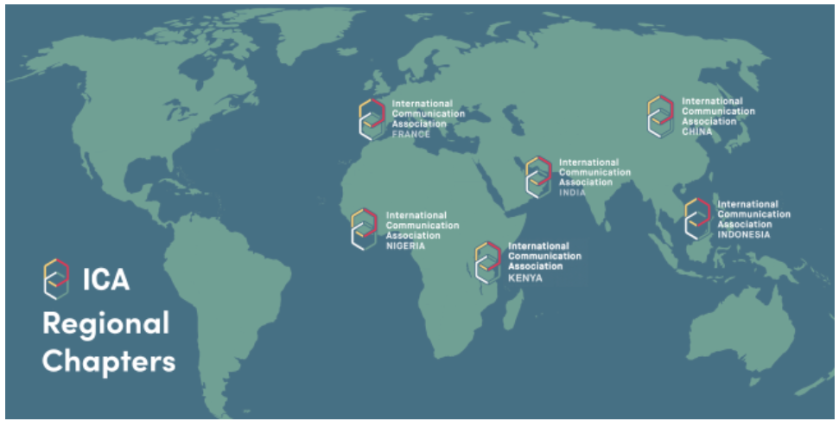
International Communication Association Regional Chapters mapThe ICA Regional Chapters Program is currently in a three-year pilot phase. No additional chapters will be approved during the pilot so that all resources can be devoted to making the six original chapters as successful as possible. The six regional chapters are: Indonesia, Nigeria, China, Kenya, France, and India.

Looking for Women Activists in the Philippines

“Collaborative

The following message is posted at the request of Dr. Lora Forsythe, at the Natural Resources Institute, Faculty of Engineering and Science, of the University of Greenwich, UK. Deadline: 6 April 2024.

“I am currently working on a grant proposal to the British Academy for research in the Philippines and Brazil. We already have a partner in the Philippines (Center for Agrarian Reform and Rural Development) but this grant is research focused, so ideally we are looking for an academic (with a PhD) who can work with us on our study on women activists in the Philippines, and how they are engaging with issues around climate change. Our previous research has involved indigenous women, but we are not sure yet if we will choose to focus specifically on indigenous women or women more broadly.”

If this describes you, or you know someone it describes, please get in touch with her directly.

Global Case Study Challenge Virtual Exchange 2024 (Austria)

“Collaborative

2024 Global Case Study Challenge Virtual Exchange/COIL, Global Work Competency Laboratory, Klagenfurt, Austria, 2 October-28 November 2024. Deadline: 1 July 2024.


GCSC 2024The Global Case Study Challenge (GCSC) is an award-winning 8-week teaching and learning program for BA and MA-level students. It’s a high-impact career-oriented virtual exchange focusing on collaborative global virtual teamwork and the development of intercultural, digital communication and sustainability competencies.

2024 is the 7th edition of the multiple award-winning GCSC. To date, 2200 students and 70 educators from 40 universities across 25 different countries have worked together in the GCSC in 485 Global Virtual Teams

Feel free to share with interested colleagues across the globe.

Sign-up here.

Seeking Support for New Sub-Saharan African Caucus (USA)

“Collaborative

Seeking Support for New Sub-Saharan African Caucus, National Communication Association, USA. Deadline: 31 July 2023.

Communication scholars representing and studying the Sub-Saharan African region are organizing an effort to create a Sub-Saharan African Caucus at the National Communication Association (NCA, based in the US). This caucus will serve as a dedicated space to share and promote the Sub-Saharan African scholarship covering a range of communication subfields. This will be the first Sub-Saharan African Caucus at a major communication association.

Following the procedures laid out by NCA to consider caucus proposals, the organizing committee is seeking support from the NCA membership. If you are an NCA member and are willing, please indicate your support at the link below. We also ask to please distribute the link and its purpose widely.

Thank you for your consideration and support!

Prisca S. Ngondo, Texas State University
Anna Klyueva, University of Houston-Clear Lake
Dane Kiambi, University of Nebraska-Lincoln


Cultural Heritage Dialogue Survey Participation Request (New Zealand)

“Collaborative

Cultural Heritage Dialogue Survey Participation Request, Victoria University of Wellington, New Zealand. Deadline: 31 August 2023.

[CID has been asked to share the following request – please participate if you are active in the cultural heritage sector!]

Tēnā koutou katoa/ Greetings,

We invite you to participate in an online survey as part of our research project to investigate Dialogue in the Cultural Heritage sector. The objectives of our survey are to discover:

· if and how dialogue is defined and used by cultural heritage institutions/organisations in their engagement with external parties and stakeholders,

· the approaches taken up for dialogue-based activities,

· the directions for dialogue work in the future.

Your responses will help us map out how dialogue activities are envisioned, created, delivered and embedded (or not) in cultural heritage institutions/organisations. Overall, the survey findings will contribute knowledge and understanding of dialogue within the cultural heritage sector and provide practice insights.

Each response will be anonymised and your personal identity will not be known to the researchers. If you choose to share your email address this will be deleted 6 months after the survey closes on 31 August 2023.

Thank you for taking the time to read this information and for your interest. We hope you will participate in our survey as we would value and appreciate your involvement. If you choose to participate, please access the link.

Ngā mihi nui/ Kind regards,

· Chern Li Liew, Victoria University of Wellington, New Zealand.
· Areti Galani, Newcastle University, United Kingdom.
· Alison Day, Victoria University of Wellington, New Zealand.

Global Case Study Challenge Virtual Exchange 2023 (Austria)

“Collaborative

2023 Global Case Study Challenge Virtual Exchange/COIL, Global Work Competency Laboratory, Klagenfurt, Austria, 2 October-29 November 2023. Deadline: 7 July 2023.

 2023 GCSC COIL

The Global Case Study Challenge (GCSC) is an award-winning 8-week teaching and learning program for BA and MA-level students. It’s a high-impact career-oriented VE focusing on collaborative global virtual teamwork and the development of intercultural, digital communication and sustainability competencies.

Organizers are excited to be moving into the sixth iteration of the GCSC. To date, 1850 students and 60 educators from 36 universities across 22 different countries have worked together in the GCSC on real-life business cases in 415 Global Virtual Teams.

Feel free to share with interested colleagues across the globe.

Sign-up here.

HIBLend Survey on Blended Student Mobility (Finland)

“Collaborative

HIBLend survey on Blended Student Mobility practices, Academic Cooperation Association, funded by the EU. Deadline: 7 July 2023.

CID followers are asked to complete this survey if they have relevant experience.

“This questionnaire has been prepared in the framework of the HIBLend project “Fostering high-quality blended student mobility in higher education” funded under the Erasmus+ programme. HIBLend aims to build the capacity of higher education institutions to design and deliver quality blended mobility opportunities for students through the exchange of good practice and peer learning. The project is coordinated by the Academic Cooperation Association and implemented in close collaboration with the European University Foundation, the Accreditation Organisation of the Netherlands and Flanders, Masaryk University and Tampere University of Applied Sciences.

The aim of this survey is to map different approaches to blended student mobility in the post-Covid context. For the purpose of this questionnaire, blended mobility is understood as an international learning activity consisting of a physical mobility experience and a complementary virtual learning component delivered prior, during or after the physical mobility stage.

Common examples of blended student mobility include Blended Intensive Programmes (BIPs) for students funded under the Erasmus+ programme or other types of blended short-term study mobility activities funded at the EU, national or institutional level (e.g., summer schools).

This survey targets any administrative or academic staff actively involved in the design or delivery of blended mobility activities at the central or faculty/department level (e.g., International Mobility Coordinators, study programme coordinators, teachers/professors, e-learning consultants, methodological advisors, quality assurance officers, IRO, IT officers).

The questionnaire consists of four major parts encompassing: (a) background information on the respondents, (b) motivation for the set-up of a blended mobility activity, (c) delivery mode, and (d) challenges to implementation and impact. The questionnaire is in English language, please provide all of your answers in English language only. It takes ca. 20 minutes to complete this questionnaire.”

IGNM: Ensembles & Composers Exchange Project (Austria/Slovenia)

“Collaborative

Call for Scores: Ensembles & Composers Exchange Project, Internationale Gesellschaft für Neue Musik (IGNM), Vienna, Austria. Deadline: 15 May 2023.

The focus of the project is the artistic exchange between Slovenian and Austrian composers as well as international composers living in Austria and Slovenia of younger generation. Two young ensembles from both countries are invited to take part in the project – between feathers (AT) and Trio Tempestoso (SI). The project aims to promote young talents and strengthen intercultural dialogue.

Conditions: Slovenian and Austrian composers as well as composers of other nationalities living in Slovenia and Austria are invited to submit their existing works for any combination (from duo to septet) of the following instruments: flute, clarinet, percussion, 2 x accordion, voice, violoncello. Applying composers must be born in 1988 or younger.