Global Citizenship Education

Applied ICD

Bosio, E., & Schattle, H. (2021). Ethical global citizenship education: From neoliberalism to a values-based pedagogy. Prospects, 1-11.

…over the past 20 years, there has been increasing interest in GCE as a means of supporting learners in developing their values, knowledge, and understanding of multiple global, national, and local issues.

This article proposes an ethical global citizenship education (GCE) framework by offering the following five dimensions: values-creation, identity progression, collective involvement, glocal disposition, and an intergenerational mindset. Ethical GCE draws on a multiplicity of critical literatures to identify characteristics of each of these dimensions. It goes beyond neoliberal/market-driven principles toward ethical perspectives promoting social responsibility, justice, human rights, and glocal sustainability. With further theoreti- cal development and strategies toward implementation, the framework has the potential to be deployed in future research and evaluation of the complex teaching and learning pro- cesses involved in GCE, particularly in a values-based perspective.

Note: Even though this article does not address intercultural dialogue directly, it seems likely that global citizenship education would only help bring about more intercultural dialogues.

 

Globalisation and Comparative Education

“Book NotesZajda, J., & Rust, V. D. (2021). Globalisation and comparative education: Changing paradigms. Springer Nature.

…policy statements on intercultural dialogue of the UNESCO, and the Council of Europe, share a policy consensus that emerging discourses dealing with intercultural dialogue refer to values education, based on peace, the respect for human rights, democracy and the rule of law. The overarching goal is promoting ‘harmonious interaction among people and groups with plural, varied and dynamic cultural identities’ as well as their willingness to live together in peace. (p. 178)

While this is an interesting book overall, the chapter most likely to be of greatest interest to CID followers is Chapter 11: Globalisation and Cultural Identity: The Role of Intercultural Dialogue (pp. 177-186) which is where the quote above appears. They conclude that “there is a need to re-assert the relevance of intercultural dialogue in an increasingly interdependent world” (p. 184).

DEA Program Fellowships (France)

FellowshipsCall for applications, Associate Director of Studies (DEA) Program, for 2022, Fondation Maison des Sciences de l’Homme, Paris, France. Deadline: December 20, 2021.

Created in 1975 through the initiative of Fernand Braudel, in agreement with the Secretary of State for Universities, Directorate of Higher Education and Research, the Associate Directors of Studies (DEA) program is the oldest international mobility program of the Fondation Maison des Sciences de l’Homme. It enables foreign scientific professionals from all continents to be invited for a period of four to six weeks to support their work in the SHS in France, as well as to promote creation of international research networks and contact with researchers on site.

The program is intended exclusively for holders of university professorships or equivalent positions in higher education and research institutions. Candidates must be under 65 years of age at the time of their stay. Priority is given to projects requiring fieldwork (surveys, work in libraries or archives, etc.) in France. Any application for the exclusive purpose of writing an article or a book will not be considered. Financial support (transportation and living expenses) is provided for 4-6 week stays, as well as support for visa applications and logistics (accommodation and access to libraries).


Anton Dinerstein Profile

Profiles

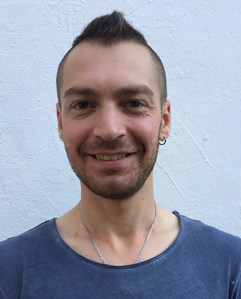
Anton Dinerstein (PhD, University of Massachusetts Amherst) is an independent researcher, social scientist, and communication scholar.

Anton DinersteinHis current research is focused on public creativity and inclusive cultural dialogue in modern-day Belarus. He employs Ethnography of Communication and Cultural Discourse Analysis to investigate how public creativity is related to social change and cultural transformation. His analysis focuses on identity, cultural rituals, and social mythology as reflected in everyday communication.


Anton is a native of Belarus where his undergraduate major in Social Communication. He also holds an MA degree in Political Sociology and an MS in Journalism & Electronic Media.

Selected publications and research:

Dinerstein A. (2021). Cultural identity in modern-day Belarusian discourse on public creativity. Journal of International and Intercultural Communication, 14(1), 41-59, DOI: 10.1080/17513057.2019.1677934

Dinerstein, A. (2020). The people who ‘burn’: ‘Communication’, unity, and change in Belarusian discourse on public creativity. Doctoral dissertation, University of Massachusetts, USA.


Work for CID:

Anton Dinerstein translated KC1: Intercultural Dialogue, KC10: Cross-Cultural Dialogue and KC80: Cultural Discourse Analysis into Russian.

U Utah: Race & Communication (USA)

“Job

Assistant Professor in Race and Communication, University of Utah, Salt Lake City, UT. Deadline: Review begins October 15, 2021, but open until filled.

The University of Utah’s Department of Communication, located in the College of Humanities, seeks a scholar whose research, teaching, and service expertise in race and communication complements and expands our existing strengths in Critical Cultural Studies; Communicating Science, Health, Environment, and Risk; Digital Media; and Rhetoric.

They invite applications for this tenure-track position from scholars and scholar-activists who have an outstanding research record (or the promise of such a record) in areas of communication focused on race and ethnicity theoretically anchored by frameworks that may include Chicanx and Latinx; Mestiza consciousness; critical race and post-colonial inquiry; Middle Eastern, South Asian, or African studies; Pacific Islander; indigeneity; intersectionality. The successful applicant may also study race and communication in myriad contexts such as sport; science and technology; media, popular culture, or digital media; public health; environmentalism; globalization. They invite applicants who will innovatively expand the Department, including those who diverge from the parameters of the position description.

CFP Families in Global Transition 2022 (Online)

Conferences

Call for proposals, Families in Global Transition 2022: Where do we go from here? March 21-22, 2022, USA but online. Deadline: 11 October 2021.

Over the last two years, the world has changed in ways that most of us could never have imagined. We are still living with the pandemic, but we are also experiencing a period of social, racial, economic and environmental reckoning that spans the world. Even if by some miracle, we were to all begin to return to a life without lockdown tomorrow, the aftershocks of all these realities combined will be felt for a long time to come. Whatever your personal situation or experience, this has had an impact on all of us. The world has changed. FIGT2022 is dedicated to reflecting on these changes and asking the big question: ‘Where do we go from here?’

Presenters are asked to address one of these three strands to help begin to answer this question.

  • Connecting: how can our individual, unique challenges and experiences bring us together as individuals and a community across cultures, borders and generations? How can we better hold space for each other’s unique experiences? This strand will look at how we can come together in ways that encourage mutual understanding, sharing and growth.

  • Innovating: can the challenges we face lead us to new research and/or new practices personally or professionally? This strand will look at whether our experiences can lead to growth, reconstruction and reimagining across all aspects of our globally mobile world.

  • Thriving: how can we develop skills to help us cope with the pain and discomfort that a globally mobile, cross-cultural life might bring in 2022? This strand is an opportunity to explore our own reflections as well as providing insights into best practices for support so that we can find ways to thrive, despite our challenges.


Dialogue for Intercultural Understanding

“Book NotesMaine, F., & Vrikki, M. (Eds.). (2021). Dialogue for intercultural understanding: Placing cultural literacy at the heart of learning. Springer Nature.

This book is a result of an extensive, ambitious and wide-ranging pan-European project focusing on the development of children and young people’s cultural literacy and what it means to be European in the twenty-first century, prioritizing intercultural dialogue and mutual understanding.

Maine and Vrikki have edited this collection resulting from a major EU funded project, DIALLS (Dialogue and Argumentation for cultural Literacy Learning in Schools), lasting 3 years, and involving 10 partners around Europe. The challenge “was to create a project that could address how children and young people might develop the knowledge, skills and competencies needed for intercultural dialogue and mutual understanding. The DIALLS project has met this challenge by working with teachers in different educational settings (pre-primary, primary and secondary) to create cross-curricular resources and activities…In a further innovation and to enable intercultural dialogue in action, the project developed an online platform as a tool for engagement across classes.” (p. 2).

CFP Sociolinguistics Symposium 2022 (Belgium + Online)

ConferencesCall for proposals, Sociolinguistics Symposium 24: Inside and Beyond Binaries, Ghent University, Ghent, Belgium (and online), 13-16 July 2022. Deadline: 25 October 2021.

Sociolinguistics Symposium is the world’s main gathering of sociolinguists internationally. This two-yearly event provides a unique opportunity and forum to develop and exchange ideas and research findings about language and society in its manifold connections and manifestations. From its beginnings as a small meeting in the UK in 1976, the tradition of Sociolinguistic Symposia has grown into the largest sociolinguistic networking event in the world. Attracting hundreds of participants and exhibitors, the Symposium is also a stimulating space for networking.

It is with much enthusiasm that organizers announce Sociolinguistics Symposium 24. SS24 will be held in Ghent in July 2022. In close consultation with previous symposium organizers and colleagues in Hong Kong, the tradition of a meeting in even years is upheld. SS24 in 2022 will mark the 20th anniversary of the first Sociolinguistics Symposium hosted on the European mainland (SS14 in Ghent in 2002). SS24 is organized by Ghent University in close collaboration with the Belgian sociolinguistic community. The dates of the conference are 13-16 July 2022.

World Teachers’ Day Oct 5 2021

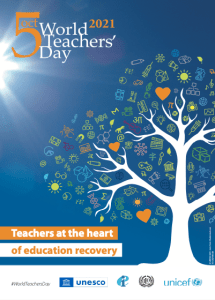
EventsWorld Teachers’ Day: Teachers at the Heart of Education Recovery, October 5, 2021. Sponsored by UNESCO, UNICEF, International Labour Organization, and Education International.

World Teachers' Day 2021

We honor all the teachers who follow the Center for Intercultural Dialogue. This has been a difficult year and a half for so many. Take a moment to pause, and appreciate all that has been accomplished despite the difficulties caused by the pandemic.

For those who have the time, World Teachers’ Day celebrations will take place from 4 to 8 October 2021.

SDSU: Asst Prof of Conflict Communication/Civil Discourse (USA)

“JobAssistant Professor of Conflict Communication / Civil Discourse, San Diego State University, CA, USA. Deadline: October 11, 2021 (or until filled).

The School of Communication at San Diego State University (SDSU) invites applications for a tenure-track faculty position in Conflict Communication/Civil Discourse, at the level of advanced assistant professor, to start August 2022.

Responsibilities: The successful candidate is expected to have a scholarly research agenda examining conflict communication or civil discourse from an interpersonal, organization, group, health, or intercultural, perspective. The faculty member will be able to teach curriculum at the undergraduate and graduate level. Courses include, but are not limited to, topics in communication theory, methodology, and conflict management. The candidate will also have the opportunity to create and teach classes aligned with their particular research interests, including upper division and graduate level courses. The successful candidate will also be expected to provide service to the School, College, University, and professional communication organizations. Faculty members are expected to serve on and chair master’s thesis and comprehensive examination committees, and mentor early career faculty members as appropriate.