 Soumia Bardhan (Ph.D., University of New Mexico) is associate professor of Communication at the University of Colorado Denver.

Operating at the intersection of intercultural communication and global communication, Bardhan uses qualitative and rhetorical approaches to explore the role of media, AI, and communication in the cultural-political transformation of Middle Eastern and South Asian societies. She investigates the complex ways diverse rhetorical dynamics and discursive practices of Islam shape MENA (Middle East and North Africa) politics and how Western actors—scholars, publics, and policy makers—might respond to such discourses. Through her research, Bardhan aims to a) minimize stereotypes and advance dialogue and understanding between Muslim and non-Muslim communities, b) explore how culture and communication affect democratic institutions globally, and b) identify extremist discourses and imminent threats to then help shape foreign policy and global security strategies. Due to the global emphasis of her work, Bardhan is also invested in contributing to the internationalization of the communication discipline.
Bardhan teaches courses related to intercultural communication; intercultural and transnational rhetoric; religion, culture, and communication; communication theories; history and philosophy of communication studies; AI and human communication; qualitative research methodologies; and directs global study programs in Spain, France, Morocco, and India. As a certified mediator, she also teaches mediation (creative dispute resolution) courses. Bardhan is recipient of several curriculum development awards, including University of Notre Dame’s Global Religion and Research Initiative grant. CU Denver College of Liberal Arts and Sciences recognized her with the 2025 Excellence in Teaching award.
Bardhan was named Henry Luce Foundation’s Sacred Writes Public Scholarship on Religion fellow (2023-2024), CU Denver’s ThinqStudio fellow (2022-2024), Big 12 Faculty fellow (2017-2018), and is Association of College and University Educators (ACUE) fellow. She serves as director on the board of the International Communication Association (ICA) and chair of its Membership and Internationalization Committee; she was chair of ICA’s Intercultural Communication Division (2019-2021). She served on the National Communication Association’s Task Force on Fostering International Collaborations in research, teaching, and service (2015-2019). She served on the editorial board of Journal of International and Intercultural Communication (2018-2021) and is associate editor of Frontiers in Intercultural Communication (2020-present). Bardhan currently serves as interim director of International Studies at CU Denver.
Selected publications:
Book:
Turner, P. K., Bardhan, S., Holden, T. Q., & Mutua, E. M. (Eds.). (2019). Internationalizing the communication curriculum in an age of globalization: Why, what, and how. New York: Routledge.
Articles and chapters:
Evans, E., & Bardhan, S. (2023). Adult Third Culture Kids and sojourner intercultural communication: Exploring belonging through a multilevel approach. International Journal of Intercultural Relations, 96.
Bardhan, S. (2022). Rhetoric and intercultural communication. In Moy, P. (Ed.), Oxford Bibliographies in Communication. New York: Oxford University Press.
Bardhan, S. (2022). #egyptian and #tunisiangirl: The (micro)politics of self-presentation on Instagram. International Journal of Communication, 16, 681-99.
Bardhan, S., & Cutter, D. (2021). Recruiting foreign warriors: Function of moral and temporal tropes in the Islamic State’s “Dabiq”. Rhetoric and Public Affairs, 24, 483-520.
Bardhan, S. & Foss, K. (2020). Revolutionary graffiti and Cairene women: Performing agency through gaze aversion. In Charrad, M & Stephan, R. (Eds.), Women rising: Resistance, revolution, and reform in the Arab Spring and beyond. New York: New York University Press.
Bardhan, S. (2019). Internationalizing the communication curriculum: Benefits to stakeholders. In Turner, P. K., Bardhan, S., Holden, T. Q., & Mutua, E. M. (Eds.), Internationalizing the communication curriculum in an age of globalization (pp. 11-20). New York: Routledge.
Bardhan, S., Colvin, J., Croucher, S., O’Keefe, M., & Dong, Q. (2019). Intercultural communication: A 17-year analysis of the state of the discipline. In Turner, P. K., Bardhan, S., Holden, T. Q., & Mutua, E. M. (Eds.), Internationalizing the communication curriculum in an age of globalization (pp. 23-35). New York: Routledge.
Bardhan, S. (2018). Affordances of websites for counterpublicity and international communication: Case of the Egyptian Muslim Brotherhood. Georgetown Journal of International Affairs, 19, 3-11.
Bardhan, S. (2018). The Egyptian Muslim Brotherhood and ‘Ikhwanweb’: Deliberative ethic/voice in a counterpublic’s rhetoric? Journal of Public Deliberation, 4(1), Article 5.
Bardhan, S. (2017). Rhetorical approaches to communication and culture. In J. Nussbaum (Ed.), Oxford Research Encyclopedia of Communication. Oxford University Press.
Bardhan, S. & Wood, R. (2015). The role of culture in civil society promotion in the Middle East: A case study approach with technology for social networking. Digest of Middle East Studies, 24(1), 111-138.
Bardhan, S. (2014). Egypt, Islamists, and the Internet: The Muslim Brotherhood and its rhetoric of dialectics in ‘Ikhwanweb’. Digest of Middle East Studies, 23(2), 235-261.

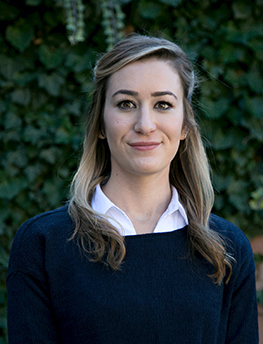 Her areas of interest include intercultural communication, interpersonal communication, and conflict management. Specifically, she explores how communication—specifically, how we communicate about difference—serves as both an instrument and a barrier to inclusion and belonging. Along with having taught several intercultural communication courses at various institutions, Salma has also held several non-academic, professional positions with local and international organizations in the field of conflict mediation and cross-cultural dialogue.

 Center for Intercultural Dialogue