UN Young Professionals Programme 2025-26

Professional OpportunitiesUnited Nations Young Professionals Programme, New York, USA. Deadline: 14 December 2025.

The UN Young Professionals Programme (YPP) is a recruitment initiative for talented, highly qualified professionals to start a career as an international civil servant with the UN Secretariat. It consists of an entrance examination process and professional development once those who are successful start their career with the UN.

The YPP examination is held once a year in different subject areas, depending on the needs of the UN. Global Communication is the subject area for this year’s YPP examination.

Participating countries:
Andorra, Angola, Belize, Brunei Darussalam, China, Cuba, Democratic People’s Republic of Korea, Dominica, Equatorial Guinea, Germany, Grenada, Guinea-Bissau, Indonesia, Iran (Islamic Republic of), Israel, Japan, Kiribati, Kuwait, Lao People’s Democratic Republic, Liberia, Libya, Liechtenstein, Luxembourg, Malta, Marshall Islands, Micronesia (Federated States of), Monaco, Nauru, Oman, Palau, Panama, Papua New Guinea, Paraguay, Qatar, Saint Vincent and the Grenadines, Sao Tome and Principe, Saudi Arabia, Singapore, Slovenia, Solomon Islands, Timor-Leste, Turkmenistan, Tuvalu, United Arab Emirates, United States of America, Vanuatu, Viet Nam.

Eligibility Criteria:
* Nationality of a participating Member State
* Bachelor’s degree or at least a 3-year equivalent degree relevant for the exam area
* 32 years of age or younger (born on or after 1 Jan. 1993)
* Fluency in English or French

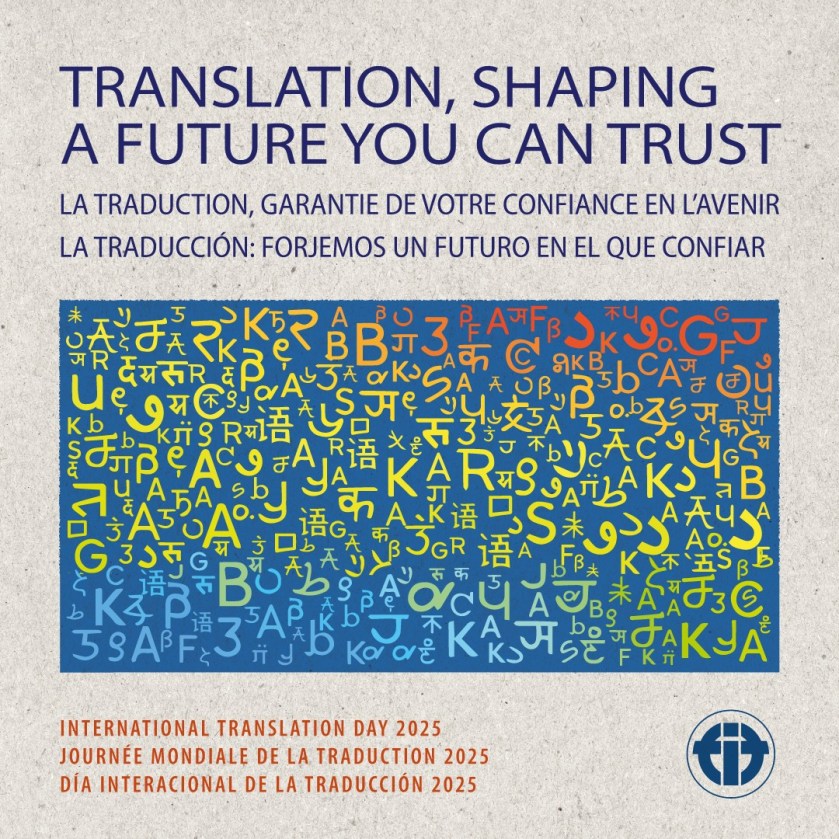
International Translation Day 2025

EventsHappy International Translation Day, a celebration  established by the United Nations in 2017, occurring on 30 September every year.

International Translation Day is an opportunity to pay tribute to the work of language professionals, which plays an important role in bringing nations together, facilitating dialogue, understanding and cooperation, contributing to development, and strengthening world peace and security. A number of organizations are planning events, as described in a prior post.

“Words travel worlds. Translators do the driving”. – Anna Rusconi

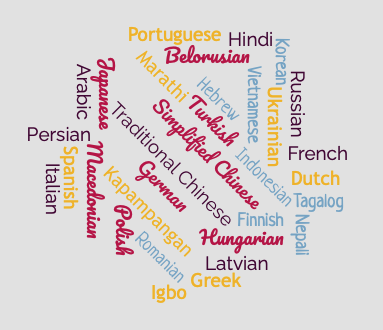
This is an appropriate occasion on which to thank all of the translators who have taken time from other responsibilities to help CID prepare translations of our publications into a remarkable 32 different languages. We could not do this without you! 

NOTE: If you want to translate one of the publications into a language in which you are fluent, please contact us before you start, to learn whether anyone else is already working on that publication in that language.


International Translation Day Events 2025

EventsInternational Translation Day, established by the United Nations in 2017, occurs on 30 September every year. A number of organizations are planning events.

International Translation Day

The International Federation of Translators is holding a webinar this year to celebrate, with the theme Celebrating Translation, Peace and Trust. In turbulent times, where peace often hangs in the balance and global communications and relations are infiltrated by a lack of trust, the ITD 2025 theme highlights the important role of human trust. Specifically, the role of translators, interpreters and terminologists in ensuring trustworthy communication, building dialogue and trust between parties and providing oversight to AI-generated text and machine translation.

English PEN will be holding both in person and online events in London to celebrate, with a two-part conversation exploring pressing questions for the craft, business and ethics of translation: How can literary translation thrive in the face of global turmoil? And how can literary translation thrive in the face of artificial intelligence?

UNESCO and Translation Commons are organizing a joint virtual event to celebrate the International Translation Day within the context of The International Decade of Indigenous Languages. This event will explore the evolving roles of Indigenous language professionals in the digital age, emphasizing the irreplaceable value of human expertise in ensuring accurate, culturally sensitive, and trusted translations. They will navigate the ethical considerations of AI in this field, focusing on community-led approaches to leverage technology responsibly for Indigenous language preservation and revitalization, ultimately creating a future where these languages are not only thriving but also safe.

International Day for Dialogue among Civilizations 2025

EventsInternational Day for Dialogue among Civilizations, established by the United Nations in June 2024, now occurs on 10 June every year. In 2025, this will be marked by an event on 5 June in Paris. (follow the link above to register)

On the occasion of the International Day for Dialogue among Civilizations, UNESCO and the Permanent Delegation of the People’s Republic of China to UNESCO will host a Symposium on “Youth Dialogue on the Future along the Silk Roads”, on 5 June 2025 at UNESCO Headquarters, Paris, France. This event aims to foster reflection on the enduring legacy of the Silk Roads as spaces of encounter, cooperation, and cultural exchange, and to highlight the importance of intercultural dialogue in building more inclusive and peaceful societies.

The programme will feature a symposium composed of three thematic panels, each exploring a distinct facet of intercultural exchange along the Silk Roads:

  • Dialogue through Art and Literature
  • Dialogue through Philosophy and Spiritualities
  • Dialogue through Science, Knowledge and Know-how

    Each session will include interventions from young researchers of the Silk Roads Youth Research Grant, experts, and representatives of Member States.

The event will also feature an artistic performance, the official opening of the photo exhibition Youth Eyes on the Silk Roads, and a special video message and musical performance by world-renowned pianist Lang Lang.

International Day for Dialogue among Civilizations 2024

EventsInternational Day for Dialogue among Civilizations, as established by the United Nations in June 2024, will now occur on 10 June every year.

Underlining the need to raise awareness of the value of diversity of civilizations and promote dialogue, mutual respect, tolerance and global solidarity, the General Assembly today adopted by consensus a resolution declaring 10 June the International Day for Dialogue among Civilizations. The text titled “International Day for Dialogue among Civilizations” (document A/78/L.75) was adopted by consensus.

By the resolution, the Assembly also invited all Member States and other relevant stakeholders to commemorate the International Day appropriately, including through educational and public awareness-raising activities, and share best practices in this regard.

The representative of China, introducing the text, spotlighted multiple interlocking crises and widening peace and development deficits facing the world, which “is entering a new era of instability”, leaving humanity “at a crossroads of history”. Dialogue among civilizations effectively prevents discrimination and prejudice, enhances cooperation and trust, and strengthens solidarity. “There is no alternative to such dialogue,” he emphasized, adding that the UN will be holding the Summit of the Future in September to find systemic solutions to current challenges at this pivotal juncture in history. The text reaffirms that all civilizational achievements constitute a collective heritage of humankind, noting that civilizations flourish in contact with others. He underscored that dialogue among civilizations contributes to improved awareness of the universal values of humanity.

Speaking in explanation of position, the representative of the United States welcomed calls for intercultural exchange. However, he pointed out, the word “civilization” has no clearly defined meaning within international law or the UN system. In the present resolution, “we believe it to be synonymous with the idea of cultures”, he asserted, adding that valuing cultural diversity is a concept that the world has embraced. “No single Government can exercise a monopoly over identity,” he stated, urging for vigilance vis-à-vis how words like “civilizations” are used.

World Day for Cultural Diversity for Dialogue and Development 2024

EventsWorld Day for Cultural Diversity for Dialogue and Development, as established by the United Nations in December 2002, occurs on 21 May every year.

It “celebrates not only the richness of the world’s cultures, but also the essential role of intercultural dialogue for achieving peace and sustainable development.”

On this Day, UNESCO would like to call upon everyone to celebrate cultural diversity, through which we will be able to build the intellectual and moral solidarity of humankind.

Audrey Azoulay
Director-General of UNESCO

International Translation Day 2023

EventsInternational Translation Day, established by the United Nations in 2017, occurs on 30 September every year. English PEN is holding an event this year to celebrate.

Join English PEN in London or online from anywhere in the world, 12–7pm BST on Friday 29 September 2023 for a day of workshops, talks and networking opportunities, culminating in a “2023 State of the Translation Nation” plenary discussion. Featuring 30 leading translators, writers, publishers, agents, booksellers and language experts, this year’s sessions include an “ask me anything” with five UK publishers, workshops on negotiating contracts and translating sensitive work, and talks on rights, events and reviews.


International Translation Day is an opportunity to pay tribute to the work of language professionals, which plays an important role in bringing nations together, facilitating dialogue, understanding and cooperation, contributing to development, and strengthening world peace and security. This is an appropriate occasion on which to thank all of the translators who have taken time from other responsibilities to help CID prepare translations of our publications into a remarkable 32 different languages. We could not do this without you! 

NOTE: If you want to translate one of the publications into a language in which you are fluent, please contact us before you start, to learn whether anyone else is already working on that publication in that language.


International Day for Countering Hate Speech

EventsInternational Day for Countering Hate Speech, as established by the United Nations in 2017, occurs on 18 June every year.

Words can be weaponsThe International Day of Countering Hate Speech was established by the United Nations in July 2021.

Hate speech incites violence, undermines diversity and social cohesion, and threatens the common values and principles that bind us together.

It promotes racism, xenophobia and misogyny; it dehumanizes individuals and communities; and it has a serious impact on our efforts to promote peace and security, human rights, and sustainable development.

Words can be weaponized and cause physical harm.

– António Guterres


World Day for Cultural Diversity for Dialogue and Development 2023

EventsWorld Day for Cultural Diversity for Dialogue and Development, as established by the United Nations in December 2002, occurs on 21 May every year. In the following meditation on the meaning of this day, Yves Winkin describes the ERASMUS program as a good example of cultural diversity and dialogue.

One practical demonstration of meeting the goals of the World Day for Cultural Diversity for Dialogue and Development is ERASMUS, the European Region Action Scheme for the Mobility of University Students. When the European Union launched the program in 1987, European education ministers were not sure it would work. It was incredibly innovative: university students could spend three to nine months in an EU country of their choice and earn degree credit in their own country for successfully completing courses.

At the time, I was teaching at the University de Liège (Belgium). One of my courses was titled “Intercultural relations and processes of acculturation.” I remember getting a call from my president asking for help in distributing special funding obtained from the Minister of Education. The idea was to go anywhere in Europe and quickly set up Erasmus partnership contracts, so that students could get moving, and Belgium could be a good European partner. As a result, I went to the University of La Réunion (a French Island in the Indian Ocean), and colleagues came to me from the UK and Finland. A delegation from Jyväskylä spent a few days in Liège distributing brochures and t-shirts: come to us! Initially people in Liège didn’t recognize that Finnish town, yet within a few years, Erasmus became the most popular program of the EU.

Extended to all 27 EU countries, and later to many other countries in the world, it allowed literally millions of students not only to learn another language and explore new disciplines but also, and more importantly, to engage day-to-day in demanding intercultural dialogue.

The most celebrated illustration of the Erasmus experience is a 2002 French film by Cedric Klapisch, L’Auberge espagnole [The Spanish Apartment] about the tribulations of six students living in the same apartment in Barcelona. As Xavier, the French student who is the lead character, observes: “I am like Europe, I am a real mess.” But a creative and maturational mess: as they struggled with their cultural affinities and differences, the six Erasmus students learned to live together and to build long-term relationships.

In 2023, Klapisch is offering a sequel called Salade grecque [Greek Salad], in which the protagonists are the children of the Spanish apartment residents. Indeed, it is said that Erasmus facilitated marriages: a study by the EU suggested that one million “Erasmus babies” were born between 1987 and 2014.

Now, it must be stressed that structural matters, and not simply good intentions, were needed to facilitate the intercultural exchange. The Erasmus program would not have been possible had European universities not accepted the notion of course credits across nations (European Credit Transfer System). In a way, it can be seen as an academic euro, a shared means of commerce.

In the early years of implementation of the Erasmus program, many professors considered such accounting logic detrimental to the quality of education. Students were alleged to accumulate credits toward their degrees through easy electives. Ultimately it was shown that students did not play that game at all: the experiential effects of their Erasmus sojourn would counter attempts at beating the system. Indeed, the personal growth process that an Erasmus experience abroad triggers is one of the most frequently mentioned benefits of the program, and academic benefits are often considered secondary when compared to relational benefits. For that reason, listing an Erasmus experience on a CV is much valued by employers.

A longer version of this article appears today on the Reiss-Davis Graduate School website; published here with permission.

Collective Healing, Social Justice and Global Well-Being (Online)

EventsRoutes of Enslaved Peoples: Webinar on Collective Healing, Social Justice and Global Well-Being, UNESCO, Paris, France, 3 April 2023 – 4:00-5:00 pm (GMT +2; virtual).

UNESCO’s Routes of Enslaved Peoples Project is starting its series of webinars on collective healing, social justice and global well-being. UNESCO and the University of Wales Trinity Saint David (UK) are jointly hosting the first webinar in an innovative series on “Collective Healing, Social Justice and Global Well-Being.” In this first webinar, Gabriela Ramos (UNESCO’s Assistant Director-General for Social and Human Sciences) will be joined by Zeinab Badawi (BBC Television and Radio Journalist) and Professor Medwin Hughes (Vice-Chancellor of the University of Wales Trinity Saint David) to explore strategies and approaches for valorising the culture and contributions of African-descendent populations as a means of combatting the racism and discrimination which persists as one of the ugly legacies of enslavement and the slave trade. Participants in the webinar will be able to ask questions to the expert panel. The debate will be moderated by Professor Scherto Gill (Director of Global Humanity for Peace Institute at the University of Wales Trinity Saint David). Simultaneous interpretation will be made available in English, French and Spanish.