World Day for Cultural Diversity for Dialogue and Development 2023

EventsWorld Day for Cultural Diversity for Dialogue and Development, as established by the United Nations in December 2002, occurs on 21 May every year. In the following meditation on the meaning of this day, Yves Winkin describes the ERASMUS program as a good example of cultural diversity and dialogue.

One practical demonstration of meeting the goals of the World Day for Cultural Diversity for Dialogue and Development is ERASMUS, the European Region Action Scheme for the Mobility of University Students. When the European Union launched the program in 1987, European education ministers were not sure it would work. It was incredibly innovative: university students could spend three to nine months in an EU country of their choice and earn degree credit in their own country for successfully completing courses.

At the time, I was teaching at the University de Liège (Belgium). One of my courses was titled “Intercultural relations and processes of acculturation.” I remember getting a call from my president asking for help in distributing special funding obtained from the Minister of Education. The idea was to go anywhere in Europe and quickly set up Erasmus partnership contracts, so that students could get moving, and Belgium could be a good European partner. As a result, I went to the University of La Réunion (a French Island in the Indian Ocean), and colleagues came to me from the UK and Finland. A delegation from Jyväskylä spent a few days in Liège distributing brochures and t-shirts: come to us! Initially people in Liège didn’t recognize that Finnish town, yet within a few years, Erasmus became the most popular program of the EU.

Extended to all 27 EU countries, and later to many other countries in the world, it allowed literally millions of students not only to learn another language and explore new disciplines but also, and more importantly, to engage day-to-day in demanding intercultural dialogue.

The most celebrated illustration of the Erasmus experience is a 2002 French film by Cedric Klapisch, L’Auberge espagnole [The Spanish Apartment] about the tribulations of six students living in the same apartment in Barcelona. As Xavier, the French student who is the lead character, observes: “I am like Europe, I am a real mess.” But a creative and maturational mess: as they struggled with their cultural affinities and differences, the six Erasmus students learned to live together and to build long-term relationships.

In 2023, Klapisch is offering a sequel called Salade grecque [Greek Salad], in which the protagonists are the children of the Spanish apartment residents. Indeed, it is said that Erasmus facilitated marriages: a study by the EU suggested that one million “Erasmus babies” were born between 1987 and 2014.

Now, it must be stressed that structural matters, and not simply good intentions, were needed to facilitate the intercultural exchange. The Erasmus program would not have been possible had European universities not accepted the notion of course credits across nations (European Credit Transfer System). In a way, it can be seen as an academic euro, a shared means of commerce.

In the early years of implementation of the Erasmus program, many professors considered such accounting logic detrimental to the quality of education. Students were alleged to accumulate credits toward their degrees through easy electives. Ultimately it was shown that students did not play that game at all: the experiential effects of their Erasmus sojourn would counter attempts at beating the system. Indeed, the personal growth process that an Erasmus experience abroad triggers is one of the most frequently mentioned benefits of the program, and academic benefits are often considered secondary when compared to relational benefits. For that reason, listing an Erasmus experience on a CV is much valued by employers.

A longer version of this article appears today on the Reiss-Davis Graduate School website; published here with permission.


Collective Healing, Social Justice and Global Well-Being (Online)

EventsRoutes of Enslaved Peoples: Webinar on Collective Healing, Social Justice and Global Well-Being, UNESCO, Paris, France, 3 April 2023 – 4:00-5:00 pm (GMT +2; virtual).

UNESCO’s Routes of Enslaved Peoples Project is starting its series of webinars on collective healing, social justice and global well-being. UNESCO and the University of Wales Trinity Saint David (UK) are jointly hosting the first webinar in an innovative series on “Collective Healing, Social Justice and Global Well-Being.” In this first webinar, Gabriela Ramos (UNESCO’s Assistant Director-General for Social and Human Sciences) will be joined by Zeinab Badawi (BBC Television and Radio Journalist) and Professor Medwin Hughes (Vice-Chancellor of the University of Wales Trinity Saint David) to explore strategies and approaches for valorising the culture and contributions of African-descendent populations as a means of combatting the racism and discrimination which persists as one of the ugly legacies of enslavement and the slave trade. Participants in the webinar will be able to ask questions to the expert panel. The debate will be moderated by Professor Scherto Gill (Director of Global Humanity for Peace Institute at the University of Wales Trinity Saint David). Simultaneous interpretation will be made available in English, French and Spanish.

International Translation Day

EventsInternational Translation Day, as established by the United Nations in 2017, occurs on 30 September every year.

International Translation Day is meant to be an opportunity to pay tribute to the work of language professionals, which plays an important role in bringing nations together, facilitating dialogue, understanding and cooperation, contributing to development, and strengthening world peace and security.

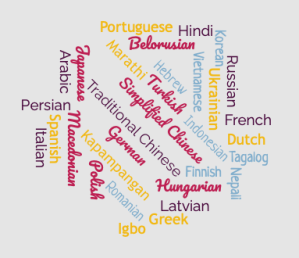
Therefore, this is an appropriate occasion on which to thank all of the translators who have taken time from other activities to help CID prepare translations of our publications into a remarkable 32 different languages. We could not do this without you! 
NOTE: If you want to translate one of the publications into a language in which you are fluent, please contact us before you start, to learn whether anyone else is already working on that publication in that language.


World Day for Cultural Diversity for Dialogue and Development 2022

EventsHeld every year on 21 May, the World Day for Cultural Diversity for Dialogue and Development celebrates not only the richness of the world’s cultures, but also the essential role of intercultural dialogue for achieving peace and sustainable development.

On this Day, UNESCO would like to call upon everyone to celebrate cultural diversity, through which we will be able to build the intellectual and moral solidarity of humankind.

(Audrey Azoulay, Director-General of UNESCO)

The United Nations General Assembly first declared this World Day in 2002, following UNESCO’s adoption of the 2001 Universal Declaration on Cultural Diversity, recognizing the need to “enhance the potential of culture as a means of achieving prosperity, sustainable development and global peaceful coexistence.” UNESCO lead the celebration.

UN Day of Peace Sept 21 2021

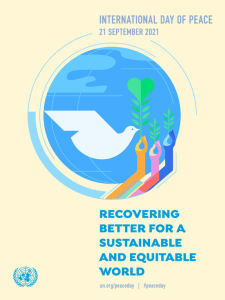
EventsUnited Nations International Day of Peace, September 21, 2021. Theme: Recovering better for an equitable and sustainable world

Each year the International Day of Peace is observed around the world on 21 September. The UN General Assembly has declared this as a day devoted to strengthening the ideals of peace, through observing 24 hours of non-violence and cease-fire. The 2021 theme for the International Day of Peace is “Recovering better for an equitable and sustainable world.” In 2021, as we heal from the COVID-19 pandemic, we are inspired to think creatively and collectively about how to help everyone recover better, how to build resilience, and how to transform our world into one that is more equal, more just, equitable, inclusive, sustainable, and healthier.

International Year of Indigenous Languages

Resources in ICD“ width=2019 is the International Year of Indigenous Languages. Indigenous languages matter for social, economic and political development, peaceful coexistence and reconciliation in our societies. Yet many of them are in danger of disappearing. Every 2 weeks, the world loses an indigenous language and with it an entire cultural & intellectual heritage.

“An International Year is an important cooperation mechanism dedicated to raising awareness of a particular topic or theme of global interest or concern, and mobilizing different players for coordinated action around the world. In 2016, the United Nations General Assembly adopted a resolution proclaiming 2019 as the International Year of Indigenous Languages, based on a recommendation by the Permanent Forum on Indigenous Issues. At the time, the Forum said that 40 per cent of the estimated 6,700 languages spoken around the world were in danger of disappearing.  The fact that most of these are indigenous languages puts the cultures and knowledge systems to which they belong at risk. 

In addition, indigenous peoples are often isolated both politically and socially in the countries they live in, by the geographical location of their communities, their separate histories, cultures, languages and traditions. And yet, they are not only leaders in protecting the environment, but their languages represent complex systems of knowledge and communication and should be recognized as a strategic national resource for development, peace building and reconciliation. They also foster and promote unique local cultures, customs and values which have endured for thousands of years. Indigenous languages add to the rich tapestry of global cultural diversity. Without them, the world would be a poorer place.”

from: About IYIL 2019.

2019 UN’s International Year of Indigenous Languages

Applied ICD“On 21 October 2016 the United Nations General Assembly proclaimed 2019 the International Year of Indigenous Languages, beginning on 1 January 2019. The International Year is an important international cooperation mechanism and a year-long celebration, involving a range of different stakeholders, dedicated to preserve, revitalize, and promote indigenous languages; as languages matter for social, economic and political development, peace building and reconciliation.

Indigenous languages are essential to sustainable development; they constitute the vast majority of the world’s linguistic diversity, and are an expression of cultural identity, diversity and a unique understanding of the world. The disappearance of indigenous languages has a negative impact on areas directly affecting lives of indigenous peoples such as, politics, health, justice, education and access to ICTs among other things.”

Our World in Data

Applied ICDOur World in Data is a non-profit, open-access project based out of the University of Oxford. It started out as a personal project by Max Roser in 2012; since then he has found a home for it at the University of Oxford, secured a stable source of funding from a range of supporters, and brought together a team of researchers and programmers.

Of particular interest to most of the followers of the Center for Intercultural Dialogue will be data relating to the United Nations Sustainable Development Goals (SDGs) – especially #16: “promote just, peaceful, and inclusive societies.”

World Day for Cultural Diversity for Dialogue and Development

EventsSince 2002, May 21 has been chosen by the United Nations as World Day for Cultural Diversity for Dialogue and Development. As the UN page for the event points out: “Three-quarters of the world’s major conflicts have a cultural dimension. Bridging the gap between cultures is urgent and necessary for peace, stability and development.”

Here is their recommended list of Ten simple things YOU can do to celebrate the Day

  1. Visit an art exhibit or a museum dedicated to other cultures.
  2. Invite a family or people in the neighborhood from another culture or religion to share a meal with you and exchange views on life.
  3. Rent a movie or read a book from another country or religion than your own.
  4. Invite people from a different culture to share your customs.
  5. Read about the great thinkers of other cultures than yours (e.g. Confucius, Socrates, Avicenna, Ibn Khaldun, Aristotle, Ganesh, Rumi).
  6. Go next week-end to visit a place of worship different than yours and participate in the celebration.
  7. Play the “stereotypes game.” Stick a post-it on your forehead with the name of a country. Ask people to tell you stereotypes associated with people from that country. You win if you find out where you are from.
  8. Learn about traditional celebrations from other cultures; learn more about Hanukkah or Ramadan or about amazing celebrations of New Year’s Eve in Spain or Qingming festival in China.
  9. Spread your own culture around the world through our Facebook page and learn about other cultures.
  10. Explore music of a different culture.

Int’l Day of Non-Violence

The International Day of Non-Violence is marked on 2 October, the birthday of Mahatma Gandhi, leader of the Indian independence movement and pioneer of the philosophy and strategy of non-violence.

According to United Nations General Assembly resolution A/RES/61/271 of 15 June 2007, which established the commemoration, the International Day is an occasion to “disseminate the message of non-violence, including through education and public awareness”. The resolution reaffirms “the universal relevance of the principle of non-violence” and the desire “to secure a culture of peace, tolerance, understanding and non-violence”.

Introducing the resolution in the General Assembly on behalf of 140 co-sponsors, India’s Minister of State for External Affairs, Mr. Anand Sharma, said that the wide and diverse sponsorship of the resolution was a reflection of the universal respect for Mahatma Gandhi and of the enduring relevance of his philosophy. Quoting the late leader’s own words, he said: “Non-violence is the greatest force at the disposal of mankind. It is mightier than the mightiest weapon of destruction devised by the ingenuity of man”.