UNESCO: Associate Editor (France)

“Job

Editor, International Institute for Educational Planning (IIEP), UNESCO, Paris, France. Deadline: 21 January 2021.


This position is located in the Information Services Unit of the UNESCO International Institute for Educational Planning (IIEP) in Paris and reports to the Information Services Team Leader. Under the supervision of the Team leader and in close collaboration with other team members, the incumbent is in charge of reviewing, revising and editing IIEP documents, such as manuscripts, concept notes, web news, institutional documents, etc. The incumbent supports in particular IIEP move towards e-publications, including through the provision of advise and assistance in this regard to IIEP staff. Because of the public nature IIEP content, the incumbent must demonstrate very good editorial skills and sound judgement in order to maintain IIEP’s excellent reputation.

UNESCO Invites Contributions to Futures of Education initiative

“UNESCO”If you are interested in participating in a cooperative CID-UNESCO focus group on the role of intercultural dialogue in the futures of education, then please read the following and send an email immediately as this event will be scheduled for late January at a mutually convenient day/time. We cannot guarantee participation, as this will be a small group, but you will also be able to organize your own event if so desired. There will only be one meeting, and then a report of the discussion sent in to UNESCO. 

UPDATE: Several focus groups are now full, thanks to the many responses – more details to be posted shortly as there are results to report. [Second update: the final report is now posted here]
UNESCO Futures of Education

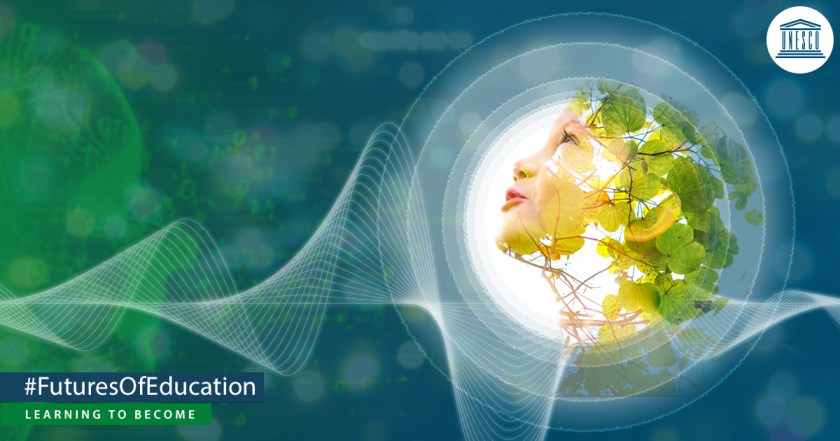
UNESCO’s Futures of Education initiative is an ambitious attempt to rethink education and help shape the future. The initiative is catalyzing a global debate on how education, learning and knowledge need to be re-imagined in a world of increasing complexity, uncertainty, and precarity.

As part of this initiative, UNESCO has appointed a high-level International Commission of thought leaders with diverse expertise and perspectives from the worlds of politics, academia, the arts, science and business. The International Commission will prepare a report, to be released in November 2021, that will provide an agenda for action and discussion by policymakers and practitioners.

The report of the International Commission will emerge out of a range of work modalities that emphasize co-creation, a broad participatory and partnership structure, the inclusion of diverse perspectives, and the absence of pre-specified conclusions. Towards this end, UNESCO is encouraging individuals, organizations and networks to organize focus group discussions with their constituencies, inputs from which will feed into to the Commission’s work.

The objective of these consultations is to generate a set of diverse perspectives on the challenges and opportunities for education and learning that can be both anticipated/predicted and imagined/envisioned when looking towards the year 2050. Rethinking as well as fully reimagining the way we live together are key dimensions explored by UNESCO; this is why the Center for Intercultural Dialogue has been approached to mobilize its members in the organization of a focus group discussion. Please send an email asap if you wish to participate!


UNESCO: Advisor for Communication/Information (Morocco)

“JobAdvisor for Communication and Information, Communication and Information Sector, UNESCO, Rabat, Morocco. Deadline: December 26, 2020.

The Advisor for Communication and Information, under the direct supervision of the Director of UNESCO Office in Rabat and the overall authority of the Assistant Director-General, Communication and Information (ADG/CI) as well as in close cooperation with staff of CI Sector at Headquarters (Directors, Chiefs of Section, Programme Specialists) and in Field Offices of the region, is responsible for developing, planning and managing a programme of work and as a team leader may manage, supervise and guide a team of staff to ensure the delivery of programme initiatives and project activities, from funding proposals to project design to evaluation and reporting.

Youth’s Voice for the Future of Media & Information Literacy in Asia & the Pacific (Online)

EventsYouth’s Voice for the Future of Media and Information Literacy in Asia and the Pacific, Asian Media Information and Communication Centre, Jakarta, November 18, 2020, 12:00-2:00 PM Jakarta Time, online.

Asian Media Information and Communication Centre, Inc. (AMIC) will be conducting an online discussion with youth entitled, Youth’s Voice for the Future of Media and Information Literacy in Asia and the Pacific. This event has the support of UNESCO Offices in Jakarta, Bangkok and New Delhi. The event will be on Wednesday, November 18, 2020, 12:00PM – 2:00 PM Jakarta Time.

The main objective is to understand how to better integrate media and information literacy (MIL) into education from the perspective of youth in Asia and the Pacific region, taking into consideration specific challenges faced by young women, as well as youth with disabilities, such as internet connectivity and accessibility. Another objective of this exercise is to build and strengthen the network of youth who could be the advocates for developing and expanding MIL in the Asia and the Pacific region.

CID can nominate up to five (5) representatives age 15-24 who are based in Asia and the Pacific to participate in the invite-only online discussion with MIL experts. If you are a CID follower and wish to be nominated, send an email with your name and age as well as the city and country in which you are based. English will be the working language for the event. Be sure to note the time zone, especially if you are physically based in the USA.

UNESCO: Programme Specialist (Uruguay)

“JobProgramme Specialist (Culture), UNESCO, Montevideo, Uruguay. Deadline: 14 November 2020.

The Programme Specialist (Culture), under the direct supervision of the Director of the UNESCO Regional Office in Montevideo and the overall authority of the Assistant Director-General for Culture, coordinates the programme and projects in the field of Culture to ensure the design, development, planning, monitoring, implementation and coordination of activities carried out under Major Programme IV – Culture in the countries covered by the Regional Office. He/She is also responsible for preparing inputs for the UNESCO Medium-Term Strategy (C/4), the Programme and Budget (C/5) and related work plans, as well as for developing partnerships and fundraising activities and ensuring UNESCO’s contribution to the ‘Delivering as One’ exercise in the field of Culture in the countries covered by the Office. He/She also leads and supervises the staff of the Culture Unit of the Office.

UNESCO: Culture & COVID-19

Resources in ICD“ width=

Culture & COVID-19: Impact and Response Tracker, UNESCO, Paris, France.

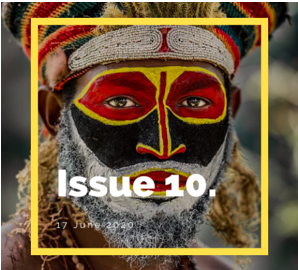
Culture & Covid Issue 10

To address the profound impact the COVID-19 pandemic will have on the culture sector, UNESCO has launched a weekly “Culture & COVID-19: Impact and Response Tracker” to provide an overview of the rapidly evolving situation. It explores both the immediate impact of the health crisis and examples of how countries around the world are adapting to the situation. This is one of several initiatives by the Organization to respond to the impact of the pandemic on the cultural sector worldwide.

Ten issues have already appeared, examining such issues as the impact on world heritage sites, tourism, museums, archaeological sites, and indigenous peoples.

COVID-19 versus ICD

Applied ICDCOVID-19 vs. Intercultural Dialogue: What Impact? An interview of Professor Fethi Mansouri (UNESCO Chairholder, Cultural Diversity and Social Justice, Deakin University, Melbourne, Australia) by Ann-Belinda Preis (Chief of UNESCO Intercultural Dialogue).

A good question. See the entire interview, but for an excerpt:

ABP: How does lack of contact and social interaction impact the broader Intercultural Dialogue (ICD) agenda, which is built on connectivity, contact and exchange?

FM: This is perhaps where COVID-19 presents a significant challenge to the ICD agenda. Intercultural dialogue has, as one of its core premises, contact between people. And the reason why we have contact as a core premise is because there is an assumption that when people get to know one another, prejudice might be reduced, and that issues of discrimination might disappear. So COVID-19 and its emphasis on social distancing means that a lot of what we would like to achieve through intercultural dialogue, in particular in bringing people together, bringing communities together, bringing diverse communities together (and diversity here means diversity of ethnic backgrounds, religious beliefs, nationalities etc.)…

Intercultural dialogue is in itself an essential tool that we will need in the post-COVID-19 environment.

We will need to renegotiate a new global compact, a new social contract, and I think dialogue will have to play a key role in that. So it is being perhaps compromised right now but it has a big role to play in the post-COVID-19 world that will emerge.

UNESCO: Asst Dir Social/Human Sciences (France)

“Job

Assistant Director General for Social and Human Sciences, UNESCO, Paris, France. Deadline: 15 February 2020.


Under the authority of the Director-General, the Assistant Director-General for the Social and Human Sciences is responsible for providing leadership and strategic vision for the Social and Human Sciences Sector in line with the Organization’s current Medium-Term Strategy for 2014-2021, its global priorities Africa and gender equality, and the 2030 Agenda for Sustainable Development.

To that effect, the Assistant Director-General for the Social and Human Sciences is responsible for the overall implementation of the Social and Human Sciences Major Programme, as approved by UNESCO’s governing bodies. This comprises management, planning and coordination of UNESCO’s strategy, programmes and plans of action for the Social and Human Sciences Sector, including transversal and interdisciplinary initiatives, as well as assistance in mobilizing extrabudgetary resources and establishing partnerships.

The Social and Human Sciences Sector’s mission is to strengthen social and human sciences programmes and policies – nationally, regionally and globally – and to promote international cooperation to address the critical challenges of the Sustainable Development Goals (SDGs). The objective is to advance knowledge, standards and intellectual cooperation in order to address the complexity of social transformations, by promoting inclusive social development and intercultural dialogue in particular.


UNESCO: Assoc Programme Specialist: Communication & Information (France)

“Job

Associate Programme Specialist, Communication and Information, UNESCO, Paris, France. Deadline: 8 December 2019.

Under the overall authority of the Assistant Director-General for Communication and Information (ADG/CI) and the direct supervision of the Chief, Executive Office (CI/EO), the incumbent is responsible for providing professional and technical support, research and analysis for the programme management, as well as coordination of the Communication and Information (CI) Sector. Working as part of the global CI team and as member of the Executive Office, the incumbent will assist the Chief, CI/EO in performing the major activities listed below.

To assist Chief, CI/EO in overall coordination activities of the Executive Office, the incumbent will:

  • collect and analyze data, prepare and consolidate briefings in the thematic areas of media  and information literacy, media development, universal access to information and documentary heritage;
  • provide support to Chief CI/EO in facilitating joint action and good working relations between colleagues in the Field and Headquarters, UNESCO Centers, Institutes and networks, Central services, as well as partnerships with Member States, Intergovernmental Organizations, civil society, academia and the private sector;
  • manage and produce correspondence, memos, briefings, speeches, articles, web content, inputs to the UNESCO annual report, etc.

UNESCO Youth Eyes on the Silk Roads Photo Contest

Photo ContestYouth Eyes on the Silk Roads Photo Contest, UNESCO, Paris, France. Deadline: 6 January 2020.

The visual arts, and in particular photography, are increasingly being used by today’s youth as a powerful tool for communication and self-expression. As such, they have the potential to play a significant role in raising awareness of the key issues facing our contemporary globalizing world. The annual Youth Eyes on the Silk Roads International Photo Contest offers an exciting opportunity for young people from all over the world to capture their understanding of the common heritage of the Silk Roads through the lens of their camera.

Organized within the framework of the UNESCO Silk Roads ProgrammeUNESCO Youth Programme and the International Decade for the Rapprochement of Cultures (2013-2022), the 2019 edition of the contest is open for entries from 19 September 2019 to 6 January 2020.

The Silk Roads are an expansive region composed of a network of maritime and land routes. Originating in East Asia, South Asia, and Southeast Asia the Silk Roads cross the Central Asian sub-continent, the Russian steppe, the Iranian and Anatolian plateaus, and the Arabian Peninsula. They also stretch through North Africa and Northeast Africa, from Tanzania to Morocco. Additionally, they pass through Eastern and Southern Europe, before reaching France and Spain. Please see the map here

The Youth Eyes on the Silk Roads Photo Contest is an opportunity for young people living or travelling within these regions to share their perceptions and further their understanding of the common cultural heritage and pluralistic identities emerging from the interactions and exchanges taking place along the Silk Roads. The contest encourages the use of photography to extend these cultural interactions and encounters in the contemporary world, to foster mutual understanding and promote peace amongst the diverse populations encompassed by the Silk Roads.

The photographs must accurately reflect the theme, “Reveal the Silk Roads”, through representations of Gastronomy and Food ProductionMusic and Dance, and Traditional Sports and Games.

The photography contest is open to everyone between 14 and 25 years old, regardless of his or her country of residence, except employees of UNESCO and the donor, China World Peace Foundation, and their family members (parents, children, siblings and spouses). There will be two categories: 14 to 17 years old, and 18 to 25 years old.

You can have a look at the 2018 winners gallery here. From this contest, the “Youth Eyes on the Silk Roads” travelling photo exhibition presenting the 57 best photos was set up. The photo album “Youth Lens on the Silk Roads” aims to reflect the diversity of youth’s perspectives and impressions on the shared heritage of the Silk Roads.