Bergamo (Italy) visit 2014

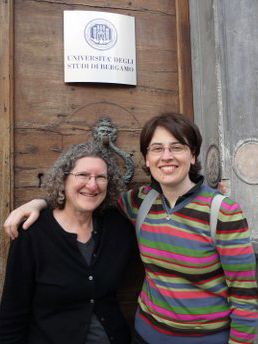
WLH_ManganoOn May 26, 2014, I was able to re-connect with Maria Flora Mangano, one of the participants in the NCA Summer Conference on Intercultural Dialogue, held in Istanbul, in 2009. We have kept in touch, as she has kept in touch with others from that event, but this is the first time we have had the opportunity to meet in person again. It took a bit of travel (I was coming in from Lugano, Switzerland, and she was coming from her home near Rome), but the conversation was worth the effort. Her work will be familiar to regular visitors to this website, as described in her post on A lesson dedicated to the genocide in Burundi: An occasion of dialogue as a space of relationship among cultures.” A chapter of hers is included in Case Studies in Intercultural Dialogue, currently in press with Kendall Hunt, and one of the results of the Istanbul conference.

Although Maria Flora already holds a PhD and has been teaching for many years now, she is currently pursuing further studies at the University of Bergamo, which is why we met there. Much of the University is located in the old city, Bergamo Alta, dating to Roman times, and many of the faculty are housed in historic buildings. This part of the city  is especially impressive, from the funicular ride up the hill on which it rests, to the grand views once you arrive. Many of Maria Flora’s classes are held in a former monastery in the lower city, with a stunning courtyard, also impressive.

Wendy Leeds-Hurwitz, Director
Center for Intercultural Dialogue

Feeling felt: The heart of the dialogic moment?

Guest PostsFeeling felt: The heart of the dialogic moment? by Robyn Penman

In Maria Flora Mangano’s post on A space of relationship for dialogue among cultures she describes how a student was able to talk about his personal experience during the genocide in Burundi because of the space of the relationship that was created for class members to speak without any fear of offence. The experience within this space of relationship was so profound that by time the student finished talking, the class was so “touched they couldn’t speak”.

As I read Maria Flora’s post I was struck by the way the experience was described metaphorically in terms of physical contact: the students were “touched”, the speaker “felt” understood. I know this is a common way of talking about poignant moments in dialogue and other “close” encounters. However, my recent foray into the interpersonal neurobiology (IPNB) research literature has made me more alert to such metaphors and given me reason to draw attention to it here.

Extensive research evidence across the neuroscience field indicates that relationships are crucial to brain development and neural functioning throughout the life cycle. We are, to use Mona Fishbane’s phase, “wired to connect”. The fact that our relationships, and presumably the quality of them, can impact on brain development is, in itself, something to take note of. However, IPNB has taken this broad notion further and fleshed out a number of ideas about how these connections work and what their impact may be. One of these ideas concerns the sense of “feeling felt”.

Daniel Siegel, who coined the term interpersonal neurobiology, uses the concept of “feeling felt” to describe the ability of one person to empathically and authentically encounter another person; especially in the early parent-infant relationship.  According to Siegel, “feeling felt” is characteristic of secure infant-parent relationships: the more infants “feel felt”, the better their attachment and the sounder their development pathway.

While there is still some controversy about the specific role played by neural mechanisms in the ability to be empathic, the concept of feeling felt and its role in childhood development has a great deal of merit. The concept of feeling felt also seems to have merit when we come to adult relationships, and to dialogue specifically.

When I was reading descriptions of the “feeling felt” phenomenon I was struck by the extent to which it resonated with Martin Buber’s sense of “being”. In his discussions of dialogue, Buber made a distinction between “being” and “seeming” in an encounter with another. For Buber, the being person is acting authentically into the encounter and, in acting thus, makes dialogue possible. The moment when two people fully experience each other as “being” in the relationship signifies a dialogic moment. In exactly the same vein we could say that dialogue has occurred when each person feels felt by the other.

The interpersonal neurobiology literature would suggest that this striving to feel felt is part of our neurological make-up. We strive for connection, and we yearn to feel felt from infancy onwards. But, equally important, the existence of this neurophysiological dimension would also suggest that “feeling felt” is a cross-cultural phenomenon. It may be that the way this “feeling felt” is described in different languages differs but the yearning for it may not. It leaves us with an interesting possibility. As scholars, we may not be able to agree on a definition of dialogue but, as participants, we know one when we have one: we feel felt.

References:
Buber, Martin. (1965). Between man and man. New York: Macmillan.
Siegel, Daniel J., & Hartzell, Mary. (2003). Parenting from the inside out. New York: Penguin.

Download the entire post as a PDF.

A space of relationship for dialogue among cultures

Guest Posts

A lesson dedicated to the genocide in Burundi: An occasion of dialogue as a space of relationship among cultures
by Maria Flora Mangano.

I am happy to share with you what happened recently in my class, during a lesson dedicated to the genocide of Rwanda and Burundi. I am currently lecturing on dialogue among cultures at St. Peter’s Philosophical-Theological Institute in Viterbo, Italy.

One of the students comes from Burundi; his name is Jean. He introduced himself during the first lesson, describing his background and choice of life as a religious. One day outside of class, he mentioned the war in Burundi and the genocide of 1993. In that moment he shared with me and two Italian students what it was like to be a Tutsi. In 2 or 3 minutes he described a few images of the genocide, which he lived through when he was 12 years old; thanks to God, all his family survived. I was shocked by his words and I asked him if he would be able to share his experience with the class, proposing that the students would both listen to his story and see part of the film Hotel Rwanda together. We could organise this special and unforgettable lesson in a couple of hours.

Jean prepared a powerpoint and presented the story of his country and the story of his family and relatives during those three terrible days of the genocide. I proposed to the class not to see the entire movie (which is quite long, so we saw only the trailer) but rather to dedicate the majority of the time to Jean’s personal story. I introduced the technical vocabulary, including genocide and shoah, sharing what these terms have meant in the last century and what they mean now. The 16 students come from 9 countries; some of them did not know even where Burundi was. I asked the students to try to create a space of relationship in which they could speak without any fear of offending or to be offended.

Jean was extremely clear in explaining the historical background, presenting the political and social aspects underlying the genocide. Then he shared his story with us. I am still speechless, shocked and impressed. It was the first time that one of my students desired to share what the genocide was for him and he prepared everything in detail. One young person who survived the genocide decided to offer his experience as a gift, not in revenge. He was able to share his memories, even if these are still dramatic and negative.

Jean said that in African culture the tradition is oral, not written and for this reason it is not possible to ask to him (or others) to write about their experience. He prefers talking over writing about it, but he never did so before this, as he said that the open hurts rest open even after time and sharing.

At the end of his time, all the students were so impressed and touched they could not speak. I ask the students to take time and then to try to share with Jean their feelings, also to try to thank him in a real way. I hope it will yet happen.

I am happy to share this wonderful experience of dialogue and sharing in class. I hope to be able to publish about it in the future. As scholar, I felt that this should be our way of teaching, especially given the discipline of communication we try to teach (and learn). Let’s go ahead to try to do the best with our students and in research on this issue. I am still convinced that we may try to re-write history through dialogue.

I am sharing what happened because it is uncommon to talk about the genocide of Rwanda (and Burundi) for people who survived this. It is still too early, as Jean told me. I consider this moment an important effect of dialogue among cultures, as this student chose to share his life with the class and he prepared the lesson on his own, without any help from me. He chose what to say, also decided not to show any pictures of the genocide and he carefully chose the words to describe those days. He also chose to first present the political and historical conditions as a necessary introduction to the genocide.

Afterwards, Jean reported that he felt understood by the class, so probably he was ready to share this moment. In the days since, I have received mails from him and from the others who have expressed their appreciation for that moment. I have the feeling that we built the space for relationship as the basis of dialogue during the course, and that this moment significantly enriched this space.

Download the entire post as a PDF.

NOTE: See the response prompted by this post, by Robyn Penman.

Example of dialogue among cultures

Guest PostsAn interesting example of dialogue among cultures by Maria Flora Mangano.

I have just taught a course in a rather unique context. The course was Communication of Scientific Research, offered to students (MSc and PhD) at the Mediterranean Agronomic Institute, located in Bari (in Southern Italy). The Institute is part of the International Centre for Advanced Mediterranean Agronomic Studies, located in Paris.

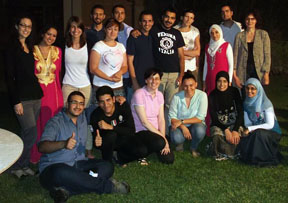
This course was an extraordinary experience: five days, of 8 hours of lessons per day, supplemented by moments of dialogue during the meals and after dinner. All told, a very intense week, with more than 25 students from Masters and PhD courses in various agronomic disciplines. Among the group, only two were Italian, the other students coming from almost 15 countries in the Mediterranean area, from Kosovo to Morocco.

The course produced many challenges for me: first of all, the fear to propose content in a non-native language, especially topics related to dialogue as a space of relationship among, beyond and across our cultures and disciplines; then the proposal of building this space during all the week, in class and out, with students who came from countries where there are still conflicts.

We discussed in class the attack in Beirut last week, as one student had parents who lived in that zone; the same with the Egyptian students with whom we tried to talk about the 50 deaths in Cairo during the riots in the streets.

It was extremely intense to dialogue with students about the value of the other and otherness, starting from European philosophy, which risked appearing far from all their cultures. I tried to introduce the content starting from keywords, as I usually do in my teaching activities, also in Latin and ancient Greek languages, exploring the meaning of the various terms in all of their languages.

I proposed that every student introduce her or himself in 10 minutes by using whatever tools they wanted. We spent a lot of time in class analyzing their oral presentations, which were delivered by slide, oral speeches, or music (one student played some songs from his country with a guitar).

The issues around scientific research gave me the opportunity to introduce other topics related to the relationship with the other, which are different for every country. I also shared with them the notion of creating a “safe” space of dialogue.

One exercise used the short film, Twice upon a time (about bilingualism in Canada). The results were interesting: the students who came from countries close to the European tradition (if we can use this expression), like Turkey or the Balkans (in particular, Macedonia, Kosovo, and Bosnia), appreciated the movie and found it a fitting conclusion to the lesson. But the students from the Maghreb (Morocco, Tunisia, Algeria) and from the Middle East (Egypt, Palestine, Lebanon) did not enjoy it as much. In fact, they found it boring and a bit excessive, as they did not fully appreciate the issues depicted.

Ramadan started during the course, which provided another wonderful opportunity for sharing and dialogue. The majority of the students in this course were Muslim, but only about half were observant. Those who were needed to fast (not only avoiding food, but also even water), throughout the day, even though in Southern Italy the summer is hot. I proposed to the students that I would participate in their evening prayer, after dinner, for almost one hour, since it was the only one of the five times dedicated to daily prayer that we might share. They were very happy and surprised, as they told me that it was uncommon for a non-Muslim to join in prayer with them.

At the end of the sessions we had ice cream in the garden (the campus is really beautiful), after dinner and after prayer. It was another occasion for interaction among the group members, including some students who were not enrolled in this course.
Course CSR_MAI 2013-rev

I asked students to send me their feedback and so I have been receiving beautiful notes. I have the feeling that we shared something new, beyond only disciplinary content, as many of them have now told me.

Download the entire post as a PDF.

Maria Flora Mangano Profile

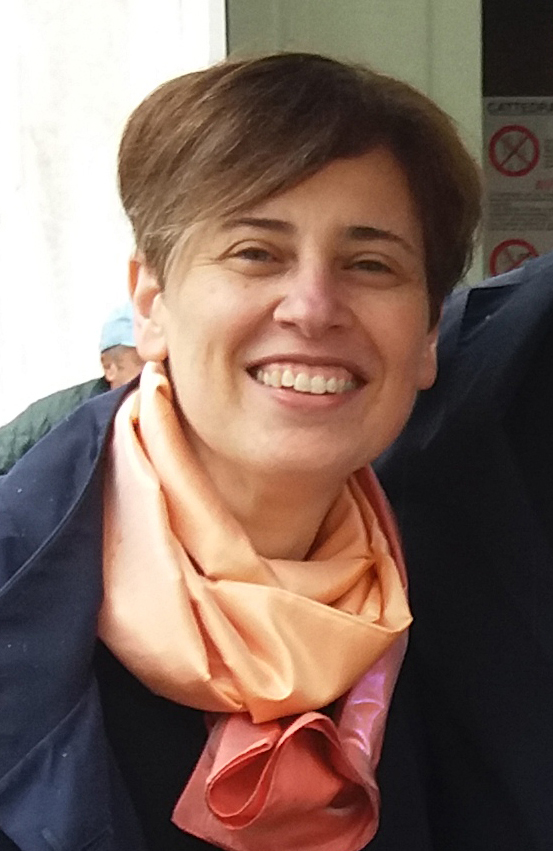
ProfilesMaria Flora Mangano, Italian scholar of intercultural and interdisciplinary dialogue, with a background in natural (Ph.D. in Biochemistry) and in social sciences (Ph.D. in Humanistic Intercultural Studies).

Maria Flora ManganoSince 2007, she has been teaching Dialogue between Cultures and Communication of Scientific Research to young scientists drawn from different fields of study within the natural, social and human sciences of some Italian faculties. She is interested in dialogue as a space of relationship between, across and beyond cultures and disciplines. Her approach to research and teaching is transcultural and transdisciplinary, and, in this perspective, the space of relationship is mediated by the philosophy of dialogue.

She participated in the National Communication Association Summer Conference on Intercultural Dialogue, and wrote a chapter in a volume resulting from that conference:

Mangano, M.F. (2015). Dialogue, as a common ground between, across and beyond cultures and disciplines – A case study of transcultural and transdisciplinary communication lectures for graduate and undergraduate students. In N. Haydari & P. Holmes (Eds.), Case studies in intercultural dialogue (pp. 73-86). Dubuque, IA: Kendall Hunt.

as well as a book on dialogue:

Mangano, M. F. (2018). Relationship as a space “in between”: A transcultural and transdisciplinary approach mediated by dialogue in academic teaching. Bergamo, Italy: University of Bergamo Press.


Work for CID:

Maria Flora Mangano wrote KC81: Dialogue as a Space of Relationship, and translated KC1: intercultural Dialogue, KC14: Dialogue, KC37: Dialogue Listening, KC81: Dialogue as a Space of Relationship, and CID Poster 1: Intercultural Communication / Competence / Dialogue into Italian. She also wrote case studies for Constructing Intercultural Dialogues: #2: Reconciliation, and #9: Dialogue as an Activity of Daily Living, and translated #2: Reconciliation into Italian. And she has written multiple guest posts: Example of dialogue among cultures; A space of relationship among dialogues and culturesSpace of relationship as a space of distance: A new proximity; Saturday morning (intercultural) school; Seeds of dialogue, Gratitude is my attitude, and Standing for peace without weapons. In addition, she wrote Occasional Paper #2: When the Letters Sing and the Numbers Jump: Education as a Space of Relationship.