Abe: Using Film in ICD

Intercultural PedagogyAbe, a film by Brazilian director Fernando Grostein Andrade, uses fusion foods as a way to approach intercultural dialogue.

Finding one’s identity is a challenge everyone faces, but few have the pressure that 12-year-old Abe feels as the son of an Israeli mother and Palestinian father. Though his parents have raised him in a secular household, both sets of grandparents insist he chooses between being Jewish or Muslim. Abe’s passion for food allows him some escape from the escalating family tensions. While exploring Brooklyn to discover new foods, he meets Chico, a Brazilian chef who believes “mixing flavors can bring people together.”

If you use other films in your work or teaching that relate to intercultural dialogue, please take a moment to send an email with a short note, as CID is currently preparing a list of such films to post as a resource.

Knowledge is the Beginning

Intercultural PedagogyKnowledge is the Beginning, a documentary produced and directed by Paul Smaczny about Daniel Barenboim, Edward Said, and the West-Eastern Divan Orchestra.

https://www.youtube.com/watch?v=bgAWv5CptHk

At least there is a chance for dialogue.

Barenboim and Said established the orchestra to bring together young musicians from across the political divide in the Middle East. They hoped that music would help to bring understanding and tolerance of different beliefs and cultures. The name comes from Johann Wolfgang von Goethe’s collection of poems, West-Eastern Divan. The film covers the years 1999-2004; the orchestra is still performing today, and makes a point of putting on concerts in the musicians’ home countries whenever possible. In 2007 UN Secretary General Ban Ki-Moon named Barenboim UN messenger of peace, and in 2016 the West-Eastern Divan Orchestra was named a UN Global Advocate for Cultural Understanding. The conversations among young musicians from a variety of countries would make this a good choice of film for someone teaching about intercultural dialogue.

Those wishing more information might read: Barenboim, D., & Said, E. (2002). Parallels and paradoxes: Explorations in music and society. London, UK: Bloomsbury.

Mother Tongue Film Festival

Intercultural PedagogyThe Smithsonian Institution’s Mother Tongue Film Festival celebrates cultural and linguistic diversity by showcasing films and filmmakers from around the world in Washington, DC.

Through digital storytelling, the festival amplifies the work of diverse practitioners who explore the power of language to connect the past, present, and future. Since 2016, the annual festival has celebrated International Mother Language Day on February 21. The fifth annual festival took place February 20–23, 2020. Many of the shorter films are available to stream in full on their website.

Many of these films would be valuable in teaching about cultural differences, if not intercultural dialogue explicitly. Just the easily accessible short films range from Pire, a music video with lyrics in Mapuzugun, the Mapuche language of Argentina, to Grá & Eagla, following an Irish bilingual comedian using Gaeilge [Gaelic], to Puhi Toprao / To Be Happy, telling the creation story of the Yanomami in Venezuela in their own language.


LIST(e)N and The Day of Listening

Intercultural PedagogyLIST(e)N invites people with opposing viewpoints on some of the most divisive issues – guns, abortion, and immigration — to listen to each other. The documentary features participants whose personal lives deeply intertwine with the topics, including one of the survivors of the Parkland, FL school shooting. As the exchanges unfold, and the participants take the time to get to know each other, moments of unexpected emotional connection and understanding arise.

Documentary director Juliana Tafur has now announced a program at universities, The Day of Listening, consisting of:

  • A screening of the award-winning 80-minute film LIST(e)N, showcasing how listening can have a positive impact on people with opposing viewpoints.
  • A post screening session that highlights the tools needed for deep listening, which are essential for exercising meaningful connections with ourselves and others.
  • An experience-based component, with mediated encounters between students, where they get to discuss important yet non-controversial topics (to be selected with the university, based on their priorities), and have the students put into practice their newly-acquired deep listening skills. *The idea here is to achieve connection between the students, just like we did during the encounters we mediated for the film.

So far, LIST(e)N has been screened at Northwestern University, Florida International University and The Ohio State University; University of Miami is coming up soon.

David: Using Film in ICD

Intercultural PedagogyDavid, the film co-written, co-produced and co-directed by Joel Fendelman and Patrick Daly, would be a great conversation starter for any discussion of intercultural dialogue, or broader issues of intercultural communication.

The film shows what happens when 11-year-old boys interact without having labels (in this case, “Jew” and “Arab”) to use as their starting point. To quote a line from the trailer, this is “a film about possibilities.”

If you use other films in your work or teaching that relate to intercultural dialogue, please take a moment to send an email with a short note, as CID is currently preparing a list of such films to post as a resource.


Graduate Programs in Intercultural Dialogue

Graduate StudyAs of today, there is a new database provided on this site, for Graduate Programs in Intercultural Dialogue. Access it directly from this link, or from the menu, under resources.

The title may be a bit misleading for, in fact, there are no Masters or PhD degrees awarded for Intercultural Dialogue, at least none that have surfaced in searches thus far. However, that does not stop students from writing to CID requesting suggestions of appropriate graduate (postgraduate if in Europe) programs. For them we are providing a list of programs in related areas: Intercultural Communication or Dialogue, various combinations of Conflict / Peace Studies, or Interfaith / Interreligious Studies, or Border Studies. Many more programs emphasize a wide range of related topics, from Social Justice to Human Rights to Migration or Multilingualism. More general degrees typically offer specializations or even certificates which might also be appropriate (so that Intercultural Communication is frequently one area of focus in Communication degrees, Migration can be a focus in Sociology, Negotiation in Psychology, Dispute Resolution in Law, Human Rights in International Relations, Multilingualism in Linguistics, Multiculturalism in Education, etc.). Also, some universities offer interdisciplinary degrees that students can design to meet their specific interests if there is no program meeting their needs.

Before dozens of colleagues in Intercultural Communication decide to write, a clarification. The National Communication Association keeps a list of which doctoral program in the USA teach intercultural communication as part of a more general program of study. But of the 36 entries in the most recent list, only six (University of Wisconsin-Milwaukee, Michigan State University, University at Albany-SUNY, University at Buffalo-SUNY, University of Arizona, and University of Illinois-Chicago) even show Intercultural Communication as a named specialization. And none of them bear the title Intercultural Communication, as do numerous degrees around the world. Since the page for graduate programs being added to the site today is intended to show programs awarding degrees in Dialogue, Intercultural Communication, or any of the cognate areas listed, that is the likely explanation for why your program does not appear. However, this list is a first attempt and will be updated frequently. Please do send an email if you are in, or know of, a program awarding a degree in ICD or one of the cognate areas described which is not listed here.

Intercultural Learning Hub

Intercultural PedagogyIntercultural Learning Hub, public “science gateway” sponsored by Purdue University’s Center for Intercultural Learning, Mentorship, Assessment and Research.

Calling all interculturalists! Looking for resources to help others develop intercultural competence or engage them in equity and inclusion work? Need a venue to disseminate your latest scholarship? Searching for connection with others in the field? Visit the new Intercultural Learning Hub. Membership is free. Your contributions are welcome.

Ramen Shop

Intercultural Pedagogy
Ramen Shop could not be more appropriate as a tool for starting discussions about intercultural dialogue.

The protagonist, the son of a Singaporean mother and Japanese father,  searches for family history and recipes simultaneously. By the end, he combines his father’s ramen noodles with his mother’s bak kut teh, or pork rib soup.

Example of dialogue among cultures

Guest PostsAn interesting example of dialogue among cultures by Maria Flora Mangano.

I have just taught a course in a rather unique context. The course was Communication of Scientific Research, offered to students (MSc and PhD) at the Mediterranean Agronomic Institute, located in Bari (in Southern Italy). The Institute is part of the International Centre for Advanced Mediterranean Agronomic Studies, located in Paris.

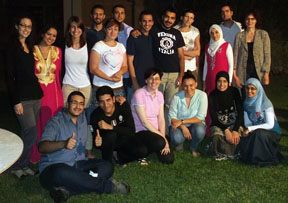
This course was an extraordinary experience: five days, of 8 hours of lessons per day, supplemented by moments of dialogue during the meals and after dinner. All told, a very intense week, with more than 25 students from Masters and PhD courses in various agronomic disciplines. Among the group, only two were Italian, the other students coming from almost 15 countries in the Mediterranean area, from Kosovo to Morocco.

The course produced many challenges for me: first of all, the fear to propose content in a non-native language, especially topics related to dialogue as a space of relationship among, beyond and across our cultures and disciplines; then the proposal of building this space during all the week, in class and out, with students who came from countries where there are still conflicts.

We discussed in class the attack in Beirut last week, as one student had parents who lived in that zone; the same with the Egyptian students with whom we tried to talk about the 50 deaths in Cairo during the riots in the streets.

It was extremely intense to dialogue with students about the value of the other and otherness, starting from European philosophy, which risked appearing far from all their cultures. I tried to introduce the content starting from keywords, as I usually do in my teaching activities, also in Latin and ancient Greek languages, exploring the meaning of the various terms in all of their languages.

I proposed that every student introduce her or himself in 10 minutes by using whatever tools they wanted. We spent a lot of time in class analyzing their oral presentations, which were delivered by slide, oral speeches, or music (one student played some songs from his country with a guitar).

The issues around scientific research gave me the opportunity to introduce other topics related to the relationship with the other, which are different for every country. I also shared with them the notion of creating a “safe” space of dialogue.

One exercise used the short film, Twice upon a time (about bilingualism in Canada). The results were interesting: the students who came from countries close to the European tradition (if we can use this expression), like Turkey or the Balkans (in particular, Macedonia, Kosovo, and Bosnia), appreciated the movie and found it a fitting conclusion to the lesson. But the students from the Maghreb (Morocco, Tunisia, Algeria) and from the Middle East (Egypt, Palestine, Lebanon) did not enjoy it as much. In fact, they found it boring and a bit excessive, as they did not fully appreciate the issues depicted.

Ramadan started during the course, which provided another wonderful opportunity for sharing and dialogue. The majority of the students in this course were Muslim, but only about half were observant. Those who were needed to fast (not only avoiding food, but also even water), throughout the day, even though in Southern Italy the summer is hot. I proposed to the students that I would participate in their evening prayer, after dinner, for almost one hour, since it was the only one of the five times dedicated to daily prayer that we might share. They were very happy and surprised, as they told me that it was uncommon for a non-Muslim to join in prayer with them.

At the end of the sessions we had ice cream in the garden (the campus is really beautiful), after dinner and after prayer. It was another occasion for interaction among the group members, including some students who were not enrolled in this course.
Course CSR_MAI 2013-rev

I asked students to send me their feedback and so I have been receiving beautiful notes. I have the feeling that we shared something new, beyond only disciplinary content, as many of them have now told me.

Download the entire post as a PDF.

Learning Matters

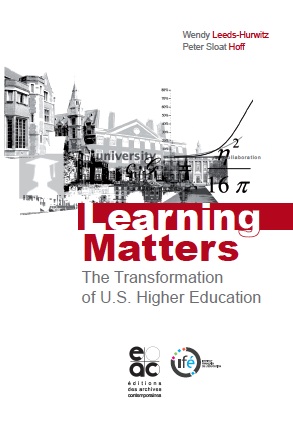
A book that I was writing while at the Institute Français de l’Education in Lyon last fall has just been published by Editions des Archives Contemporaines, based in Paris. The title is Learning Matters: The Transformation of US Higher Education. It’s co-authored with a former University of Wisconsin-Parkside colleague, Peter Hoff, who went on to become President of the University of Maine. My thanks to Yves Winkin for asking the questions about higher education in the US that led to the writing of this book.

Here is a summary of the book’s content:

Higher education in the United States of America, considered by many to set a worldwide standard for broad access and high levels of excellence, has for many decades seen massive changes in its approaches to teaching and learning. Redesigning and transforming the way colleges and universities teach their students has been likened to reconstructing an airplane while it remains aloft. More than 4,000 US colleges and universities have met the challenge by analyzing major changes in student populations and introducing new instructional techniques that recognize the primacy of learning over teaching. This seemingly innocent but powerful transformation, acknowledging that teaching only matters as a means to the real end – learning – is powering a pedagogical revolution. The Learning Revolution in US higher education began when World War II veterans flooded university classrooms, soon to be followed by their children, the American “Baby Boom.” Overwhelming numbers of new students from new kinds of backgrounds flooded colleges and universities, forcing professors to rethink how they went about teaching these new generations. To handle the numbers, many new universities were created, and many established centers for teaching excellence to help professors adapt to new populations with new techniques. In the 1990s, higher education further professionalized the teaching craft via the Scholarship of Teaching and Learning. Research into how students learn and how to help them learn took its place alongside traditional academic research. Aided by a wave of new technologies, teaching centers and the scholarship of teaching and learning are transforming the university classroom as well as many new venues outside the classroom where learning now takes place. The resulting new pedagogical architecture now embraces every dimension of US higher education.

Copies of the book are available directly from the publisher: Editions des Archives Contemporaines or, for those based outside of France, from Amazon in the US. (For those outside those two countries, the book is also available from Amazon in Germany, Spain, and the UK.)

The section of the book most directly linked to my work with the Center for Intercultural Dialogue concerns internationalization as an issue for US higher education. Here are a few relevant quotes:

  • “the rest of the world increasingly speaks English, but few Americans actively travel in international circles, so globalization may become oddly limited to the English language, passing over many native speakers” (p. 92)
  • “It would be difficult to argue that U.S. universities have been doing an adequate job of preparing students to live and work in the global village. Historically, what little was done has been deemed adequate, so few people see a need for substantial change” (pp. 97-98)
  • “The world has become smaller, and so students need to understand more of what occurs in other countries than their own. At the lowest level of application, this implies integrating international examples; at the highest level, new technologies permit international collaborative research projects.” (p. 218)

For those interested in discussing issues related to teaching and learning, and expanding on what we included in the book, my co-author, Peter Hoff, created a Facebook page: https://www.facebook.com/CollegeLearningMatters

If you read Portuguese instead of English, a monograph version, Arquitectura pedagógica para a mudança no ensino superior [Pedagogical architecture changes for higher education], prepared when I was a Fulbright Senior Specialist at the Instituto Politécnico de Coimbra during the spring, is also now published.