
 Maria Flora Mangano, Italian scholar of intercultural and interdisciplinary dialogue, with a background in natural (Ph.D. in Biochemistry) and in social sciences (Ph.D. in Humanistic Intercultural Studies).
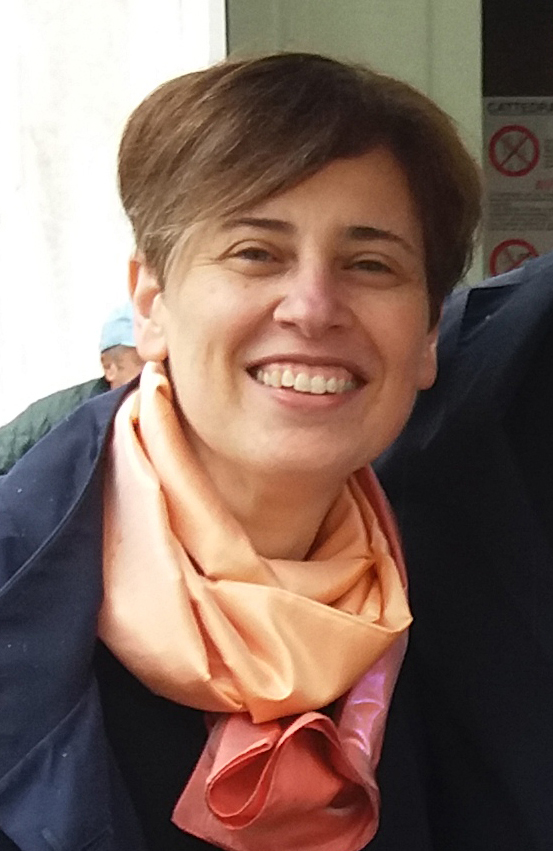 Since 2007, she has been teaching Dialogue between Cultures and Communication of Scientific Research to young scientists drawn from different fields of study within the natural, social and human sciences of some Italian faculties. She is interested in dialogue as a space of relationship between, across and beyond cultures and disciplines. Her approach to research and teaching is transcultural and transdisciplinary, and, in this perspective, the space of relationship is mediated by the philosophy of dialogue.
She participated in the National Communication Association Summer Conference on Intercultural Dialogue, and wrote a chapter in a volume resulting from that conference:
Mangano, M.F. (2015). Dialogue, as a common ground between, across and beyond cultures and disciplines – A case study of transcultural and transdisciplinary communication lectures for graduate and undergraduate students. In N. Haydari & P. Holmes (Eds.), Case studies in intercultural dialogue (pp. 73-86). Dubuque, IA: Kendall Hunt.
as well as a book on dialogue:
Mangano, M. F. (2018). Relationship as a space “in between”: A transcultural and transdisciplinary approach mediated by dialogue in academic teaching. Bergamo, Italy: University of Bergamo Press.
Work for CID:
Maria Flora Mangano wrote KC81: Dialogue as a space of relationship, and translated KC1: intercultural dialogue, KC14: Dialogue, KC37: Dialogic listening, KC81: Dialogue as a space of relationship, as well as nearly all of the CID Posters, into Italian. She also wrote several case studies for Constructing Intercultural Dialogues: #2: Reconciliation, and #9: Dialogue as an activity of daily living, and translated #2: Reconciliation into Italian. And she has written multiple guest posts: Example of dialogue among cultures; A space of relationship among dialogues and cultures; Space of relationship as a space of distance: A new proximity; Saturday morning (intercultural) school; Seeds of dialogue, Gratitude is my attitude, and Standing for peace without weapons. In addition, she wrote Occasional Paper #2: When the letters sing and the numbers jump: Education as a space of relationship. Most recently, she wrote a guest post, The making of the posters: Between, across (and beyond) translation, describing the act of translation as an act of intercultural dialogue.

 His research explores embodied and relational understandings of language, communication, and culture across diverse settings and scales with a focus on gesture. He is author of the gesture studies monograph The Impulse to Gesture: Where Language, Minds and Bodies Intersect (2018) and the interdisciplinary book Chinese Urban Shinema: Cinematicity, Society, and Millennial China (2020, with David H. Fleming).
 His research includes theory-building efforts in message effects, persuasion, narrative influences, and dynamic processes of media selection, media effects, and maintenance of personal and social identity, with a particular interest in health outcomes, with over 130 publications in these and related areas. He has served as principal investigator of NIH-funded studies of community-based substance abuse prevention efforts, alcohol-related risk perceptions and media coverage, and responses to alcohol advertisements and warnings (representing over $12 million in funded research grants). He also has served as chair of the International Communication Association’s Health Communication Division and was founding chair of the Coalition for Health Communication.
 Center for Intercultural Dialogue