Vancouver Dialogues (Canada)

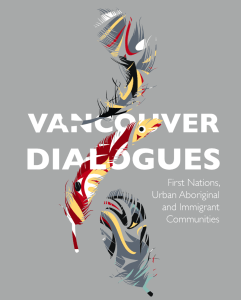
Applied ICDVancouver Dialogues: First Nations, Urban Aboriginal, and Immigrant Communities, Vancouver, BC, Canada.

“Stories build community and create understanding. They are the memories and oral histories of peoples who have taken different journeys to create a home in Vancouver. The City of Vancouver Dialogues Project aimed to create cohesive communities by exploring the stories of Vancouver’s First Nations, urban Aboriginal and immigrant communities.”

The book resulting from the 2010-11 project (available online, for free) can serve as a model to other communities for how to get people from different cultural backgrounds talking to one another. At the end of the project, “Overwhelmingly, those who have been involved with the Project have asked for a continued dialogue about the issues which have been raised,” which can only be understood as a marker of success.

A Taste of Harmony (Australia)

Applied ICDA Taste of Harmony, Australia, 17 March-18 April 2025.


Food brings people together. It’s something we can all share.

A Taste of Harmony is Australia’s largest celebration of cultural diversity and it was especially created for the workplace (but could easily be adapted to other contexts, such as education). The goal is to use food as a way of bringing people together to share, discover and learn about each other’s cultural heritage.

There are many ways for workplaces to participate in A Taste of Harmony, from encouraging staff to bring in food that reflects their cultural origins to share with their colleagues to more elaborate events. The key is bringing people together and creating a fun, informal way for colleagues to share their cultural heritage through food and discover more about their co-workers.

Broadcasts Foster Dialogue among Refugees and Host Communities (Moldova)

Applied ICD

Broadcasts to foster dialogue and understanding among refugees and host communities, Moldova.

Following the full-scale invasion of Ukraine in February 2022, UNESCO supported broadcasters in neighbouring countries, such as Teleradio-Moldova (TRM), to launch a series of programmes to aid Ukrainian refugees with support from the Government of Japan. Displaced Ukrainian media professionals were included in the broadcasts to better help refugees navigate their new lives in Moldova. Funded by the Government of Japan as an emergency project under the UN’s Regional Refugee Response Plan for the Ukraine Situation, UNESCO supported TRM to produce and broadcast programmes accessible to the displaced Ukrainians to help them settle and rebuild their lives in Moldova.

Daria Russu, host of TV Moldova 1’s 30-minute Ukrainian-language “Weekly” TV-programme, noted the challenge refugees face in accessing credible news in their mother tongue: “Ukrainian refugees have nowhere to get information about Moldova and they have nowhere to get information about the world in general. That is exactly why this project is needed, so they can get verified, truthful and complete information in their native language.”

Over the course of seven months, TRM broadcasted nearly 100 programmes for tens of thousands of Ukrainian refugees in Moldova. These covered a wide range of topics, including health, education, housing and daily life in the host country. More than 200 refugees, national experts and humanitarian actors were interviewed, providing valuable insights and perspectives for the programmes.

A key component of the project was a baseline study on the media habits and information needs of the Ukrainian refugees, commissioned by UNESCO from its long-term partner, the Norwegian Refugee Council (NRC). Loreana Sacara, TRM’s Project Coordinator, highlighted that the programmes were designed based on the research’s findings: “The programmes early gathered a wide loyal audience both among the refugees and the local population. They were aired in the Ukrainian language with subtitles or voiceovers in Romanian”.

CosmoKidz Resources (USA)

Applied ICD

CosmoKidz resources, Coordinated Management of Meaning Institute for Personal and Social Evolution, USA.


The global problems of today and of the future will require leaders who are able to helpfully engage with others of varying backgrounds, beliefs, and perspectives. CosmoKidz is providing the building blocks for this kind of leadership. Helping to build better social worlds, one conversation at a time.

The CosmoKidzTM program consists of sets of conversational activities for adults to use with children and teens to help them develop constructive social and emotional intelligences. The CosmoKidzTM activities fit in with a new move in educational thinking: a shift from training students for cleverness and competition to helping them become fulfilled individuals and active, caring, compassionate people. The conversational activities are developed for different age groups—from children, to tweens and teens—based on something CMMi calls a cosmopolitan sensibility. It’s a different way of looking at how adults relate with children and how we would like them to relate with others. It also helps us focus on important things that most people don’t pay attention to that happens in our communicating with others.

CosmoKidz materials are now available in English, Pashto, Farsi, Norwegian, and Romanian. And there are related materials for CosmoTweenz, CosmoTeenz, and CosmoParents, as well as more general SOAR (Sense what’s around you, Open your hands to help others, Act with kindness, Respect other people) activities.

Stories from the Silk Roads (Canada)

Applied ICD

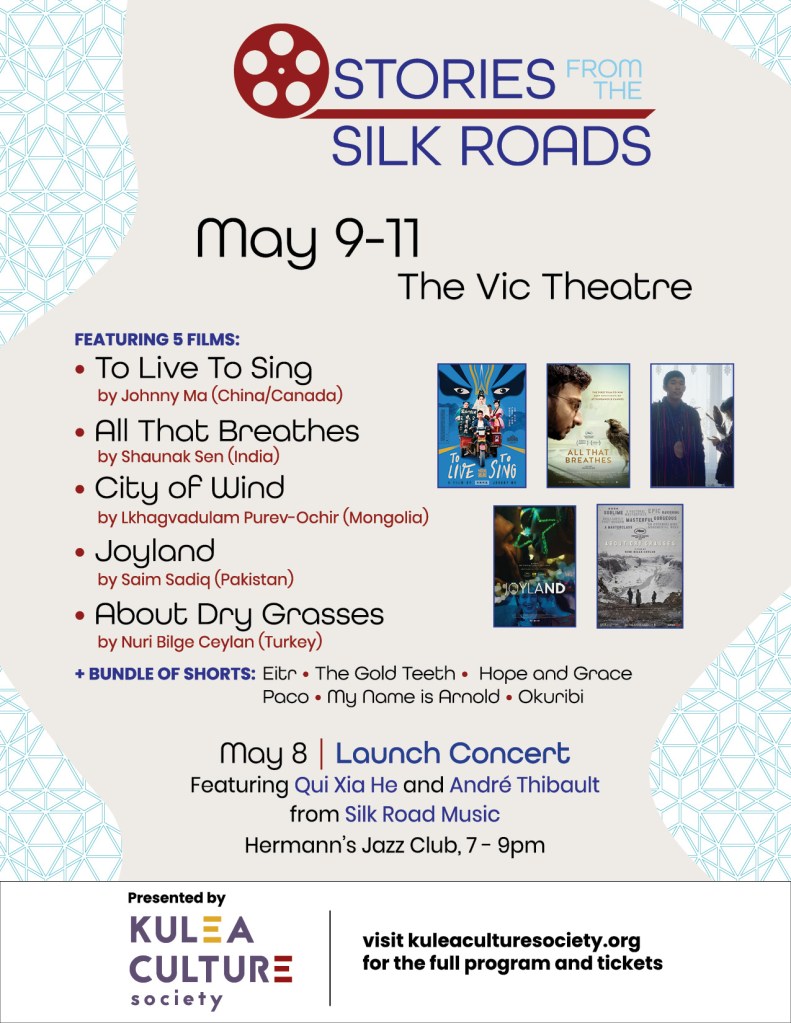
Storis from the Silk Roads, Kulea Culture Society, Victoria, British Columbia, Canada, 8-11 May 2024.

Stories from the Silk Roads, Kulea Culture Society

During Asian Heritage Month, Kulea Culture Society presents Stories from the Silk Roads, a four-day event of music and film to celebrate the rich heritage of Canadians with roots in the Asian continent. The Silk Roads were a system of caravan routes crossing the Eurasian continent from the Mediterranean Sea to China. They influenced the emergence and development of trade and cultural ties between people and statehoods located along the way and beyond. The routes carried goods, ideas, people across the continent and the sea from China, India, Uzbekistan, Turkmenistan, Kazakhstan, Iran, Syria, Turkey among others to the Mediterranean and the West. Just like on the Asian continent, different Asian communities live across Canada today. These cultures have developed their distinct identities, arts and histories through interaction and communication with each other in Canada. Stories from the Silk Roads highlight diversity and harmony through arts and culture.

Human Library Reading Garden (Denmark)

Applied ICD

Human Library Reading Garden in Copenhagen, Human Library Organization, Copenhagen, Denmark. Grand opening: 28 April 2024; then every Sunday until 13 October 2024.

Concept: “The Human Library® creates a safe space for dialogue where topics are discussed openly between our human books and their readers. All of our human books are volunteers with personal experience with their topic. The Human Library® is a place where difficult questions are expected, appreciated and answered.”

Details: “Very similar to your public library only we have real people on loan as an open book for you. Offering insights and honest conversations about their life and experience. If you arrive at the Human Library Reading Garden in the opening hours (Sundays 12-4pm) you will see a black librarian’s desk and a board with a list of topics available to readers. If the topic is listed in English, then it is available to readers in English. Consult the librarian to get an introduction and register for your library card. At this time you also agree to respect and observe our “Rules for Readers.” Now you can make your choice from what is available. The librarian is there to help guide you and once you have made your choice. The librarian will bring out the book for you and make introductions.

If you are in a group, then we recommend that you share a book. A maximum of five readers can take part in a group reading. During the season we are open on Sundays for the public. While our weekdays are reserved for visits from educational institutions and other publishing partners. Most of our topics are available in both Danish and English. A few are also available in Arabic, French, German, Italian and Spanish. You may borrow as many books as you like, but only one at a time.”

This is one human library of many; for more information about the entire movement, see here. Over the last 24 years, the Human Library has hosted events virtually and in libraries, museums, festivals, conferences, schools, universities and for the private sector, in over 85 countries.

Video Exhibition: Roma for Romania (Romania)

Applied ICD

Marica, Irina. (2 November 2023). Roma personalities in focus at Bucharest subway exhibition. Romania Insider.

The subway in Bucharest hosts this month a special video exhibition dedicated to outstanding personalities of the Roma culture. A total of 11 short videos about each personality are set to run on screens in subway stations until November 30.

The video exhibition aims to change mindsets, reduce stereotypes in Romanian society as a whole and contribute to the development of intercultural dialogue.

Some of the personalities included in the project are jazz singer Anca Parghel (1957-2008), violinist Ion Voicu (1923-1997), artist Anton Pann (1790-1854), footballer Bănel Nicoliță (born 1985), musician Barbu Lăutaru (1780-1858), singer Connect-R (born 1982), and actress Alina Șerban born 1987).

The exhibition is part of the “Roma for Romania” campaign, which the National Agency for Roma, the National Center for Roma Culture – Romano Kher and the “Pro-Europa” Roma Party Association have been running since April 2023.

WOSM/KAICIID: Dialogue for Peace

Applied ICD

The International Dialogue Centre – KAICIID and the World Organization of the Scout Movement (WOSM) have signed a new memorandum of understanding to continue the Dialogue for Peace programme.

Through the Dialogue for Peace programme, KAICIID and WOSM have increased the number of dialogue facilitators and trainers within the Scouting movement, helping Scouts acquire the skills to promote a culture of peace and create positive change in their communities. Since 2013, they have jointly trained over 1,000 people from 120 countries. The renewed partnership will seek to build on and expand the existing successes of the Dialogue for Peace initiative and other awareness activations around dialogue. The Dialogue for Peace Challenge Badge is an initiative co-designed by WOSM and KAICIID to develop competencies related to dialogue in young people to promote active listening, non-judgemental communications, and ultimately build a culture of peace.

Mojuba! Dance Collective & ICD (USA)

Applied ICD

McKeown, Nora. (14 August 2023). Mojuba! Dance Collective creates space for dancing and healing. Spectrum News.

This is not just something for me or for us, or the people who are in the company, but this can really be a move of the community to help us to have that intercultural dialogue, to help us to find ways to tell our own stories.

-Errin Weaver

“In 2019, Errin Weaver started Mojuba! Dance Collective for choreographers in Cleveland to explore the African Diaspora through movement and healing . . . The collective has been well-received by the community, prompting intercultural conversations. It also provides a space for Black choreographers to feel validated in their experiences and heal through dance.”

Interreligious Dialogue: Heschel Center at Catholic U of Lublin (Poland)

Applied ICD

The Heschel Center has begun its activities at the Catholic University of Lublin.

The Abraham J. Heschel Center for Catholic-Jewish Relations – a new scientific, educational, and cultural unit to deepen Catholic-Jewish relations internationally – has began its activities at the Catholic University of Lublin, Poland. Scientific research, publishing activities, student exchanges, as well as international symposia, conferences, debates and cultural events are the main tasks of the institution. Its mission is to build Catholic-Jewish relations on the scientific, educational, and cultural levels on an international scale. The center combines research work, commemorating the past, educating and engaging young people, as well as shaping public awareness through modern media on a global scale.

The pillars on which the Center’s activities are based can be summed up in a motto: Common Bible – Common Past – Common Future. They also relate to shared biblical roots, to the community of the history of both societies, as well as to the need to shape a future based on dialogue and openness to multiculturalism – said the Rector of the Catholic University of Lublin, Rev. Prof. Miroslaw Kalinowski.