CFP International Rhetoric Workshop: Crossing Traditions, Reimagining the Political (Sweden)

CFP: International Rhetoric Workshop: “Crossing Traditions: Reimagining the Political”
Uppsala University, Sweden
17-19 August 2016

The International Rhetoric Workshop (IRW) invites PhD students and emerging scholars to participate in developing the study of political rhetoric and its theoretical traditions. At beautiful Uppsala University, Sweden, we will meet in the last days of summer to advance rhetorical scholarship on “Crossing Traditions: Reimagining the Political”. The theme seeks to engage with questions of how various traditions of rhetorical theory meet and merge within global rhetorical practices, and how these crossings can change and develop the concept of the political. The IRW seeks to bring the diverse global community of rhetoric scholars together in a collaborative setting.

Contemporary rhetorical studies include the study and criticism of contemporary persuasive practices, theoretical discussions on the conditions for communal meaning-making, and historical studies of rhetorical practices and rhetorical thinking in different times and places. The emphasis rhetorical studies places on cross-fertilization between these different forms of inquiry opens opportunities to take on the challenges posed by contemporary politics. The workshop theme seeks to be true to this characteristic of rhetorical studies, and focuses on the crossings of various rhetorical traditions and how global rhetorical practices can change and develop our conception of the political and its possibilities.

The concept of the political has been a keystone in rhetorical thought since its instigation in ancient Greece. With world-wide communication and instant circulation, recurring crises and ever-increasing risk, environmental global challenges, and the racializing, sexualizing, and gendering of bodies, the importance of rhetoric at its intersection with the political continues to increase. It is simply not possible to imagine the political without also taking into consideration rhetorical practices that negotiate all of these issues. Examinations of the political and its materialization in particular contexts and advances in theoretical models that better fit today’s world are therefore much needed.

Suggested themes or questions to be furthered at the workshop:
– Geographically structured traditions of rhetorical practices: their local, regional, and national contestations.
– How these traditions crosses boundaries: how they are compared, merged or intersected with other specific practices globally.
– How various rhetorical scholarships on political practices and political theories change and merge across academic traditions.
– Rhetorical conditions of possibility for the political to emerge.
– How rhetoric’s multifaceted, transnational intellectual history has crossed borders: its ancient heritage, its Arabic-European transformations, its mutation into post-colonial settings and histories of thought.
– How rhetoric’s continuous engagement with political, philosophical, and aesthetic thought is played out in global political settings.

Format and participants
The format consists of a three-day workshop at Uppsala with an opening keynote address on each day; breakout sessions in which workshop participants review and discuss drafts of ongoing research with faculty; and faculty discussion panels on topics relevant to the theme.

IRW will include three keynote addresses from internationally recognized scholars working in the intersection of rhetorical and political thought: Debra Hawhee (Penn State University, USA), Kari Palonen (University of Jyväskylä, Finland), and Philippe-Joseph Salazar (University of Cape Town, South Africa).

The core activity of the workshop will be engaged discussion and development of participants’ work-in-progress. Papers will be pre-circulated to a small group of about 5-6 workshop participants and one member of the invited faculty and everybody is expected to have constructive suggestions and comments on each other’s work.

IRW will also have panel sessions, led by the invited faculty, on methodological and theoretical topics relating to the theme. The invited faculty consists of: Mats Rosengren (Uppsala University, Sweden), María Alejandra Vitale (University of Buenos Aires, Argentina), Jiyeon Kang (University of Iowa, USA), Jairos Kangira (University of Namibia), Dilip Gaonkar (Northwestern University, USA), Anne Ulrich (University of Tübingen, Germany), Alan Finlayson (University of East Anglia, UK) and our three keynote speakers. They work in the fields of postcolonial intellectual history, securitization, neo-liberal forms of governmentality, the changing forms of protest movements, the challenge of the political to continental thought, and national political rhetoric at the intersection of geopolitical rhetorical practices.

In keeping with the small and informal setting, IRW will accept 50-60 participants based on quality of research, geographical spread, and relevance to the workshop theme. Abstracts should be no longer than 300 words and submitted through the form below. Abstract submission is open to PhD students and emerging scholars who have received their PhD no earlier than January 2014.

How to apply
Deadline for abstract submission: 30 March 2016.

Please note that if an abstract is accepted for the conference, a full draft paper of your work-in-progress should be submitted by 30 June 2016. Final papers should be 4000-6000 words in length, excluding notes and references.

Letter of acceptance will be sent no later than 20 April 2016.

Registration fee (includes participation in the workshop with pre-circulated paper, one informal dinner, as well as breakfast and lunch for three days): 100 EUR

To submit your abstract, please follow this link to the submission form.

CFP Explorations in Ethnography, Language and Communication (Sweden)

6th conference on Explorations in Ethnography, Language and Communication (EELC)
Södertörn University (Sweden)
22-23 September 2016

The aim of the conference is to examine how linguistic ethnography can be used in order to capture cultural, gendered, linguistic and other kinds of diversity in today’s global societies. In line with Södertörn University’s intercultural profile, conference papers will explore the role of language in diverse settings: in the workplace, in education, in the community and at home. Today, with the development of technology, information and capital are transcending social and geographical barriers thus giving new forms to communication. The challenges of conducting ethnography in order to capture these new globalized yet diverse settings are larger than ever and in this conference we wish to explore new theories and methods and discuss research results from studies that have set out to achieve this.

The following plenary speakers have confirmed their participation:
Jan Blommaert, Professor of Language, Culture and Globalization and Director of the Babylon Center at Tilburg University
Celia Roberts, Professor Emerita of Applied Linguistics at King’s College.
Rickard Jonsson, Associate Professor in the Department of Child and Youth Studies at Stockholm University

Forms of participation
We welcome participants to give a paper, present a poster, or hold a workshop. Paper presenters will be allowed 20 minutes, with a further 10 minutes for discussion. Poster presenters will be assigned a special session for brief presentations and discussions. Workshops may last 90 minutes to two hours and can be run by one organizer or a group of organizers with complementary projects. All workshop proposals should indicate a relevant thematic discussion and associated audience activity, such as critical questions on theory, issues of methodology, or exercises on data analysis.

Important dates and abstract submission
Deadline for abstract submission for papers and workshops: 1 April 2016
Notification of acceptance: 29 April 2016

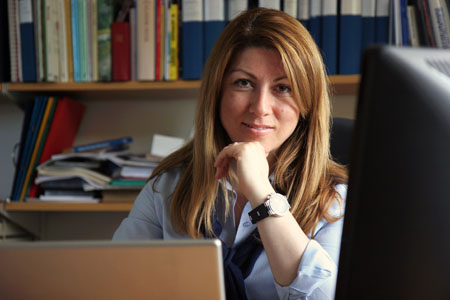
Beyza Björkman Profile

ProfilesBeyza Björkman is Associate Senior Lecturer at Stockholm University, Department of English, Centre for Academic English.


Beyza BjorkmanSince 2005, she has been doing research on the use of English as the medium of instruction in Swedish higher education. Her general research interests include the use of English as a lingua franca (ELF) for academic purposes, spoken academic discourse in general, academic literacy, linguistic equality, language change and language policy.

Her most current research on ELF focused on the pragmatic aspects of English as a lingua franca as the medium of instruction, focusing on polyadic lingua franca speech in student-student interaction. More recently, she has published on language policy work at Swedish universities, focusing on actual language practices vs language management issues, as well as attitudes towards the use of English in Swedish higher education. She is currently doing research on the spoken genre of PhD supervisor-PhD student interactions in supervision meetings.

For more information on Beyza’s research and publications, visit her website.


Work for CID:
Beyza Björkman wrote KC40: English as a Lingua Franca.

Post-doc position Karlstad U (Sweden)

Career opportunities in media and communication studies, Karlstad University
Research in media and communication studies at Karlstad University is pursued at the Department of Geography, Media and Communication (GMK) in the Faculty of Arts and Social Sciences. Media and communication studies at Karlstad University is an attractive education and research environment with interdisciplinary contacts and global perspectives as integral parts of our activities.

Undergraduate studies are offered in the two degree programmes Information & PR and Media and Communication, the latter with the options Communication and Global Media and Visual Communication and Design. The overarching research perspective is global media studies, including global media industries and journalism as well as the daily media routines in a multifaceted mediascape. The research pursued under this umbrella has an emphasis on two areas: (1) Communication, culture and identity, and (2) Media, democracy and citizenship. Researchers in the department are used to publishing internationally and attracting research funding. The environment is internationally orientated and in an expansive phase. We are recent recipients of a major research funding from the Ander Foundation to institute The Ander Centre for Research on News and Opinion in the Digital Era (NODE), which means that we now need to recruit a number of new academic staff to strengthen the research and teaching capacity in our two profile areas, including: a postdoc position (2 years) in media and communication studies: news, public opinion, and digital media (linked to NODE).

Duties for the postdoc position in media and communication studies with emphasis news, public opinion, and digital media.
This postdoc position offers the opportunity to work for two years on a research project of relevance to one or both of the NODE research projects, i.e. (1) how audiences access political information (in a wide sense of the word) in a media landscape where journalism no longer necessarily has a given role, and (2) how organisations, businesses, and public authorities act and think in relation to the gradual weakening or even outright disappearance of investigative journalism; to what extent alternative forces such as citizen journalists, activists and public authorities are perceived to fulfil similar functions to investigative journalism; and what communication strategies are used by businesses and public authorities (and other organizations with an interest in public opinion formation) when many citizens cannot be reached via traditional mass media. The postdoc is also expected to contribute to the NODE research environment and to departmental research activities generally by participating in seminars, conferences, meetings, etc. Postdoc duties are mainly linked to research. Partly, but not exceeding 20%, duties may include teaching, supervision, examination, course responsibility and development.

Eligibility
A PhD in media and communication studies/related field or equivalent qualifications from abroad is required for this postdoc position. The doctoral degree must have been earned within three years before the application deadline. An applicant holding a degree older than three years may still be considered if there are special reasons e.g. parental leave och sick leave.

Assessment criteria
Beyond the eligibility requirements, the following qualifications and skills will be considered: 
Special weight is given to the innovativeness and feasibility of the project proposal, and its international relevance.
Special weight is given to the project’s relevance to one of the following themes:
*1) how audiences access political information (in a wide sense of the word) in a media landscape where journalism no longer necessarily has a given role,
*2a) how organisations, businesses, and public authorities act and think in relation to the gradual weakening or even outright disappearance of investigative journalism; to what extent alternative forces such as citizen journalists, activists and public authorities are perceived to fulfil similar functions to investigative journalism,
*2b) what communication strategies are used by businesses and public authorities (and other organizations with an interest in public opinion formation) when many citizens cannot be reached via traditional mass media.
Considerable weight is given to the considered and realistic publication plan submitted (preferably with specification of substudies, planned publication channels/journals etc)
Considerable weight is given to documented research skills in one of the following areas: journalism, news media, media consumption, public opinion, political communication, strategic communication.
Weight is given to the fact that research skills are primarily documented through peer reviewed journal publications – at least one such international journal publication is required.
Weight is given to the high degree of research skills demonstrated in respect to problem formulation, theory and methodological awareness, and analytical capacity.

In addition, the following are useful qualifications:
*besides academic qualifications, experience of practical communication work (journalism, information etc)
*experience of developing and leading projects and activities
*international experience and experience of teaching in English
*experience of course development and web-based teaching
*experience of external cooperation

Terms of employment
This is a two-year fixed-term employment full-time. Expected starting date in the autumn of 2014.

Application should include the following items:
*A project plan (2,000 words) presenting the applicant’s ideas of how the postdoc project fits into the research field of news, public opinion, and digital media as well as into the applicant’s own research profile.
*Publication plan
*CV (with verified copies of certificates, references, degrees etc.)
*Submitted academic publications – doctoral thesis,
*Research articles or books/book chapters –  displaying the applicant’s research skills.
*An account of practical experiences of relevance to the position
*A brief (1,000 words) personal letter with background, reasons for applying, and view on research.
*Two letters of recommendation and contact information to  two references.

Application should be made electronically via the university’s web-based recruitment tool MyNetwork. Documents that cannot be sent electronically, such as books, publications, software, should be delivered in two copies to:
Karlstads universitet
Personalavdelningen
651 88 Karlstad Sweden
Referensnumber REK2013/101

For information on all the vacancies, please contact
Solveig Nilsson Lindberg, Head of Department
Christer Clerwall, Director of Studies
Professor André Jansson
Professor Henrik Örnebring.

Last day of application: 23 May 2014

Karlstad University has around 16 000 students and a staff of over 1 200 members. Democratic principles, equality and diversity are cornerstones of the University. We value the enriching presence of diverse backgrounds and competencies among students and staff.

Doctoral fellowship – Sweden

Visiting doctoral fellowships

The Media Management and Transformation Centre (MMTC) at Jönköping International Business School, Jönköping University, Sweden, is offering visiting doctoral fellowships in the field of media business and media economics for advanced doctoral students at other universities. Applications are invited from students to spend up to three months at the MMTC to work on their dissertations, exchange ideas and knowledge, and use the resources of the centre.

Applicants must be pursuing doctoral work in economics, management, accounting/finance, law or communications related to media economics, media management, or economic policy issues of media. Visiting doctoral fellows receive a housing and subsistence stipends and round trip travel to and from their home institutions.

The Media Management and Transformation Centre is Europe’s premier centre on media business studies and offers doctoral studies and research fellowships, provides research stipends to scholars studying relevant issues, and hosts conferences and workshops for researchers that are designed to improve knowledge and understanding of media business issues. Its mission is to develop knowledge about issues raised by the large-scale transformation of the media industries created by globalisation, consolidation and the creation of dominant firms, the proliferation of contemporary information and communication technologies, cross-media activities, fragmenting audiences, and changing revenue patterns. The centre is directed by Prof. Robert G. Picard and leading scholars worldwide on mass media economy.

Applicants should send:
A letter of intent explaining why you want to apply, what you expect to gain from the fellowship, and a one paragraph description of the research you will undertake.
A copy of your dissertation proposal
A letter of recommendation from your doctoral supervisor, which should include an indication of the relevance
of MMTC interests to your dissertation research
A curriculum vita and copies of attested documents (transcript,
diploma)
A copy of your Bachelor’s or Master’s thesis
A personal description of yourself

Deadlines:
Autumn semester 2011 – by March 31, 2011

Send your application to:
Dr. Patrik Wikström, Research Manager
Media Management and Transformation Centre
Jönköping International Business School
P.O. Box 1026
SE-551 11 Jönköping
SWEDEN

For more information: patrik.wikstrom@ihh.hj.se