 Evelyn Y. Ho (PhD, University of Iowa) is Professor of Communication Studies, Asian Pacific American Studies, and Critical Diversity Studies and a Faculty Chair of the Honors College at the University of San Francisco.
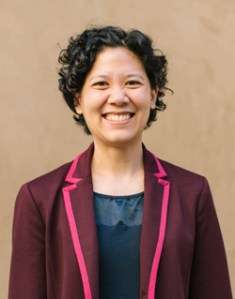 Beginning with an understanding that communication is a cultural activity and that health care systems and beliefs are profoundly cultural, Prof. Ho’s teaching and research focus broadly on the intersections of health, culture and communication. Health care in the United States is increasingly confronted with a variety of domestic and international-based alternatives and complementary therapies to western biomedicine and her research studies the discursive construction of holistic, complementary, and integrative medicine especially in relationship to biomedicine.
A recent project called Integrative Nutritional Counseling combines Chinese medicine and Chinese medicinal foods principles with western biomedical nutrition for Chinese Americans with type 2 diabetes and heart health. Other recent projects include:
-
Discourse analysis of Chinese American patients (using English, Cantonese or Mandarin) and primary care providers discussing complementary and integrative therapies and/or mental health.
-
Understanding the use of informal/unlicensed Chinese medicine practices (such as foot reflexology, postpartum practices, Chinese medicinal foods) in Singapore
-
Systematic review of provider-patient communication about complementary and integrative health care.
Previous research has examined public health acupuncture clinics in Seattle and in San Francisco, the use of acupuncture and massage therapy use for HIV–related neuropathy, and patient education about how to discuss complementary and integrative medicine with doctors.
At USF Prof. Ho teaches courses in Communication and Culture, Ethnography of Communication, Qualitative Research Methods, Communication and Health Disparities, Complementary and Integrative Health, Sanctuary and Immigration, and Asian Pacific American Studies. She has been a guest/visiting professor at the University of Helsinki (2018) and the National University of Singapore (2015). In 2014, she co-taught USF’s first ever Pacific Islander course — the Davies Forum — Pondering Paradise: Contemporary Issues Through a Pacific Lens.
She has previously chaired both the Health Communication Division and the Language and Social Interaction Division of the International Communication Association and the LSI Division of the Western States Communication Association.
Selected publications
Ho, E. Y., Acquah, J., Chao, C., Leung, G., Ng, D., Chao, M. T., Wang, A., Ku, S., Chen, W., Yu., C. K., Xu, S., Chen, M., & Jih, J. (2018). Heart healthy integrative nutritional counseling (H2INC): Creating a Chinese medicine + Western medicine patient education curriculum for Chinese Americans with heart disease. Patient Education & Counseling, 101, 2202-2208. https://doi.org/10.1016/j.pec.2018.08.011
Chi, H.-L., Cataldo, J., Ho, E. Y., & Rehm, R. S. (2018). “Can we talk about it now?” Recognizing the optimal time to initiate end-of-life care discussions with Chinese-American older adults and their families. Journal of Transcultural Nursing, 29, 532-539.
https://doi.org/10.1177/1043659618760689
Leung, G., Ho, E. Y., Chi, H.-L., Chen, Y., Ting, I., Huang, S., Zhang, H., Pritzker, S., Hsieh, E., & Seligman, H. (2018). “We (Tang) Chinese”: Contemporary health management and identity positioning among Cantonese Chinese Americans with type 2 diabetes. Journal of International and Intercultural Communication, 11, 271-285.
https://doi.org/10.1080/17513057.2018.1487071
Chi, H.-L., Cataldo, J., Ho, E. Y., & Rehm, R. S. (2018). “Please ask gently: Using culturally targeted communication strategies to initiate end-of-life care discussions with older Chinese Americans. American Journal of Hospice and Palliative Medicine, 35, 1265-1272.
https://doi.org/10.1177/1049909118760310
Ho, E. Y., Lie, S., Luk, P. P. L., & Dutta, M. J. (2018). Speaking of health in Singapore using the Singlish term heaty. In M. Scollo & T. Milburn (Eds.), Cultural discourse analysis in situated contexts: A tribute to Donal Carbaugh, (pp. 3-19). Fairleigh Dickinson University Press.
Hamblin, T., Ho, E. Y., & Dhruva, A. (2017). Integrative medicine: Combining Ayurveda and biomedicine. In A. du Pré & E. B. Ray (Eds.), Case Studies: Real-Life Scenarios in Health Communication, (pp. 73-78). Oxford, England: Oxford University Press.
Ho, E. Y., Lalancette, C., & Leung, G., (2015). “Using Chinese medicine in a Western way”: Negotiating integrative Chinese medicine treatment for type 2 diabetes. Communication & Medicine, 12, 41-54.
doi: 10.1558/cam.v12i1.25993.
Ho, E. Y., Tran, H., & Chesla, C. A. (2015). Assessing the cultural in culturally sensitive printed patient education materials for Chinese Americans with Type 2 diabetes. Health Communication, 30, 39-49.
https://doi.org/10.1080/10410236.2013.835216
Ho, E. Y. (2015). Qi (Chinese). In K. Tracy, C. Ilie & T. Sandel (Eds.). The International Encyclopedia of Language & Social Interaction. Boston: John Wiley & Sons.
Ho, E. Y. (2014a). Complementary and alternative medicine. In T. L. Thompson (Ed.). Encyclopedia of Health Communication (Vol. 1, pp. 65-70). Thousand Oaks, CA: Sage.
Ho, E. Y. (2014b). Socio-cultural factors in health communication. In N. G. Harrington (Ed.). Exploring Health Communication from Multiple Perspectives. (pp. 212-239). New York: Routledge.
Work for CID:
Evelyn Ho was one of the participants at the National Communication Association’s Summer Conference on Intercultural Dialogue in Istanbul, Turkey, which led to the creation of CID.

 His research includes theory-building efforts in message effects, persuasion, narrative influences, and dynamic processes of media selection, media effects, and maintenance of personal and social identity, with a particular interest in health outcomes, with over 130 publications in these and related areas. He has served as principal investigator of NIH-funded studies of community-based substance abuse prevention efforts, alcohol-related risk perceptions and media coverage, and responses to alcohol advertisements and warnings (representing over $12 million in funded research grants). He also has served as chair of the International Communication Association’s Health Communication Division and was founding chair of the Coalition for Health Communication.
 Center for Intercultural Dialogue