

Federica Setti holds a PhD in Anthropology and Education at the University of Turin.
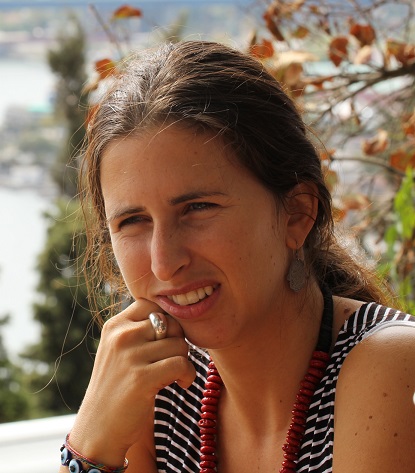
As part of her PhD she has carried out an ethnographic study of education and relationships between Roma and non-Roma among a Sinti family network and in a middle school attended by their teenager children in Trento. She was visiting scholar at the University of Edinburgh, based at STEP (Scottish Traveller Education Programme). She carried out ethnographic research among a Dassikané Roma family network and in a primary school attended by their children in Turin as part of her MA in Cultural Anthropology and Ethnology.
Her research interests include Romani studies; Cultural and Medical Anthropology; Migration studies and Anthropology of Death. She carried out ethnographic research into Moroccan peoples’ migration experiences between Italy and Morocco and an ethnography of mourning processes, related to relatives of patients attended by a palliative care centre in Trento, for her BA degree in Cultural Anthropology and Ethnology. The latter is published in the The Italian Journal of Palliative Care under the title “Processes of Mourning: Ethnography and Life histories in Trentino.” She also concentrated on the history of relationships between majority societies and minorities, particularly through an archival research on the special classes ‘Lacio Drom’ activated in Italy only for those called ‘Gypsies’, with an exonym, published in the article “‘You, Gadže, see school in one way. We, Sinti, see it in another way’: An ethnography of education and school pathways of Sinti and non-Sinti in Trento,” in Trentino’s Archive Journal.
The monograph about her PhD research, titled “In A Matter of Perspectives: Ethnography of Education and of Relationships between Roma and non-Roma” is in publication, in Italian, with the publisher CISU (Rome). Furthermore, the journal articles she wrote related to her PhD ethnography are forthcoming, including “The implications of ‘naming’ on Roma and Sinti right to education and social inclusion: an ethnography of education among a Sinti family network,” prepared for the Special Issue “On the education of Roma, Travelers and ‘occupational nomads’. Research findings and questions that interrogate researchers and educators,” to be published in Intercultural Education Journal.
She was Teaching Fellow, Lecturer and Exam committee member in Anthropology of Education, Intercultural Education and Educational Processes in Multicultural Societies (chair: Professor Francesca Gobbo) at the University of Turin, for four years. She is in the Teachers of Italian as Foreign language’s Province of Trento’s register and taught for three years Italian as foreign language to migrant and Roma students in middle schools. She is a member of the European Academic Network on Romani Studies, the Gypsy Lore Society and the URBA-ROM Network. She is also co-founder and member of wom.an.ed – women’s studies in anthropology and/of education. She is reachable via email.
 Center for Intercultural Dialogue