International Summer School in MigrationMedia(tor): Empowering Voices of Migrants (Poland/Croatia)


Study Abroad
International Summer School in MigrationMedia(tor): Empowering Voices of Migrants, Uniwersytet Jagielloński, Krakow, Poland (also partially in Croatia), 8-17 September 2025. Application deadline: 30 April 2025.

This unique summer school provides an intensive, interdisciplinary learning experience designed to equip participants with the tools, knowledge, and skills needed to empower migrants and mediate migration-related challenges. Through interactive workshops, expert-led discussions, and practical activities, you’ll engage with topics such as migrant advocacy, anti-discrimination policy and cultural integration.

The MigrationMedia(tor): Empowering Migrant’s Voices International Summer School aims to create a space for people from the countries of the European Union, Albania, Serbia, Bosnia and Herzegovina, Kosovo, Moldova, Montenegro, North Macedonia and Ukraine to discuss issues of media influence on perceptions of migration. The lectures and workshops will provide participants with the knowledge necessary to understand the processes of contemporary migration, as well as the tools to analyze and seek reliable information on the subject. An important part of the class will also be to give participants the opportunity to describe and tell migration stories from the perspective of their own experiences and observations, on the basis of which a publication summarizing the project will be created.

Eligible participants: age 18-30, from EU countries, Albania, Serbia, Bosnia and Herzegovina, Kosovo, Moldova, Montenegro, North Macedonia or Ukraine
Language: English
Cost: free of charge (The organizers cover the cost of travel in Poland and Croatia and accommodation in the period 8-17.09.2025, catering, and the cost of additional attractions. Participants get to Gdynia at their own expense. The organizers cover the cost of round trip Krakow – Croatia)

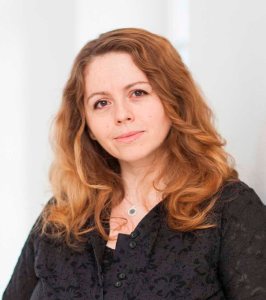
Maja Nenadovic Profile

ProfilesMaja Nenadovic holds a Ph.D. from the University of Amsterdam, and is the co-founder of the Croatian Education and Development Network for the Evolution of Communication – HERMES and of Reflectory, a consultancy in the fields of conflict transformation, social cohesion and civic engagement.

Maja Nenadovic

Maya is a monitoring and evaluation specialist, dialogue facilitator, human rights & civic education specialist, debate coach, critical pedagogy practitioner, and program design consultant. She has worked in 40+ countries worldwide. Since 2012, she has implemented “Across Divides – Training Workshops for Depolarizing Communication,” a methodology that she developed and tested in the field through a series of workshops and dialogues with both individuals using discriminatory and hate speech rhetoric, and with people and groups targeted by it. In addition she serves as a Board member of the Global Dialogue Collective.


Work for CID:

Maja Nenadovic participated in a CID/UNESCO focus group for the Futures of Education Initiative, and is participating in an expert group organized by the Center.

CFP: IN SITU Horizons of Sustainability (Croatia)

“Collaborative

Call for papers, IN SITU: Horizons of Sustainability: The Power of Creative Innovation for Transformation of Rural and Non-urban Futures, Šibenik, Croatia, 25-27 September 2024. Deadline: 8 July 2024.

IN SITU is a four-year project that combines research and experimental actions to advance the innovation-related practices, capacities, and potentials of cultural and creative industries (CCIs) based in non-urban and rural areas of the EU. The project aims to better understand their forms, processes, and governance needs and to advance the ability of non-urban and rural CCIs to act as drivers of innovation, competitiveness, and sustainability. Ultimately, the aim is to contribute to a more informed and sustainable future for practitioners in cultural and creative industries based in non-urban and rural areas.

This first international conference of the IN SITU project will explore the transformative power of innovative approaches of cultural and creative agents in forging more equitable and sustainable communities beyond urban centres.

In this event, organizers wish to inspire new ways of learning from one another. They aim to create an intimate environment that enables meaningful discussions and networking opportunities across research, culture-based creative practice, and planning and policy-making spheres. Therefore, within the conference, they will create different spaces and opportunities to foster exchange and dialogue with non-conventional approaches that fully place participants in the context of the place where the event is located. This also means that the number of presentations will be limited to allow for these other approaches.

They invite proposals for presentations of papers and projects from scholars, researchers, artists, cultural practitioners, activists, policymakers and decision-makers from across the world and a broad range of disciplines. All proposals should make an original contribution to the topic of place-based innovation and the transformative power of the creative and cultural sector in forging more equitable and sustainable communities in rural and non-urban areas.

IN SITU Summer School: (Croatia)

Professional Opportunities

IN SITU Summer School: Place-based Creative Solutions for Cultivating Caring and Sustainable Communities, 20-24 September 2024, Zlarin, Croatia. Deadline for applications: 24 June 2024.

Aiming to create two-way relations with the context in which it takes place – the island of Zlarin – the Summer School programme is designed to address issues that we consider crucial for their sustainability: community building and engagement, tourism and its adjustments to the needs of the local communities and, finally, care as an organising principle intertwining all the elements necessary for the growth and well-being of the community.

Organizers invite students, scholars, cultural and creative practitioners, cultural professionals and activists who work with and within smaller communities, in rural and non-urban areas worldwide, to join in! The working language of the Summer School will be English.

The Summer School is organised by IN SITU partners Kultura Nova Foundation in cooperation with the Centre for Social Studies of the University of Coimbra and the IN SITU Consortium.

CFP International Rhetoric Workshop: Borders & Crossroads 2024 (Croatia)

Conferences

Call for papers: International Rhetoric Workshop: Borders & Crossroads, 18-20 June 2024, University of Dubrovnik, Dubrovnik, Croatia (in person). Deadline: 18 February 2024.

The Planning Committee for the 4th Biennial IRW invites international PhD students and emerging, early-career scholars to come together and consider the myriad ways that our contemporary and established traditions of rhetorical theory, pedagogy, and criticism inform global flows of meaning-making. Senior and more established scholars are also welcome to apply. This year’s theme, Borders and Crossroads, prompts us to examine the notions of 1) physical, cultural, and conceptual borders that delineate territories and boundaries, marking spaces of distinction, separation, and connection; and 2) crossroads that represent intersecting paths, encounters, confluences, and opportunities to confront and transcend restrictive boundaries. Borders and Crossroads are encountered across inter/national, political, identity, and cultural contexts, all amid widespread refugee, migratory, wartime, economic, racial, and environmental crises. Guided by this theme, the workshop seeks to explore how rhetoric can contribute to shaping novel responses, articulate new socio-political narratives, and cultivate human hopes and imaginaries for resolution, world-making, justice, possibility, sustainability, and reconciliation.

Held over the course of three days, the IRW consists of an opening keynote address each day from internationally renowned scholars, workshop sessions in which participants review and discuss drafts of ongoing research with faculty mentors and each other, and faculty discussion panels engaging topics relevant to the conference theme. This year’s keynote speakers include Lisa A. Flores and Karma Chávez.

Healthy Conflict and Constructive Dialogue Classroom (Online)

EventsTHE CIVICS Innovation Hub and NECE campus: Healthy Conflict and Constructive Dialogue Classroom . Speaker: Maja Nenadovic, online, 26 September 2023 from 5:00 am to 6:30 am ADT.

During this workshop, the Educators’ Guide to Depolarisation will be presented, as well as navigating through some of its exercises, designed to encourage and equip teachers with methods for facilitating difficult conversations on controversial or polarising topics with their students. In addition, educational materials from the project Depolarisation Activism for Resilient Europe (DARE) will also be presented.

Maja Nenadovic is a practitioner and educator with 20 years of experience of working in the civic education, critical pedagogy, human rights education, Holocaust education and youth civic engagement fields. Next to designing original civic education and human rights education materials, she coordinated and facilitated several long-term civic education projects in the region of Western Balkans.

The NECE (Networking European Civic Education) Campus is an all-year-round online event series that provides a platform for educators, policymakers, civil society actors, and experts in citizenship education to learn, and exchange practices, research, tools, and methods related to democratic engagement and civic education. The series includes a diverse set of presentations, workshops, and capacity-building activities. It’s organised into functional and thematic tracks to cater to the needs of civic educators, covering a broad range of topics.

THE CIVICS is a a pan-European NGO with hubs in Bonn, Sofia and Zagreb with the goal of strengthening the democratic competences, self-efficacy, and resilience of citizens across Europe.

CFP Intercultural Horizons (Croatia)

Intercultural Horizons Conference
May 18-19th, 2017
Rijeka, Croatia

The conference committee will be accepting proposals through January 15th 2017!

This edition will be hosted by the University of Rijeka – Faculty of Humanities and Social Sciences thanks to a long-standing relationship with faculty there. The event is organized by Siena Italian Studies and the Foundation for Intercultural Exchange (formerly known as the International Center for Intercultural Exchange).

The theme for this edition is Innovative Approaches to Education for Democratic Culture and Inclusive Societies.  We look forward to welcoming back Martyn Barrett (University of Surrey, UK) and Robert Bringle (Indiana University – Purdue University Indianapolis, USA) and are thrilled to welcome for the first time Michael Byram (University of Durham, UK) and Petra Rauschert (University of Munich) as Keynote Speakers.

For more information on the event, the keynote speakers and the call for proposals please visit the conference website.

Youth Forum Pula: Culture of Peace: Migrant Crisis and the Youth (Croatia)

The European Center for Peace and Development  (ECPD) University for Peace (UPEACE) established by the United Nations – Regional Center for International Postgraduate Studies and Development Researches, Pula, within the ECPD International Program of Transfer of Knowledge System, in cooperation with Istria Region and the City of Pula, organizes

YOUTH FORUM PULA : CULTURE OF PEACE: MIGRANT CRISIS AND THE YOUTH
Pula, Croatia, 24 – 25 September 2016

In an effort to make culture of peace and tolerance spread throughout the world, ECPD continues, in cooperation with Istria Region and the City of Pula, its activities towards exploring the possibilities for international and interethnic reconciliation, religious tolerance and human security and organizes Youth Forum in Pula. Starting from the fact that the current migrant movements have been significantly changing the demographic map of the world and of Europe in particular, the understanding of the cultural and religious differences presents one of the biggest challenges of the today’s global development as well as the significant component of the long-lasting peace and sustainable development. In the era of globalization, when the world has been connected more than ever, it is extremely important to promote a responsible leadership in all the spheres and all the levels of society. The worldwide youth presents the significant potential and leaders of the future world system of the joint values and tolerance.

EPCD is pleased to invite you to take part in the Youth Forum which will be dedicated to the extremely current topic – Culture of Peace: Migrant Crisis and the Youth. The special focus of this year’s Youth Forum will be put on the importance of improving the existing and acquiring the new knowledge and skills for peaceful interaction with migrants, prevention of conflicts and peace building process. The main topic of the Youth Forum “Culture of Peace: Migrant Crisis and the Youth“ will be covered through two workshops and the following discussion panels :
• Migrant movements and their influence on the stability of Europe
• Social inclusion of the migrants through economic development and cooperation
• Youth – Partners today, peace leaders in the future

CERTIFICATE
Based on the participation and acquired knowledge and skills during the Youth Forum, the participants will receive an internationally valid and accredited Certifi cate of the European Center for Peace and Development (ECPD) of the University for Peace established by the United Nations.

APPLICATION FORM
Applications due July 31, 2016 as an email attachment.

ACCOMMODATION
For Youth Forum participants are provided accommodation at the Hotel “Pula” in Pula at preferential rates : 34€ on a full-board basis per day for a double and triple room, per person. In order to enjoy preferential hotel prices, please specify, when booking the accommodation, that you are a participant of the Youth Forum.

Note: The participants are free to choose another type of accommodation at their own preference. Participants who submit their application forms by the above submission deadline and confirm their attendance shall not be charged participation fee. The organizers cover local transfer costs; all other costs (transportation, accommodation, visas) shall be borne by participant.

CFP Memory-Nostalgia-Melancholy Workshop (Croatia)

CFP Memory-Nostalgia-Melancholy Workshop
Date: Sun 6 – Mon 7 September 2015
Venue: Hotel Lone, Rovinj, Croatia
Abstract submissions by: Fri 27 March 2015

The workshop, hosted by the School of Arts and Humanities at Nottingham Trent University, focuses on the intersections between memory, nostalgia and melancholy in contemporary culture, characterised by relentless mobility and radical displacement. Numerous critics of globalisation, transnationalism and cosmopolitanism have posited an overwhelming feeling of homelessness not only among people who have been displaced from their original home/lands, but also among those who feel estranged from their places of origin due to rapid social change or environmental decline. ‘Only the exiled have a land’, Baudrillard argued. ‘The others are nomads chasing their shadows in the deserts of culture’ (1990: 83). Arguably, homesickness is prevalent in today’s developed world, which can be—and sometimes indeed is—felt even for times and places unrelated to someone’s personal roots.

Home/land has no stable meaning and is always socially constructed, enacted and reproduced through everyday life practices and creative endeavour. This discursive homebuilding involves active memory work, and is typically associated with a nostalgic or melancholic mindset. Both linked to emotional disorders and often conflated in everyday parlance, the terms nostalgia and melancholy have distinct genealogies and have indeed been theorised as related, overlapping or semantically opposed to one another.

The following list of possible questions to be addressed is neither restrictive nor exhaustive:
– What are the interpretations of nostalgia and melancholy in different discursive and disciplinary fields?
– What is the relationship between longing and belonging?
– What is the poetics and politics of imaginative home-building?
– What is the interplay between nostalgia and melancholy?
– How are either or both of them represented, enacted and consumed in cultural texts across a variety of media and genres?
– Can either or both be mobilised to engender political and social change?
– Are either or both of them symptoms of, or cure for social problems related to globalisation and social change?
– Is the notion of a ‘forward-looking’ memory of home an oxymoron or a viable scenario?
– What are the spatio-temporal coordinates of nostalgic yearning?
– How does nostalgic yearning for ‘homeland’ relate to concrete ambitions to achieve territorial gain?

The language of the workshop is English. Contributions are invited, which build on original research, engage with relevant theories and contribute conceptual insights across a range of academic disciplines, including literary and cultural studies, anthropology, history, geography, heritage studies and memory studies.

A selection of papers will be solicited for publication in an edited monograph.

Please submit a paper title, an abstract of up to 300 words and a short biographical note to Dr Maja Mikula by Friday 27 March 2015.

Selected speakers will be notified via email by Friday 3 April and will be able to register for the workshop.

Registration is free of charge. Participants are responsible for their own travel and accommodation expenses. Pending room availability, participants will be offered a 10% discount on current online prices in any of Maistra’s hotels or resorts in Rovinj.

CFP 8th Central/Eastern European Media & Communication Conference

CEECOM2015
The Digital Media Challenge
8th Central and Eastern European Media and Communication Conference
Zagreb, 12-14 June 2015

Conference organized by the University of Zagreb in cooperation with the ECREA CEE Network and cosponsored by ICA

The transition of communication media to digital is a worldwide phenomenon. In Central and Eastern Europe the term “transition” is naturally assumed to mean democratic transition in the postsocialist period starting in 1990. For the past 25 years, many in these countries struggled to establish independent media industries with new democratic expectations and in a capitalist market environment. The focus was very much on the political and economic postsocialist transition, including in research in media and communication studies.

In this years’ CEECOM we wish to refocus on the challenges to media industries, media audiences, and media regulators posed by the digital transition in the Central and Eastern European region and beyond. Since today’s media have an increasingly global dimension that is manifesting together with the digital technology, we aim to discuss the manifestations of these global developments and their challenges in a regional setting.

The journalistic profession is having a hard time facing the challenges of the digital revolution and global economy, but also the pressures of commercial interests and the need for new competences of young journalists. As a result of that process, the trust citizens have in state institutions and mass media has been significantly declining. Some warn that the corruption of basic journalistic values – through infotainment, the imperative of speed and the use of digital technologies to raise the popularity instead of quality – has been undermining the very foundations of democracy. The citizens, paradoxically, are surrounded with media offer that has never been wider, while they have never been less involved. New possibilities for participation in the digital public sphere are being used in different ways by different people, are there patterns here that we can uncover?

While digital technology defines today’s media, the key to their understanding is beyond a technological utopia or dystopia, in the new social practices that media afford – in media production and use, in changing public communication, media organization and production, journalism practice and the role of audiences. Social media, user-generated content, crowdsourcing, rise of alternative media, networked distribution and promotion of content and participatory agenda setting characterize today’s media landscapes that comprise both the legacy and the digital media. Today’s mediatized cultures can no longer be observed outside of the media that facilitate them, but need to be investigated in their articulations of everyday lifeworlds.

In our attempt to understand the present manifestations of digital mediascapes, we might also examine how the socialist economic and political settings and normative assumptions of the role of media influence contemporary post-socialist institutional settings and the development of digital media cultures.

Some of the topics for which we invite contributions include, but are not limited to:
*Mediatized cultures – production, audiences and social practices
*Self-construction and self-expression, identity performance and experimentation
*Education, knowledge and learning, play and entertainment
*Sociality – social spaces created around and through use of communication technology, belonging – foundation of social bonds and social integration, communities they create, how they engage in politics or civic activities
*Privacy, security, control and surveillance (interveillance)
*Digital democracy – mediatized political communication, digital citizenship, participation and the digital public sphere
*Redefining the legacy journalism paradigm
*At the organizational level: the role of newsroom in digital media environment; newsroom adjustments to media convergence.
*At the professional level: changing practice of journalists; multi-platform reporting; role of social media in daily reporting, especially in stories and sources identification and interaction; new relations with audiences, participatory and collaborative journalism.
*At the media output level: pluralism and quality of content, its availability and usability and, in general, public interest
*Digital Skills for the New Approach to Journalism Education
*Development of the new digital skills and the basis for the new journalism education curricula – new forms of reporting, new genres in digital media, data analysis and storytelling
*Children in the mediatized world
*media literacy – privacy and young media consumers,
*role of family in media literacy & media use
*digital generation and media
*Media and information literacy – libraries, copyright issues and open access, education for media and information literacy, regulation for media and information literacy, media literacy and social inclusion
*The past and present of media and communication studies in CEE – comparing socialist and post-socialist disciplinary developments

The conference will work in plenary (keynote and special panels) and parallel/paper sessions. Abstracts will be double blind reviewed by members of the Scientific Committee.

Conference Participants
The conference aims to promote academic cooperation in the field of media and communication studies, broadly defined in a way to include trans-disciplinary and inter-disciplinary approaches to media and communication, within the Central and Eastern European region and beyond. While the primary focus of the conference is on sharing and discussing new research, the conference takes a multi-stakeholder approach to underline the importance of dialogue between scholars of media, political science, sociology, regulators and policy makers, international and national experts, practitioners, as well as representatives of regulatory authorities and civil society organizations.

Co-authored proposals are accepted, including those written by master students and their academic supervisors. The participants are invited to register and to submit original papers and panels. No more than two submissions by one author can be accepted (including combinations of panels and individual papers).

Participants do not need to be members of any of the sponsoring academic associations. The event is also open to participants who do not plan to submit research proposals. All accepted attendees are asked to register for the Conference.

Submission, Registration and Important Dates
Conference language: English. Individual paper proposals addressed to one of the proposed topics should mention this in the proposal (other topics on CEE issues are welcome as well). Abstracts (of max. 300 words) will be evaluated by at least two members of the Scientific Committee. Panel proposals of 300 – 500 words should include the rationale and title of proposed panel, and name & affiliation of the Chair/Moderator and up to five members of the panel, and brief abstracts (150 words) for each participant’s contribution. Abstract & panel submission site will open on November 20, and individual paper and panel proposal can be uploaded until 20 December, 23:59 CET. The reviews will be completed and notifications sent by 31 January 2015.

Please contact the conference organizers if you have any questions!
Conference registration will open on 1 February 2015. Early bird registration ends 1 April 2015.

Summary of important dates:
20 November 2014: Abstract Submission Site Opens
20 December 2014: Deadline for submissions of abstracts and panel proposals
31 January 2015: Notification of acceptance
1 February 2015: Registration & fee site opens
1 April 2015: Early bird registration ends
1 May 2015: Deadline for full papers to be delivered to Chair of the working group
12 June 2015: Opening ceremony of CEECOM 2015 conference

Conference Book
Full papers should be sent to the panel chairs by 1 May 2015. An edited collection of the most successful papers will be published with an international publisher.

Conference Fee
150 EUR conference participants
100 EUR doctoral students
Early bird: until 1 April 2015
100 EUR conference participants
75 EUR doctoral students
The fee covers lunches & coffe & refreshments breakes, and conference materials.

Conference Organizers
CONFERENCE CHAIR: Zrinjka Peruško, University of Zagreb, Croatia

SCIENTIFIC COMMITTEE (MEMBERS OF CEECOM CONSORTIUM):
Auks? Bal?ytien? (Vytautas Magnus University in Kaunas, Lithuania)
Boguslawa Dobek-Ostrowska (University of Wroclaw, Poland)
Micha? G?owacki (University of Warsaw, Poland)
Epp Lauk (University of Jyväskylä, Finland)
Zrinjka Peruško (University of Zagreb, Croatia)
Irena Reifova (Charles University in Prague, Czech Republic)
Ilija Tomani?-Trivundža (Ljubljana University, Slovenia)
Tomáš Trampota (Charles University in Prague, Czech Republic)

LOCAL ORGANIZING COMMITTEE
Mihaela Banek Zorica (University of Zagreb, Croatia)
Domagoj Bebi? (University of Zagreb, Croatia)
Antonija ?uvalo (University of Zagreb, Croatia)
Hrvoje Jakopovi? (University of Zagreb, Croatia) Iva Nenadi? (University of J.J. Strossmayer, Osijek, Croatia)
Krešimir Pavlina (University of Zagreb, Croatia)
Tena Perišin (University of Zagreb, Croatia)
Sonja Špiranec (University of Zagreb, Croatia)
Dina Vozab (University of Zagreb, Croatia)
Nada Zagrablji? Rotar (University of Zagreb, Croatia)

CONTACT/CONFERENCE SECRETARIAT:
Centre for Media and Communication Research
Faculty of Political Science
University of Zagreb
Lepuši?eva 6, 10 000 Zagreb, Croatia
www.cim.fpzg.unizg.hr
E-mail: ceecom2015@gmail.com
Website: www.ceecom.org
Facebook: http://www.facebook.com/ceecom2015
Twitter: @ceecom2015 #ceecom2015