

Disability as Intercultural Dialogue. Guest post by Jessica M. F. Hughes & Mariaelena Bartesaghi.
Ethnomethodologist Carolyn Baker argues that culture is not a pre-made context for action to unfold, but rather an ongoing moral order of categories and categorization, where locally produced categories become “locked into place” (2000, p. 99). This is how we understand—and are able to talk about—disability in terms of culture, as an assemblage of voices, bodies and actions within a contingent and shifting social order(ing). Just as Bakhtin (1986) tells us that there is no first speaker, but rather language as coordination over time and amidst utterances in relation, disability can only mean in terms of what we are able to (co)produce it as meaning. In our book, Disability in dialogue (Hughes & Bartesaghi) contributors set out on empirical projects designed to trouble the categories of disability within several cultural frames: geographical settings, diagnostic accounts, political action, crisis events, and everyday occurrences.
Inasmuch as disability is a culture, an ordering of relations and identity projects, of what is and might be possible, of what is historically entrenched and institutionally regulated, then disability is also an intercultural doing. This is the case not merely in the exchanges between a culture of able bodiedness to which disability owes its constitution, but between the multiple and diverse identity positions of those who are incumbent within the culture of disability. These exchanges are dialogic through and through, for they always mirror, borrow, and often oppose each other. In Shotter’s words (2015), these dialogues are occasions for attunement (p. 8) and intercultural betweenness.
Analyzing disability discourses means appreciating dialogic tensions, the centripetal and centrifugal forces at work, the constant interplay between dialogue and monologue. And it means listening to the diverse voices that, as Bakhtin remarked, are everywhere and always in relation.
Download the entire guest post as a PDF.

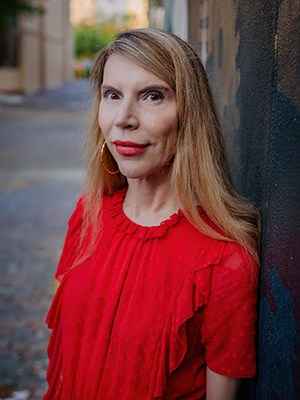 She was born and raised in Milan, Italy, and is an expat to the United States since her 20s, so intercultural dialogue is an everyday accomplishment for her. She is an associate professor of communication at the University of South Florida. She is a discourse analyst, who studies institutional discourse in social settings, such as psychotherapy, psychiatry, medicine, academia and crisis. She was the Editor in Chief of Qualitative Research in Medicine and Healthcare from 2016 to 2021 and has published in Discourse Studies, Applied Linguistics in Professional Practice, The Review of Communication and Language Under Discussion. She has recently co-edited the anthology Disability in Dialogue for John Benjamin’s Dialogue Series (with Jessica Hughes) and is working on a book on crisis discourse. She is delighted to have introduced many graduate students to discourse studies, and the empirical study of dialogue. Many of her once doctoral advisees now study dialogue in their own work.
 Center for Intercultural Dialogue