Call for Applications: Internet Policy in the MENA Region: Research Methods for Advocates
September 1-4, Kadir Has University, Istanbul
Application Deadline: May 15, 2015
As activists and researchers around the world endeavor to influence internet policymaking processes and raise awareness about the importance of protecting the open internet, the need for relevant, advanced internet policy research methods among advocates is brought into stark relief. This need is particularly great in the broader MENA (Middle East and North Africa) region, where observers are witnessing increasing levels of government control online, inadequate legislation supportive of a robust and secure cyberspace, as well as increasingly sophisticated security risks to journalists, researchers, and activists. These issues are further complicated by the political, economic, and cultural dynamics that are specific to the region.
Recognizing the importance of advocacy and policy efforts that make use of methodologically rigorous and contextually appropriate research as well as the need for a deeper engagement with the local environments that shape internet policy issues, the Annenberg School for Communication‘s Internet Policy Observatory has teamed up with Citizen Lab, ASL19, Ranking Digital Rights, and Kadir Has University‘s New Media Department to develop an Internet Policy Research Methods Workshop. This program will bring together young scholars and activists working in digital rights and the internet policy space in an intensive four day practicum that provides a survey of both qualitative and quantitative, online and offline research methods with the goal of enhancing and advancing their advocacy efforts.
The Internet Policy Research Methods program seeks applications from activists, advocates and those working at NGOs, and early career researchers working and studying in the Middle East and North Africa. Prospective applicants should have a particular area of interest related to internet governance and policymaking, censorship, surveillance, internet access, political engagement online, protection of human rights online, or corporate governance in the ICT sector. Applicants will be asked to bring a specific research question to the program to be developed and operationalized through trainings and one-on-one mentorship with top researchers and experts from around the world.
The program will provide skill-building tutorials on the following topics:
– defining the problems and framing research questions
– conducting desk and archival research
– policy mapping
– questionnaire/interview design and techniques
– conducting surveys and public opinion research
– network measurement
– social network analysis
– data visualization
– maximizing influence: research dissemination and promotional strategies
– developing proposals for funding, creating actionable research agendas and evaluating project impact
We encourage individuals from the MENA region in the academic (early career), NGO, and public policy sectors to apply. The course will be conducted in English and applicants should have high proficiency in English in order to interact with experts, lecturers and other participants who will come from diverse backgrounds. Apply for the 2015 Summer Research Institute online. A limited pool of funding in the form of travel support is available and will be allocated based on the strength of the application, fit with the workshop, and demonstrated need. If you require funding support, please indicate as such in the online form.
For more information about the program, please contact Emad Khazraee.

 Çiğdem Bozdağ is an assistant professor in the department of New Media at the Kadir Has University, Istanbul. Bozdağ’s research and teaching focus on digital media, intercultural communication, migration, globalization, and education and media technologies.
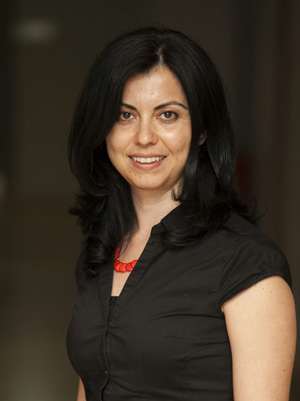 Her recent research was about online intercultural school networks between Germany and Turkey. Bozdağ completed her Ph.D. at the University of Bremen in January 2013. In her thesis, she analyzed the websites of the Moroccan and Turkish diaspora and their role in ethnic community building, within a mediated emerging social space. From 2008 to 2010, she worked at the same university in the research project “Communicative Connectivity of Ethnic Minorities: The Integrative and Segregative Potential of Digital Media for Diasporas.” Moreover, she worked on an EU-funded research project, entitled “ICT and Cultural Diversity.” After the Ph.D., Bozdağ worked as a Mercator-IPC fellow at the Sabanci University, Istanbul. She received her M.A. degree from the University of Bremen, in the field of media culture. Her bachelor degree is from Boğaziçi University, in the field of political science and international relation.
 Center for Intercultural Dialogue