
RiceBreaker for ICD

Intercultural Pedagogy

Spry, Amber D. (2023). The #RiceBreaker: Facilitating intercultural dialogues in the classroom by engaging shared experiences. Journal of Political Science Education, 19(2), 195-204.

Amber Spry has invented a very cute icebreaker using discussion of how different students in a class cook rice in order to spark intercultural dialogues. It should be a good starting point for other instructors.

The activity asks students to answer a straightforward question: “how does your family or your culture cook rice?” By using the example of a simple ingredient found across the globe, the activity demonstrates how students can hold different perspectives on the same topic based on their own experiences, and models for the class how to approach conversation throughout the semester when perspectives on a given topic may vary. This activity provides an example of how a classroom icebreaker can be used in a way that facilitates dialogue, promotes participation, and models intellectual respect.

Her starting point is Political Science, but it seems likely to work for those in other disciplines as well. For example, it has already been adapted for the foreign language classroom by Sahai Couso Díaz on Language Panda.

If you prefer to listen to a podcast, Spry has been interviewed on the topic for radio station KCRW: Using a ‘ricebreaker’ to start a conversation about cultural identity.

Film Literacy and Intercultural Dialogue

Intercultural Pedagogy

Glotov, S. (2023). Film literacy and intercultural dialogue: Focus on cultural representation. (Doctoral dissertation, Tampere University, Finland).

In his dissertation, Sergei Glotov links “film literacy with intercultural education that can support open and respectful intercultural dialogue between people of different cultural backgrounds…intercultural film literacy education is introduced as the link between film literacy and intercultural education…Overall, the research advocates for looking closely at the messages of cultural representation we receive from audio-visual media and being critical and reflective about them, by studying how these messages are created and broadcasted, as well as challenging them through intercultural dialogue and the actual experiences of other people.” It seems likely this would be useful to those teaching about intercultural dialogue, especially those who use films in the classroom.

Mother Tongue Film Festival 2023 (USA)

Intercultural PedagogyThe Smithsonian Institution’s Mother Tongue Film Festival celebrates cultural and linguistic diversity by showcasing films and filmmakers from around the world. This year’s theme is Coming Home.

The Smithsonian’s Mother Tongue Film Festival celebrates cultural and linguistic diversity by showcasing films and filmmakers from around the world, highlighting the crucial role languages play in our daily lives. In 2023, the festival returned in person, in Washington, DC, February 23 to 26, but many of the films are now available to stream in full on their website.

A few examples of the films available to stream:

Definition of Resilience is a four-episode radio and video documentary series highlighting the dynamic stories of Native American hip-hop MCs. Episode 2 considers the topic of identity.

Witch is a collaboration between Apashe, a Canadian dance and electronic musician, and Alina Pash, a Ukrainian rapper and musician. The music is described as “creepy orchestral with dance flavor,” and Pash’s rap vocals are reminiscent of spellcasting. Shot in Pash’s hometown of Kyiv, the music video weaves the story of a witch burner who reaps what he sows.

Create Wikipedia Entries on ICD Topics

Intercultural Pedagogy

Wiki Education is asking that faculty consider assigning students to write articles for Wikipedia. Wikipedia has limited entries on intercultural dialogue-related topics. The two seem a natural fit.

In Wiki Education’s Wikipedia Student Program, college and university instructors assign students to write Wikipedia articles, empowering them to share knowledge with the world. Students research course-related topics that are missing, underrepresented, incomplete or inaccurate, synthesize the available literature, and use free tools and trainings to add information to Wikipedia. They are now accepting submissions for the Fall 2022 term.

I’ve not used Wikipedia assignments in courses because I retired before this became a thing. However, I learned the process in order to create a page for the Center for Intercultural Dialogue, and later was asked by a  colleague to please create an entry for intercultural dialogue as a topic, as there was not yet anything available on the site. So I know it’s not difficult, and I also know that there is not as much content on related topics as there might be. Therefore, I suggest that anyone looking for a new and interesting type of applied assignment might want to consider the creation of Wikipedia pages as a possibility as a way to ensure that Wikipedia has the most up-to-date content relevant to intercultural dialogue topics.

For students, one benefit is that it is possible to check how many times anyone has viewed an entry. The ICD entry has been available for under two years, but has already had over 5000 views. Having that kind of impact should help motivate any student to do their best work.

Wendy Leeds-Hurwitz, Director
Center for Intercultural Dialogue

Mother Tongue Film Festival (Online)

Intercultural PedagogyThe Smithsonian Institution’s Mother Tongue Film Festival celebrates cultural and linguistic diversity by showcasing films and filmmakers from around the world in Washington, DC, until May 31, 2021.

Through digital storytelling, the festival amplifies the work of diverse practitioners who explore the power of language to connect the past, present, and future. Since 2016, the annual festival has celebrated International Mother Language Day on February 21. The sixth annual festival will take place via a monthly online screening series from February 21 to May 31, 2021.

Many of these films would be valuable in teaching about cultural differences, if not intercultural dialogue explicitly. The theme this year is The Healing Power of Storytelling.

Culture Buff Intercultural Games

Intercultural PedagogyCulture Buff Games, created by Culture Games, an EdTech developer of interactive games on different cultures, offer games for intercultural trainers (some free, others cost).

Culture Buff GamesThe games leverage visual culture scenarios to help foreign students understand how country-specific culture values manifest in contemporary everyday life and are informed by historical events. Designed by interculturalist trainers, these learner driven interactive games emphasize problem solving and practical application of cultural knowledge. Our games can be trainer facilitated or used as self-directed learning tool. There are multiple sets of games for American Values, British Values, Chinese Values and Indian Values.
Call for Exercises on ICD Topics


Intercultural PedagogyCID would like to make available on this site a collection of exercises on topics related to intercultural dialogue, and designed to help people learn to engage in intercultural dialogues. 

Intercultural Dialogue definition

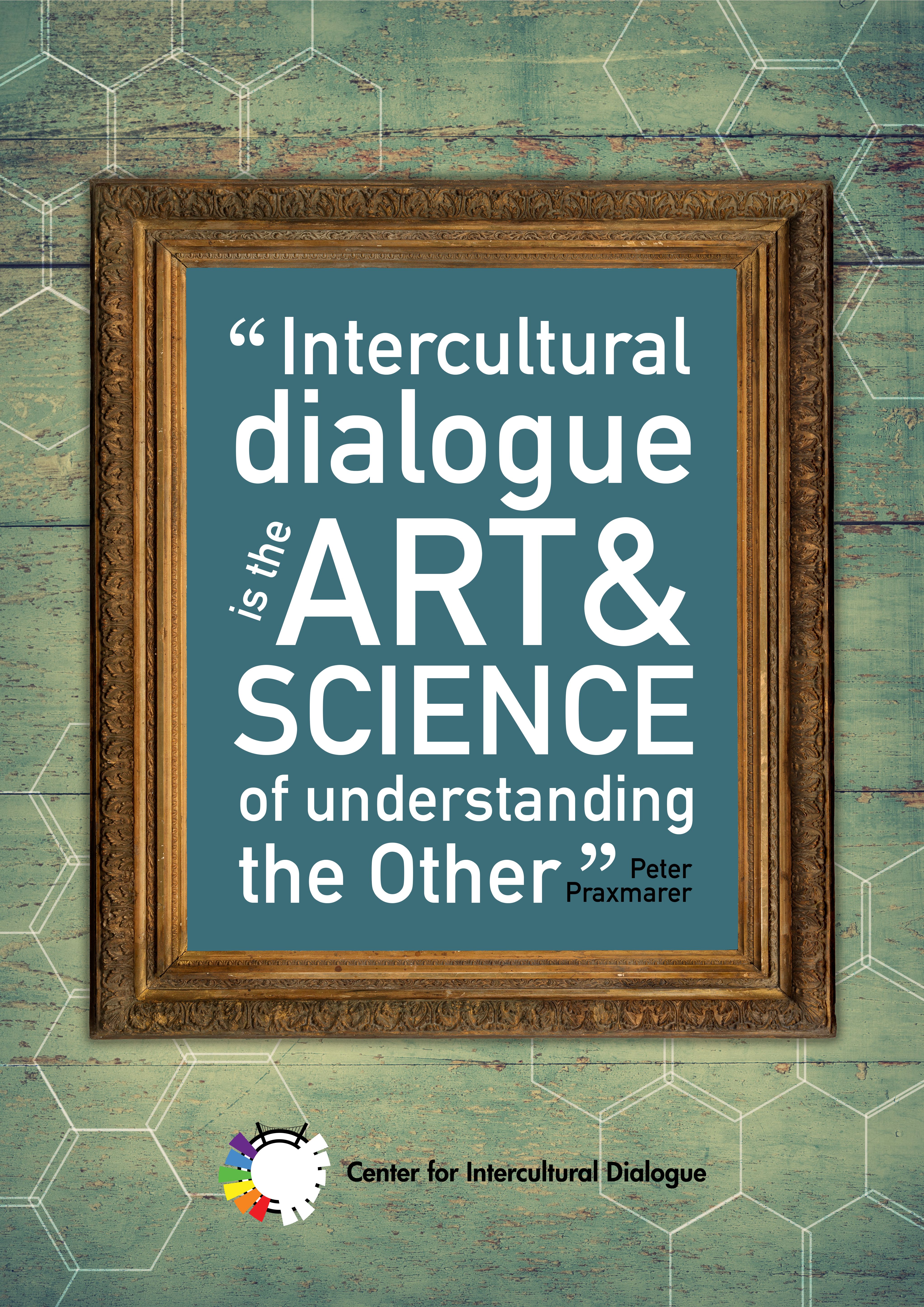
As a reminder, intercultural dialogue has been defined on this site as “the art and science of understanding the Other” (courtesy of Peter Praxmarer, as explained here). 

The goal is to first gather a number of such exercises and, second, make them available to all those who follow this site. This request may be interpreted broadly, both in terms of content (so that intercultural competence, conflict resolution, conflict management, negotiation, peacekeeping, etc. would all be appropriate foci), and in terms of type of exercise (not only discussion but also writing, video, interview, graphic design, etc. could all be relevant examples). 

Please send examples, and/or questions, to Wendy Leeds-Hurwitz, via email.

Showing Multiple Cultural Identities

Intercultural Pedagogyde Luca, Antonio, & Riyait, Jaspa. (2020, June 6). What we look like: 11 Asian-American artists celebrate their experiences of culture and identity with illustrated self portraits. New York Times.

The Times asked artists of multicultural backgrounds to draw self-portraits, and published the results. It’s an interesting exercise, and a good possibility for a Intercultural Communication course assignment. Most students have several cultural identities in their background after all, even if they and their parents were born in the USA.

As has been pointed out on this site, children who grow up with parents having different cultural backgrounds, and who learn to interact in multiple cultural contexts, often learn to be particularly good at intercultural dialogue. (For further discussion, see KC12: Third Culture Kids, and KC94: Cross-Cultural Kids.)

U Minnesota Press Offers Free Racial Justice Books

Intercultural PedagogyRacial Justice Resources, available for free, from University of Minnesota Press, Minneapolis, MN, USA.

The University of Minnesota Press is committed to challenging white supremacy, police violence, and unequal access to criminal justice, education, and resources in Minnesota, the United States, and throughout the world. To promote understanding and action for change, they are making a series of antiracist books available to all to read online for free through May 15, 2021.

These include: Living for Change by Grace Lee Boggs, and Tell Me Your Names and I Will Testify, by Carolyn Lee Holbrook, among others, for a set of 30 ebooks.

Anti-Racist Resources

Intercultural PedagogyThere are a large number of documents currently being posted online with suggestions for what to read or teach related to anti-racism. Given that dialogue across racial boundaries is one form of intercultural dialogue, the topic is particularly relevant to CID. For a one-page introduction, see KC97: Anti-Racist Education.

Race is happening. Never mind that race is always happening but it is especially happening now, urgently happening. . .
– Lauren Michele Jackson

Here are a few of the reading lists currently circulating:

Chicago Public Library. (2020). Anti-racist reading list from Ibram X. Kendi.

EmbraceRace. (N.D.). Looking for excellent “diverse” books for children? Start here!

Flicker, Sarah Sophie, & Klein, Alyssa. (2020). Anti-racism resources.

Stamborski, Anna, Zimmermann, Nikki, & Gregory, Bailie. (2020). Scaffolded anti-racism resources.

and a set of further links can be found here:

Washington Area Women’s Foundation. (2020). Anti-racism resources.

Related information is here:

Black Lives Matter. (2020). What matters .


After you’ve read some of those sources, listen to this interview:

Holmes, Linda (Host). (2020, June 10). The limitations of an anti-racist reading list [Radio broadcast]. National Public Radio.

or read this essay by the author interviewed on that radio show:

Jackson, Lauren Michele. (2020, June 4). What is an anti-racist reading list for? Vulture.