

I spent about three months between January and April 2024 traveling in several countries in Asia, including Singapore, Malaysia, Cambodia, Vietnam, China, Hong Kong, and Taiwan.
While the trip entailed a field research project about the use of visual media as a form of multicultural communication in Southeast Asia, I took advantage of the occasion to explore many local cultures or heritages in the vast region. For example, I visited some UNESCO World Heritage sites, such as Angkor Wat in Cambodia, the Singapore Botanic Gardens in Singapore, George Town in Malaysia, and Hoi An Ancient Town in Vietnam.
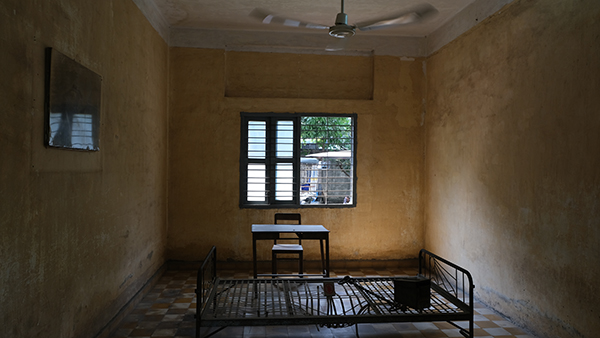
But while the above heritage sites and many other such cultural resources were truly very remarkable, my visits of the Tuol Sleng Prison and the Choeung Ek Genocidal Center in Phnom Penh, Cambodia, have left a long-lasting impression on me. Both sites, and many other sites such as these that have been collectively called the Killing Fields, came from an extremely dark and bloody history that was the genocide (with up to three million people murdered) committed by the Khmer Rouge government under Pol Pot between 1976 and 1978.
I have read about the Cambodian genocide by the Pol Pot regime in media reports through the years since college, although I have never seen the 1984 British film The Killing Fields. But none of what I have read about this tragic history could have prepared me for the shock and sadness I experienced during my visits there.
Tuol Sleng, or S-21 Prison, was one of about 189 interrogation (read torture) centers during those tumultuous years under Pol Pot’s Khmer Rouge regime. It was inaugurated on April 17, 1980, as a memorial museum and has been open to the public since. According to the United States Holocaust Memorial Museum, “Between 14,000 and 17,000 prisoners were detained there, often in primitive brick cells built in former classrooms. Only 12 prisoners are believed to have survived.”
Located approximately 11 miles south of Phnom Penh’s city center, the Choeung Ek Genocidal Center is perhaps the most well-known among about 300 Killing Fields. Tuol Sleng was directly tied to the Choeung Ek site in that (“confessed”) prisoners from S-21 were sent to Choeung Ek for their summary execution. Close to 9,000 bodies were exhumed from the mass graves after they were initially discovered. When I was there, sections of the open-air fields were still cordoned off to prevent visitors from accidentally disturbing any human remains that were still buried there. Perhaps one of the most iconic symbols of Choeung Ek is the Buddhist stupa, which houses more than 5,000 human skulls that are encased behind acrylic glass.
My attendance at the various exhibits in both the Tuol Sleng and the Choeung Ek sites was nothing short of being surreal and, at times, bone-chilling. One of the most unforgettable parts of the visits has been our close proximity to the objects being on display. For example, in Tuol Sleng, which was housed in a repurposed school, we were standing right in front of the bed in the middle of several of the former classrooms where the prisoners were tied and tortured for their confession. In the extremely tight space inside the Buddhist stupa at Choeung Ek, we were literally inches away from the human skulls on display. I overheard a fellow traveler who refused to go inside the stupa precisely because they felt uncomfortable getting so close to the skulls.
Indeed, the visit to Tuol Sleng and Choeung Ek was by no means a positively pleasant experience, regardless of how educational it may have been. It certainly reminded me of my visit to Auschwitz I and Auschwitz II-Birkenau outside of Krakow, Poland, in 2018. In both cases, I walked away with more questions than I had answers. What can and should we learn from these dark and tragic histories?
Casey Man Kong Lum, Associate Director
Center for Intercultural Dialogue
Photo credit: Casey Man Kong Lum

 Center for Intercultural Dialogue